
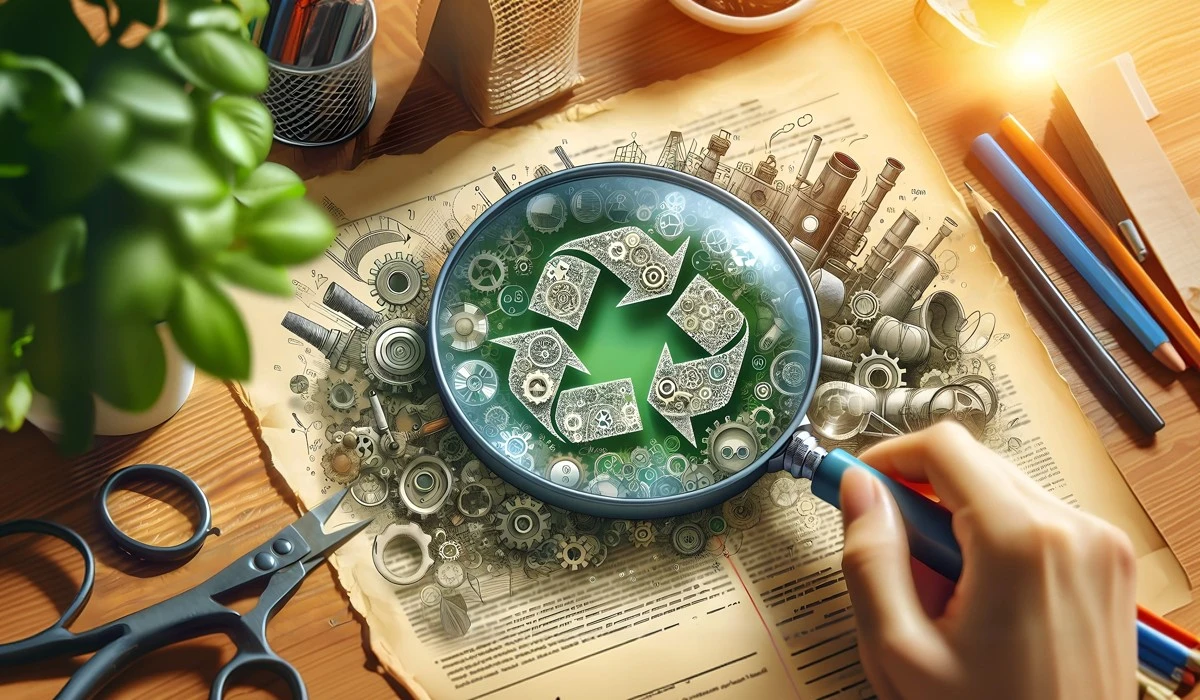
How The Circular Economy Recaptures Margins
Business leaders often watch money disappear without realizing they threw it away themselves. Every time a customer buys a product and eventually tosses it, the company loses the very materials they paid to source. This "take-make-waste" routine drains your bank account because you must buy new resources for every single sale. You essentially pay to lose your own assets.
The Circular Economy changes this by treating every sold item as a future resource. Instead of letting value die at the cash register, companies use circular supply chain models to bring those materials back. This shift stops the constant spending on raw goods. You stop being a middleman for trash and start being a manager of permanent value. Keeping products in use longer allows you to recapture the margins that usually vanish into a landfill.
The high cost of the linear "take-make-dispose" model
Traditional business models act like a leaky bucket. You spend millions on raw materials, manufacture a product, and then lose contact with it forever. This disposal-heavy mindset costs the global economy trillions of dollars every year. According to The Guardian, the extraction of raw materials worldwide has grown by more than three times over the last fifty years. Deloitte reports that 100 billion tonnes of materials are consumed every year. Furthermore, a report from the Circularity Gap World indicates that of the 106 billion tonnes of materials utilized by the global economy annually, only 6.9% are secondary raw materials. The Guardian also notes that global recycling rates have decreased for eight years in a row, with that 6.9% figure representing the current portion of materials sourced from recycled inputs.
Escaping the Double Cost of Linear Supply Chains
Companies pay twice for this waste. First, they pay high prices for virgin materials. Second, they pay disposal fees to get rid of scrap. How do circular economy supply chains differ from linear ones? Unlike linear models that move in one direction toward disposal, circular systems create loops where products return to the production cycle to maximize their utility. This switch prevents the "death" of a product's value at the point of sale. Instead of a one-time transaction, the item stays in your financial orbit.
Meanwhile, raw material price volatility makes long-term planning almost impossible. When you rely on the "take-make-waste" model, you remain a slave to global commodity prices. If the price of copper or steel spikes, your margins shrink instantly. Failing to recapture materials means you essentially throw away your hedge against inflation. You lose the chance to reuse what you already bought, forcing you to buy the same thing again at a higher price.
How circular supply chain models convert waste into profit
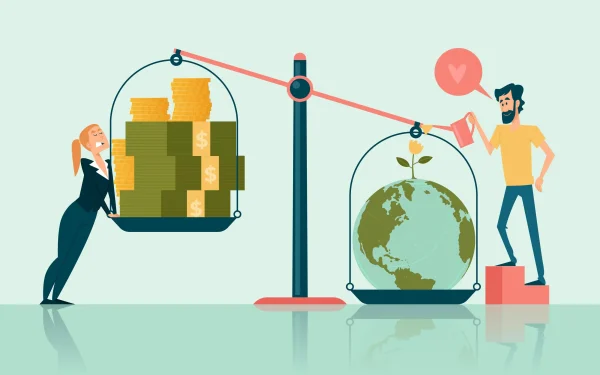
Moving from theory to action requires a change in how you handle goods. Circular supply chain models include recycling but emphasize keeping the product’s original form through repair and refurbishment. You harvest components from old units rather than buying new ones from a supplier. As noted by the World Economic Forum, items in a circular economy are produced and used in a manner that lowers the consumption of world resources, cuts down on waste, and decreases carbon dioxide emissions. This method keeps the value high and the energy costs low.
Swiss economist Walter Stahel first proposed these "loops" decades ago. He realized that keeping a product in its highest-value state earns more money than breaking it down. For example, taking a used engine and replacing three worn parts is cheaper than melting the whole thing down. This approach turns your "trash" pile into a parts warehouse. You stop fighting for new resources and start mining your own history.
Ironically, most companies ignore the wealth sitting in their own scrap heaps. The Circular Economy framework proves that "waste" is simply a resource in the wrong place. Implementing circular supply chain models allows you to regain control over your material inputs. You change an expense—disposal—into a revenue stream. This shift helps you reclaim billions in lost value that previously ended up in the ground.
The power of remanufacturing and asset recovery
Remanufacturing allows you to sell the same materials multiple times. When you restore a used product to "as-new" condition, you save between 60% and 80% of the cost. You already paid for the metal and the initial shaping. You should not have to pay for it again. Research from the Carbon Trust indicates that restoring products uses 85% less energy than producing new items from scratch. The World Economic Forum also highlights that the shift toward this economic model could potentially create $4.5 trillion in economic value by the year 2030.
This is a full industrial restoration; it is more extensive than a simple repair job. Focusing on asset recovery allows you to slash the need for new material by up to 98%. This protects your margins from the rising costs of mining and shipping. You gain a significant competitive advantage by having lower production costs than rivals who still rely on virgin materials.
Scaling productivity with Product-as-a-Service in a Circular Economy
The "Product-as-a-Service" (PaaS) model shifts how you earn revenue. Instead of selling a machine once, you lease the use of it to the customer. This keeps the physical asset on your books. Because you own the product, you want it to last forever. This aligns your profit with the item's durability and long-term performance.
Rolls-Royce uses this strategy with its "TotalCare" program. They sell flight hours rather than jet engines. This forces them to make engines that rarely break. What are the benefits of a circular supply chain? Research published in ResearchGate suggests that these systems allow organizations to significantly improve their resource productivity, while also offering reduced waste management costs and improved supply chain strength against global shocks. Owning the materials allows you to control your own future regardless of global trade disruptions.
In reality, this model makes your revenue more predictable. Instead of waiting for a one-time sale, you enjoy recurring payments. This cash flow allows for better financial planning. You also develop a deeper relationship with your customer because you provide ongoing maintenance. Every service call is an opportunity to ensure your asset stays in peak condition for its next life cycle.
Reducing procurement volatility through secondary material loops
Raw material prices jump around like a heart rate monitor. Since 2010, some vital metals have seen price spikes of over 150%. This volatility destroys your ability to plan a budget. The Circular Economy offers a way out by creating "urban mines." You treat your existing customer base as your primary supplier of raw materials.
Recovering materials from your own products allows you to skip the global commodities market. This creates a shield around your bottom line. You no longer care if a mine halfway across the world shuts down. You already have the copper, steel, and lithium you need sitting in your warehouse or in your customers' hands. This predictability makes your financial forecasts much more accurate.
Furthermore, secondary loops allow you to bypass the "monstrous hybrids" that plague traditional manufacturing. Using the Cradle to Cradle framework allows you to distinguish between technical nutrients and biological nutrients. You design products so they come apart easily. This design choice makes the Circular Economy a practical reality rather than a theoretical practice. It ensures that your materials stay pure and ready for reuse.
Using reverse logistics to close circular supply chain models
You need a way to get products back without spending a fortune. This is where reverse logistics comes in. Successful companies build centers that use AI to sort returns instantly. They call this "triage." The system decides if an item should go to resale, repair, or material recovery. This speeds up the cycle and gets value back onto the balance sheet faster.
Most initial pilots for these circular supply chain models see a return on investment within three to six months. According to data from Reconomy, these initiatives can lower packaging expenses by as much as 70% once the systems are scaled up. Consolidating returns allows you to cut shipping costs by nearly 30%. This high output makes it cheaper to reclaim your own products than to buy new parts from a supplier. You create a self-sustaining loop that feeds your factory while starving your competitors of resources.
Ironically, many businesses view returns as a headache. In a Circular Economy, a return is a gift. It is a pre-processed bundle of materials that you already understand. You know the exact alloy of the steel and the age of the components. This "known data" makes production much more productive than working with raw ore or unknown scrap.
Driving long-term growth with Circular Economy strength
Strength is the new gold. During the COVID-19 pandemic, companies with circular loops kept moving while others stopped. They harvested parts from their own stock when global shipping lanes froze. Decoupling your growth from finite resources ensures your business can survive any crisis. You thrive when others struggle to find basic components.
Gartner predicts that circularity will be the only way to do business by 2029. How does a circular economy help businesses save money? Reducing the need for virgin raw materials and removing disposal costs allows companies to significantly lower their operational overhead and improve their overall margins. Both the planet and the company's life are saved through this approach. This long-term view turns environmental goals into a firm business strategy.
In the past, growth meant using more stuff. Currently, growth means using the same stuff more often. Adopting circular supply chain models prepares your company for an environment of resource scarcity. You stop hoping for cheap commodities and start building a business that doesn't need them. This independence is the ultimate form of risk mitigation.
Measuring the ROI of your circular supply chain models
You cannot manage what you do not measure. Forward-thinking companies now track the "Material Circularity Indicator" (MCI). This score shows how much of your product comes from recycled content and how much waste you generate. Research shows that every point you gain on a circular index correlates with a 0.152 percentage point increase in your actual ROI.
Focus on "Resource Productivity" as your main KPI. Measure how much revenue you earn per kilogram of material you use. Traditional companies want to sell more units. Circular Economy leaders want to extract more money from the same units. This shift in metrics changes how your entire team views success. It moves the focus from volume to value.
Additionally, track your "Circular Revenue Share." This is the percentage of your income that comes from PaaS, leasing, or remanufactured goods. As this number grows, your reliance on volatile raw materials shrinks. You begin to see your warehouse as a bank full of high-value assets waiting for their next loop rather than a storage space for costs.
Bridging the gap between sustainability and the CFO
Most CFOs ignore sustainability because it sounds like a cost. To get executive buy-in, you must present the Circular Economy as a financial tool. Show them how it reduces procurement spend and increases asset recovery. Frame it as a way to "recapture lost margins" rather than a way to "go green." Money talks louder than morals in the boardroom.
When the finance team sees that you can reduce material costs by $630 billion across the EU alone, they will listen. Explain that circularity is a risk management tool. It protects the company from inflation and supply chain shocks. This approach turns the sustainability office into a profit center that the CFO will want to fund and expand.
Leading the Circular Economy Revolution
The linear model is failing. It leaves too much money on the table and creates too much risk for modern enterprises. Adopting circular supply chain models allows you to reclaim the value you used to throw away. You change your relationship with materials from a liability into a permanent asset. This change requires a new mindset, but the financial rewards are undeniable.
The first movers in this space will own the future. They will have lower costs, higher customer loyalty, and more durable operations. Start by identifying where your margins are currently bleeding out into the landfill. Then, use the Circular Economy to fix those holes. You will find that the most sustainable way to grow a business is also the most profitable. Focus on the value you already own, and the margins will follow.
Recently Added
Categories
- Arts And Humanities
- Blog
- Business And Management
- Criminology
- Education
- Environment And Conservation
- Farming And Animal Care
- Geopolitics
- Lifestyle And Beauty
- Medicine And Science
- Mental Health
- Nutrition And Diet
- Religion And Spirituality
- Social Care And Health
- Sport And Fitness
- Technology
- Uncategorized
- Videos

