
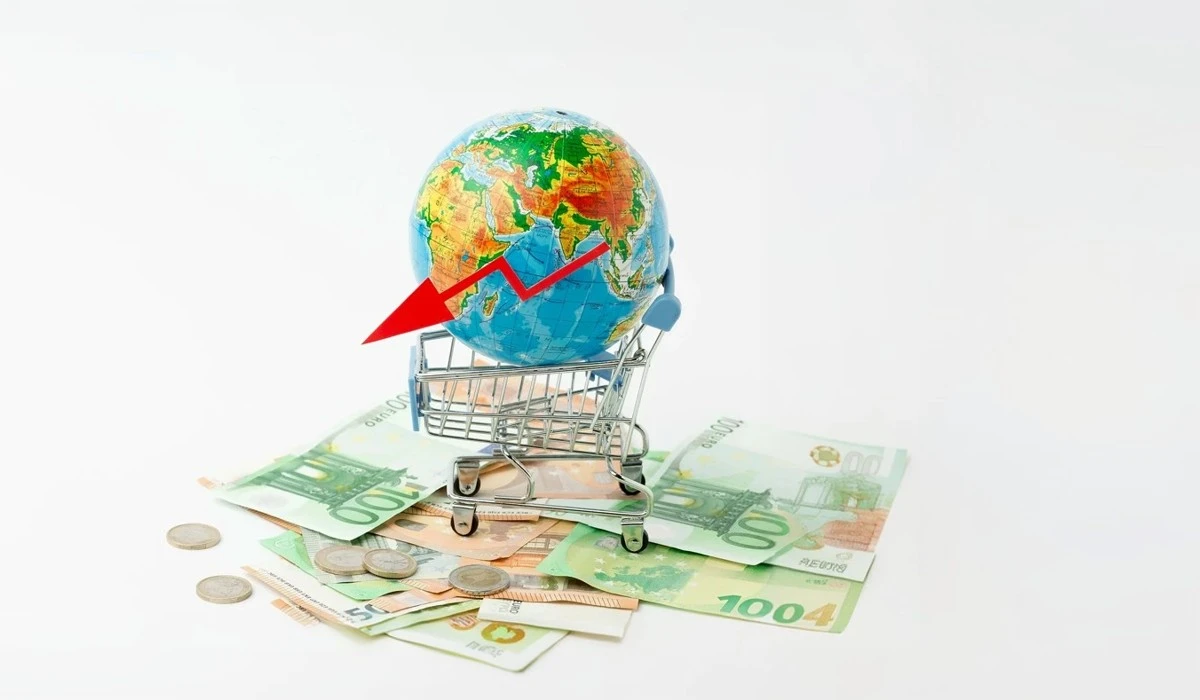
Global Currencies: Profit From Shifting Trends
When you put a hundred-dollar bill in a drawer, you think its value stays the same. You see the same face and the same numbers every time you open that drawer. But while that paper sits still, the world around it moves.
Central banks print more money, prices at the grocery store climb, and your hundred dollars buys less than it did last year. Money behaves like a melting ice cube rather than a static object. If you just hold it, you lose.
The wealthiest people on earth move money instead of simply saving it. They understand that the value of what you own depends entirely on the health of the paper it is measured in. Right now, the way the world trades and stores value is shifting.
Those who observe these shifts can grow their wealth while others watch their savings evaporate. A grasp of global currencies is the difference between wealth erosion and capital growth. This guide shows you how to stay ahead of foreign exchange trends and use the evolving state of fiat monetary systems to your advantage.
Why Modern Fiat Monetary Systems Require a New Strategy
According to an essay from Federal Reserve History, the modern financial world shifted in 1971 when the Nixon Shock ended the Bretton Woods system through the introduction of price controls and the end of gold convertibility for the dollar. As noted by the U.S. State Department, this action suspended the currency’s direct tie to gold and shifted the entire world into a pure fiat monetary system model.
Research by the International Monetary Fund explains that in this model, money possesses value due to government backing and public agreement instead of a physical stash of gold. This change turned currency into a tool for policy rather than a stable store of value. Consequently, the rules for building wealth changed overnight.
The Effect of Massive Debt Expansion on Currency Value
Today, governments manage their economies by taking on massive amounts of debt. The International Monetary Fund notes that when a government’s spending exceeds its revenue, the central bank frequently purchases that debt, which expands the base money supply. This generates what the European Central Bank calls seigniorage, which is the income or interest a central bank earns by issuing currency and acquiring assets.
How do fiat monetary systems work? Investopedia clarifies that these systems rely on official decree and public trust instead of tangible commodities like gold, meaning their value is heavily influenced by central bank policy and national debt.
Educational materials from the St. Louis Fed point out that if the money supply expands faster than economic output, the purchasing power of each unit declines as price levels rise. This expansion acts like a hidden tax on your bank account. If you keep all your assets in one currency while that government prints more money to pay off debt, you are effectively subsidizing their spending.
Moving from Stability to Volatility
In the past, a "set it and forget it" approach to savings worked reasonably well. You could put money in a high-yield account and outpace inflation. Today, that strategy is dangerous. Central banks now use "quantitative easing" to flood markets with liquidity whenever the economy stumbles.
This constant intervention creates massive swings in the market. One year, the Euro is strong, and the next it is struggling. If you stay in a single currency, you are tethered to the whims of one central bank. Smart investors now treat their cash like a portfolio, moving between different global currencies to avoid the volatility of any single nation.
Navigating Volatility in Global Currencies for Steady Gains
Most people fear market swings, but for a prepared investor, volatility is a profit engine. When the value of money moves, it creates gaps that you can exploit. A thorough grasp of the forces that push global currencies up or down allows you to position yourself to catch the wave.
Ironically, the very instability that scares the public provides the highest returns for those who know how to read the signals. You just need to know which currencies act as anchors and which act as engines.
Decoding Interest Rate Differentials
One of the most powerful tools in currency trading is the "Carry Trade." A report by the Bank for International Settlements describes this as a strategy where an investor borrows funds at a low interest rate in one currency, such as the Japanese Yen, to buy higher-yielding assets in another, like Mexico or Brazil.
You profit from the "spread" or the difference between those two rates. For example, if you borrow Japanese Yen at 0.1% interest and buy Mexican Pesos that pay 11% interest, you pocket the difference. As stated by Investopedia, these trades remain profitable as long as exchange rates do not fluctuate unfavorably.
Safe Havens vs. Risk-On Assets
According to reports from Reuters, the Japanese Yen and the Swiss Franc serve as prominent safe havens. The news agency explains that these currencies are supported by nations acting as net creditors with significant current-account surpluses, which drives demand when global markets crash, and investors bring their money home.
On the other hand, during times of global growth, investors move into "Risk-On" assets. These are often currencies from emerging markets or commodity-rich nations like Australia. Switching between these two groups based on the global mood protects your principal during crashes and grows it during booms.
Identifying Major Foreign Exchange Trends Before They Peak
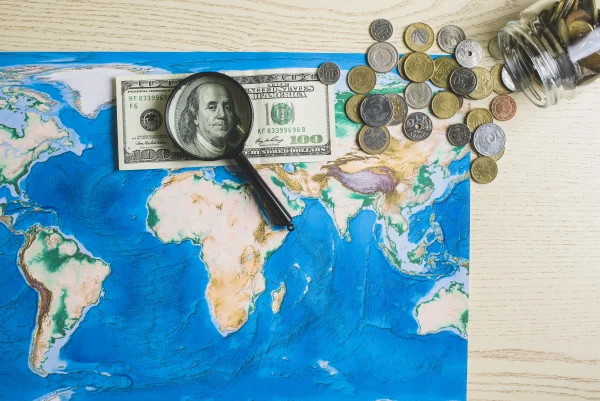
To profit from global currencies, you must spot a trend before the rest of the herd. This requires looking at factors beyond price charts. You have to look at what a country produces and how its central bank thinks.
Real wealth is made by identifying structural shifts in the market. Meanwhile, most retail traders are just reacting to yesterday's news. Success comes from seeing the connection between physical goods and the paper used to buy them.
The Correlation Between Commodities and Currency
Some currencies are essentially "proxies" for raw materials. The Australian Dollar (AUD) moves closely with the price of iron ore. Reuters also highlights that the Canadian Dollar and the Norwegian Krone frequently track crude oil prices because energy products are vital exports for these nations.
What are the latest foreign exchange trends? Current trends include the rise of multi-polar trade agreements and an increased reliance on algorithmic trading to capitalize on microsecond price fluctuations.
If you believe energy prices will rise, buying the Krone is often a more direct play than buying individual oil stocks. These "commodity currencies" provide a clear path to profit because their value is tied to tangible resources that the world needs to function.
Monitoring Central Bank Sentiment
The most important people in the financial world are central bankers. When they speak, the market moves. You need to listen for two specific tones: "Hawkish" or "Dovish."
As defined in a Reuters analysis, a "hawkish" central bank prioritizes combating the threat of inflation by raising interest rates, which usually makes its currency more valuable. A dovish central bank wants to lower rates to jumpstart the economy, which usually makes its currency lose value. Reading the minutes of central bank meetings allows you to predict the next major shift in foreign exchange trends.
Profiting from the Redesign of Global Currencies
The way we think about money is undergoing its biggest change since 1971. Global trends are shifting toward a setting where the US Dollar is no longer the only primary currency. New technology and new political alliances are creating a multi-polar system of global currencies.
This redesign creates massive opportunities for those who aren't afraid of new technology. The old gatekeepers are losing their grip, and new entry points are appearing for savvy investors who want to diversify away from traditional fiat monetary systems.
The Rise of CBDCs and Their Market Influence
According to the Atlantic Council, 134 countries are exploring Central Bank Digital Currencies (CBDCs). The organization clarifies that these are digital versions of national money rather than decentralized cryptocurrencies like Bitcoin, and it notes that these initiatives often focus on improving wholesale and cross-border transactions.
CBDCs will make cross-border trade much faster and more productive. Reuters reports that projects like "mBridge"—a collaboration involving the central banks of China, Hong Kong, Thailand, and the UAE—enable these nations to conduct secure transactions. The publication further notes that this system allows for instant settlements without relying on the US Dollar or the SWIFT network, which increases the liquidity of these currencies.
De-dollarization and the Search for Alternatives
Data from the International Monetary Fund shows that the US Dollar’s share of global reserves has fallen from 71% in 1999 to approximately 58% or 59% in recent years. A Reuters report characterizes this "de-dollarization" as a movement led by the BRICS nations to challenge dollar hegemony in response to U.S. sanctions and interest rate hikes.
As these nations agree to trade oil and other goods in their own local currencies, the global demand for the Dollar softens. This creates an opening to invest in the currencies of the winning nations. If Saudi Arabia starts accepting Chinese Yuan for oil, the "Petroyuan" becomes a major factor in the market.
Assessing Risk Within Traditional Fiat Monetary Systems
To keep your money safe, you must recognize the warning signs of a failing currency. History is full of examples where fiat monetary systems collapsed because the government lost control of its budget.
When a currency fails, it usually happens slowly at first, then all at once. Defensive strategies are not just about making more money; they are about making sure the money you have doesn't turn into worthless paper.
The Velocity of Money and Inflationary Triggers
Data from the Federal Reserve Bank of St. Louis indicates that inflation involves both the volume of money printed and the speed at which people spend it. The bank defines the "Velocity of Money" as the frequency with which a single unit of currency is used to buy domestic goods and services.
Once people start to lose trust and spend that money quickly to get rid of it, inflation explodes. When the "printed money" finally hits the consumer market with force, the value of that currency can drop by double digits in weeks. Watching the M2 money supply velocity tells you when it is time to exit a specific currency.
Geopolitical Flashpoints and Currency Crashes
War and political instability are the fastest ways to kill a currency. We saw this with the Turkish Lira and the Argentinian Peso. In these cases, the government was forced to keep interest rates low to stay solvent, even while inflation was sky-high.
Research published in the Journal of Money and Economy refers to this situation as "Fiscal Dominance," where a central bank accommodates excessive government spending. When a central bank can no longer raise rates to protect the currency because it would bankrupt the government, the currency is doomed. Investors who recognized this in Argentina moved their wealth into stronger global currencies long before the final crash.
The Role of Technology in Spotting Foreign Exchange Trends
In the current market, humans aren't the only ones trading. Roughly 80% of the volume in the $7.5 trillion-a-day forex market comes from algorithms. These "bots" can process millions of data points in seconds to find a trend.
You don't need to be a computer scientist to benefit from this. You just need to use the tools that track what these algorithms are doing. Technology has leveled the playing field, allowing retail investors to see the same data as big banks.
Algorithmic Indicators and Sentiment Tools
"Smart money" leaves tracks. The use of heat maps and flow data reveals where the big institutional players are putting their capital. If you see a massive spike in demand for the Euro at a specific price level, you know a "buy wall" exists there.
What factors affect the value of global currencies? The primary drivers are interest rates, economic performance indicators like GDP, and the overall political stability of the issuing country.
You can also use the Relative Strength Index (RSI). If the RSI for a currency pair like GBP/USD goes above 70, it is "overbought," meaning it might be time to sell. According to a technical guide by Fidelity, a currency is considered "oversold" when its RSI value falls below 30, and a bounce-back might be coming. These tools help you remove emotion from your decisions.
Automating Your Currency Strategy
You don't have to stare at a screen 24 hours a day to catch foreign exchange trends. Modern platforms allow you to set automated alerts based on specific economic events.
For example, you can set an alert to notify you the moment the US Federal Reserve announces an interest rate change. This allows you to react instantly to news that will shift the market, ensuring you are always positioned on the right side of the trend without sacrificing your personal time.
Strategic Diversification Across Global Currencies
The ultimate goal of studying the market is to build a "currency-agnostic" portfolio. This means your wealth is spread out so that no single government’s mistake can ruin you.
Diversification across different global currencies creates a safety net. If one region struggles, another is likely thriving. This balance is the hallmark of a sophisticated investor who understands the long-term nature of the financial world.
Allocating Assets by Geographic Strength
A smart portfolio balances exposure between established markets and emerging ones. You might keep 50% of your cash in "anchor" currencies like the US Dollar or Euro for stability.
Then, you allocate the other 50% to growth currencies in regions like Southeast Asia or South America. This allows you to benefit from the high growth rates in developing nations while keeping a foot in the most liquid markets in the world.
Real-Time Rebalancing Techniques
A good portfolio is not static. You must rebalance as the market moves. If one of your global currencies has a massive run and now makes up too much of your portfolio, you should sell some and move the profit into a currency that is currently undervalued.
This "sell high, buy low" strategy is easier when you track the Purchasing Power Parity (PPP). If a currency's exchange rate is much higher than what it can actually buy in goods and services, it is overvalued. Selling at that peak allows you to lock in gains before the market corrects itself.
Future-Proofing Your Wealth Through Global Currencies
The world of money is no longer a simple place where you can just save your way to success. The constant shift of fiat monetary systems means that the value of your labor is always being tested by inflation and policy changes. If you want to keep what you earn, you have to be as flexible as the market itself.
Focusing on foreign exchange trends ensures you stop being a victim of the melting ice cube and start becoming a manager of your own financial destiny. You don't need to be a billionaire to trade like one; you just need to understand that money is a tool that should always be moving toward strength.
As the global environment shifts toward a multi-polar system, the opportunities to profit have never been greater. Keep your eyes on interest rates, watch the commodity markets, and don't be afraid to step away from currencies that are being printed into oblivion. Your future depends on your ability to command the flow of global currencies. Start treating your money as a global asset today, and you will be prepared for whatever the financial world does tomorrow.
Recently Added
Categories
- Arts And Humanities
- Blog
- Business And Management
- Criminology
- Education
- Environment And Conservation
- Farming And Animal Care
- Geopolitics
- Lifestyle And Beauty
- Medicine And Science
- Mental Health
- Nutrition And Diet
- Religion And Spirituality
- Social Care And Health
- Sport And Fitness
- Technology
- Uncategorized
- Videos

