
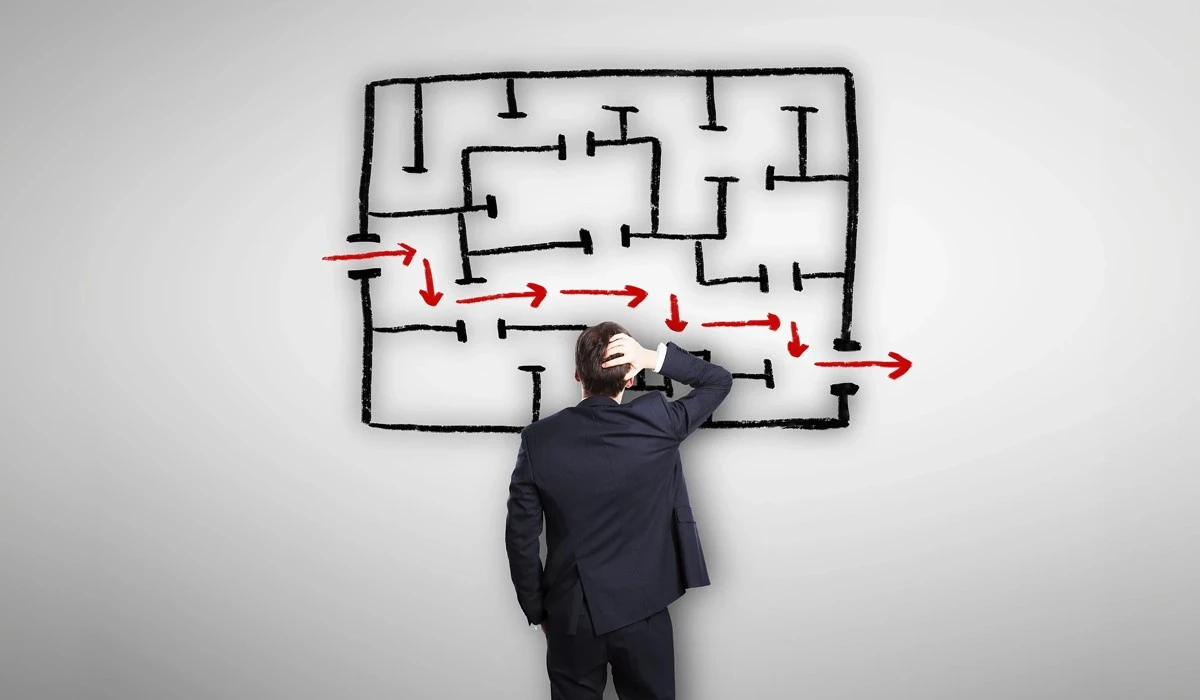
Gamestorming Ends Your Decision Paralysis
You walk out of a ninety-minute meeting with a sore back and a vague sense of dread. Everyone in the room nodded when the boss asked for agreement. Now, in the hallway, the real conversation starts. People whisper about why the new plan will fail. They pointed out flaws they stayed quiet about ten minutes ago.
This gap between public agreement and private doubt kills momentum. It stalls projects and wastes thousands of dollars in salary hours. While most teams believe they face a communication problem, they actually have a structure problem. They try to solve difficult, messy challenges using linear conversations. Words get lost. Loud voices dominate. Ideas die because nobody has a way to see them. Gamestorming changes this interaction. Structured play draws the private doubts into the light, where the team can actually fix them.
Why Teams Struggle to Make Decisions
Meetings often feel like a tug-of-war where nobody knows which way to pull. The problem starts with how we handle information. When five people talk at once, the brain struggles to keep up. We reach "cognitive load" limits quickly. This leads to decision paralysis.
The Hidden Costs of Consensus-Seeking
Modern offices prize politeness. We want everyone to feel included. Ironically, this desire for harmony often results in "groupthink." People suppress their best ideas to avoid conflict. They wait for a leader to tell them what to do.
This behavior creates a false sense of progress. You get a room full of people agreeing on a mediocre path. This mediocrity costs companies millions in lost innovation. True consensus requires friction. You need a way to disagree safely without hurting feelings.
Why Traditional Brainstorming Falls Short

Traditional brainstorming usually follows one rule: "There are no bad ideas." Unfortunately, this lack of structure creates a mountain of garbage. The loudest person in the room usually wins. Introverts with brilliant insights stay quiet.
Research shows that unguided brainstorming favors "anchoring bias." The first idea mentioned sets the tone for the entire hour. Every subsequent thought revolves around that first anchor. This limits the scope of what the team can achieve. You end up with a slightly better version of a bad idea rather than a breakthrough.
Solving Stagnation through Gamestorming
In 2010, authors Dave Gray, Sunni Brown, and James Macanufo introduced a better way. They realized that games provide the perfect boundaries for work. Games have rules, goals, and visual components. These elements keep people focused and productive.
The Three-Act Structure of Design Games
As stated in the Gamestorming playbook for innovators, most group games follow a three-act path: Opening, Exploring, and Closing. This process begins with generating as many possibilities as possible, continues with the exploration of patterns, and ends with the selection of the best path.
What is the goal of Gamestorming? The primary goal is to use game mechanics to overcome complicated business challenges and drive collaborative innovation through the disruption of routine thinking patterns. This structure prevents teams from jumping to conclusions too early. It forces you to sit with the problem until the best answer appears.
Moving from Talk to Action
Gamestorming moves ideas from the air onto the wall. You use sticky notes, markers, and sketches. This physical act changes how the brain processes data. When you see an idea on a wall, you can move it. You can group it with other ideas.
Visual artifacts turn abstract thoughts into concrete choices. Instead of arguing with a person, the team evaluates a post-it note. This separation between the person and the idea reduces tension. It allows the team to critique work without making it personal.
Proven Gamestorming Techniques for Sharp Focus
Sharp focus requires specific gamestorming techniques to filter the noise. You cannot solve everything at once. You must break the problem into smaller, playable pieces.
Visual Thinking as a Decision-Making Shortcut
Dr. Richard Mayer’s Multimedia Learning Theory proves that people learn better from words and pictures than from words alone. Visual thinking exploits this. Drawing a problem reveals gaps that words hide.
A simple sketch can replace a five-page memo. It allows the team to see the "big picture" literally. You might draw a customer's path and realize a step is missing. That realization happens in seconds on a whiteboard, whereas it might take hours to find in a text document.
Creating a Safe Space for Wild Ideas
The "Anti-Problem" technique is a powerful way to shift perspectives. You ask the team to solve the exact opposite of their goal. If you want to improve customer service, ask, "How can we make our customers hate us?"
This exercise removes the pressure to be "right." People feel free to be funny and extreme. Ironically, the answers to the anti-problem reveal the biggest flaws in your current system. You simply flip the negative answers to find your new strategy.
The Power of Collaborative Constraints
Most people think rules kill creativity. In reality, total freedom is paralyzing. Constraints provide a target. They force the brain to find shortcuts and clever workarounds.
Using Timeboxes to Force Clarity
How do gamestorming techniques work? They work by applying specific rules and visual tools to abstract problems, making the path to a solution visible, tactile, and time-bound. Timeboxes are the most effective constraint.
When you give a team only five minutes to generate fifty ideas, they stop overthinking. They stop self-censoring. This speed triggers Parkinson’s Law. Work expands to fill the time available, so you must keep that time short to stay sharp.
The Rule of "Yes And" in Strategy
Borrowed from improv theater, "Yes And" is a core rule for the opening phase. When someone shares an idea, you must accept it and add to it. You cannot say "No" or "But" during this stage.
This rule builds momentum. It creates a stack of ideas that the team can sort through later. It prevents the "idea killers" in the office from shutting down innovation before it has a chance to breathe.
High-Effect Gamestorming Activities for Every Stage
You need a toolkit of gamestorming activities to handle different challenges. Some games warm up the brain, while others drive hard decisions. Selecting the right game at the right time is the key to success.
Low-Stakes Games to Warm Up the Group
Start with something simple like "Post-up." Every person writes their thoughts on sticky notes in silence for five minutes. This prevents the "loudest voice" problem. It ensures that everyone, including the quietest intern, gets their ideas on the board.
Silence is a powerful tool. It allows for deep thinking without the distraction of office politics. Once the notes are on the wall, the team begins to see common themes. This visual data provides the foundation for the next phase of the meeting.
Advanced Exercises for Difficult Roadmaps
Which gamestorming activities are best for small groups? Activities like 'Post-up' or 'The 5 Whys' are ideal for small teams because they allow for deep individual contribution before collective synthesis. For difficult roadmaps, try "Prune the Product Tree."
In this game, the trunk of the tree represents your core product. The branches represent features. If a branch gets too heavy, the tree falls. This visual metaphor helps teams realize they cannot do everything. They must "prune" ideas to keep the core business healthy.
Navigating the Groan Zone with Ease
Sam Kaner coined the term "Groan Zone" to describe the period of confusion that happens between opening and closing. This is where most meetings fail. People get tired and frustrated. They want to pick any idea just to leave the room.
Staying Productive When Opinions Clash
The Groan Zone is actually a sign of progress. It means you have moved past the obvious answers. You are now wrestling with the difficult truths of the project. To survive this, keep the team focused on the "Exploring" phase.
As suggested in the Gamestorming playbook, teams should use "Affinity Mapping" to group nodes into clumps based on similarity. This method helps the team search for patterns without immediately judging the ideas. Seeing the data organized into clusters reduces the mental stress of the group.
Using Dot Voting to Find Instant Consensus
When it is time to choose, records from the UK Parliament suggest that teams should stop talking and start voting. To facilitate this, the Gamestorming playbook describes giving each player five votes, often through sticky dots, which they place on the ideas they find most valuable.
A heat map appears on the wall instantly. You don't need a long debate to see what the team values. The dots tell the story. This method provides a clear, democratic result that everyone can support because they saw the process happen.
Tips to Facilitate Your First Gamestorming Session
Facilitating a session requires a different mindset than leading a meeting. According to a guide from Nursing Home Help, the facilitator is the guardian of the process instead of the "boss" of the ideas. This role involves keeping the energy high and the rules in place.
Choosing the Right Tools
Analog tools like whiteboards and markers work best for in-person teams. There is something primal about standing up and moving things with your hands. It keeps the energy in the room high.
For remote teams, digital whiteboards like Miro or Mural offer the same benefits. They allow for real-time collaboration across time zones. The key is to ensure everyone has access and understands how to move the "virtual" sticky notes before the game begins.
Setting the Rules of Engagement
Before the session begins, the Gamestorming playbook recommends explaining the "7Ps," which involve defining the Purpose, Product, Participants, Probable issues, Process, Period, and Place. When people know the rules, they feel safe enough to participate fully.
Remind the team that this is a "Magic Circle." For the next hour, titles do not matter. The only thing that matters is solving the problem on the wall. This freedom leads to the kind of radical honesty that traditional meetings often crush.
Skillfully navigate the Art of the Fast Move with Gamestorming
Decision paralysis keeps your best ideas trapped in your head. It turns vibrant teams into slow-moving bureaucracies. Utilizing Gamestorming breaks that cycle. You replace endless talking with structured action and visual clarity.
Shifting from "talking about work" to "playing with the problem" creates a culture of agility. You stop guessing what people think and start seeing it on the wall. This clarity speeds up every part of your business, from product design to internal policy.
Pick one technique today. Use a five-minute "Post-up" in your next session. Watch how quickly the room transforms when you give people a marker instead of a microphone. You will find that the best solutions were always there; you just needed the right game to find them.
Recently Added
Categories
- Arts And Humanities
- Blog
- Business And Management
- Criminology
- Education
- Environment And Conservation
- Farming And Animal Care
- Geopolitics
- Lifestyle And Beauty
- Medicine And Science
- Mental Health
- Nutrition And Diet
- Religion And Spirituality
- Social Care And Health
- Sport And Fitness
- Technology
- Uncategorized
- Videos

