
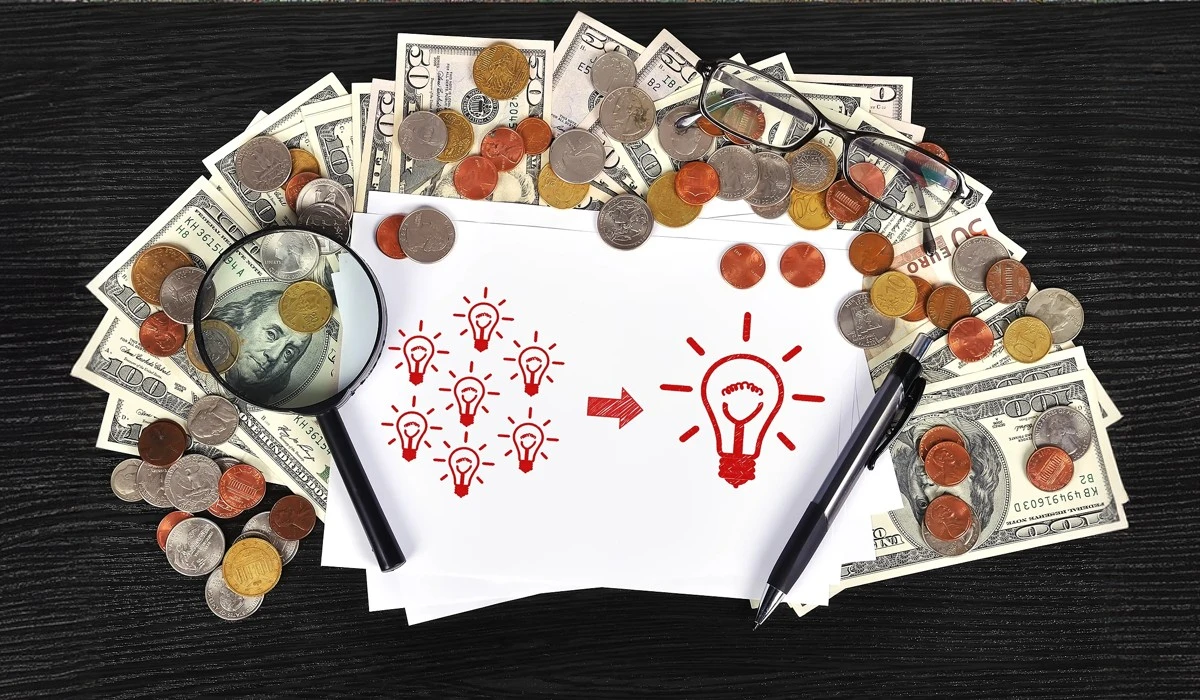
Freakonomics Logic: Fixing Costly Incentives
A daycare in Haifa once tried to stop parents from picking up their children late. They introduced a $3 fine for every late arrival. Most managers would expect parents to hurry up and follow the rules. Instead, the number of late parents doubled almost overnight. This happened because the fine removed the guilt of being late. Parents no longer felt they were doing something wrong. They felt they were buying extra time.
This story highlights the core of Freakonomics. Instead of acting as expected, people respond to the actual rewards and punishments they face. Understanding behavioral incentives keeps companies from making expensive mistakes. Looking at the world through this lens stops the guessing and reveals the truth.
Most business failures happen because leaders ignore the ways people think. They create policies that sound good in a meeting but fail on the ground. Tracking microeconomic trends reveals these failures before they bankrupt your brand. You gain the power to fix systems that rely on flawed assumptions.
The Freakonomics Approach to Debugging Broken Incentives
To fix a failing business, you must look past the surface. Most leaders rely on "conventional wisdom" to make decisions. They follow the crowd because it feels safe. However, according to a report by The Guardian, authors Steven Levitt and Stephen Dubner illustrate that conventional wisdom frequently rests on inaccurate observations because it ignores the fact that incentives serve as the foundation of modern existence. Real progress requires a "rogue" mindset that questions everything. You must treat your business like a laboratory.
When you audit your current operations, search for behaviors that don't make sense. If your sales team meets its goals but customer satisfaction drops, you have an incentive problem. The Freakonomics logic suggests that people will find the easiest path to a reward. If you pay for volume, they will give you volume, even if the quality is terrible.
Identifying the "concealed side" of your operations
Start by running data audits to find anomalies in your performance metrics. As stated in documentation from the Nobel Prize, companies should search for "natural experiments" within their own history, which often result from random policy changes, institutional rules, or variations in the environment. Comparing different branches or periods reveals how your staff actually reacts to your rules.
Data helps you see the gap between what people say and what they do. This gap often contains the secret to your company’s friction. If you ignore these patterns, you will keep throwing money at problems that never go away.
Understanding Behavioral Incentives Beyond the Paycheck
Many managers believe that money is the only thing that matters to workers. This is a dangerous mistake. While cash is a strong motivator, it is only one piece of the puzzle. Humans respond to a mix of rewards that affect their pockets, their reputations, and their hearts. If you only use one type, your system will eventually break.
What are the three types of incentives in Freakonomics? As noted in research published by the National Center for Biotechnology Information (NCBI), there are three primary categories of incentives—economic, social, and moral drivers—which together influence how people behave in any context. A great leader balances these three to create a healthy culture. For example, a salesperson might work on commission (economic). They also work for the "Salesperson of the Month" title (social). Finally, they work because they believe in the product (moral).
Why moral and financial motivations often conflict

Research in the National Center for Biotechnology Information (NCBI) also suggests that introducing financial rewards can sometimes damage motivation, a concept referred to as "crowding out." The study reviews how external incentives can potentially weaken a person's internal drive. When you offer a small financial reward for a task someone already enjoys, they might stop doing it. They start seeing the task as a job rather than a passion.
The Haifa daycare study proves this. The $3 fine turned a moral obligation into a market transaction. Once the price was set, parents simply paid it. They didn't feel like bad people anymore; they felt like customers. To avoid this, ensure your behavioral incentives do not accidentally replace a sense of duty with a cheap price tag.
Using Microeconomic Trends to Pivot Faster
You don't need a global economic report to understand your customers. You just need to look at microeconomic trends in your own data. These small-scale patterns tell you exactly what people want before they even say it. Small data points act as early warning signals for your business strategy.
For instance, consider the gap between stated and revealed preferences. As noted in a study from PubMed, online dating participants often list specific traits they want in a partner; however, their actual contact history shows they frequently select people with completely different characteristics. The same happens in business. Customers might tell you they want "quality," but their purchase history shows they only care about "speed."
How do you identify microeconomic trends? Spotting these trends involves analyzing specific data within a niche market or a single company's transaction history to reveal patterns before they go mainstream. Focus on the granular level. Don't just look at monthly revenue; look at which items people buy together on a rainy Tuesday versus a sunny Friday.
From local data to global strategy
Once you spot a pattern, test it on a small scale. If you notice a specific group of customers buying more when you offer a gift, try that same gift with a larger group. Microeconomic trends allow you to fail small and win big.
Scaling a successful test into a company-wide policy ensures that your strategy rests on facts. It prevents you from wasting your marketing budget on broad campaigns that don't resonate. Focusing on the "micro" level builds a foundation for "macro" success.
Applying Freakonomics Logic to Organizational Friction
Internal conflict often stems from people responding to the wrong signals. When departments fight, it is usually because their behavioral incentives push them in opposite directions. The shipping department wants to save money on postage, while the sales department wants to please customers with overnight delivery.
Using Freakonomics logic allows you to spot these misalignments. You can treat these internal silos as competing groups with their own sets of rules. When you change the rules, you change the behavior. If you reward cooperation instead of individual department targets, the friction usually disappears.
Eliminating the 'cheating' factor in performance metrics
People will "game" any system you build. Research found in the National Center for Biotechnology Information (NCBI) explains Goodhart’s Law, which states that once a measure is used as a target, it no longer serves as an accurate measure. This principle is often attributed to anthropologist Marilyn Strathern. For example, if you judge teachers solely on student test scores, some teachers will eventually cheat. Furthermore, a study from the University of Chicago found that approximately 5% of teachers in the Chicago school system manipulated student test answers to ensure their own job security.
To stop this, you must build metrics that are hard to fake. Rewarding the process is more effective than just rewarding the final number. If you only look at the result, you invite your staff to find the path of least resistance. That path often leads to dishonesty or shortcuts that hurt your brand in the long run.
Why Traditional Incentive Structures Often Backfire
Most people use "perverse incentives" without knowing it. This happens when your solution creates a new, bigger problem. The British government in colonial India once offered a bounty for dead cobras to reduce the snake population. In response, locals started breeding cobras in their basements to collect more bounty money.
Why do incentives often backfire? Incentives usually backfire because they create a 'perverse' motivation where people find the easiest path to the reward, regardless of whether it helps the overall goal. This shows that people are clever. They will always find the "concealed side" of your offer. If your goal is to reduce waste, but you pay people for every bag of trash they collect, they will simply bring trash from home.
Designing Strong Incentives for Long-Term Growth
To build a system that lasts, you must use microeconomic trends to guide your design. Don't try to build a perfect system on day one. Instead, build a flexible one. You need to watch how people react to your rules and adjust them in real-time.
Effective behavioral incentives focus on long-term value rather than short-term spikes. For example, if you pay a real estate agent a flat commission, they want a fast sale. However, data shows that agents leave their own houses on the market longer to get a higher price. They work harder for themselves because their personal reward is higher. You want your employees to feel that same personal drive.
Testing and iterating on your incentive architecture
Use A/B testing for your company policies. Offer one bonus structure to one team and a different one to another. Measure the results over six months. This method removes the guesswork and provides clear evidence of what works.
Iterative design means you are never finished. As the market changes, your people will change. Constantly looking at the data keeps you ahead of the curve. You ensure that your rewards always align with your company's actual goals.
Turning Microeconomic Trends into a Competitive Advantage
Small signals in your data can help you outmaneuver massive competitors. Large companies often move slowly because they rely on massive, lagging indicators. You can use microeconomic trends to spot shifts in customer behavior weeks or months before the "big players" notice.
Information is your greatest weapon. In the past, the Ku Klux Klan held power through "secret" rituals. When those secrets became public, their power vanished. In business, information asymmetry works the same way. When you have more data than your competitor, you can price your products better and treat your customers more effectively.
Predicting competitor moves through incentive analysis
Looking at how they pay their people allows you to predict what a competitor will do. If a rival company changes its commission structure, you can guess its next move. They are signaling their priorities through their behavioral incentives.
Analyzing the "why" behind their actions allows you to prepare your counter-move. If they are pushing for volume, they will likely drop their prices soon. If they are pushing for quality, they might raise them. This allows you to stay one step ahead at all times.
Learning Your Incentives Through the Freakonomics Lens
Instead of requiring a bigger budget or a larger team, fixing costly mistakes requires a shift in how you see the world. When you use Freakonomics logic, you stop blaming people for being lazy or dishonest. You start looking at the systems that make them act that way.
Tracking microeconomic trends reveals the small patterns that lead to big failures. You gain the clarity to build behavioral incentives that actually work. Remember, the world runs on incentives. If you align those incentives with your goals, success follows naturally. Stop following the crowd and start following the data. The concealed side of your business is waiting for you to find it.
Recently Added
Categories
- Arts And Humanities
- Blog
- Business And Management
- Criminology
- Education
- Environment And Conservation
- Farming And Animal Care
- Geopolitics
- Lifestyle And Beauty
- Medicine And Science
- Mental Health
- Nutrition And Diet
- Religion And Spirituality
- Social Care And Health
- Sport And Fitness
- Technology
- Uncategorized
- Videos

