

Fly Safe: Aviation Management And Safety
A calm flight at thirty-five thousand feet hides a massive, highly coordinated operation. According to the Federal Aviation Administration, passengers sip coffee and watch movies while airlines simultaneously manage over forty-five thousand flights every single day. The agency notes that these carriers safely guide nearly three million people across twenty-nine million square miles of airspace. Calm resolutions during high-pressure altitude scenarios never happen accidentally. A sudden drop in cabin pressure or a severe turbulence encounter demands instant, flawless execution from the flight deck and the aisles. Strict corporate protocols dictate every precise movement the crew makes. Airlines treat predictive hazard controls as a basic business process, matching the exact priority they give to core flight operations. Comprehensive corporate systems protect the entire operation. Frontline workers physically embed these protective concepts into muscle memory, transforming administrative rules into life-saving realities for everyone on board.
Precision Safety Through Proactive Aviation Management
Airlines eliminate operational guessing games through structured administrative responses to danger. The modern aviation industry replaces reactive panic with intense, proactive preparation. Global regulators demand that air carriers treat passenger protection as a living, breathing corporate necessity. Successful incident prevention requires perfect coordination between the people walking the aisles and the executives sitting in the boardroom. Effective safety management systems actively monitor flight telemetry, finding microscopic errors before they ever escalate into headline-grabbing disasters. Simultaneously, rigorous cabin crew training builds unshakeable confidence within frontline workers. Flight attendants learn to suppress human fear and command chaotic environments through conditioned muscle memory. These two powerful forces merge to create a highly predictable environment at altitude. Proper aviation management and safety frameworks turn theoretical classroom knowledge into an impenetrable shield that guarantees survival during terrifying in-flight emergencies.
Why Aviation Management and Safety is Non-Negotiable for Crews
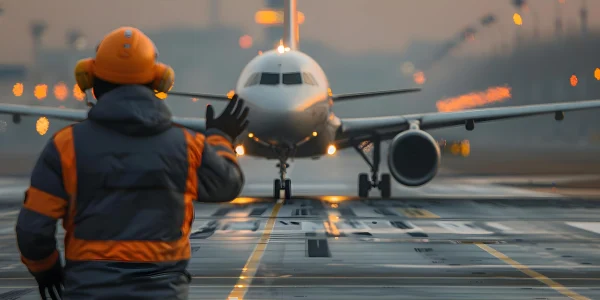
Frontline crews face severe physical hazards long before the aircraft ever leaves the tarmac. Data from the Flight Safety Foundation reveals that ground and ramp accidents alone cost major global airlines at least ten billion dollars annually. The organization also reports that these ground operations injure nine out of every one thousand departing crew members. Aviation management and safety acts as the ultimate shield against these constant dangers. The industry leads the corporate world in controlling human risk through enterprise-wide infrastructures. Organizations use tools like the Aviation Safety Reporting System to actively seek out latent causal factors instead of blaming the closest active operator. This proactive approach stops predictable errors from becoming catastrophic tragedies. Medical emergencies, unruly passengers, and severe weather events constantly threaten flight operations. Strict corporate protocols give flight attendants the exact procedures they need to handle these intense scenarios, keeping the operational environment secure and highly predictable.
Split-Second Survival Through Structured Emergency Protocols
Certain terrifying situations offer absolutely zero preparation time for the flight deck or the cabin. Aircraft face extreme vulnerabilities during the high-stakes takeoff and landing phases. An unplanned ditching into water requires flight attendants to act immediately without delivering a standard passenger briefing. Complete reliance on immediate muscle memory decides whether people survive the impact. Modern airlines mandate highly specific responses for these split-second emergencies. Corporate administrators design these life-saving protocols with advanced data analytics and historical accident reports. They filter this important information straight into the daily operational briefings. Frontline workers memorize every escape route, slide deployment technique, and command phrase. Excellent safety protocols build a structured reality where human panic surrenders to conditioned reflexes. The industry removes the guesswork from crisis management, ensuring that every professional responds to terror with clinical precision and undeniable authority.
Decoding the Framework Behind the Flight Deck
Global aviation authorities adopted a universal framework in two thousand thirteen to standardize proactive hazard controls across the planet. The International Civil Aviation Organization created Annex Nineteen, and records from the organization show that one hundred ninety-three member states eagerly implemented its guidelines. The Federal Aviation Administration explicitly codified these principles into enforceable United States law under Title Fourteen Code of Federal Regulations Part Five. A Federal Aviation Administration brief confirms that both global and national regulators mandate compliant safety management systems to stand on four unshakeable pillars. Executives commit to safety policies, managers identify hazards through risk management, auditors evaluate operations via safety assurance, and trainers build culture through safety promotion. Strict aviation management and safety protocols rely entirely on this administrative backbone. This strategic framework directly dictates aircraft maintenance schedules, pilot rest periods, and daily crew briefings, replacing reactive guessing games with proactive operational dominance.
Data-Driven Safety Management Systems in Aviation
Airlines collect millions of data points daily to identify emerging trends before accidents happen. What is an aviation safety management system? It is a structured framework that airlines use to manage risk, encompassing policies, procedures, and clear accountability structures. This approach makes passenger and crew protection an absolute operational prerequisite. Digital telemetry constantly monitors aircraft performance and flags minor mechanical deviations. Safety experts analyze this constant stream of information to fix microscopic vulnerabilities across the global fleet. Regulators recently expanded these strict mandates beyond traditional air carriers. As of early two thousand twenty-three, the government requires over two hundred large and small airports to establish formal risk infrastructures within five years. Expanding this framework guarantees that ramp workers, baggage handlers, and gate agents receive the same operational protection as flight crews.

Real-World Scenarios in Cabin Crew Training
Flight attendants complete grueling physical preparation before they ever earn their professional wings. The European Union Aviation Safety Agency forces recruits to pass a rigorous regimen lasting up to 168 hours. Candidates must achieve an eighty percent success rate in theoretical knowledge and demonstrate flawless practical execution. Instructors push trainees into deep pools to practice aquatic survival techniques. The recruits don lifejackets, inflate them while treading water, and board specialized sliderafts to simulate harsh oceanic realities. Evacuation friction presents another massive hurdle during these drills. Federal Aviation Administration guidelines require trainers to focus heavily on stopping passengers from retrieving personal baggage during an emergency. Baggage retrieval fatally delays slide deployments and blocks narrow aisles. Crews learn aggressive crowd control techniques to force swift evacuations, applying theoretical classroom knowledge directly to physical survival skills.
Intensive Cabin Crew Training for Real-World Emergencies
High-fidelity simulators expose aspiring flight attendants to terrifying, realistic crisis scenarios. How long is cabin crew safety training? Initial safety training typically lasts between four to six weeks, depending heavily on the airline and specific aircraft types. However, European Union Aviation Safety Agency guidelines mandate that flight attendants also undergo recurrent training annually to keep their emergency response skills perfectly sharp. Certification standards force recruits to extinguish actual fires inside dark, smoke-filled cabin mockups. They physically wear heavy protective breathing equipment while locating concealed heat sources using sensory awareness. Proper aviation management and safety frameworks demand these stressful simulations to prevent hesitation during real-world disasters. Instructors monitor heart rates and decision-making speed as alarms blare through the speakers. Annually refreshing these intense skills ensures that every flight attendant maintains peak operational readiness, effectively neutralizing spontaneous threats before they escalate into deadly airborne catastrophes.
How Modern Aviation Management and Safety Transforms Daily Flights?
Modern predictive algorithms process an astronomical amount of technical aircraft data during every single flight. A standard Boeing seven thirty-seven generates twenty terabytes of engine information per hour. Meanwhile, an Airbus A three fifty produces up to four hundred thousand distinct data parameters per flight. Safety management systems utilize these massive digital telemetry sets to spot potential hazards immediately. Programs like Flight Operational Quality Assurance pull raw information directly from onboard flight data recorders. Machine learning algorithms then scan this vast ocean of numbers to identify dangerous precursor events, like an accidental flap overspeed. Analysts study exactly how pilots successfully adapt to these unnoticed mechanical glitches to prevent future accidents. This incredible density of real-time operational intelligence removes human guesswork, allowing airlines to rewrite technical procedures based entirely on cold, hard, undeniable mathematical facts.
AI-Driven Aviation Safety and Predictive Risk Systems
Specialized aviation software rapidly funnels voluntary hazard reports straight to corporate event review committees. The Aviation Safety Action Program aligns perfectly with federal advisory circulars to isolate subtle maintenance errors before they cause in-flight technical failures. Technicians easily report quality escapes through these secure digital portals without fearing immediate termination. NASA currently leads the entire industry into an autonomous future with its System-Wide Safety project. The agency plans to move global airlines toward an In-Time Aviation Safety Management System. This futuristic framework utilizes advanced artificial intelligence and detailed ordinal pattern modeling to shift safety protocols from manual data mining to instantaneous risk detection. Proper aviation management and safety demands constant technological evolution. Computers will soon predict mechanical failures milliseconds before they happen, giving crews an invincible digital shield that permanently alters the reality of commercial air travel.
The Human Element in Risk Mitigation
Biological and psychological realities govern the daily performance of every commercial airline worker. The United Kingdom Civil Aviation Authority formed the Confidential Human Factors Incident Reporting Programme in nineteen eighty-two to study these exact physical limitations. Researchers isolate manual skills decay and communication breakdowns as the primary variables driving modern flight risks. Human factors analysis constantly proves that simple administrative friction causes direct physical danger. Documentation errors accounted for roughly eighty-three percent of all maintenance reports submitted to the national safety database between two thousand ten and two thousand thirteen. Airlines enforce strict crew duty limits and jet lag management strategies to protect human cognitive bandwidth. Effective aviation management and safety strategies treat adequate sleep as a mandatory operational metric. Rested employees maintain hyper-vigilant situational awareness, easily catching catastrophic mechanical anomalies that exhausted workers simply ignore.
Psychological Safety as a Critical Aviation Risk Factor
Modern psychological research entirely changes how airlines approach employee well-being and operational readiness. Safety experts now formally categorize bullying, harassment, discrimination, and victimisation as highly severe flight hazards. Hostile company cultures drastically degrade the mental bandwidth of pilots and attendants, directly causing dangerous second-order safety failures. A stressed flight attendant distracted by workplace toxicity cannot properly focus on arming an emergency exit door. Excellent cabin crew training completely emphasizes psychological readiness during a crisis. Instructors teach recruits how to compartmentalize personal stress and project absolute authority during chaotic evacuations. This intense emotional conditioning builds resilient individuals who perform flawlessly under immense pressure. The industry acknowledges that happy, supported workers naturally create a much safer flying environment. Airlines aggressively eliminate toxic workplace behaviors to ensure that every crew member arrives at the gate mentally prepared to save human lives.
Building a Just Culture for Incident Reporting
NASA processes roughly four hundred voluntary hazard disclosures every single day through the Aviation Safety Reporting System. A NASA program briefing confirms that administrators permanently de-identify all reports after preliminary processing, completely eliminating the submitter's identity. Furthermore, strict federal laws absolutely forbid the government from using this important data to penalize honest reporters. This strong immunity shield encourages pilots, mechanics, and flight attendants to admit their daily mistakes without fearing career destruction. Safety scientist Sidney Dekker defines this core principle as a Just Culture. He argues that learning from employee mistakes actively builds organizational safety. This incredible philosophy shifts entire airlines from a punitive mindset to a resilient, data-gathering mindset. Proper aviation management and safety relies entirely on this open communication channel. When employees freely report dangerous near-misses, corporate managers can permanently rewrite broken procedures before a minor human error inevitably turns into a massive fatal accident on the runway.
Human Factors: The Core of Aviation Safety
Knowledge of human behavior remains the most important component of preventing major operational disasters. Why are human factors important in aviation? Human factors require intense focus because human limitations cause the vast majority of aviation incidents. Researching these elements helps airlines design better, fail-safe procedures that naturally support a crew's cognitive and physical capabilities. Anonymous reporting constantly feeds valuable data into ongoing human factors research. Analysts study these candid narratives to understand exactly why a veteran pilot misread an altitude gauge or why a mechanic skipped an important engine inspection. Removing the fear of punishment reveals the exact truth behind every dangerous aviation mistake. Transparent corporate communication creates an environment where everyone learns from a single error. This incredible coordination ultimately ensures that aircraft fly safely across the globe without unnecessary operational friction.
Auditing and Constant Improvement in the Skies
Global authorities constantly evaluate airlines to ensure their operational protocols never become stale or dangerously outdated. The International Air Transport Association launched its Operational Safety Audit in two thousand three to assess carrier management infrastructures. Auditors utilize exactly nine hundred sixteen stringent operational standards to grade four hundred forty global operators. Statistical data proves that rigorous auditing massively improves passenger survivability. Registered carriers completely outperformed non-registered airlines by a factor of four in two thousand twenty-two. Certified airlines boasted a microscopic accident rate of zero point seven zero per million sectors. Meanwhile, non-registered operators suffered an accident rate of two point eight two. Active safety management systems act as living entities that instantly evolve alongside new aircraft technology. Regular external audits force corporate executives to update their internal manuals, completely eliminating the dangerous complacency that plagues older transportation industries.
Risk-Based Aviation Audits for Global Safety Compliance
The audit environment constantly shifts to address emerging global threats and shifting regulatory frameworks. The international audit program evolved from a rigid, one-size-fits-all checklist into a highly tailored, risk-based model in two thousand twenty-four. This deeply trusted methodology serves as the official compliance standard for major global regulators. The Federal Aviation Administration relies on these specific audit results to approve non-United States codeshare agreements. Proper aviation management and safety demands this exact level of intense, third-party scrutiny. External inspectors easily spot operational blind spots that internal managers conveniently ignore. Routine evaluations ensure that detailed safety protocols effectively match the brutal realities of modern commercial flight. This relentless pursuit of perfection ultimately guarantees that airlines operate at peak performance. They proactively crush emerging hazards long before those dangers ever threaten an innocent passenger sitting in a window seat.
Safe Landings Require Strong Systems
Flawless flight operations rely on an incredible combination of highly trained individuals and protective corporate systems. Airlines move millions of people across the globe every day, treating human risk as a highly predictable mathematical certainty. Executives build unshakeable policies that collect massive amounts of digital telemetry, identifying unnoticed mechanical glitches before they cause catastrophic failures. Frontline workers memorize rigorous evacuation protocols to dominate spontaneous crises with terrifying precision. They extinguish cabin fires, manage unruly crowds, and deploy aquatic sliderafts using conditioned muscle memory. Active safety management systems constantly analyze human error to rewrite vital operational manuals. Anonymous reporting portals allow mechanics and pilots to expose subtle technical vulnerabilities without fearing corporate retaliation. These proactive infrastructures shift entire organizations away from reactive blame, building a powerful culture that values absolute honesty and constant technological evolution above everything else.
Relentless Aviation Safety: The Key to Secure Skies
Routine flights only remain safe because the industry aggressively refuses to accept mediocrity. Regular external audits force carriers to adapt their internal operations to modern aerodynamic challenges. Regulators constantly expand their strict mandates to protect baggage handlers and ramp agents alongside traditional flight crews. Intense psychological research forces airlines to actively destroy toxic workplace behaviors that degrade valuable cognitive bandwidth. Rigorous cabin crew training guarantees that flight attendants possess the exact physical stamina needed to save lives under extreme duress. Pairing these capable professionals with active safety policies entirely changes the nature of commercial travel. Proper aviation management and safety ultimately functions as a flawless, life-saving reality. This relentless administrative dedication removes terrifying operational hazards from the skies, ensuring that every single person on board arrives at their final destination completely unharmed and perfectly secure.
Recently Added
Categories
- Arts And Humanities
- Blog
- Business And Management
- Criminology
- Education
- Environment And Conservation
- Farming And Animal Care
- Geopolitics
- Lifestyle And Beauty
- Medicine And Science
- Mental Health
- Nutrition And Diet
- Religion And Spirituality
- Social Care And Health
- Sport And Fitness
- Technology
- Uncategorized
- Videos

