
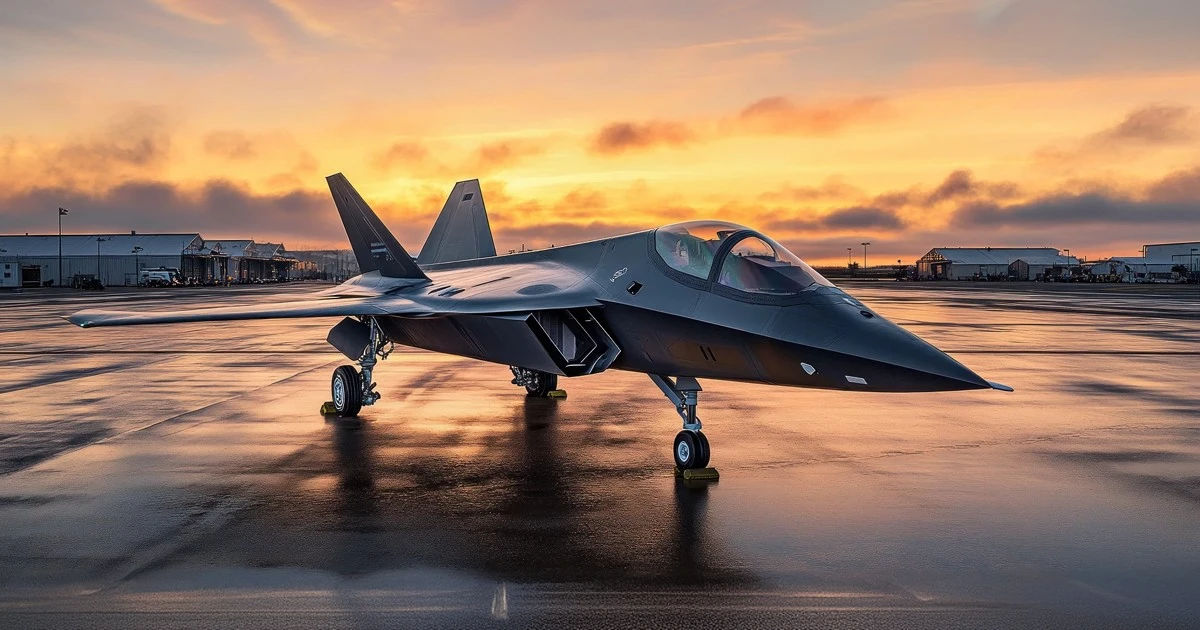
FCAS Collapse: Why Europe’s Jet Deal Failed
When you force two rivals to share a kitchen, you don’t get a better meal; you get a kitchen fire. According to Reuters, the €100 billion FCAS programme was initiated in 2017 to replace Rafales and Eurofighters, serving as Europe’s grand answer to American dominance in the skies. France, Germany, and Spain agreed to build a super-jet to replace their current fleets. The plan looked perfect on paper. They would pool money, share technology, and create a unified defense shield.
But reality works differently than diplomatic treaties. While leaders shook hands for the cameras, the engineers and CEOs back home started a quiet war over control. France demanded a plane that lands on aircraft carriers. Germany wanted a pure land-based defender. Dassault refused to hand over its trade secrets to Airbus. Now, the cracks are too wide to ignore. The dream of a single European fighter is shattering under the weight of national ego and industrial greed.
The Public Breakup
Politicians often blame engineering for failures that are actually about power. Speaking on the "Machtwechsel" podcast, Reuters reports that Merz questioned whether Germany would still need a manned fighter in 20 years, arguing that the project costs made no sense. As noted by The Guardian, Merz insisted this was "not a political dispute," but strictly a technical one.
This explanation hides the real friction. The dispute concerns ownership of the flight controls rather than the plane's ability to fly. Merz’s rejection signals a deeper shift in Berlin. Germany is tired of playing junior partner to French desires. Merz provides a clean exit route through his attack on the technical viability. He avoids a direct political insult while effectively pulling the plug on the current version of the deal.
Dassault’s Power Play
If you already have a bestselling product, you have zero incentive to compromise with a rookie partner. Dassault Aviation makes the Rafale. This jet is a combat-proven success story with customers lining up around the world. Dassault CEO Éric Trappier knows his company holds the strongest cards. Defense News reports that Trappier has struck a dark tone on the project, stating that cooperation is "very, very difficult" and requires humility from the partner.
Dassault views Airbus as a threat rather than a helper. Trappier refuses to share intellectual property (IP) just to satisfy a political agreement. He demands full leadership. To him, splitting authority means creating a confusing mess. The French manufacturer is willing to go solo because they can. They have the expertise and the export revenue to survive without German funding.
The German Gamble
Having a massive bank account doesn't matter if you don't know how to build the engine. Germany plans to boost its defense re-armament budget to €150bn by 2029. Money is not the problem; the "from scratch" challenge creates the real barrier. The Guardian quotes analyst Francis Tusa, who warns that Germany lacks the experience to build a next-generation fighter alone.
Tusa compares a German solo build to the "Manhattan Project" in terms of difficulty, noting that despite Airbus's commercial expertise, they lack fighter design history. You cannot simply buy the knowledge that Dassault has spent decades refining. If Germany walks away, they face a steep learning curve. They might suggest partnering with Saab in Sweden, but that still leaves a massive gap in capability. France has a running head start; Germany has a checkbook and a blank sheet of paper.
One Jet, Two Missions
Designing a machine to do everything usually guarantees it does nothing well. The military requirements for France and Germany contradict each other at a basic level. France operates an aircraft carrier. They need a jet with heavy landing gear and specific airframe reinforcements to handle brutal sea landings. They also need a plane capable of carrying nuclear weapons.
Germany has no aircraft carriers. They need a lighter, land-based interceptor. They also have no specific requirement for a nuclear-capable jet of their own design. A single airframe cannot easily do both jobs without expensive compromises. An anonymous French official noted that the project began without looking at these military realities. The divergent war doctrines mean the engineers are trying to build two different planes in one body.
The Airbus Compromise
When partners can't agree on the car, they might just decide to share the GPS. Airbus CEO Guillaume Faury sees the writing on the wall. He knows the single-plane idea is dying. Instead of letting the whole FCAS program crash, he proposes a "two-fighter solution."
His idea splits the hardware but keeps the software. Germany builds its jet. France builds its jet. They connect via a shared "combat cloud." This digital network allows drones and fighters to talk to each other. The cloud and drone swarms survive even if the main fighter jet project splits. This approach saves the high-tech research jobs but admits political defeat.
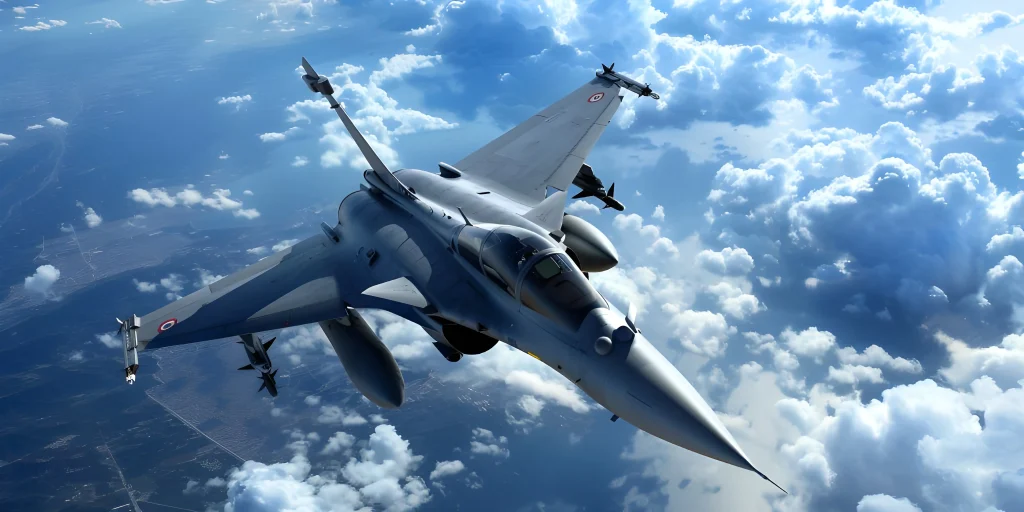
Is the FCAS program cancelled?
The program is not officially dead, but leaders are actively proposing splitting it into separate jets while keeping shared software systems.
The Export Safety Net
A full order book gives you the freedom to be rude to your partners. President Macron relies on more than just European unity. He is actively selling Rafales to India. A potential order for 114+ jets gives Dassault massive financial independence.
This export success changes the negotiation table. France does not need the FCAS program to keep its factories running. They have customers paying cash right now. Germany does not have a comparable export product in the fighter market. This advantage allows Dassault to dictate terms. If Germany doesn't like it, France can simply focus on its international clients.
What countries are in the FCAS program?
France, Germany, and Spain represent the core partners of the initiative, though Belgium recently joined as an observer.
The Cost of Division
External threats usually unite allies, but sometimes panic drives them apart. The geopolitical timing for this split is terrible. Donald Trump is demanding Europe pay for its own defense. The threat from Russia is rising. A fragmented industry makes Europe weaker.
Instead of one strong competitor to the American F-35, Europe might end up with two weaker jets. This duplication wastes billions of euros. Christian Mölling, a Deputy Director at the DGAP think tank, warns in a recent report that such fragmentation risks European cooperation, signaling that a German withdrawal could lead to isolation. It tells Washington that Europe cannot get its act together. The loss of political trust hurts more than the wasted money.
When will FCAS be ready?
The target entry is 2040, but political delays and potential splits make that timeline highly unlikely.
The Global Stakes
Waiting for a perfect deal often means you arrive too late to the fight. The world isn't pausing for France and Germany to settle their argument. The British-led GCAP (Tempest) program is moving forward with a target service entry of 2035.
If the FCAS program stalls, Europe loses a generation of technological advancement. The "combat cloud" and drone swarms represent the future of war. If France and Germany build separate walls, they lose the scale needed to compete with US and Chinese tech giants. The deadlock threatens to kill the entire defense initiative, leaving Europe dependent on American jets for decades to come.
A Future Fragmented
The dream of a unified European air force is hitting the hard wall of reality. The FCAS program aimed to bind nations together, but it exposed their deep differences instead. France values independence and global projection. Germany values budget control and land defense. These priorities do not mix well.
We are likely witnessing the end of the single-airframe concept. The future probably holds two separate jets connected by a shaky digital Wi-Fi signal. Billions of euros will be spent to duplicate effort. The "two-fighter solution" saves face for the politicians, but it admits a painful truth. Europe remains a collection of rivals rather than a single power.
Recently Added
Categories
- Arts And Humanities
- Blog
- Business And Management
- Criminology
- Education
- Environment And Conservation
- Farming And Animal Care
- Geopolitics
- Lifestyle And Beauty
- Medicine And Science
- Mental Health
- Nutrition And Diet
- Religion And Spirituality
- Social Care And Health
- Sport And Fitness
- Technology
- Uncategorized
- Videos

