

Energy Trading Maximized By Market Structure Expertise
Electricity is the world’s most volatile commodity. It expires the millisecond it’s created, no shelves, no warehouses, just a constant, high-speed balancing act. When millions of people in New York trigger their air conditioners, a power plant hundreds of miles away must react instantly. This isn’t just physics; it’s a high-stakes financial game.
To win in energy trading, you have to look beyond price charts and study the physical constraints of the grid. From congested lines to transformer limits, the market structure determines who profits and who fails. By bridging the gap between grid physics and commercial strategy, mastering both physical movement and financial derivatives, you unlock a level of performance that the rest of the market misses.
Why Market Structure Dictates Energy Trading Success
In the past, single companies owned everything from the power plant to the wire in your wall. These monopolies had no reason to innovate or lower costs. Then, regulators changed the world. FERC Order 888 and Order 889 forced utilities to open their transmission lines to everyone. This shift created the modern electricity market structure. Suddenly, independent companies could compete to sell power.
This competition creates price signals. When a heatwave hits, prices spike because demand outstrips supply. These spikes function as signals rather than occurring as accidents. They tell generators to turn on and tell traders where to send power. Energy Trading firms thrive in this environment. They act as the middleman that ensures power moves to where people need it most. Without these rules, the grid would stay stagnant and expensive.
The market rules define the profit. If you know how the system clears its auctions, you can predict price movements. Traders study the Open Access Same-Time Information System (OASIS) to see transmission availability. They use this data to find gaps in the market. Ironically, the most congested parts of the grid often offer the highest rewards for those who know how to navigate the bottlenecks.
Deciphering the Layers of the Electricity Market Structure
The grid operates on several layers. You must understand each one to place a smart bet.
Wholesale vs. Retail Dynamics
Think of the wholesale market as the bulk store for electricity. Generators sell massive amounts of power to utilities and large industrial players. This is where the most liquid Energy Trading happens. Large players trade thousands of megawatts daily. These trades happen in bulk, often months or years in advance.
Retail markets involve the final price on a home bill. Traders rarely deal with your home light bulb. Instead, they focus on the massive flows between regions. Wholesale prices fluctuate every minute, while retail prices often stay flat for months. This disconnect creates a massive need for hedging. If a utility buys power at a spike price but sells it to you at a fixed rate, they lose money. Traders provide the tools to prevent that loss.
The Role of ISOs and RTOs
Regional groups like PJM and ERCOT act as the traffic cops of the grid. According to the Federal Energy Regulatory Commission, PJM is the largest entity of its kind, coordinating wholesale electricity for 13 states and the District of Columbia. These entities don't own the power plants; instead, they run the auctions. Research from Iowa State University notes that they ensure the cheapest power is utilized first through a process known as security-constrained economic dispatch.
Every region has slightly different rules. The Energy Information Administration notes that the energy-only market in Texas leads to high price volatility and significant price swings. In the Northeast, PJM uses capacity markets to ensure enough plants stay open for emergencies. Learning these regional variations is key to understanding the electricity market structure. If you treat every region the same, you will likely miss the specific risks that cause price volatility.
Strategic Execution Through Power Trading Systems
Once you know where to trade, you must choose how to trade. Different power trading systems offer different risk profiles.
Day-Ahead vs. Real-Time Markets
Most trades happen in the Day-Ahead Market (DAM). This is where companies forecast tomorrow's needs. It is a financial market where players commit to prices 24 hours in advance. However, the weather changes or a plant breaks down. This creates the Real-Time Market (RTM). The Iowa State University study also highlights that real-time market prices update every five minutes to match the grid’s current status.
The gap between these two prices is the "DART spread." Traders look for discrepancies here. If you think the Day-Ahead price is too low compared to the coming heatwave, you buy early. This helps the grid prepare for the actual demand. Balancing these two markets is a core skill for anyone in the power business.
Financial Transmission Rights (FTRs) and Virtual Bidding
You don't always need to own a power plant to trade. As noted in research from LMP Market Design, virtual bidding permits participants to speculate on price shifts without handling physical electricity. The study also suggests that you might use Incremental Offers (Incs) to act like a generator or Decremental Bids (Decs) to act like a consumer. You profit if the price moves in your favor between the two market settlements.
Meanwhile, according to a fact sheet from PJM, Financial Transmission Rights (FTRs) allow participants to bet on transmission congestion by paying holders the difference when a wire becomes clogged, and price disparities arise between nodes. These power trading systems provide the tools to manage risk. They allow participants to hedge against the physical limitations of the grid. Without FTRs, the cost of moving power across a congested state line would be too risky for most companies.
Leveraging Volatility in Professional Energy Trading
Electricity prices can go from $20 to $2,000 in minutes. Weather is the biggest driver of this volatility. A sudden cloud cover over a solar farm can strip megawatts from the grid instantly. This creates a vacuum that other generators must fill. Traders watch these shifts like hawks to capitalize on the price moves.
How do energy traders make money? Most profit comes from identifying price discrepancies between different geographic locations or predicting how demand surges will affect the spot market. In California, the "Duck Curve" causes prices to drop during the day when solar is abundant. Sometimes prices even turn negative. This means generators pay you to take the power because they cannot easily turn off their plants.
Effective Energy Trading involves knowing exactly when these surpluses will end. When the sun sets, demand ramps up fast. Traders who predict this "ramp" period can secure huge margins. They use natural gas plants or batteries to provide power exactly when the sun goes down. This timing is everything in a high-volatility environment.
Technical Advancements in Power Trading Tools
Speed is everything now. Human brains cannot process thousands of price points across the grid fast enough.
Algorithmic Execution and High-Frequency Data
S&P Global reports that on the EPEX SPOT market in Europe, automated bots submit over 80% of orders. These algorithms process weather data, grid status, and historical trends faster than any human. They use power trading tools to execute thousands of trades per second. This automation keeps the market optimized. It also means human traders must focus on higher-level strategy rather than clicking buttons.
These bots look for "Shadow Prices." A shadow price represents the value of relieving a specific transmission constraint. If an algorithm sees a constraint forming, it can adjust its bids in milliseconds. This high-frequency approach has turned the electricity market structure into a digital battlefield. To compete, firms must invest in heavy-duty data processing and low-latency connections.
The Effect of Battery Storage on Market Arbitrage
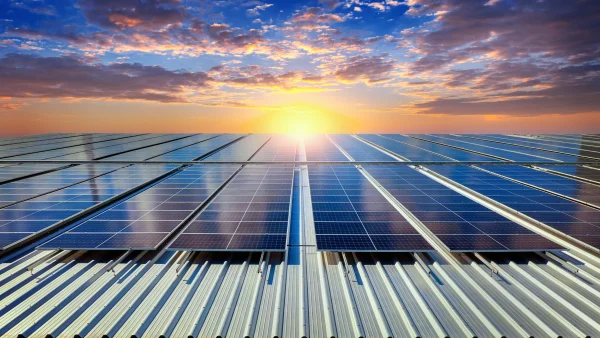
Batteries are changing the game. In addition to storing power, these units provide "flexibility." According to the Australian Energy Regulator, batteries function as either a load when charging or a generator when discharging, depending on the price cycles. Traders use batteries to soak up cheap solar power at noon and sell it back at a premium at night. This physical asset becomes a powerful tool within an Energy Trading portfolio.
A report from the National Renewable Energy Laboratory adds that batteries offer ancillary frequency regulation services to keep the grid stable. ISOs pay a premium for this speed. As more coal plants retire, the need for these fast-acting power trading options grows. Traders who manage battery fleets are currently at the forefront of the energy shift.
Managing Risk within the Electricity Market Structure
Trading is risky. If you bet wrong on a price spike, you can lose millions in hours. Professional firms use Value at Risk (VaR) models to calculate their potential losses. They run thousands of "what if" scenarios to prepare for the worst. They might simulate a hurricane hitting the Gulf Coast or a pipeline failure in the Northeast.
The Bank for International Settlements reported that during the 2022 European energy crisis, prices swung so wildly that many firms faced massive margin calls. They had to provide huge amounts of cash to keep their trades open. Navigating the electricity market structure requires a deep understanding of these financial safeguards. If you don't manage your credit risk, the market will force you out. Success depends on staying within the limits of the law and the limits of your bank account.
Traders also track the "Clean Spark Spread." This is the difference between the price of electricity and the cost of the gas and carbon credits needed to make it. If the spread is negative, you stop generating. If it’s high, you run your plants at maximum capacity. Monitoring these spreads is the only way to ensure long-term profitability.
Future-Proofing Your Energy Trading Strategy
The grid is becoming more decentralized. FERC Order 2222 now allows small resources, like home batteries and rooftop solar, to join the wholesale market. This means the electricity market structure is expanding. Thousands of tiny "generators" will soon influence prices. Traders must adapt to this new reality.
According to directives from the Federal Energy Regulatory Commission, markets are moving toward shorter settlement intervals, shifting from hourly blocks to 5-minute or 15-minute intervals. This change aligns the money with the physical reality of a renewable-heavy grid. Is energy trading a good career? It is a highly lucrative and intellectually stimulating field for those who enjoy the intersection of fast-paced finance and critical global infrastructure.
As we move toward a green grid, the demand for people who understand power trading systems will only grow. Those who can predict how wind and solar interact with traditional plants will lead the next decade. The winners will be those who can process data from millions of smart devices while keeping an eye on the macroeconomic trends of the global energy market.
Gaining Expertise in the Grid for Long-Term Gains
Possessing a screen and a bank account is only part of gaining expertise in the grid; one also needs a deep respect for the physics of the wires. You must align your financial goals with the technical reality of the electricity market structure. When you understand why a specific node is congested or why a wind lull is coming, you move from guessing to knowing.
Energy Trading rewards the disciplined and the informed. While power trading systems give you the tools to execute, the layout of the grid gives you the opportunity. Stay focused on the data and respect the rules of the system. The most successful participants never stop learning how to keep the power on. If you can manage the flow of electrons, you can manage the flow of capital in the world's most essential market.
Recently Added
Categories
- Arts And Humanities
- Blog
- Business And Management
- Criminology
- Education
- Environment And Conservation
- Farming And Animal Care
- Geopolitics
- Lifestyle And Beauty
- Medicine And Science
- Mental Health
- Nutrition And Diet
- Religion And Spirituality
- Social Care And Health
- Sport And Fitness
- Technology
- Uncategorized
- Videos

