
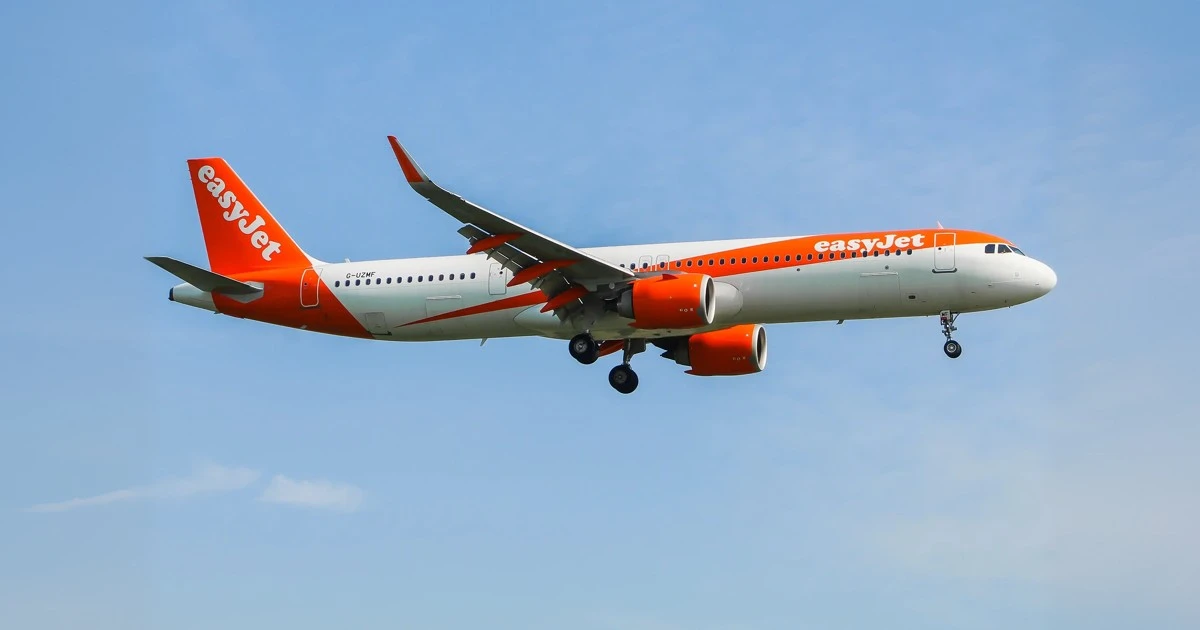
Image Credit - By M901QX, Wikimedia Commons
EasyJet’s £5.99 Cabin Bag Claim Ruled False
When airlines advertise a low fee, they rarely promise you a deal; they anchor your expectations before the real math begins. You see a single-digit number, but the booking software ensures that number almost never survives to the checkout page. This disconnect between the advertised start price and the final total recently sparked a major regulatory crackdown. An investigation exposed how "starting at" claims often lead to zero actual availability for the average traveler.
According to a report by Sky News, the Advertising Standards Authority (ASA) officially ruled against EasyJet, finding their claim of selling cabin bags "from £5.99" to be misleading. Data analysis revealed a massive gap between this marketing promise and the inventory reality. While the airline insisted these low-cost options existed, investigators found them nearly impossible to locate. These ruling highlights a shift in how regulators view cabin bag pricing strategies. It forces a hard look at whether current airline advertising informs passengers or simply lures them into a purchase funnel designed to upsell.
The Data Disconnect: Zeros and Averages
Numbers on a screen often represent theoretical possibilities rather than bookable realities. The investigation by the consumer group Which? focused heavily on this gap between theory and practice. They analyzed 520 flights to see if a standard passenger could actually buy a bag for the advertised "from £5.99" price.
Data from Which? shows that out of 520 flights analyzed, exactly zero featured the advertised £5.99 fee. The lowest price found during the entire study sat at £23.49. This creates a discrepancy of nearly five times the advertised rate. The consumer group also noted that the average price across all examined routes hovered around £30, which is about five times more expensive than the lowest claimed price. This creates frustration for travelers trying to budget for a trip. A common question arises here: do airlines conceal baggage fees? Airlines separate fees from the base fare, which often makes the total cost of travel harder to see until the final booking steps.
EasyJet defended its position by stating that the £5.99 price point serves as an informational baseline rather than a guarantee for every flight. They argued that their fee structure fluctuates based on demand. However, the sheer lack of availability in the sample size suggests the "starting at" price acts more like a mirage.
Regulatory Standards on Cabin Bag Pricing
Rules regarding marketing language usually tighten only after companies stretch definitions until they break. The ASA stepped in because the word "from" carries a specific weight in consumer protection law. It implies that a significant proportion of customers can actually secure the product at that price.
The regulator determined that EasyJet failed to meet this standard. The evidence provided by the airline did not prove that bags were available at £5.99 across a wide enough range of dates and routes. The ASA concluded that the consumer expectation of finding a £5.99 fee remained unmet. Consequently, as reported by The Independent, the regulator banned the airline from using the phrase in marketing communications without solid evidence to back them up.
This ruling forces a change in how airlines display cabin bag pricing. Transparency must now take precedence over attractive headlines. EasyJet responded by updating their website text following the feedback. They maintained that low-cost options technically exist on some routes, but the regulatory pressure forced an immediate shift in presentation. The airline stated its goal remains pricing transparency, yet the clash between their variable pricing models and fixed advertising claims proved too significant to ignore.
The Bait Strategy vs. Consumer Reality
Marketing often relies on presenting an ideal scenario that the average buyer will never experience. Which? accused the airline of using low headline fares specifically as bait. The strategy draws customers in with a cheap ticket, only to hit them with high backend costs for essentials like luggage.
The editor at Which? described the disregard for rules as shocking. They argued that airlines use unattainable prices to deceive buyers. When a customer commits to a flight based on a low fare, they feel psychologically committed to the purchase even when add-ons inflate the price. This practice erodes trust. Consumers might wonder why regulatory bodies don't act faster. Why does it take so long to stop misleading ads? Regulators must gather substantial data and proof of systemic issues before they can legally enforce changes or issue bans.
The standard now set by the ASA requires evidence to substantiate any "starting at" pricing. You cannot simply have one seat on one flight at the low price and claim the fare starts there. The inventory must match the implication of the ad. This protects the consumer from wasting time searching for a fare that effectively does not exist.

Industry-Wide Patterns: Ryanair and Wizz Air
When one competitor successfully separates a service from its cost, the entire market shifts to match that profitable confusion. The investigation did not limit its scope to just one airline. Which? found similar discrepancies with other major budget carriers like Ryanair and Wizz Air.
According to Which?, Ryanair advertised a bag fee of £12. The data showed this price appeared on only two out of 634 flights. The average cost turned out to be £20.50. Wizz Air showed a similar pattern. They advertised a fee of €15 (approximately £13.11). This price appeared on only two out of 338 flights. Their average cost sat at £28.93.
These numbers reveal a systemic issue with cabin bag pricing across the budget sector. The advertised price serves as a placeholder, not a genuine offer. Travelers frequently ask, why are cabin bags so expensive? Airlines use demand-based algorithms that automatically increase fees based on high demand, route popularity, and the time of booking.
Ryanair defended their numbers by attacking the sample size. They claimed 634 flights represented a "too small" or "unrepresentative" set of data. Which? rebutted this by noting their study covered eight popular routes over both peak and off-peak dates. The consistency of the data suggests the high prices represent the norm, not the exception.
The Economics of the "Headline" Fare
A ticket price no longer buys a seat on a plane. It simply secures the right to enter the payment ecosystem. The "headline" ticket price grabs attention, but the "real" cost includes the base fare plus the bag. In many cases, the ancillary fees exceed the cost of the ticket itself.
Industry analyst Simon Calder noted that bag fees have the potential to increase trip costs significantly. Calculations suggest these add-ons can raise the total price by up to 165%. For a budget traveler, this destroys the value proposition of the cheap ticket. A £20 flight becomes a £50 flight once a standard carry-on joins the cart.
This shift changes how consumers must compare flights. You cannot simply look at the initial number on a comparison site. You must factor in the strict enforcement of personal item limits. Airlines now police bag sizes rigorously. This enforcement ensures that passengers who try to avoid fees get caught at the gate. This leads to a relevant question: are carry-on bags free in Europe? Not yet, though the EU has voted on proposals to standardize free carry-on allowances, pending final approval from member states.
Corporate Defense and Executive Attitudes
Corporate transparency often focuses on explaining the fee structure rather than simplifying the cost itself. The reactions from airline executives reveal a commitment to this unbundled business model. Michael O’Leary, CEO of Ryanair, expressed zero regret regarding penalties for oversized bags.
He framed the issue as a matter of system integrity. He stated that staff bonuses halted the exploitation of the system. By incentivizing staff to catch oversized bags, the airline ensures revenue protection. This aggressive stance highlights the conflict between passenger comfort and airline profitability.
Wizz Air took a more defensive tone. A representative claimed they maintain adherence to consumer protection statutes. They argued their pricing remains dependent on season and demand. However, consumer expert Jane Hawkes noted that confidence erodes due to this pricing confusion. When buyers cannot predict the final price, they lose faith in the brand. The issue appears systemic across budget carriers, rather than being an isolated error by a single company.
Legislation and Future Changes
External rules eventually force internal changes when voluntary transparency fails. For instance, The Guardian reports that Spain has fined five budget airlines, including Ryanair, a total of €179m for charging passengers for hand luggage and seat reservations. The European Union has also passed a vote to mandate free 7kg carry-on allowances. This legislation currently awaits member state approval. If fully enacted, it would dismantle the current cabin bag pricing model used by these carriers.
Until then, the discrepancy remains. EasyJet claims lowest prices are available "on some routes," while the data shows no options under £23.49 in the sample set. This contradiction keeps the tension high between regulators and airlines. The ASA ruling marks a significant step, but the financial incentives for airlines to conceal true costs remain powerful.
The End of the Anchor Price
The days of "blind" booking are ending, but the complicated math remains firmly in place. The ASA ruling against EasyJet proves that regulators are watching cabin bag pricing more closely than ever. Advertised rates must now reflect reality instead of a theoretical possibility. While airlines like Ryanair and Wizz Air defend their variable strategies, the data reveals a clear pattern of higher actual costs. As the EU moves toward mandating free carry-on allowances, the days of the deceptive £5.99 bag fee may finally be numbered. Travelers now know that the first price they see is rarely the price they pay.
Recently Added
Categories
- Arts And Humanities
- Blog
- Business And Management
- Criminology
- Education
- Environment And Conservation
- Farming And Animal Care
- Geopolitics
- Lifestyle And Beauty
- Medicine And Science
- Mental Health
- Nutrition And Diet
- Religion And Spirituality
- Social Care And Health
- Sport And Fitness
- Technology
- Uncategorized
- Videos

