
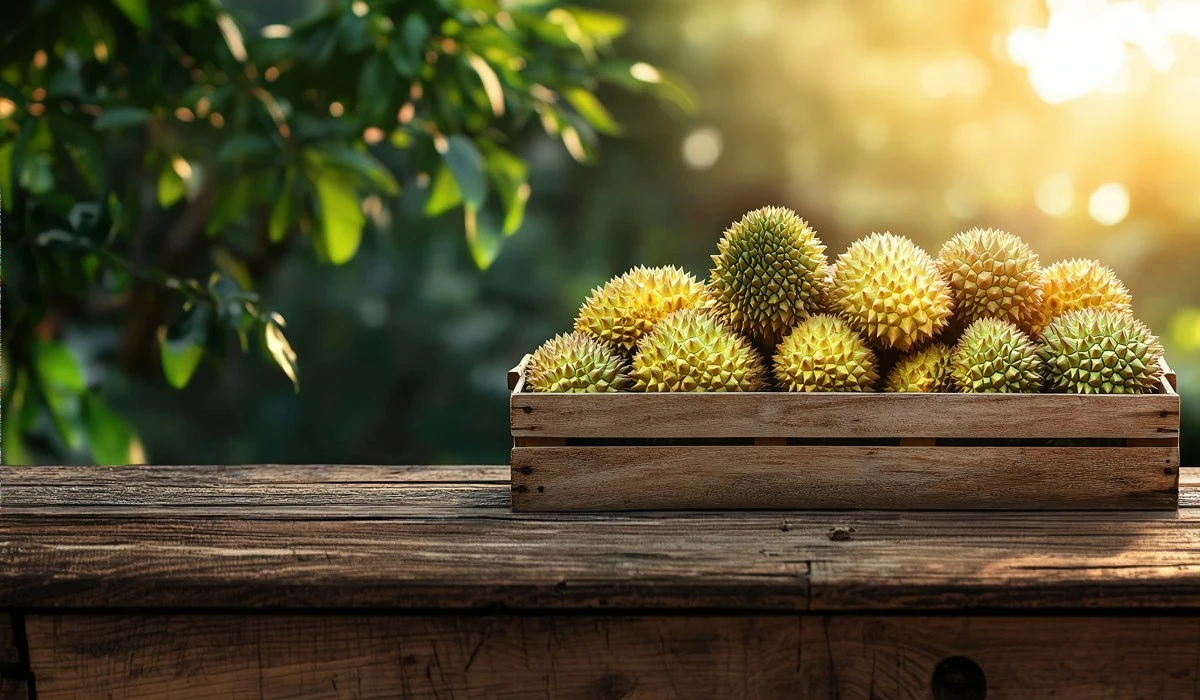
Durian Market: Why the World Craves This Spiky Fruit
One fruit forces the government to build international railways and farmers to bulldoze profitable oil palm plantations. This singular crop dictates trade terms between nations and turns humble villagers into overnight millionaires. While the smell repels many, the financial returns attract global superpowers. Niche preferences in the durian market rewrite the economic rules of Southeast Asia.
The Evolution of the Durian Market
Ancient explorers found a spiky fruit in the jungle, but modern logistics turned it into a multi-billion-dollar asset. The historical record for this fruit stretches back centuries. Research published in MDPI cites records from Venetian merchant Niccolò de’ Conti, who observed the "duriano" in 15th-century Sumatra. He described a green, cucumber-sized fruit containing five segments that tasted like cheese. Later, the Oxford English Dictionary officially entered the word into the English language in 1588. Naturalist Alfred Russel Wallace observed the fruit in Borneo in 1856, describing an experience worthy of an international voyage. He famously called the flavor a blend of almond, cream cheese, and onion sauce.
In 1934, the Malaysian Ministry of Agriculture launched a variety registration system to track different types of the fruit. This moved the crop from a wild forest find to a managed agricultural product. The 1980s brought a massive shift when Tan Lai Fook found the Musang King variety in Gua Musang. This specific strain would eventually anchor the modern durian market. During the 1990s, many farmers faced an economic downturn.
The Taxonomy of a Tropical Giant
They removed their oil palm trees and replaced them with durian trees because they saw a higher profit potential. By 2020, the value of imports into China reached $2.3 billion. A report from FreshPlaza notes that the 2021 opening of the China-Laos Railway provided a direct route for mass transport and accelerated market growth. The publication states that the railway moved 150,000 tons of the fruit into China this year alone. It also highlights that total trade volume reached $7 billion in 2024, with China acting as the primary buyer for exports from Thailand, Vietnam, and Malaysia.
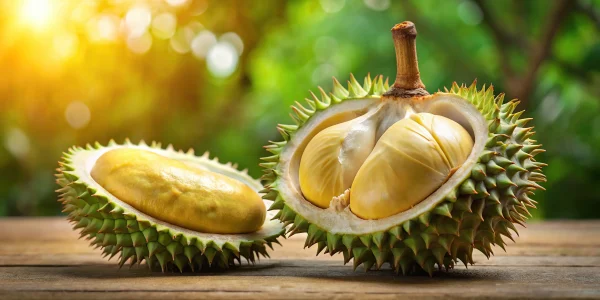
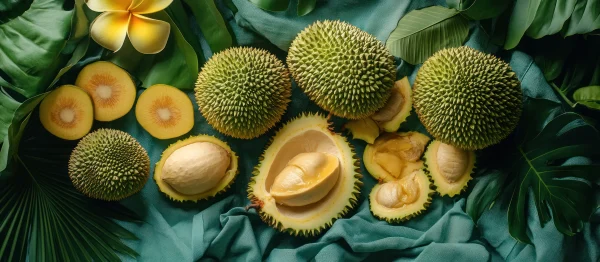
Botanists place the tree in the Malvaceae family, making it a relative of the mallow plant. The fruit grows on trees reaching heights of 25 to 50 meters in tropical forests. While the world knows of 30 recognized species, humans only consume 9 edible varieties. The physical anatomy of the fruit consists of five distinct compartments. These compartments correspond to carpels, which hold the creamy flesh. This flesh, or aril, typically accounts for only 15% to 30% of the total weight of the fruit. Most of the weight resides in the thick, thorn-covered shell.
Natural Dispersal and Pollination
Research from Monash University suggests that bats and birds act as the primary pollinators for these trees. The study notes that nectar-heavy flowers open in the mid-afternoon but only release pollen starting at 19:00 hrs to attract these animals. Large mammals like elephants, tigers, and rhinos traditionally dispersed the seeds through eating the fruit and traveling long distances. However, nature presents a contradiction in the jungle. How do orangutans help durian trees? A study published in ResearchGate observed that orangutans act as seed predators; they do not disperse seeds because they consume them before they mature. This behavior leads to a failure in the natural dispersal system. Despite this, the trees survived for millennia before humans began large-scale cultivation.
The Rise of Musang King as a Global Status Symbol
A wild find in the 1980s forced oil palms out of the ground to make room for a more profitable tree. Luxury branding turned the Musang King into the "Hermès of durians." According to the South China Morning Post, the Musang King variety found in the 1980s now serves as a global status symbol with prices between $14 and $28 per unit. The Straits Times adds that Agriculture Minister Mohamad Sabu has observed premium fruit selling for $105 in China. This high price point creates a sense of exclusivity that appeals to wealthy urban consumers. Chinese vendors like Xu Xin noted an initial shock when they first tasted Malaysian varieties. They soon realized the potential for export. Consumers in China began moving away from sugary, simple profiles toward sophisticated and pungent bitterness. This shift in taste drove the demand for Musang King to new heights.
Economic Pivot in Rural Villages
The move from oil palms to durian trees significantly changed the face of Malaysia. Farmers realized that a single successful harvest could yield far more than years of palm oil production. This shift turned many small-scale landowners into wealthy entrepreneurs. Uncle Thing, a farm owner, witnessed this prosperity firsthand. He watched local farmers transform into millionaires. New fleets of pickup trucks now fill rural villages, serving as clear symbols of this newfound wealth. However, the labor remains difficult despite the financial gains. Workers must navigate steep terrain and handle heavy, spiky fruit daily.
Legal Conflicts and Land Rights
The massive value of the durian market also created intense legal battles. In Raub, a major production hub, land disputes broke out between the state and local farmers. Families had farmed these lands for decades, but the state claimed ownership of the territory. These conflicts highlight the tension between traditional farming and high-stakes industrial agriculture.
Durian Diplomacy and the China-Laos Railway
Speeding trains now move 2,000 tonnes of fruit daily across borders to satisfy a growing appetite for bitterness. International relations now depend on the flow of this fruit. Governments use "durian diplomacy" to secure trade agreements and strengthen bilateral ties. China remains the primary destination, receiving over 90% of the global supply. This concentration of trade gives the fruit immense political leverage. The China-Laos Railway serves as the main artery for this trade. It allows for the transport of over 2,000 tonnes of fruit daily. Before this infrastructure existed, logistics presented a massive hurdle for exporters. The fruit has a limited storage life of four to five weeks, even with shrink wrapping. Rapid transport ensures the product reaches the consumer before it spoils.
Market Growth and Consumer Base
The growth of the durian market is staggering. The total value increased three-fold between 2020 and 2024. Interestingly, only 2% of the Chinese population currently purchases the fruit. This small percentage provides enough demand to sustain a multi-billion-dollar business. Chee Seng Wong, a prominent exporter, points out that even a minimal increase in the purchasing population would lead to massive commercial success. If 5% or 10% of the population began buying, the current supply would fail to meet the demand. This potential for growth keeps investors interested in expanding plantations.
The Environmental Cost of Tropical Gold
Large-scale profit requires clearing the very forests that once protected the fruit’s wild ancestors. The drive for profit comes with a significant environmental price. Industrial plantations often lead to deforestation and habitat loss. As farmers clear land for more trees, they destroy the environments that support local wildlife. This creates a cycle where the very birds and bats needed for pollination lose their homes. When a region prioritizes a single crop, the local diversity suffers. What are the environmental effects of durian farming? Large-scale durian farming often leads to significant deforestation and the loss of habitats for endangered species like tigers and rhinos. These animals once moved the seeds across the landscape, but now they face shrinking territories.
Balancing Wealth and Conservation
Communities face a difficult choice between immediate wealth and long-term environmental health. The high market value makes it hard for local governments to limit expansion. However, without sustainable practices, the industry may eventually collapse. Soil depletion and the loss of natural pollinators threaten the future of these plantations.
Pursuing Durian Freedom in Hainan
China aims to end its dependency on Southeast Asian suppliers through domestic crops in Hainan. The Chinese government wants to achieve "durian freedom." This term refers to the push for domestic self-sufficiency. State media frequently discusses the pursuit of a sovereign food supply to stabilize prices and ensure availability. Hainan saw its first harvest in 2023. The island aims for a production target of 2,000 tonnes by 2025. While this sounds significant, the Hainan market share currently remains below 1% of total Chinese consumption. The local supply cannot yet compete with the massive volumes coming from Malaysia and Thailand.
Challenges to Domestic Success
Growing tropical fruit in Hainan presents unique challenges. The climate differs from the traditional jungle environments of Southeast Asia. Some experts believe the Hainan harvest poses a threat to the global market, while others argue the effect will remain minimal. The current demand is so high that even a successful Hainan crop would barely dent the need for imports.
The Biology Behind the Stench and the Flavor
Bats pollinate the flowers at night while sulfuric compounds warn predators away from the ripening mass. The fruit contains a layered chemical profile. Organosulfur compounds create the famous fetid or sulfuric stench. Food writers and chefs often struggle to describe the aroma. Richard Sterling compared the smell to swine waste, turpentine, and used athletic footwear. Anthony Bourdain famously described the aftertaste as having intimate contact with a deceased relative. Author Anthony Burgess compared eating the fruit to consuming a gelatinous raspberry dessert inside a communal restroom. Despite these harsh descriptions, the nutritional value is high. A 100g serving provides 31% of the daily value for Thiamine.
Health Beliefs and Biological Facts
Traditional medicine often categorizes the fruit as having "warming" properties. People traditionally counteract this heat through drinking water from the fruit's shell or eating mangosteens. However, some folk myths carry dangerous risks when ignored. Is it safe to eat durian with alcohol? Biological evidence shows high sulfur in the fruit reduces the body's ability to clear toxins by 70%. This biological fact supports the long-standing belief that mixing the two can lead to severe health issues. The organosulfur compounds essentially put the body's detoxification system on hold.
Cultural Perception and the Journey to Advocacy
A childhood dislike often transforms into a deep adult appreciation that bridges cultural gaps. The progression from disgust to advocacy is common among consumers. Journalist Monica Tan described her transformation from childhood hatred of the fruit to adult advocacy. She views the fruit as a bridge to her cultural heritage. In her view, there are no losers in consumption challenges because the experience itself creates a connection to the past. Connoisseurs treat the stench as a high-end fragrance. They look past the initial offensive odor to find the layered flavors underneath. This appreciation separates the casual eater from the true enthusiast. Many hotels and public transport systems ban the fruit, yet it continues to command the highest prices in the market.
Sophisticated Bitterness
The evolution of taste in the Chinese durian market reflects a broader trend. Consumers no longer want just sweetness. They seek out the "sophisticated bitterness" found in high-quality Musang King. This preference drives the market toward more expensive, layered varieties. The industry continues to adapt to these changing tastes. Farmers focus on perfecting the creamy texture and bitter notes that premium buyers demand. This focus on quality over quantity ensures that the durian market remains a luxury-driven industry.
The Future of the Global Durian Market
The durian market stands at a crossroads of environmental preservation and economic expansion. What began as a wild jungle fruit now fuels a $7 billion trade network that links Southeast Asian farms to Chinese dinner tables. This spiky fruit has moved beyond its reputation for a foul smell to become a pillar of regional wealth and a tool for international diplomacy. As China pursues production in Hainan and Malaysia settles its land disputes, the demand for Musang King shows no signs of slowing down. The tension between profit and nature will continue to shape the tropical landscape. Ultimately, the success of the durian market proves that a unique flavor, no matter how polarizing, can change the world.
Recently Added
Categories
- Arts And Humanities
- Blog
- Business And Management
- Criminology
- Education
- Environment And Conservation
- Farming And Animal Care
- Geopolitics
- Lifestyle And Beauty
- Medicine And Science
- Mental Health
- Nutrition And Diet
- Religion And Spirituality
- Social Care And Health
- Sport And Fitness
- Technology
- Uncategorized
- Videos

