
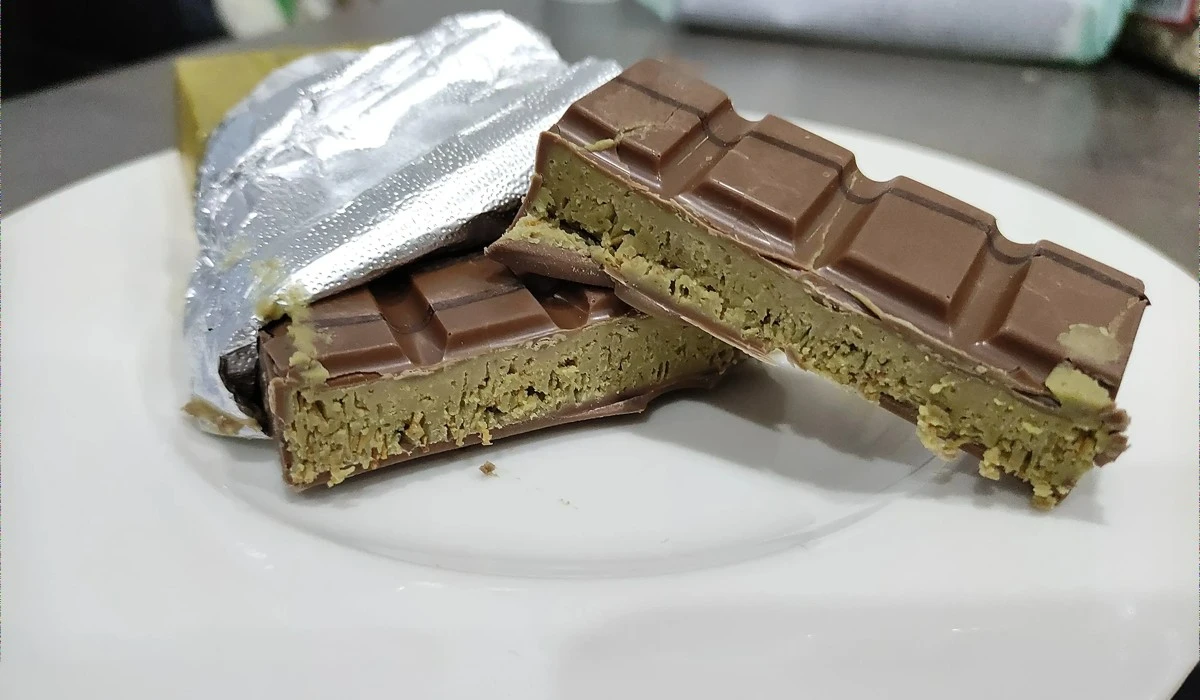
Image Credit - by Ionenlaser, CC BY 4.0, via Wikimedia Commons
Dubai Chocolate Trap Is Not What You Think
Marketing often tricks your brain into craving a status symbol rather than actual food. A global frenzy currently surrounds a dessert that began as a specific personal craving but mutated into something entirely different during its transit across borders. The Dubai Chocolate phenomenon sweeping South Korea proves how quickly a product can lose its identity when hype takes the wheel. Consumers hunt for these bars using real-time maps, yet many end up with a chewy rice cake instead of the promised crispy pastry.
The trend reveals a strange disconnect between expectation and reality. You see a viral video promising a specific crunch, but local adaptations deliver a completely different texture to fit mass manufacturing constraints. This gap creates a unique tension in the market. Shoppers pay premium prices for what is essentially a mislabeled product, driven by the fear of missing out rather than culinary quality. The situation exposes how fragile product authenticity becomes when social media fame demands infinite scale.
The Viral Spark That Changed the Recipe
A single image from a celebrity can force an entire manufacturing sector to pivot overnight. According to FNNews, the frenzy began in September 2024 when K-pop group Ive’s member, Jang Won-young, shared a photo of a specific treat on Instagram. That simple digital signal acted as a spark. It transformed a foreign dessert concept into a local necessity. The post went beyond suggesting a snack, effectively mandating a lifestyle update for millions of followers.
Before this moment, the dessert existed as a niche curiosity. After the post, it became a cultural command. The market reacted with immediate, aggressive speed. By October 2024, the convenience chain CU released its own version, the "Dubai chewy rice cake." This quick turnaround demonstrates the power of influencer authority. Manufacturers bypassed traditional R&D timelines to capitalize on the visual hype. They prioritized speed over fidelity to the original recipe. The resulting product captured the visual aesthetic of the trend but fundamentally altered the eating experience to suit local production capabilities.
When Scarcity Breaks the Supply Chain
Limiting access to a product creates a panic that makes price tags irrelevant. The economics of the Dubai Chocolate trend rely heavily on this artificial pressure. Data from Maeil indicates that between October and January, the CU chain sold 1.8 million pieces. This volume sounds high, but it failed to scratch the surface of consumer demand. The report further notes that a CU representative admitted that factory output remains insufficient for the current appetite, with requests consistently outpacing production speed.
This imbalance turns shopping into a competitive sport. Consumers now use real-time stock tracking maps to locate available inventory. Stores enforce purchase limits per customer to prevent hoarding. The frenzy has reached such a peak that non-traditional venues are entering the arena. Hardware stores and dry cleaners are actually debating whether to stock these desserts. When a tool shop considers selling chocolate, the market has clearly detached from logic.
"Why is Dubai Chocolate so expensive right now?"
As reported by the Korea JoongAng Daily, current retail costs range between 5,000 and 10,000 won ($3 – £2.5) because massive demand allows retailers to charge a premium for scarcity.
The desperation to acquire the item, rather than the ingredients, drives the value. Scarcity economics override standard pricing models. Buyers justify the cost as an entry fee to a cultural moment. The product serves as a ticket to social relevance, making the financial cost secondary to the acquisition victory.
The Texture Betrayal and Consumer Fatigue
Expectations snap when the physical reality of a product contradicts its marketing label. The South Korean version of Dubai Chocolate faces growing backlash for this exact reason. The packaging and marketing promise a specific experience, yet the interior tells a different story. The original concept relies on a "cookie" or chocolate shell filled with crispy knafeh pastry. However, the mass-market version often delivers a rice cake texture.
Consumers are expressing "counterfeit fatigue." Online complaints pile up regarding the absence of crucial ingredients. Buyers expect the sharp crunch of knafeh but find the squish of marshmallow or the chew of rice cake instead. A disappointed customer noted the emotional letdown of paying a high price for an "inferior imitation" that lacked the signature pastry shreds. The exterior fails to provide the expected resistance, and the interior lacks the complex mix of textures that defined the original viral hit.
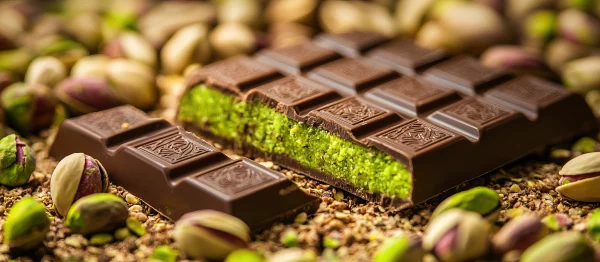
"What is inside the Dubai Chocolate bar?"
According to Lexology, authentic versions contain pistachio cream and toasted knafeh pastry, while local adaptations often swap these for rice cake, marshmallow, or generic cereal.
This substitution is not an accident. It is a calculated manufacturing decision. Replicating the exact texture of the original requires specific ingredients and processes that are hard to scale. Manufacturers bet that the name alone would sell the product, regardless of the textural accuracy. This gamble works initially, but eventually, the sensory disappointment creates a drag on the trend.
Why Korea Rewrote the Ingredient List
Local aesthetics often bully flavor profiles into submission during product adaptation. The South Korean market prioritizes "visual density" over the balance of flavor. Food critic Lee Yong-jae argues that this specific trend values aesthetic excess above culinary equilibrium. The goal is to create a product that looks "thick" and substantial on camera, rather than one that tastes harmonious on the tongue.
This preference explains the shift toward rice cakes and marshmallows. These ingredients provide volume and a specific "chewy" look that photographs well. They support the "fatcaron" (fat macaron) style aesthetic popular in the region. However, this visual focus distorts the ingredient economy. The price of pistachios at major supermarkets rose by 20% due to the trend, yet the actual pistachio content in the cheap adaptations remains debatable. The visual promise of a pistachio-rich, dense dessert drives the inflation, even if the flavor profile ends up muddled by fillers.
The Original Blueprint vs. The Imitation
True innovation usually stems from a personal need rather than a boardroom strategy. According to the FIX Dessert Chocolatier website, the authentic Dubai Chocolate story began in 2022 with Sarah Hamouda, a British-Egyptian entrepreneur, and Nouel Catis Omamalin, a Filipino chef. They founded FIX Dessert Chocolatier in Dubai. The invention began as a pregnancy craving rather than a business plan. Hamouda wanted a specific combination of chocolate, knafeh, pistachio, and tahini that she could not find.
The viral vector was auditory as well as visual. In December 2023, influencer Maria Vehera posted a TikTok video that garnered over 125 million views. The sound of the crunch—ASMR—became integral to the product's success. Sarah Hamouda intended the bar to evoke sensory nostalgia, serving as an "edible transport" to Middle Eastern souks. She prioritized the experience over simple sustenance.
The South Korean adaptation stripped away this nuance. As noted by dubaimusts, the original product, named "Can't Get Knafeh Of It," relied on tahini for bitterness to balance the sweet chocolate. The mass-market versions frequently omit the tahini entirely, removing the sophisticated bitter note that grounds the flavor. They focus solely on the sweet and the green color, missing the culinary composition that made the original noteworthy.
The Health Risks Buried in the Wrapper
Rapid mass production frequently outruns safety regulations and quality control. As the demand for Dubai Chocolate exploded, so did the number of unregulated imitations. A study conducted by the Baden-Württemberg Ministry of Consumer Protection (cited by Lexology) revealed disturbing findings in samples of these trendy treats. Researchers found carcinogens related to palm oil contaminants in several tested bars.
The rush to market leads to corner-cutting. The study also identified undeclared sesame allergens and aflatoxins—mold toxins found in poorly stored pistachios. When manufacturers scramble to source ingredients like pistachio paste during a shortage, quality assurance often slips.
"Is Dubai Chocolate safe to eat?"
While the original brand adheres to standards, generic copies have tested positive for carcinogens and mold toxins, posing real health risks.
This danger lurks beneath the shiny foil wrappers. Consumers assume that a widely sold product is safe, but the speed of the trend outpaces the oversight capabilities of food safety agencies. The drive to fill shelves allows substandard and potentially dangerous ingredients to slip into the supply chain.
Legal Loopholes and Global Branding
Geographic names lose their protective power when the public adopts them as generic descriptors. The term "Dubai Chocolate" functions essentially as a generic trademark in the European Union. The UAE is not a signatory to the Geneva Act, meaning they have no geographical protection for the name. This legal void allows any company, anywhere, to slap the label "Dubai" on a chocolate bar.
Manufacturers in Turkey and Europe produce many of the bars sold under this name. Major brands like Lindt and Aldi have engaged in disputes over similar products. The name "Dubai" signals luxury and opulence, according to analyst Monique Naval. It taps into the "gold-dust culture" associated with the city. Brands use the name to charge a premium, implying an origin story that simply does not exist for the specific bar in your hand. The consumer buys a story of Middle Eastern luxury, but the product often comes from a factory in a completely different continent, utilizing a legal blind spot to maximize profit.
Unwrapping the Illusion
The Dubai Chocolate craze stands as a monument to the power of social signaling over substance. What started as a carefully crafted treat born from a mother's craving transformed into a chaotic global scramble involving rice cakes, hardware stores, and carcinogen warnings. The tension between the original crispy, tahini-infused bar and the chewy, mass-produced imitation highlights how modern trends consume and distort their source material. Buyers often pay for the name while rarely getting the genuine experience. In the end, the wrapper promises luxury, but the reality is often just a sticky, expensive compromise.
Recently Added
Categories
- Arts And Humanities
- Blog
- Business And Management
- Criminology
- Education
- Environment And Conservation
- Farming And Animal Care
- Geopolitics
- Lifestyle And Beauty
- Medicine And Science
- Mental Health
- Nutrition And Diet
- Religion And Spirituality
- Social Care And Health
- Sport And Fitness
- Technology
- Uncategorized
- Videos

