
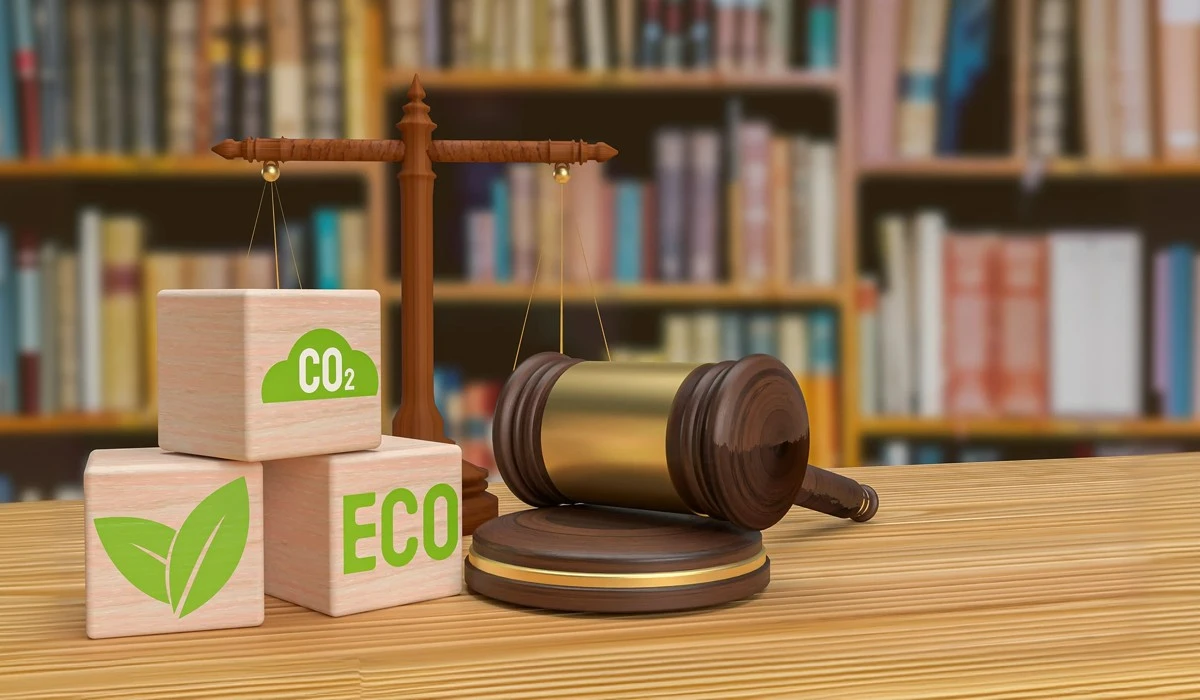
Drive Sustainable Growth With Environmental Law
Many business leaders erroneously view environmental regulations as mere moral obligations or public relations hurdles. In reality, these regulations function as a strict financial ledger to be balanced against revenue. A company that ignores a rule hurts the planet and simultaneously accumulates a debt that regulators will eventually collect with interest. This focuses on protecting your bank account instead of saving trees.
The numbers prove this reality. In Fiscal Year 2024 alone, the EPA’s enforcement actions resulted in $1.7 billion in penalties, the highest figure since 2017. One single settlement with Cummins Inc. accounted for $1.48 billion of that total. Environmental Law functions as a core business strategy rather than a simple checkbox for safety officers, determining whether you keep your profits or hand them over to the government.
This guide moves you from reactive panic to proactive safety. We will bypass the rhetoric and look strictly at the operational risks, the specific laws that trap businesses, and the strategies you need to secure your assets.
The Financial Reality of Regulatory Non-Compliance
Many executives operate under the false assumption that they can plead ignorance or negotiate their way out of a violation. The current legal environment makes that nearly impossible. According to Cornell Law School's legal information on CERCLA, liability is "strict," which removes the need for the government to prove negligence or specific intent behind pollution. If the violation happened on your watch, you pay.
The penalties are not limited to corporate bank accounts. They can threaten your personal freedom. In FY 2024, the EPA charged 121 criminal defendants, a 17.6% increase from the previous year. This signals a shift from "education-first" policies to aggressive enforcement. You need to assess your risk immediately because the consequences are severe. Violations often lead to heavy civil fines, mandatory cleanup costs, and in severe cases, criminal charges against company officers.
Under statutes like CERCLA (often called Superfund), liability is "joint and several." This is a terrifying concept for business owners. It means that if you contributed even a small fraction of waste to a site that requires cleanup, the government can force you to pay 100% of the remediation costs if other parties cannot pay. Your responsibility extends beyond your specific share to include the entire bill.
Basic Pillars of Environmental Law You Must Know

The legal framework governing the environment is vast, but it rests on a few basic pillars. Understanding these concepts helps you anticipate where liability comes from before it hits your desk. Environmental Law is elaborate, and its application usually follows two specific pathways: who pays for the damage and how long you are responsible for your waste.
The Polluter Pays Principle
This economic principle originated from the OECD in 1972 and serves as the base of modern U.S. environmental statutes. It dictates a simple rule: the entity that causes the damage must bear the cost of fixing it. This prevents companies from privatizing profits while socializing the costs of pollution. In practical terms, this means your budget must account for potential cleanup costs, not just waste disposal fees. If your operations contaminate local soil, the cleanup bill belongs to you, regardless of your current financial standing.
Cradle-to-Grave Management
The Environmental Protection Agency explains that the Resource Conservation and Recovery Act (RCRA) established a structure for managing hazardous materials from "cradle-to-grave," ensuring responsibility persists even after the waste is transported away. Hiring a cheap waste transporter who then dumps chemicals illegally still leaves you liable for that waste.
There is no expiration date on this liability. This strict "cradle-to-grave" mandate is the reason Lowe's Home Centers paid a $12.5 million penalty in a recent settlement. They mishandled the documentation for lead paint waste. They failed to track the full lifecycle of the material, and the regulators made them pay for the gap in their paper trail.
Navigating Climate Compliance Law as Global Standards Change
While traditional regulations focus on toxic sludge and chemicals, a new wave of rules is targeting unseen emissions. Climate compliance law is evolving faster than any other sector of regulatory enforcement. It requires a different set of tools and a much higher level of transparency.
Carbon Reporting and Disclosures
A major shift involves the requirement for public carbon footprint disclosures. According to the California Legislative Information portal, the Climate Corporate Data Accountability Act (SB 253) applies to U.S. business entities that generate more than $1 billion in annual revenue and operate within California. Starting in 2026 (reporting on 2025 data), these companies must report Scope 1 and Scope 2 emissions. In 2027, they must report Scope 3, which covers the entire supply chain.
The stakes are high. The law also limits annual penalties for non-compliance to $500,000 per reporting year. While there is a temporary "safe harbor" for Scope 3 reporting until 2030 to protect companies from penalties for good-faith mistakes, the pressure is on. You must start gathering data now.
Energy Efficiency Mandates
Regulations are also crossing borders. The EU’s Corporate Sustainability Due Diligence Directive (CSDDD) entered into force in July 2024. It affects non-EU companies, including American firms, if they have a net turnover of over €450 million within the EU. This directive forces companies to identify and mitigate environmental effects across their entire chain of activities. Climate compliance law now means that a factory manager in Ohio might have to change operations to satisfy a regulator in Brussels.
Common Operational Pitfalls That Initiate Fines
Most fines do not come from massive, malicious oil spills. They come from boring, administrative errors. Companies initiate investigations because they get sloppy with paperwork or miss dates. These unforced errors hand regulators an easy win.
Permit Violations and Expirations
The Clean Air Act requires facilities to obtain specific permits for emission limits. A common mistake is failing to update these permits when you upgrade equipment. In early 2024, a natural gas processing company in New Mexico was fined $1.9 million. Their crime? They failed to comply with "New Source Performance Standards" (NSPS). They likely thought their old permits covered their new operations. They were wrong. Permit audits must be ongoing, not a one-time event.
Improper Waste Disposal Documentation
The Uniform Hazardous Waste Manifest is the most dangerous piece of paper in your office. It tracks every shipment of waste. If a manifest is missing a signature, or if the dates don't match, regulators treat it as a "lost" shipment. This implies illegal dumping.
You cannot rely on your vendors to get this right. You need internal checks. Experts recommend conducting comprehensive internal audits at least annually to identify gaps before regulators do. If you wait for the EPA to find a missing manifest, it is already too late.
Building a Proactive Environmental Law Strategy
You cannot treat Environmental Law as a problem to be solved only when a lawyer calls. It must be baked into your daily operations. A proactive strategy protects your bottom line as it prevents business interruptions and keeps your name out of the headlines.
Integrating Legal Checks into Operations
Legal counsel often sits at the backend of a project, reviewing things only when they go wrong. This is a mistake. Legal checks must move to the frontend of project planning. Before you buy a new machine or expand a warehouse, you must verify how it alters your emissions profile or waste output. Taking these actions prevents violations before they happen.
Using Technology for Monitoring
Manual spreadsheets are a liability. Modern compliance relies on Continuous Emissions Monitoring Systems (CEMS). These are hardware and software setups that track pollutants in real-time. While the upfront cost can be high, industry data suggests a payback period of just 18–24 months. The ROI comes from process optimization and, more importantly, avoiding fines for accidental exceedances.
Furthermore, adopting standards like ISO 14001 is proven to help. A 2024 study showed that ISO 14001 certification improved technical productivity in high-polluting industries by 2.7%. This certification is becoming a "license to operate" in global markets, showing partners that you take Environmental Law seriously.
The Role of Due Diligence in Mergers and Acquisitions
When you buy a business, you buy its past. This concept is called "successor liability." The EPA holds current owners liable regardless of who owned the property when the pollution occurred.
This makes due diligence essential. You must vet a target company’s history with climate compliance law and general pollution. The standard for this vetting recently changed. As of February 2024, the EPA requires the new ASTM E1527-21 standard for Phase I Environmental Site Assessments.
This new standard requires a deeper review of historical records than ever before and carries a strict expiration date. As specified in the Electronic Code of Federal Regulations, the components of Phase I Environmental Site Assessments must be updated within 180 days before the acquisition of the property to remain valid. If you rely on a report that is 181 days old, you void your "innocent landowner" defense under CERCLA. Always check the dates.
Future-Proofing Against Evolving Regulations
The rules you follow today will be obsolete tomorrow. The regulatory environment is shifting rapidly due to social pressure and scientific urgency.
The Rise of ESG Litigation
Investors and citizens are no longer waiting for regulators; they are suing companies directly. Reuters reported that in the landmark Held v. Montana (2023) ruling, a state judge declared that citizens possess a primary constitutional right to a clean and healthful environment. This opens the door for state-level lawsuits against polluters.
Simultaneously, "greenwashing" is becoming a legal trap. The EU is tightening its "Green Claims Directive," and the U.S. FTC is updating its "Green Guides." Vague claims like "eco-friendly" are becoming legally risky. If you claim to be green, you must have the data to prove it.
Stricter International Standards
Supply chain liability is expanding. In June 2024, the UK Supreme Court made a massive decision in the "Finch" case. They ruled that downstream emissions (Scope 3) are "direct effects" of extraction projects. This sets a precedent that companies are legally responsible for the use of their products, not just their production of them.
Why is environmental law changing so fast? Rapid climate change acceleration and public pressure are forcing governments to enact stricter, more changing regulations annually.
Becoming Proficient in Environmental Law for Long-Term Success
The field of Environmental Law is elaborate, rigid, and unforgiving. However, it is navigable. The companies that succeed in the next decade will be the ones that treat compliance as an asset rather than a burden.
According to a report by Reuters, the SEC Climate Disclosure Rule is currently facing delays as the commission stayed the rules during a federal appeals court review. Consequently, the pressure has moved to state laws like California's SB 253 and international rules like the EU's CSDDD. A "wait and see" approach is now a liability. You must act. Review your current compliance posture immediately. Audit your Phase I reports. Check your waste manifests. Investing in compliance today is the only way to secure your profit for tomorrow.
Recently Added
Categories
- Arts And Humanities
- Blog
- Business And Management
- Criminology
- Education
- Environment And Conservation
- Farming And Animal Care
- Geopolitics
- Lifestyle And Beauty
- Medicine And Science
- Mental Health
- Nutrition And Diet
- Religion And Spirituality
- Social Care And Health
- Sport And Fitness
- Technology
- Uncategorized
- Videos

