
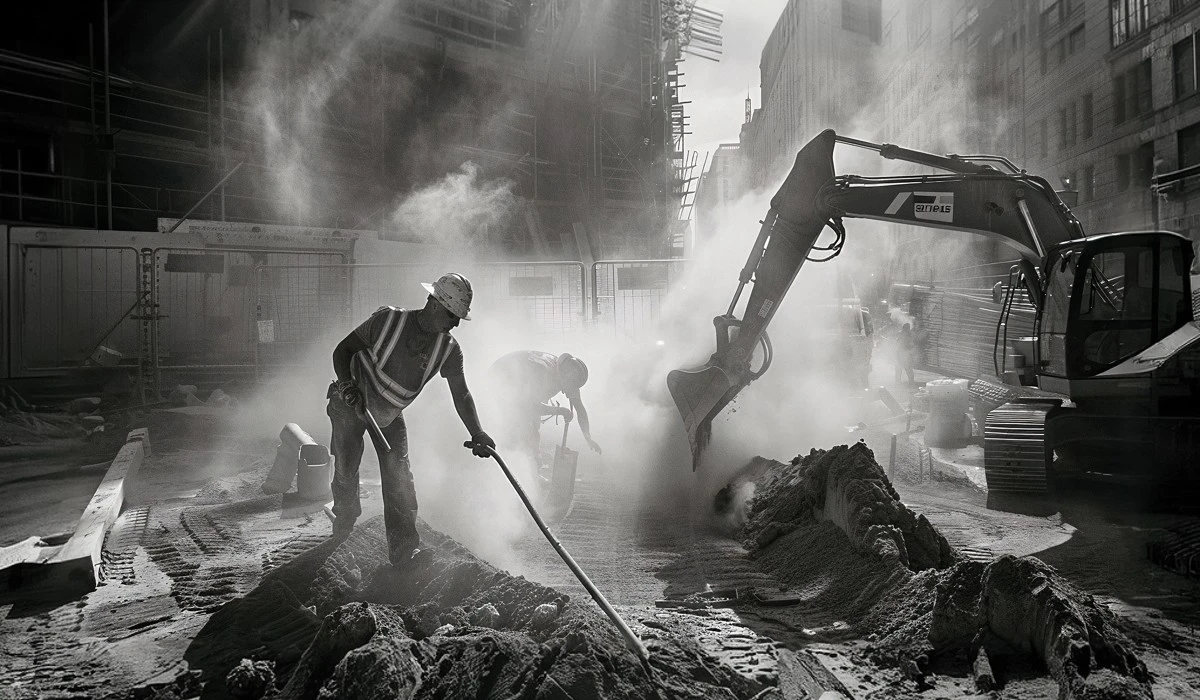
Demolition Management Limits Structural Hazards
In a crowded city, a 20-story tower stands only inches from a glass-walled office building. While some assume a wrecking ball merely swings until walls fall, leaving dust and rubble, professional teams actually dismantle structures with high precision. This move toward engineering-based removal keeps workers safe and neighbors happy. When a project leader uses professional Demolition Management, they control every falling brick. Gravity becomes a tool rather than a threat. This approach ensures that a controlled building demolition stays within its own footprint and away from the public.
Shifting from Reactive to Proactive Hazard Control
Planning starts long before the first swing of a hammer. A site manager begins by looking for things that might go wrong. According to OSHA Standard 29 CFR 1926.850(a), a competent person must conduct an engineering survey of the structure before any demolition operations begin. The agency states that this survey evaluates the condition of the framing, floors, and walls. It further notes that identifying these factors helps prevent the premature collapse of any portion of the structure. As specified in OSHA guidelines regarding damaged structures, teams must brace or shore up walls if employees are working in a building previously compromised by fire or flood.
Good Demolition Management also handles the utilities early. Following OSHA 1926.850(c), crews shut off or cap all gas, water, and steam lines outside the building line. As the regulation requires, they notify any involved utility company in advance of the work. Addressing these details first allows the team to remove the biggest risks before they become active threats.
Engineering the Sequence of Controlled Building Demolition
Engineers use "reverse assembly" logic to bring a structure down. They look at how the building went up and then do the exact opposite. This ensures that the load paths remain predictable. If a crew removes a support beam too early, the whole floor might drop. A managed plan prevents this by keeping the remaining structure stable.
In tight urban spaces, teams often use top-down methods. They lift small excavators to the roof using massive cranes. These machines then work their way down, floor by floor. This reduces the height of the building gradually. This specific type of controlled building demolition keeps the mess small and the risks low. It prevents the massive, unpredictable collapses that happen when people just "hit and hope."
Managing Load Paths and Temporary Bracing
Keeping a partially dismantled building upright requires constant attention. When workers remove walls, the weight of the roof must go somewhere else. Managers use temporary bracing and internal shoring to manage these shifting weights. They pay close attention to structural weaknesses caused by age or weather.
How do I make a demolition site safer? The most effective method is implementing a comprehensive safety plan that includes real-time structural monitoring and strict exclusion zones. Monitoring how a building leans, or shifts allows managers to pull workers out before a collapse. Safety protocols provided by Construction Safety Nova Scotia define the demolition zone as having a horizontal radius of at least 1.5 times the project's initial height. This keeps everyone at a safe distance if something falls the wrong way.
Specialized Equipment and Remote Operations
Modern technology takes the worker out of the danger zone. High-reach excavators now feature booms that extend over 200 feet. This allows the operator to stand far away while the machine nibbles at the top of a tower. These machines provide a "stand-off" distance that saves lives.
Meanwhile, robotic breakers handle the most dangerous tasks. These small, powerful machines crawl into tight spaces where a human shouldn't go. A technician operates the robot from up to 700 meters away. This completely removes the person from the "drop zone." It also protects workers from Hand-Arm Vibration Syndrome, a common injury from using heavy power tools for too long. Using these tools is a core part of modern Demolition Management.
Vibration and Noise Mitigation in Urban Settings
Tearing down a building creates vibrations that can crack the foundations of neighboring homes. To stop this, managers use tri-axial monitoring. As described by Svantek, these seismic sensors track the Peak Particle Velocity (PPV) in three different directions to ensure the site stays within safe limits.
For example, a site near a school might have a strict limit of 1 mm/s to prevent cosmetic damage. Industrial areas might allow up to 50 mm/s. Tracking these figures enables the team to change their tools if the vibrations get too high. This carefully controlled building demolition prevents expensive lawsuits from neighbors. It also ensures the city remains stable while the site changes.
Environmental Hazard Containment and Abatement
Unseen killers like asbestos and lead pose a massive risk. Before a single brick falls, a thorough inspection must happen. The National Emission Standards for Hazardous Air Pollutants (NESHAP) require this for every project, regardless of the building's age. If the team finds asbestos, they must remove it safely before the main teardown begins.
Crews also look for PCBs in old caulk and window glazing. The Environmental Protection Agency highlights that these toxic chemicals were common in the caulking of buildings constructed or renovated between 1950 and 1979. To keep the air clean, managers use "fog cannons." Technology from Spraystream suggests that atomizing systems can reduce the spread of dust, including respirable silica, by approximately 90%. Proper Demolition Management treats air quality with the same importance as structural safety.
BIM and 3D Structural Modeling
Building Information Modeling (BIM) serves purposes beyond new construction. Engineers now create digital twins of old buildings to plan their destruction. This 4D simulation adds a timeline to the 3D model. It shows exactly how the building will look at every stage of the teardown.
What are the most common demolition accidents? Most site injuries result from unexpected structural collapses or improper debris management, both of which are mitigated by detailed engineering surveys. The use of a digital model helps managers find these "clashes" before they happen on-site. They can see if a specific beam removal will cause a floor to sag. This foresight turns a high-risk job into a predictable process.
Real-Time Site Monitoring and IoT Sensors
Small sensors now provide big data on demolition sites. Tilt sensors attached to outer walls send alerts to a manager's phone if a wall moves even a few millimeters. This gives the crew time to evacuate or shore up the structure. These IoT (Internet of Things) devices act as an early warning system.
Other sensors track noise and dust levels in real-time. If the wind picks up and blows dust toward a nearby park, the sensors activate the water misting system automatically. This data-driven approach keeps the site in compliance with local laws. It proves that Demolition Management has moved beyond brute force and into the world of high-tech monitoring.
Adhering to OSHA and Local Safety Standards
The paperwork for a project is just as important as the hammers. OSHA requires a "Competent Person" to be on-site at all times. This person must have the training to identify hazards and the authority to stop work immediately. Without this oversight, a site quickly becomes a liability.
Is demolition management required by law? While specific job titles vary by region, legal frameworks generally require a structured safety plan and expert oversight for any high-risk structural removal. These laws ensure that companies don't cut corners to save time. Following these rules protects the company from massive fines and keeps insurance costs low.
Documentation as a Risk Management Tool
A well-managed site keeps a "black box" of information. This includes daily logs, safety briefings, and equipment inspection reports. If an accident happens, these records show that the company followed every safety rule. This documentation is a powerful tool for reducing legal risks.
Managers also use these logs to track the health of their workers. They record who was near hazardous materials and for how long. Regular safety briefings, or "Toolbox Talks," ensure that every worker knows the plan for the day. This culture of documentation makes the controlled building demolition process transparent and professional.
On-Site Material Sorting and Resource Recovery
Tearing down a building doesn't have to mean filling up a landfill. High-quality Demolition Management focuses on "soft stripping" or selective demolition. Workers remove high-value materials like copper wiring, brass fixtures, and steel beams before the heavy machines move in.
This process can offset up to 20% of the total project cost through salvage profits. Once the internal materials are gone, the team crushes the concrete on-site. They use magnets to pull out the rebar and then recycle the clean concrete as road base. This reduces the need for new materials and keeps the controlled building demolition environmentally friendly.
Reducing the Carbon Footprint of Site Clearance
Smart logistics save fuel and reduce emissions. On-site concrete crushing allows the team to reduce the number of truck trips needed to haul waste away. This lowers the carbon footprint of the entire project. Modern managers also choose machines that meet the latest emission standards.
Productive scheduling ensures that machines don't sit idling for hours. The plan coordinates the arrival of trucks with the progress of the excavators. This level of detail is why professional management is so valuable. It turns a messy job into a clean, productive operation that respects the planet.
Safety Briefings and Hazard Identification Training
The people on the ground are the first line of defense against accidents. Every morning, the team gathers for a safety briefing. They discuss the specific hazards of the day, such as a weak floor or a high-voltage line. This keeps safety at the front of everyone’s mind.
Empowering workers to "stop the job" is a key part of modern safety. If a worker sees a crack that wasn't there yesterday, they have the power to halt work. This proactive attitude prevents minor issues from turning into major disasters. This training turns a group of laborers into a highly skilled team.
Certification for Detailed Controlled Building Demolition
In the past, anyone with a sledgehammer could call themselves a "wrecker." Today, the industry demands certification. Pioneers like Jack Loizeaux and Controlled Demolition Inc. (CDI) changed the field by treating demolition as an engineering challenge. They moved away from the old methods of burning props to control a fall, a method once used by historical figures like Fred Dibnah.
Modern implosions are a feat of math. Research published in Live Science notes that crews use electronic detonators that fire at 0.25-second intervals. These tools help a building like the Mina Plaza in Abu Dhabi—the tallest building ever demolished with explosives—fall into its own footprint in just 10 seconds. Only certified experts can handle this level of difficulty. Hiring these professionals is a reliable way to eliminate hazards on a site.
Securing the Future with Demolition Management
Safety on a construction site never happens by accident. It is the direct result of rigorous Demolition Management. Treating every project as a unique engineering puzzle allows managers to protect their workers and the community. They turn the dangerous task of structural removal into a predictable and sustainable process. High-tech sensors, robotic tools, and strict planning have replaced the chaotic methods of the past. Choosing a controlled building demolition strategy ensures that the job gets done on time and without injury. As cities grow more crowded, this level of precision becomes the only responsible way to clear the path for the future.
Recently Added
Categories
- Arts And Humanities
- Blog
- Business And Management
- Criminology
- Education
- Environment And Conservation
- Farming And Animal Care
- Geopolitics
- Lifestyle And Beauty
- Medicine And Science
- Mental Health
- Nutrition And Diet
- Religion And Spirituality
- Social Care And Health
- Sport And Fitness
- Technology
- Uncategorized
- Videos

