
Costa Coffee Sale Failed: Coke Halts Auction
Buying a massive chain of coffee shops looks like a power move until you realize you actually bought thousands of landlords, broken espresso machines, and tangled supply chains. Coca-Cola discovered this the hard way after spending billions on a vision that quickly turned into a heavy anchor on their balance sheet. The beverage giant recently decided to freeze the Costa Coffee sale, ending months of speculation and backroom talks.
Coca-Cola originally acquired the brand to dominate the global caffeine market. According to a Whitbread press release from August 2018, Coca-Cola paid a staggering £3.9 billion to acquire the brand. They wanted to move liquid. Instead, they got stuck managing brick-and-mortar retail outlets during an economic downturn. Bankers and bidders could not bridge the massive gap between what Coca-Cola paid and what the market thinks the chain is worth today. Now, the company faces a difficult reality: keeping a struggling asset is currently less painful than admitting a multi-billion pound loss. The Costa Coffee sale is off the table for now, but the problems that triggered the auction remain unsolved.
The Valuation Trap
Paying a premium for a brand sets a clock ticking where the asset must prove its worth before the market loses patience. That price tag implied massive future growth that simply never materialized. When they tested the waters for a sale in August 2025, the reality was harsh. As reported by The Guardian, bidders looked at the books and offered valuations closer to £2 billion.
Accepting a bid at that level would crystallize a potential loss of nearly 50% on the initial investment. No board of directors wants to sign off on a deal that burns half the capital they deployed just seven years prior. The gap between the asking price and the offers created a stalemate. A Reuters report noted that private equity firms like TDR Capital and Bain Capital circled the distressed asset, though they only buy when the price reflects the risk. Coca-Cola refused to sell at the bottom. Consequently, the Costa Coffee sale collapsed because the seller’s pride could not match the buyer’s math.
A Clash of Business Models
A company built on shipping syrup and cans operates with a completely different rhythm than a company that serves hot milk and cleans tables. Coca-Cola thrives on efficiency, manufacturing, and distribution. Costa Coffee requires intense operational management, staff training, and high street real estate maintenance. The two models constantly fought against each other.
Coca-Cola’s "Total Beverage Company" strategy aimed to push Ready-to-Drink (RTD) coffee products and vending machines. They viewed the thousands of physical stores as a marketing vehicle for the canned drinks. However, the retail footprint proved too heavy. The stores became the main operational burden instead of acting as a supporting asset. Outgoing CEO James Quincey admitted the "investment hypothesis" failed to prove itself. The retail dominance remained excessive, and the connection with the core soda business never generated the expected value.
The Bidder Standoff
Sophisticated investors smell blood when a corporate giant tries to quietly offload a struggling division. Late-stage talks involved heavy hitters. Reuters confirmed that firms in the latter stages included TDR Capital, the owners of Asda, and Bain Capital, who back Gail’s and PizzaExpress. These firms understand the UK high street intimately. They saw the falling margins and the rising costs and adjusted their calculators accordingly.
Early interest also came from Apollo, KKR, and Centurium Capital, but excitement faded as the financial picture cleared. The Financial Times reported that the advisory bank, Lazard, worked to find a middle ground, noting that one proposal even suggested Coca-Cola keep a minority stake to sweeten the deal. Nothing worked. The bidders held firm on their lower valuations. Does Coca-Cola plan to sell Costa again? Sources suggest a sale remains possible in the medium term if performance improves. The Costa Coffee sale process revealed that while private equity has cash, they will not overpay for a business with shrinking profits.
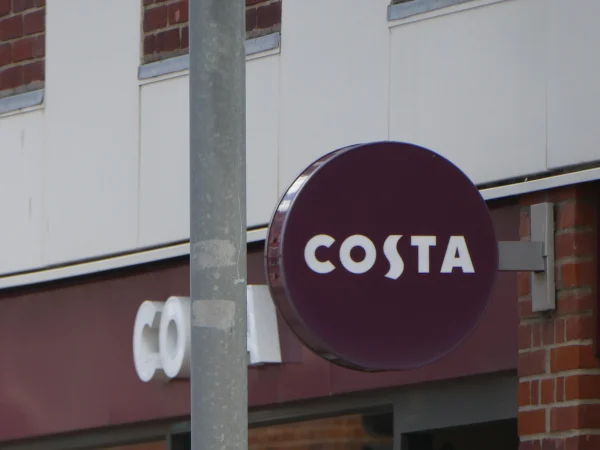
Image Credit - by Sebastiandoe5, CC BY-SA 4.0, via Wikimedia Commons
Squeezed From Both Sides
Dominating the middle ground in any market creates a dangerous vulnerability when competitors attack from the top and bottom. Costa sits in an uncomfortable position. On one side, premium rivals like Gail’s and trendy independent cafes steal customers who want artisanal quality and a better atmosphere. On the other side, value competitors like Greggs and McDonald’s offer coffee that is "good enough" for a much lower price.
This pressure shows in the numbers. While rivals surged ahead, accounts filed at UK Companies House and highlighted by FoodNavigator show that Costa posted an operating loss of £13.5 million in 2024. Caffè Nero, a direct high street competitor, reported sales growth of 7% in the same period. Costa failed to defend its territory. The brand dominance it once held has faded as consumers migrated to cheaper options or better experiences. The Costa Coffee sale stumbled partly because potential buyers saw this strategic squeeze and worried about the cost of fixing it.
Financial Bleeding and Costs
Profit margins evaporate quickly when the cost of raw materials rises faster than the price of a latte. Inflation dealt a heavy blow to the chain’s bottom line. The price of coffee beans spiked, and energy costs for running thousands of outlets remained high. Revenue did inch up to £1.2 billion in 2024, a meager 1% rise, but the costs swallowed that growth and more.
The operating loss widened significantly compared to the previous year. Soft footfall on the UK high street further compounded the problem. You might wonder, is Costa Coffee profitable right now? No, the company reported a £13.5 million operating loss in its most recent financial filing. This financial bleeding makes the asset unattractive. Buyers typically pay a multiple of earnings. When earnings are negative, the math for a high-value exit simply breaks down.
Leadership Shake-ups
Big strategic failures usually lead to changes in the executive suite. The halting of the auction coincides with a major change at the top of Coca-Cola. CEO James Quincey, who championed the original purchase, is moving to the role of Executive Chair in March 2026. Henrique Braun will take over as the new CEO.
This timing is rarely accidental. Quincey stated that the acquisition results were subpar and strategic goals went unmet. Passing the torch allows the new CEO to distance himself from the legacy of the bad deal. Braun takes the helm with the Costa problem still on the books, but without the personal attachment to the initial decision. This leadership change signals a shift in focus back to the core carbonated drinks business, leaving the coffee chain as an orphan in the portfolio.
The Brand Image Problem
Reputation creates value, and recent years have chipped away at the trust consumers place in the brand. While the financial struggles dominated the headlines, operational failures damaged the customer connection. A 2024 Prevention of Future Deaths report detailed how a tragic allergen death in 2023 exposed severe gaps in staff training. Investigations into animal welfare regarding the dairy supply chain in 2022 and 2023 further tarnished the company’s ethical standing.
Even cultural issues caused friction. Backlash against trans-inclusive art on delivery vans and mural inclusions sparked debates that distracted from the core business. Why are people boycotting Costa Coffee? Some groups criticized the brand for its stance on social issues and artwork, causing reputational noise. These controversies might seem small individually, but together they degrade the brand equity. A buyer looks at these headlines and sees potential liability and the need for a costly PR overhaul.
Facing the Grind: Coca-Cola’s Unwanted Pivot
Coca-Cola finds itself in a position no owner wants: holding a depreciating asset that everyone knows they tried to dump. The Costa Coffee sale failed because the reality of the business could not support the fantasy of the price tag. With a £13.5 million operating loss and a potential valuation drop of nearly £2 billion, the numbers simply did not add up. Coca-Cola must now pivot from seller to fixer. They have to stop the bleeding, stabilize the brand, and prove that the coffee chain can compete against agile rivals like Gail’s and Greggs. Until the balance sheet improves, the "For Sale" sign comes down, but the pressure to resolve this strategic error will only increase.
Recently Added
Categories
- Arts And Humanities
- Blog
- Business And Management
- Criminology
- Education
- Environment And Conservation
- Farming And Animal Care
- Geopolitics
- Lifestyle And Beauty
- Medicine And Science
- Mental Health
- Nutrition And Diet
- Religion And Spirituality
- Social Care And Health
- Sport And Fitness
- Technology
- Uncategorized
- Videos

