
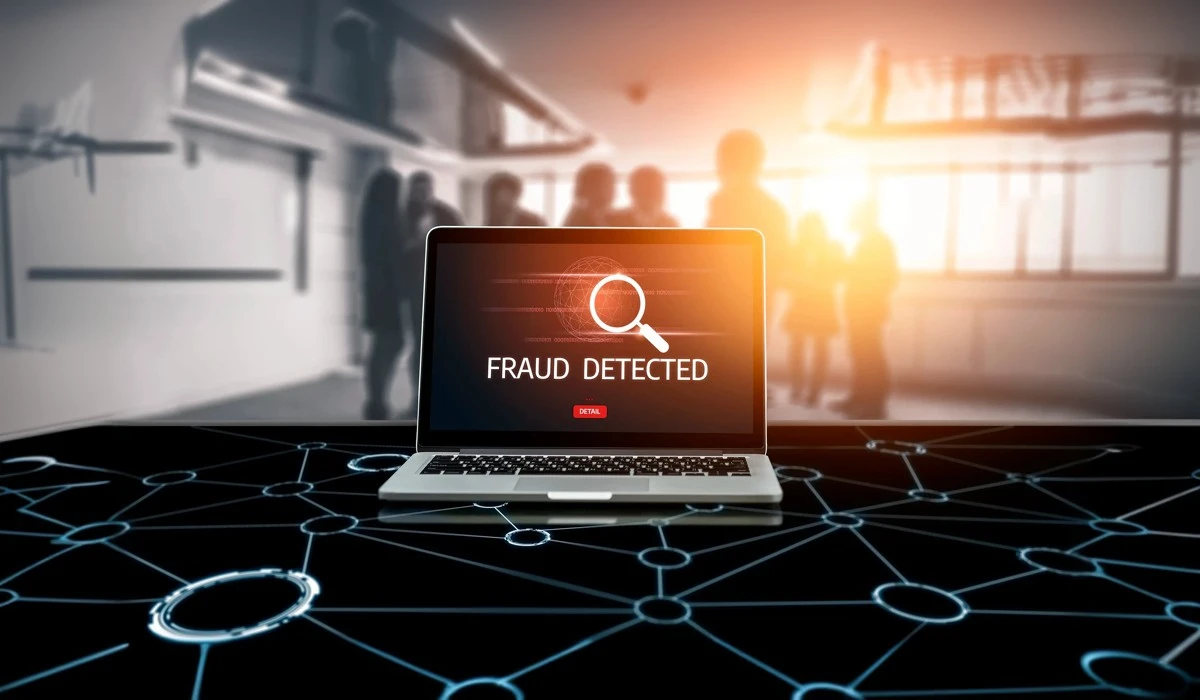
Corporate Fraud Investigation to Protect Your Business
When you trust a long-term employee with the keys to the safe, you create a blind spot that grows larger every year. Loyalty often masks the slow drain of company cash because no one thinks to look at the person who never takes a day off. Most business owners view their team as family, yet this emotional bond frequently provides the cover for financial theft. You might notice a slight dip in profit or a strange vendor name, but you look away because "Steve" has worked there for a decade.
Ignoring these small red flags allows a massive problem to grow. A professional Corporate Fraud Investigation acts as a proactive shield for your equity. It moves beyond simple trust and uses hard data to verify every dollar that leaves your accounts. The use of forensic accounting investigations provides the clarity needed to stop losses before they bankrupt the company. This process turns you from a victim into a strategist who protects the organisation's future.
Why Corporate Fraud Investigation is Your Best Defence
Financial theft damages your bank balance while also eroding the foundation of your entire operation. According to the Association of Certified Fraud Examiners (ACFE), the average organisation loses 5% of its annual revenue to fraud every single year. The study also notes that a thorough Corporate Fraud Investigation identifies these leaks and plugs them immediately. This action stops the bleeding of capital and allows for the recovery of what belongs to the company.
The Economic Reality of Hidden Financial Leakage
Small leaks sink big ships over time. Most fraud schemes last about 12 months before anyone notices. During that year, a single dishonest employee can siphon off enough cash to prevent you from hiring new talent or upgrading equipment. What looks like a "bad quarter" on your balance sheet often represents an undetected scheme.
Research published in ResearchGate explains that basic motivations for such behaviour are often categorised within the fraud triangle framework. This concept, which Springer Link notes was developed by Donald Cressey, examines three necessary conditions for crimes: pressure, opportunity, and rationalisation. People steal when they have a financial need and see a weak spot in your records. They then tell themselves they deserve the money. Identifying these factors assists in building a wall against future theft.
Preserving Brand Reputation and Stakeholder Trust
Transparency during a crisis actually increases investor confidence. When shareholders see you taking decisive action, they feel safer with their money in your hands. How long does a corporate fraud investigation take? The duration typically spans from a few weeks to several months, depending on the detailed nature of the data and the number of accounts involved. Taking this time proves you value integrity over convenience.
Based on a report by the Association of Certified Fraud Examiners (ACFE), 43% of cases were revealed because an individual decided to report the activity. This rate is nearly triple the effectiveness of standard internal audits. Encouraging a culture of reporting helps your investigation team find the truth much faster.
The Core Elements of Forensic Accounting Investigations
Standard audits look for errors, but forensic accounting investigations look for intent. These specialists dig into the "why" behind every transaction. They use high-level math and legal knowledge to build a case that holds up in a courtroom. This process removes the guesswork from your financial oversight.
Reconstructing Financial Records with Precision
Fraudsters often delete records or create fake invoices to hide their tracks. Forensic accountants reconstruct these records from the ground up. They follow the "paper trail" even when it leads through multiple shell companies or offshore accounts. The Internal Revenue Service (IRS) describes how investigators use the Net Worth Method of proof to catch thieves who leave no direct trail. The agency explains that this technique calculates a person's income by looking at asset accumulation, liability reduction, and expenditures compared to their known salary.
Tracing Digital Breadcrumbs and Asset Trails
Modern thieves leave digital footprints every time they move money. Investigators use specialised tools to find where stolen funds went. As stated by Cornell Law, specialists ensure every piece of evidence meets the "Daubert Standard," which is used to assess the reliability and relevance of expert witness testimony for legal validity. What are the first signs of business fraud? According to the ACFE, common early indicators include sudden drops in profit margins, unexplained inventory shortages, or the refusal of employees to take vacations. Early recognition of these signs allows for a faster response.
Experts also apply Benford’s Law during their search. This mathematical rule, as detailed in research from ScienceDirect, relies on Newcomb–Benford’s Law to analyse the frequency of significant leading digits in financial data. If the numbers don't follow the natural distribution, it often points directly to manual manipulation or fake entries. This level of detail makes it nearly impossible for a fraudster to stay concealed for long.
Identifying the Most Common Internal Threats
You cannot fight what you do not recognise. Many business owners fall victim to the same handful of schemes year after year. Understanding these threats allows for the deployment of forensic accounting investigations where they matter most.
Payroll Schemes and Ghost Employees
According to the Chartered Institute of Payroll Professionals (CIPP), payroll fraud is a persistent threat that typically lasts 18 months before being detected. Thomson Reuters notes that fraudsters create "ghost employees" by establishing non-existent staff on paper who receive wages accessed by the fraudster. Some employees also inflate their hours or manipulate commission rates. Because these small amounts add up over the years, the total loss often reaches six figures before a Corporate Fraud Investigation begins.
Procurement Fraud and Vendor Kickbacks
Procurement fraud involves shell companies and "favoured" vendors. An employee might set up a fake business and send invoices for supplies you never received. Other times, they take kickbacks from real vendors in exchange for approving inflated prices. These schemes rely on the fact that most managers only glance at invoices before signing them. Breaking this cycle requires a deep dive into your vendor list and payment history.
Executing a Precise Corporate Fraud Investigation
Once you suspect foul play, you must move with precision. A disorganised search alerts the fraudster and gives them time to destroy evidence. Following a proven roadmap ensures you collect the facts you need for a legal victory.
Establishing an Independent Investigative Team
Never ask internal staff to investigate their own colleagues. Use third-party experts to avoid bias and emotional conflict. An outside team brings a fresh set of eyes and a higher level of technical skill. They can ask the tough questions without worrying about office politics. This independence is the backbone of a credible Corporate Fraud Investigation.
Maintaining Chain of Custody for Evidence

Evidence is useless if a judge throws it out. You must document the movement and handling of every document and hard drive. This process is called the "chain of custody." Investigators use document hashing to create a unique digital "fingerprint" for every file. This proves that no one altered the data after the team collected it. The team also uses the PEACE model for interviews, which stands for Preparation, Engage, Account, Closure, and Evaluation. FIS International describes this as a non-accusatory approach used to gather information without violating rights. This careful approach protects the company from wrongful termination lawsuits later.
Utilising Technology to Reveal Malicious Activity
Old-fashioned ledgers are gone, and so is old-fashioned detective work. Today, forensic accounting investigations rely on powerful software to process millions of data points in seconds. This technology finds the needles in the haystacks that humans simply cannot see.
Data Analytics and Pattern Recognition
Data from eCampusOntario explains that Computer-Assisted Audit Techniques (CAATs) provide software tools and methods that allow investigators to evaluate 100% of transaction data. Standard audits only look at a small sample, which often misses the fraud. Software like ACL or IDEA flags every single anomaly for review. Investigators also use the Relative Size Factor (RSF) test. This test compares the largest record in a group to the second-largest record. If one invoice is ten times larger than the rest, the system flags it for immediate inspection.
The Role of AI in Detecting Transactional Anomalies
Artificial intelligence monitors your data in real-time to stop fraud before it happens. It learns your company's "normal" behaviour and alerts you to anything strange. Can small businesses use forensic accounting? Scaleable forensic accounting services are available to fit the budget and specific risk profile of any-sized enterprise. Research from IBM highlights that even small shops benefit from using Optical Character Recognition (OCR) to convert images of text into machine-readable formats, which helps search for concealed patterns.
Legal Protections Earned Through Proactive Detection
A successful investigation identifies the thief and provides the legal ammunition needed to recover money and stay compliant with the law. Without a formal report, you have very little advantage in court.
Preparing for Potential Litigation and Recovery
If you want your money back, you need proof. A Corporate Fraud Investigation provides the documentation required for law enforcement or civil lawsuits. As defined by Cornell Law, courts can order the "disgorgement of profits," which requires the offender to give up any profits they made as a result of their actions. This report also supports claims for fidelity bonds. A report from Georgia Tech indicates that these insurance policies are designed to protect the business from employee dishonesty. Furthermore, as noted in a guide by J.S. Held, insurers rarely pay out without evidence of fraudulent acts in a professional forensic report.
Meeting Regulatory Compliance Standards
Laws like the Sarbanes-Oxley Act (SOX) Section 404 require companies to have strong internal controls. If fraud happens and you didn't have these controls, the board of directors could face claims of negligence. Conducting an investigation proves that you take your fiduciary duties seriously. It shows the government and the public that you are committed to financial integrity.
Strengthening Resilience After a Corporate Fraud Investigation
The final step of any investigation is making sure the crime never happens again. You must patch the holes in your defence. This phase turns a painful experience into a stronger, more resilient business.
Updating Internal Audit Protocols
Use the findings of the forensic accounting investigations to change your workflow. The most important change is the "Segregation of Duties." No single person should have the power to authorise a payment, record the transaction, and hold the cash. You should also set up Positive Pay systems with your bank. This service matches the check number and amount against a list you provide, stopping forged checks instantly.
Training Staff on Ethical Financial Practices
Technology helps, but people are your first line of defence. Train your staff to spot the red flags of fraud and give them a safe way to report concerns. Remember the 10-10-80 rule: 10% of people will never steal, 10% will always steal if they can, and 80% will steal if the opportunity arises. The removal of opportunity and the creation of a culture of honesty protects that 80% from making a life-changing mistake.
Secure Your Future with Vigilance
A Corporate Fraud Investigation is the ultimate tool for reclaiming control of your business. While the process requires an investment of time and resources, the protection of your company’s future is an invaluable return. You deserve to know that your hard-earned revenue supports your goals rather than an employee's lifestyle. Use data and professional expertise to strip away the "loyalty" that masks theft. When you prioritise financial clarity, you build a business that can survive any internal threat and thrive for years to come. Integrity is both a core value and the most profitable strategy available.
Recently Added
Categories
- Arts And Humanities
- Blog
- Business And Management
- Criminology
- Education
- Environment And Conservation
- Farming And Animal Care
- Geopolitics
- Lifestyle And Beauty
- Medicine And Science
- Mental Health
- Nutrition And Diet
- Religion And Spirituality
- Social Care And Health
- Sport And Fitness
- Technology
- Uncategorized
- Videos

