

Cocoa Market Crash While Retail Chocolate Booms
When state regulators guarantee a payout they cannot fund, a massive harvest instantly causes mass poverty. A massive surplus of goods typically generates wealthy producers. In raw agricultural trade, overproducing a commodity destroys the financial lives of the rural workforce. Corporate shelves overflow with highly profitable goods while the people growing the raw ingredients wait months for a single paycheck. This stark financial disconnect drives the current global cocoa market crash. Bumper crops trap thousands of farmers in devastating debt. International buyers refuse inflated state prices. Retail consumers pay premium rates for shrinking candy bars. The entire global supply chain squeezes the base producer to protect top-level profit margins.
The Cocoa Market Crash Begins With A Rigid State Price Tag
Setting a national price floor artificially higher than international market willingness stops all commerce immediately. Ghana and Ivory Coast attempted to dictate financial terms to global commodity traders. These state regulators set a highly optimistic guaranteed payout target of $5,300 per tonne in October. Global traders simply walked away from the negotiating table. The state boards demanded a massive 40% premium over the standard market rate. Big buyers flatly refused the deal. Why are cocoa prices dropping? Buyers abandon the market when national boards artificially inflate raw material costs beyond consumer demand. According to a Reuters report on a recent audit, Ghana’s national regulator, Cocobod, currently struggles to meet its short-term financial obligations because it lacks sufficient liquidity from failing to secure international purchasers at high prices.
The government recently realized the severity of this miscalculation. Reuters also reports that the Ivory Coast Agriculture Minister reduced the guaranteed payout for growers from 2,800 CFA francs to between 800 and 1,000 CFA francs per kilogram by classifying next month's production as mid-crop. This sudden cocoa market crash leaves approximately 800,000 growers waiting for delayed payments. Massive harvests pile up uselessly in rural warehouses. Experts project Ivory Coast will soon hold 200,000 tonnes of completely unsold inventory. The state guarantee destroyed the market liquidity it intended to protect.
Why Abundant Yields Punish West African Cocoa Farmers
A bumper crop forces rural growers to hold perishable assets while buyers vanish. A local cooperative in Bangolo holds hundreds of tonnes of unsold beans right now. Their transport trucks sit completely motionless for 21 days. Bahily Bakouli Issiaca watches 800 cooperative members depend entirely on a completely dead trade. They experience severe current-year commerce difficulty. The sheer volume of beans removes any urgency for buyers to make a deal. Growers finish collecting their crops and find absolutely zero purchasers. Sella Aga Josiane stares at her harvested yield with extreme uncertainty regarding basic nourishment for her ten offspring. She completely lacks the ability to finance their schooling.
Ba Siba Fabrice connects his total financial depletion directly to a severe loss of domestic tranquility. Household peace vanishes quickly when daily income disappears. He relies entirely on bean cultivation for his family's existential survival. West African cocoa farmers harvest record amounts of physical product, yet they experience complete financial starvation. The main reporting blames this massive slump squarely on a good harvest flooding the market. Financial analysts at Saxo point to multi-year weather disruptions, crop disease, and aging trees prior to the recent rainfall improvements. The current oversupply masks severe long-term agricultural decay.
Field Economics Force Brutal Daily Choices
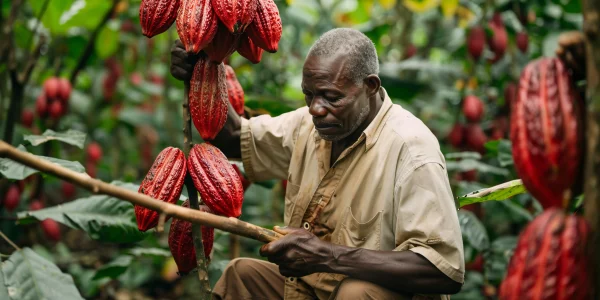
Maintaining a commercial farm costs the exact same amount whether the final product sells or rots. Veteran grower Robert Addae faces rigid agricultural supply expenses and unyielding worker wages every single month. A severe bean valuation plunge wipes out his profit margin instantly. Growing these beans requires about $1,000 per acre in basic maintenance alone in Ghana. The static costs of farming collide violently with the collapsing price of the crop. The 2024 peak valuation temporarily exceeded $12,000 per tonne. Farmers adjusted their expectations to match those historic highs. The subsequent plunge to $3,500 per tonne erased months of financial planning. The agricultural workers still demand their daily wages. The fertilizer suppliers still require payment for their chemicals. The rural farmer absorbs all the financial risk of a highly volatile global commodities market.
Fatal Delays and Empty Trucks
Geographic isolation turns a delayed agricultural paycheck into a medical fatality. Farmer Malik Boahen recently fell ill in his remote village. His family lacked the necessary funds to hire transport to a local medical clinic. He died at home. His widow, Akosua Frimpong, lost her partner strictly because the expected bean revenue never arrived. Without financial backing, rural families face absolute ruin. She entered recent widowhood with a total absence of financial support. The failure of the state payment system directly results in the loss of human life.
Boardroom Debt Fuels The Cocoa Market Crash
Borrowing billions of dollars to pay farmers above market value eventually fractures the entire national economy. Cocoa contributes a massive 7% to Ghana’s total GDP. It supplies 15% of the nation’s primary foreign exchange. An official Cocobod press release states that the staggering debt burden forced immediate internal changes, causing the Executive Management and Senior Staff to take a 20 percent and 10 percent salary reduction respectively for the remainder of the 2025/26 crop year. These corporate salary reductions spark intense debate among the farming community.
Association president Nana Obodie Boateng Bonsu strongly approves of these executive wage reallocations. He prefers a direct transfer of those specific funds to the delayed grower payouts. The cocoa market crash highlights the immense structural failure of national regulatory boards attempting to outsmart global trading desks. The debt continues to accumulate rapidly while the beans sit rotting in the sun. The state buys product it cannot sell. The international buyers wait for the state to go bankrupt. The farmer starves in the middle of this high-stakes standoff.
Global Chocolate Sales Face Unprecedented Demand Destruction
Pushing retail prices to historic extremes permanently alters consumer snacking habits. According to coverage by Bakery and Snacks, the initial surge above $12,000 per tonne in early 2024 severely damaged consumer appetite worldwide before prices collapsed by nearly 70 percent, failing to guarantee cheaper shelf prices. The publication also outlines massive global demand destruction and lower processing volumes, reporting that European demand contracted by 7.2% in the second quarter of 2025, Asian markets plummeted by a staggering 16%, and North America saw a 2.8% drop in sales volume.
Commodities strategist Tracey Allen connects the consumption collapse directly to the previous high valuations. She notes that an unprecedented operational expense rise heavily reduced the commercial appetite of major buyers. Global chocolate sales simply cannot sustain consecutive double-digit price hikes. She views a demand rebound as highly improbable without significant harvest and inventory boosts. Retailers enact strict pricing restrictions to stop bleeding customers. Financial reports focus on acute nearby scarcity, historic backwardation, and panic-level trader premiums driving the initial supply squeeze. The market experiences a violent correction. Consumers refuse to pay inflated prices for basic candy. The manufacturers cut their raw material orders. The demand destruction works its way backward through the supply chain until it hits the grower.
Chocolate Shrinkflation Outlasts The Cocoa Market Crash
Corporate manufacturers use temporary supply shocks to permanently reduce product sizes. Shoppers naturally expect cheaper candy once raw agricultural prices fall. Corporate brands maintain their high retail prices and keep their product weights low instead. A market analysis by Global Market Insights confirms that six large corporations completely dominate the industry, identifying Mars Wrigley Confectionary, Mondelez International, Ferrero Group, Hershey Co, and Nestle among the leading firms that control 55% of the massive $110 billion annual retail market. Will chocolate prices go down? Candy manufacturers plan to maintain high consumer prices and permanently implement cheaper alternative ingredients.
Beverages executive Celine Pannuti observes a clear corporate trend of quantity reduction amid severe cost inflation. Budget shoppers quickly flock to cheaper store brands. The luxury tier expands rapidly for wealthy buyers willing to pay premium rates. The middle market completely vanishes. Analysts like Edward Hockin warn consumers to expect continued quantity constraints and impending double-digit consumer cost hikes. The companies protect their profit margins at the direct expense of the consumer. The main reporting expects eventual cheaper chocolate based on the current harvest. Saxo analysts assert that chocolate shrinkflation remains entirely irreversible.
Palm Oil and Permanent Changes
Manufacturers permanently alter traditional recipes to rely heavily on cheaper alternative ingredients. Analysts confirm that brands substitute palm oil for real cocoa to maintain profit margins. The industry experiences permanent recipe reformulations. JP Morgan and Saxo note that prices will remain structurally higher for longer. They forecast medium-term prices hovering between $5,000 and $6,000 per tonne. These figures double the historical averages for the commodity. The physical product on the retail shelf permanently degrades in quality. Corporate brands never revert to the old formulas once consumers accept the new taste profiles.
Paper Metrics Fail Against Agricultural Reality
Setting a theoretical living wage on a spreadsheet completely ignores the actual crop yields in the dirt. Fairtrade established a living income reference payout of $2,390 per tonne for growers. They base this calculation on an extra $400 per tonne living income differential premium. Organizations like INKOTA reject this specific metric entirely. They state clearly that Fairtrade uses overly optimistic yield assumptions. Real farms produce far fewer beans than the corporate models suggest. The math reveals a horrifying disparity between retail profits and farmer survival. How much do cocoa farmers make? The average Ghanaian grower family of six members working four hectares earns a mere $191 a month.
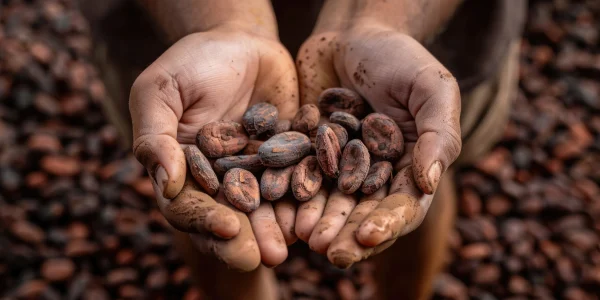
A real living income in Ghana requires at least $395 a month. These smallholder families number roughly 5.5 million globally. They receive a tiny fraction of the industry profits. Research published by Walk Free confirms that growers secure roughly 8 cents for every Euro spent on chocolate at retail, earning just 6 percent of the price of a standard milk chocolate bar while manufacturers take 33 percent. The immense wealth of the global candy industry never reaches the rural villages. The industry generates massive wealth for corporate executives and shareholders. The people working the land struggle to feed their children. This mathematical reality persists regardless of the fluctuating global spot price.
The Stark Reality of the Cocoa Market Crash
A global trade system relying on underpaid labor eventually fractures under the weight of its own excess inventory. Retail prices stay incredibly high for consumers. National regulators drown in billions of dollars of debt. Growers watch their harvested crops rot in motionless trucks. The cocoa market crash exposes the harsh financial truths of international agricultural trade. Massive corporate profits require extreme rural poverty to function properly. Consumers buy smaller, more expensive, lower-quality products. Farmers bury their family members because they lack the basic funds to afford a simple ride to the medical clinic. The disconnect between the boardroom and the bean field remains absolute. The primary producers take all the physical risk and receive the lowest possible financial reward. The system operates exactly as the top corporations intend.
Recently Added
Categories
- Arts And Humanities
- Blog
- Business And Management
- Criminology
- Education
- Environment And Conservation
- Farming And Animal Care
- Geopolitics
- Lifestyle And Beauty
- Medicine And Science
- Mental Health
- Nutrition And Diet
- Religion And Spirituality
- Social Care And Health
- Sport And Fitness
- Technology
- Uncategorized
- Videos

