
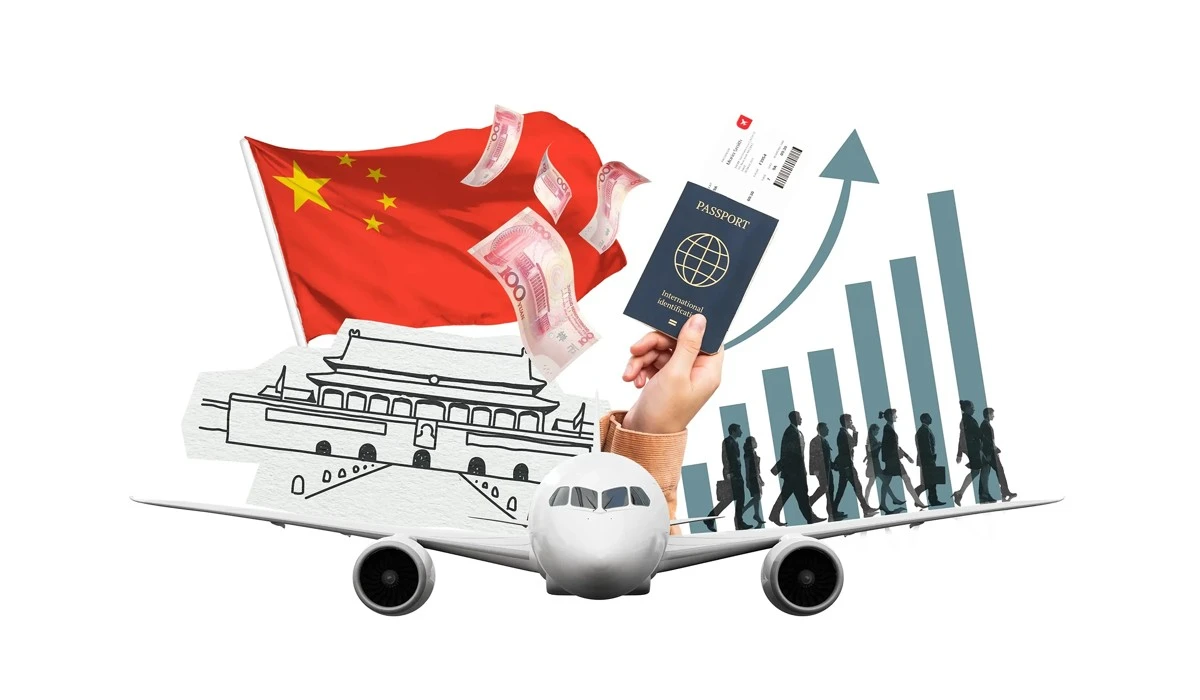
China Visa-Free Policy Raises Border Control Concerns
International treaties operate on exact geographic definitions, leaving citizens from crown dependencies legally stranded in transit. A 26-year-old traveler learned this the hard way when a minor regional detail on a travel document voided an entire international agreement.
According to the Chinese Embassy in Canada, the new China visa-free policy grants entry to standard UK travelers, allowing ordinary passport holders to enter visa-free and stay for up to 30 days starting February 17, 2026. Yet, immigration systems treat specific passport issuing authorities as completely foreign jurisdictions. You can hold British Citizen status, board a flight with confidence, and still face immediate deportation upon arrival.
As reported by AOL, a solo holiday meant to last 10 days instantly dissolved into a grueling legal nightmare when a woman was refused entry to China and immediately deported. After a 12-hour flight to Shanghai, border officials rejected the traveler, confiscated her documents, and ordered a forced return flight. Exploring the specifics of the China visa-free policy reveals a rigid system where minor geographic technicalities outrank actual citizenship rights.
The Geography Error in the China Visa-Free Policy
Global travel systems treat crown dependencies as entirely separate entities from their mainland counterparts. This rigid classification creates massive blind spots at international borders.
A 26-year-old tourist touched down at the Shanghai domestic desk, ready to catch a connecting flight to Guangzhou. The traveler held an Isle of Man passport. Under international law, this document establishes British Citizen status. The passenger assumed the China visa-free policy naturally applied to all British citizens.
Chinese immigration officials disagreed. They scanned the document and immediately flagged the Isle of Man status as invalid for the visa exemption program. To the border guards, the Isle of Man passport indicated non-UK and non-GB status. The traveler faced instant rejection.
The intended 10-day solo holiday stopped completely at the transit checkpoint. Geographic technicalities completely erased the traveler's legal standing in a matter of seconds.
A 12-Hour Transit to Total Isolation
Diplomatic protection evaporates the moment communication networks fail to connect across national firewalls. You lose all bargaining power when you cannot reach the officials meant to advocate for you.
Following the passport rejection, the tourist attempted a desperate intervention. The traveler’s boyfriend tried contacting the Chinese Consulate in London. Meanwhile, the British consulate in Shanghai had already closed for the day. This created a total communication failure at the exact moment the traveler needed high-level intervention.
The traveler experienced extreme isolation while detained at the border. Family members and London diplomats proved entirely incapable of contacting mainland authorities to clarify the passport issue. The tourist felt an overwhelming sense of foolishness and a totally unjustified criminal sensation.
With zero certainty about personal fate, the traveler simply waited for a final ruling from the guards. Ultimately, border officials confiscated the passport and forced the tourist onto a 12-hour return flight back to Gatwick.
Empathy Amidst the Bureaucratic Chaos
Despite facing deportation, the tourist expressed surprising empathy for the border staff. The local guards simply followed the exact codes programmed into their terminals. The real frustration stemmed from the total ignorance of international treaties by higher bureaucratic levels. British authorities completely failed to communicate the specific legal weight of crown dependency documents to their foreign counterparts.
Navigating the China Visa-Free Policy Rules
Bureaucratic border expansion relies on highly specific passport classifications rather than general citizenship status. Travelers often assume broad protection, but immigration databases run on exact terminology.
The expanded China visa-free policy permits visitors to stay for up to 30 days. This limit applies to tourism, business trips, family visits, and cultural exchanges. As noted by the official Visa for China FAQ and the Associated Press, the program recently grew from an initial 50 to 79 eligible nations. What countries are eligible for visa-free entry to China? Currently, 79 nations fall under the expanded program, including the UK and Canada. This creates a massive influx of eligible travelers.
However, officials only accept "ordinary passport holders" from the United Kingdom and Canada. Specialized documents, diplomatic passports, and crown dependency issues cause immediate scrutiny. According to the National Immigration Administration, visitors from Indonesia receive a 10-day, or 240-hour, transit waiver, while U.S. citizens fall under a much shorter 24-hour transit rule. This sharp contrast highlights the strict limitations built into these new travel agreements.
Strict Operational Protocols Upon Arrival
What are the requirements for entering China visa-free? Visitors must present a 30-day outbound flight ticket and proof of accommodation immediately upon entry. Removing the visa fee changes nothing about the strict on-arrival security measures. According to Reuters, border control mandates biometric fingerprinting for all foreign visitors as a mandatory security step. Travelers must also complete a mandatory 24-hour public security registration. The border effectively shifted the verification process from the embassy directly to the airport terminal.
The Isle of Man Passport Contradiction
Holding a specific type of regional passport automatically activates rejection codes in foreign immigration databases. Border agents prioritize local issuing authority over broad national identity.
As detailed by the House of Commons Library, the core issue traces back to the technical definition of the United Kingdom, which clarifies that Crown Dependencies are not part of the UK but remain self-governing dependencies of the Crown. The Isle of Man operates as a self-governing British Crown Dependency. It falls outside the formal United Kingdom of Great Britain and Northern Ireland. Even though residents hold British Citizen status, their passports state "Isle of Man" on the cover.
Do UK citizens need a visa for China? Travelers holding standard ordinary UK passports no longer need a visa for stays under 30 days. People holding Isle of Man documents face a completely different reality.
The China visa-free policy explicitly limits entry to ordinary UK passports. The immigration system views the Isle of Man document as a non-qualifying variant, leaving the traveler totally unprotected by the new treaty.
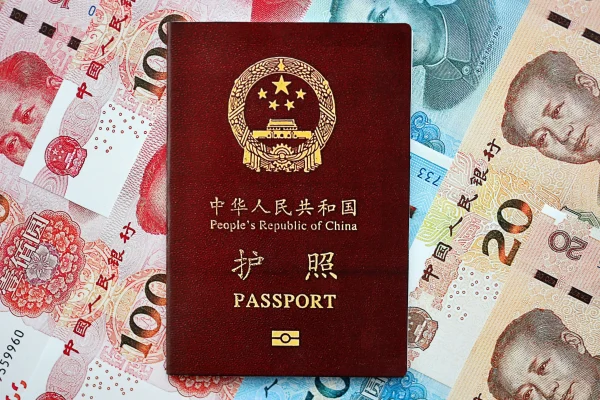
Global Diplomacy Driving the China Visa-Free Policy
Corporate savings targets and high-level political visits dictate modern border regulations more than tourist convenience. Governments open their doors primarily to stimulate business deals.
High-level state visits heavily influenced the creation of the China visa-free policy. UK Prime Minister Keir Starmer and Canadian PM Mark Carney traveled to Beijing in January. These diplomatic missions aimed to boost international commerce. Removing the visa requirement saves corporations between USD 140 and 200 per traveler.
This financial shift directly affects corporate travel budgets. Companies instantly redirect those savings into booking more flights. The travel industry anticipates a massive 20-25% surge in corporate bookings. Major carriers like Air China, British Airways, and Air Canada plan rapid route capacity expansions to handle the expected volume.
The Surge in Passenger Volume and Economic Effect
According to 2024 Office for National Statistics data, UK traveler volume hits roughly 620,000 visitors annually. The new entry rules will drastically increase those numbers. Airlines must scale their operations immediately to capture the newly opened business travel market. The focus entirely revolves around maximizing the volume of high-value travelers moving between these major economic hubs.
Conflicting Dates and System Chaos
Government announcements often lag behind the actual implementation codes programmed into airport check-in systems. This discrepancy traps early travelers in a jurisdictional gray area.
Reports show active visa-free travel occurring right now for many British citizens. However, official supporting sources claim the actual policy commencement date targets February 17. The policy specifically identifies "ordinary passport holders from the United Kingdom and Canada" as the exclusive beneficiaries.
This timing contradiction generates massive confusion. Travelers read headlines about open borders and book their flights immediately. They arrive at the airport assuming full legal clearance. If the local border terminal lacks the updated February 17 protocol, the guards fall back on older, stricter rules.
A System Lacking Flexibility
Border systems offer zero flexibility for edge cases. If a treaty lists the "United Kingdom," an agent will never accept the "Isle of Man" as a substitute. The 26-year-old traveler flew 12 hours straight into this precise bureaucratic trap. The traveler carried a valid British document, yet the digital database demanded exact adherence to the updated list.
The High Stakes of the China Visa-Free Policy Application
Removing an upfront fee simply transfers the financial risk from the initial application process to the physical border checkpoint. A rejection at immigration costs significantly more than a traditional visa denial.
Before this policy shift, a traveler applied for a visa weeks in advance. If the embassy flagged an Isle of Man passport as invalid, the tourist lost a small application fee. They remained safely at home. Under the new China visa-free policy, the traveler risks the entire cost of the trip.
The tourist from Gatwick paid for round-trip flights, a 10-day accommodation package, and transit connections. The border rejection destroyed that entire investment. Instead of a cheap holiday, the passenger endured a grueling 24 hours of total flight time, lost vacation funds, and endured intense emotional distress.
The Psychological Toll of Airport Expulsion
The sudden shift from eager tourist to rejected traveler creates intense psychological whiplash. The 26-year-old passenger reported a severe emotional toll. Being detained, facing a communication blackout, and having travel documents physically confiscated mimics the experience of a criminal arrest. The traveler simply wanted a solo holiday, yet the bureaucratic mismatch turned a routine transit stop into a high-stress expulsion event.
Corporate Priorities Overshadow Tourist Security
International travel agreements function primarily as economic tools rather than public services for standard vacationers. The focus remains locked on corporate efficiency and high-level trade routes.
The massive 20-25% booking surge projected by Air China, British Airways, and Air Canada relies entirely on corporate travelers. The China visa-free policy streamlines entry for executives carrying standard passports. The USD 140 to 200 savings per traveler adds up to millions in reduced corporate expenses.
This corporate focus leaves edge cases highly vulnerable. A 26-year-old tourist falls outside the primary target demographic of this diplomatic push. When the system encountered an Isle of Man document, it simply rejected the anomaly. The massive airline capacity expansion ensures more standard travelers get through, while unique passport holders face a rigid, unforgiving entry protocol.
The Discrepancy in National Allowances
The 30-day allowance for UK and Canadian citizens highlights a massive shift in diplomatic relations. Contrast this with the tight 10-day transit waiver offered to Indonesian travelers and the 24-hour rule for U.S. citizens. These duration limits reflect precise diplomatic agreements. The 30 days allow sufficient time for long-term business negotiations, extensive family visits, and extended cultural exchanges. Standard British citizens benefit greatly from this extension, provided their passport cover explicitly states the correct geographic region.
The True Cost of Border Ambiguity
Modern travel treaties prioritize massive trade volumes over individual passenger security. Bureaucracies implement sweeping rules without updating their digital systems to recognize specific regional territories.
The 26-year-old traveler experienced the harsh reality of this systemic oversight. The China visa-free policy successfully stimulates corporate travel and slashes visa fees for standard passport holders. Yet, it entirely fails residents of crown dependencies. A minor geographical distinction transformed a simple 10-day holiday into a traumatic deportation event.
Travelers must understand that border control relies entirely on rigid data entry. General citizenship guarantees nothing if the cover of your passport features an unlisted territory. Relying on headline announcements leaves tourists highly vulnerable to rigid immigration enforcement and forced return flights.
Recently Added
Categories
- Arts And Humanities
- Blog
- Business And Management
- Criminology
- Education
- Environment And Conservation
- Farming And Animal Care
- Geopolitics
- Lifestyle And Beauty
- Medicine And Science
- Mental Health
- Nutrition And Diet
- Religion And Spirituality
- Social Care And Health
- Sport And Fitness
- Technology
- Uncategorized
- Videos

