
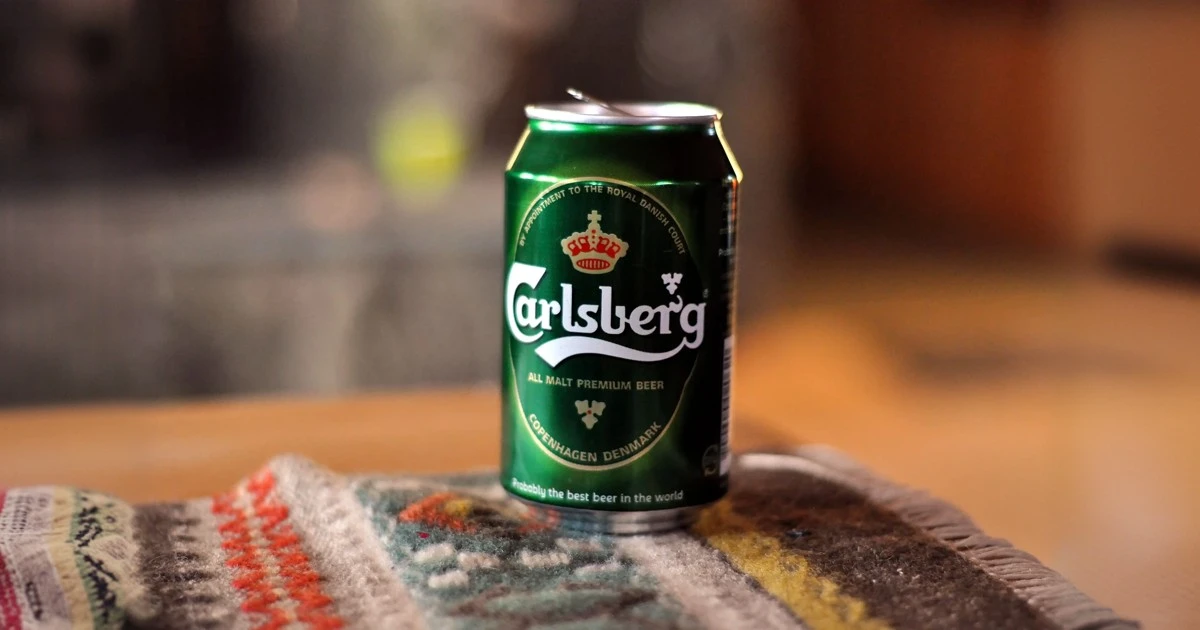
Image Credit - By cyclonebill from Copenhagen, Denmark, Wikimedia Commons
Carlsberg: The Secret Science Lab Selling Beer
Most companies guard their trade secrets with armies of lawyers, but one brewing giant gave away its most valuable invention for free. In the late 19th century, making beer was a gamble. Batches frequently spoiled, earning the name "beer sickness." A solution existed inside a Copenhagen laboratory, but the owner did not patent it. Instead, he mailed the cure to his biggest rivals. This counterintuitive decision did not bankrupt Carlsberg. It set a global standard that forced the entire industry to play by their rules.
J.C. Jacobsen founded his brewery in 1847 to professionalize the chaotic art of brewing, rather than just selling alcohol. He treated his vats like chemistry sets and his employees like lab assistants. Today, that same obsession with control drives a massive shift in their business model. The company famous for the "probably the best lager in the world" slogan is quietly moving away from beer. With a portfolio now heavily weighted toward non-alcoholic and soft drink options, the Danish giant is re-engineering its base again. The strategy relies on scientific precision and aggressive expansion to survive a volatile market.
The Laboratory That Paid for the Brewery
Profit often follows discovery, yet sometimes the finding matters more to the founder than the money itself. J.C. Jacobsen in 1875 established the Carlsberg Laboratory with a specific focus on brewing chemistry and physiology. He viewed the production floor as an extension of the lab bench. Most brewers of that time operated on superstition and tradition. Jacobsen operated on data. According to the Carlsberg archives, S.P.L. Sørensen developed the pH scale and conducted landmark research into amino acids, proteins, and enzymes. This scientific approach removed the guesswork from production.
Every bottle tasted the same because the variables remained under strict control. The laboratory became the heart of the operation, pumping out innovations that defined modern lager. This dedication to science required immense funding. The founder eventually transferred majority ownership to the Carlsberg Foundation in 1887. This structure ensured that profits fueled the arts, humanities, and sciences rather than just lining private pockets. The business existed to support the research, creating a cycle of innovation that kept them ahead of competitors who only cared about volume.
The Gift That Fixed Global Brewing
Sharing a competitive advantage usually destroys a business, yet giving away the crown jewel cemented this brand's authority. As detailed by the Carlsberg Group, Emil Chr. Hansen’s method for purifying yeast allowed for consistent quality on a production scale. A study published in the National Library of Medicine notes that this introduction of pure culture strains changed lager production forever. Jacobsen faced a choice. He could keep the pure yeast secret and corner the market on consistent beer. He chose the opposite path. He shared the discovery freely with other brewers. This act improved the quality of beer globally.
Who founded Carlsberg?
J.C. Jacobsen founded the brewery in 1847 in Copenhagen. By raising the industry standard, he ensured that consumers stopped fearing bad beer. The demand for lager skyrocketed. Carlsberg launched its iconic Pilsner in 1904, accompanied by the Art Nouveau logo that remains today. The company positioned itself as the leader of a sophisticated, reliable industry. They sold the technology that made the product possible, rather than simply selling a beverage.
A Strange Way to Run a Business
Most corporations answer to shareholders demanding quarterly returns, but this empire answers to a board of academics. The Foundation ownership model creates a unique set of priorities. The founder’s motto, Laboremus pro Patria (Let us work for our country), directed the company toward patriotism and public service. This structure allowed for long-term thinking that public companies often lack. In 1906, the "Old" and "New" Carlsberg breweries merged. The company continued to pour resources into scientific advancement and cultural support. This heritage creates a distinct corporate identity. They balance the ruthless productivity required for global dominance with a mandate to support society. The Foundation model also influences their expansion. They built their first foreign brewery in Malawi in 1968, marking the start of a serious international push. The goal remained consistent: export the scientific standard of Danish brewing to every corner of the map.
Expanding the Map Aggressively
You cannot grow by staying home, even if your home market treats you like royalty. The late 20th century saw the company transform from a Danish icon into a global heavyweight. Merging with Tuborg Breweries in 1970 consolidated their power in Denmark, providing a sturdy base for international conquest. The real acceleration began with acquisitions. Reuters reported that Carlsberg and Heineken agreed to a cash bid of 7.8 billion pounds to buy and break up Scottish & Newcastle, opening new doors. Today, the brand holds the rank of the 7th largest brewery by revenue. They employ approximately 33,000 people and operate in 140 markets.
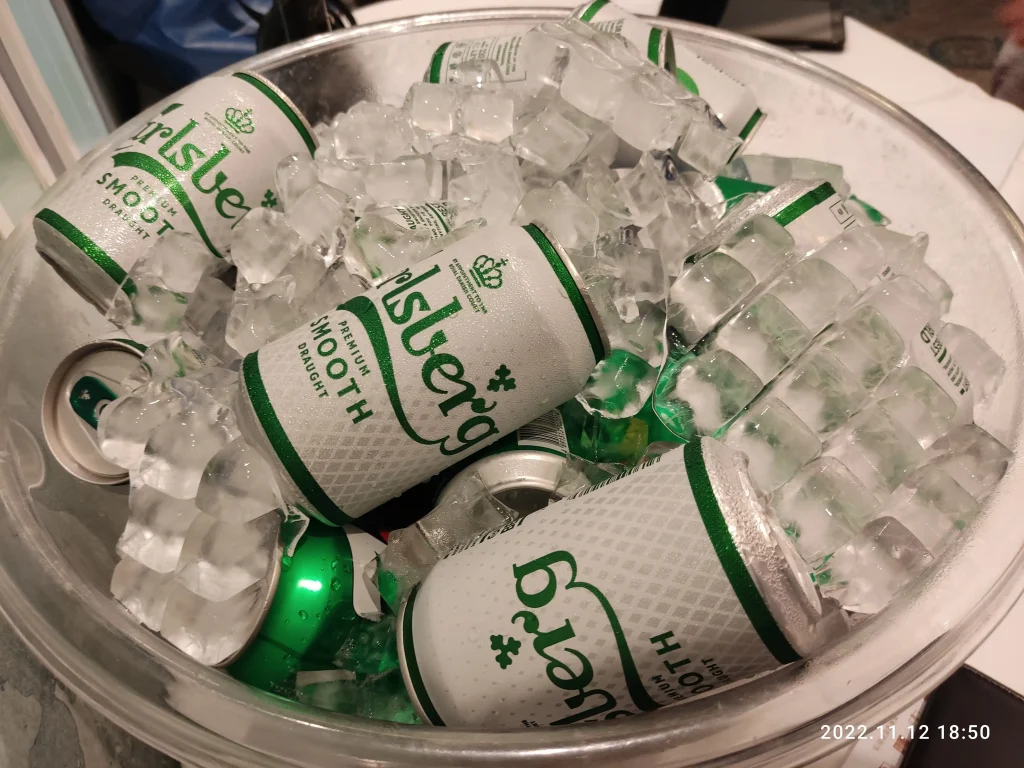
Image Credit - By DUAWGIEFONG ETR SHUN, Wikimedia Commons
Is Carlsberg sold worldwide?
Yes, the brand reaches consumers in over 140 markets globally. Dominance varies by region. In Malaysia, they hold over 50% of the market share. In Poland, they rank third with 14.4%. The company adapts its portfolio to fit local tastes while maintaining the master brand's reputation. They use licensing deals and joint ventures in places like India and China to navigate difficult local regulations.
The Soft Drink Pivot
Surviving in the alcohol industry sometimes requires selling everything except alcohol. Recent moves show a major divergence from the company's beer-focused history. Reuters reported that the company agreed to acquire British soft drinks maker Britvic for £3.3 billion to create a leading beverage group. This deal reshaped the revenue model rather than simply adding a few sodas to the cooler. The Financial Times highlights that core beer sales dropped from 59 percent of the total in 2024 to 49 percent.
Soft drinks now make up roughly 30% of the group's total following the Britvic deal. CEO Jacob Aarup-Andersen describes this as building "defensive barriers" around the beer core. Consumers drink less alcohol today. Moderation trends drive the market toward non-alcoholic options. By owning the soft drink space, the company protects its bottom line against falling beer volumes. They realized 30% of the targeted £110 million savings from the Britvic integration benefits early, proving the financial logic behind the move. The company now functions more as a beverage platform than a traditional brewery.
Facing Modern Headwinds
Even giants stumble when politics and inflation collide with consumer habits. The company faces severe challenges that threaten its stability. The most dramatic blow came from Russia. In an interview with Reuters, CEO Jacob Aarup-Andersen stated there is no way around the fact that Russia stole their business and he refused to help them legitimize the seizure.
Did Russia seize Carlsberg assets?
The Russian government seized the assets of Baltika Breweries in 2023. Other markets present their own difficulties. In the UK, the company lost the license to brew San Miguel to rival AB InBev. The Standard reported that group organic volumes fell by 0.6% after accounting for the loss of this contract. Simultaneously, a UK government publication confirmed that all alcohol duty rates would uprate in line with the Retail Price Index at 3.66%. Industry analysts warn these costs will inevitably trickle down to shoppers. Despite these hits, operating profit rose by 5%. This increase came largely from the cost savings in the Britvic integration. The company manages to squeeze more profit out of lower volumes, a necessary skill in a shrinking market.
The Future of the Bottle
Staying relevant means changing the recipe before the drinkers change their minds. The modern strategy focuses heavily on diversification. The brand portfolio now includes over 500 varieties, with 155 in the flagship group. The shift concerns strength as much as flavor. The standard global ABV sits at 5%, but in the UK, specific versions have dropped to 3.4% to navigate tax laws. Meanwhile, the famous Special Brew has been reduced from 9% to 7.5%. These adjustments reflect a pragmatic approach to regulation and health trends. India represents the next great frontier. The company is considering an IPO for its Indian operations to capitalize on the growing market there. Sustainability and non-alcoholic options drive the long-term vision. The CEO emphasizes that adaptation is essential. The "finest lager" slogan from 1973 still holds nostalgic power, but the company's future relies on beverages that might never see a fermentation tank.
Conclusion: The Science of Survival
Carlsberg started as a quest to fix bad beer through chemistry. It succeeded so well that it completely changed how the world brews. Now, the company applies that same rigorous analysis to its business model. The shift toward soft drinks and the aggressive handling of geopolitical crises show a corporation that refuses to rely on tradition alone. The seizure of assets in Russia and the loss of key contracts like San Miguel forced a hard look at vulnerability. The response was to build a wider, more defensive moat using soft drinks and non-alcoholic brands. J.C. Jacobsen used science to control yeast; his successors use diversification to control the market. The laboratory is still open, but the experiments now focus on global finance and consumer psychology.
Recently Added
Categories
- Arts And Humanities
- Blog
- Business And Management
- Criminology
- Education
- Environment And Conservation
- Farming And Animal Care
- Geopolitics
- Lifestyle And Beauty
- Medicine And Science
- Mental Health
- Nutrition And Diet
- Religion And Spirituality
- Social Care And Health
- Sport And Fitness
- Technology
- Uncategorized
- Videos

