
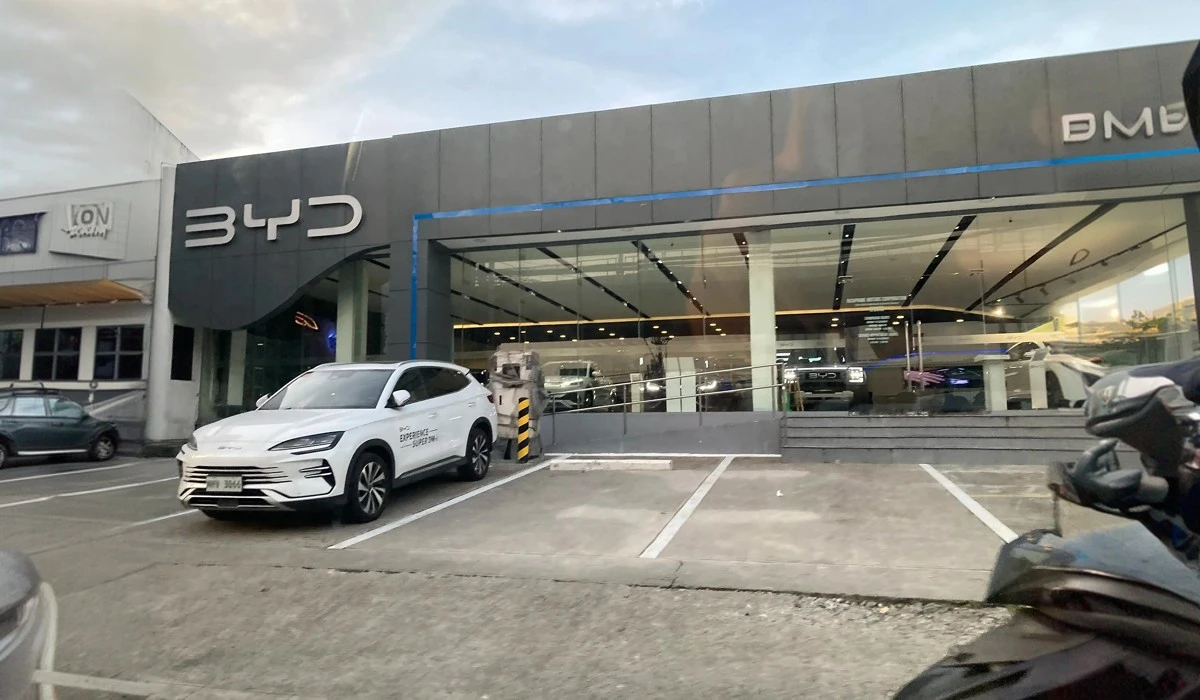
Image by - Captainmorlypogi1959, CC BY-SA 4.0, via Wikimedia Commons
BYD Overtakes Tesla To Lead Global EV Shift
Laughing at a competitor often creates the exact conditions they need to defeat you. As reported by Bloomberg, Elon Musk publicly dismissed BYD in 2011, laughing at their car designs and stating he didn't see them as a competitor at all. He viewed the Chinese firm as a distraction instead of a threat. That dismissal allowed BYD to work without the pressure of the spotlight, slowly perfecting a battery-first approach while Tesla focused on software and brand image.
The results of that oversight are now concrete. For the first time in history, the American EV giant has lost the volume war. The numbers for 2025 confirm a complete reversal of the hierarchy Musk once joked about. Tesla’s sales have shrunk, while its rival has surged ahead with aggressive speed. This signifies a permanent shift rather than a bad quarter, effectively changing the guard in the electric vehicle industry. As BYD overtakes Tesla, the market must accept a new reality where pricing and utility matter more than hype.
The Numbers Behind How BYD Overtakes Tesla
Dominance often blinds market leaders to the simple math working against them. The final tallies for 2025 show a gap that is no longer bridgeable by brand loyalty alone. BYD finished the year with 2.26 million pure electric vehicle (EV) sales. This represents a massive 28% year-over-year growth. They sprinted past the finish line with a wide lead.
In contrast, Tesla moved in the opposite direction. According to AP News, Tesla said they delivered 1.64 million vehicles in 2025, down 9% from a year earlier. The fourth quarter was particularly brutal. Tesla delivered only 418,227 units, which is a 15.6% drop against Q4 2024. The Guardian reports that while BYD recorded 4.55 million sales overall including hybrids—which actually fell 8%—the pure EV comparison alone proves the shift. The American firm has officially suffered its first annual defeat in EV volume.
The Subsidy Vacuum and Political Backlash
Government support acts like a temporary shield, and when it vanishes, the product must stand entirely on its own. The repeal of the $7,500 US tax credit in September 2025 stripped away a key financial incentive for American buyers. Suddenly, the price on the sticker was the price customers actually paid. This removal exposed Tesla to direct price comparisons that they previously avoided.
Internal strategy also played a role in this decline. Elon Musk’s increasing involvement in politics alienated a significant portion of his customer base. According to The Washington Post, a final tally shows he donated $288 million to the Trump campaign, creating a confusing contradiction for buyers given the candidate's anti-EV agenda. Many consumers vote with their wallets. People wonder about the effect of politics on sales. How did political views affect Tesla sales? Analysts point to a direct link between Musk’s polarizing government role and the brand's alienation of liberal buyers who traditionally support green tech. This backlash, combined with the subsidy loss, accelerated the sales slump.
Aggressive Pricing Meets Global Expansion
Accessibility usually beats exclusivity when a market eventually matures. BYD understood that the next wave of EV buyers wanted value, not status. They launched aggressive pricing strategies that undercut Western competitors significantly. This approach allowed them to dominate markets in Latin America and Southeast Asia, where price sensitivity drives every purchase decision.
Europe proved to be a fertile ground for this strategy as well. In the UK market alone, BYD saw a staggering 880% growth for the year ending September 2025. They flooded the streets with affordable options while Tesla’s market share in the EU slid from 2.4% down to 1.6% between January and October. Focusing on volume and affordability allowed BYD to overtake Tesla in regions that the US firm once considered secure strongholds.
Technology Is No Longer a Unique Moat
Advanced tech ceases to be a defensive wall when competitors start offering it as a standard feature. For years, Tesla claimed a unique advantage in autonomous driving and software integration. However, the Chinese reality has caught up. BYD now includes its "God's Eye" autonomous technology even in its cheapest models. High-tech features are no longer exclusive to luxury price tags.
Competitors and tech giants in China are deploying self-driving capabilities that rival or exceed American offerings. Tesla’s claim of a "unique" advantage is fading as the industry standard rises. Musk previously dismissed the capability of these rivals, but the 2025 data proves that the technology gap has closed. Consumers can now get advanced driver assistance systems without paying a premium, further eroding the justification for Tesla’s higher price points.
The Stock Market Valuation Disconnect
Wall Street frequently bets on future promises while ignoring the ledger sitting right on the desk. Despite the clear loss in volume and the drop in sales, Tesla retains a market capitalization of $1.4 trillion. This is worth more than the next 30 automotive rivals combined. Investors are ignoring the current car sales data in favor of a different narrative.
The market reaction to the 2025 reports highlighted this split perspective. After the earnings news broke, Tesla stock fell only 1.2%, while BYD shares jumped 5%. Investors still value Tesla’s profit margins, which remain higher than BYD’s despite the lower volume. The American firm effectively trades as a tech company, while the market treats BYD as a traditional auto manufacturer. This valuation disconnect keeps Tesla afloat even as BYD overtakes Tesla on the manufacturing floor.
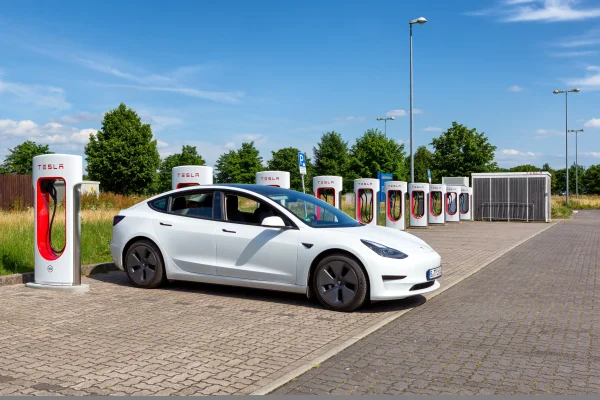
Image by - Avda, CC BY-SA 3.0, via Wikimedia Commons
The Pivot to Robotaxis and Autonomy
When you lose the war for car sales, you must attempt to change the battlefield entirely. Tesla has signaled a massive strategy shift away from simply selling cars to individuals. The focus is now on the "Robotaxi" rollout, forecasted for 2026. Musk is betting the entire future value of the company on "Optimus" robots and autonomous fleets rather than the Model 3 or Model Y.
This pivot explains why the stock price holds firm. As noted by Seeking Alpha, a Wedbush analyst recently projected that Tesla would maintain 70% dominance of the self-driving sector, arguing no other company can match their scale. Optimism remains high among financial experts who see the current sales slump as a temporary bump before the autonomy time begins. Consumers have questions about this new direction. What is the future of Tesla if they sell fewer cars? The company plans to generate revenue through autonomous ride-hailing services, effectively becoming a transport utility instead of a car seller.
Origins and Leadership Irony
A company’s foundation often dictates its durability during a competitive storm. Encyclopedia Britannica records that BYD was founded in 1995 by Wang Chuanfu, starting life strictly as a battery manufacturer. Their expertise lies in the chemical components that make EVs run. This vertical integration allows them to control costs and innovate from the bottom up. Wang is often compared to Musk, but his approach is grounded in manufacturing hardware rather than software hype.
The irony of the current situation is sharp. Musk funded a political campaign that removed the subsidies his company benefited from. Meanwhile, BYD expanded its commercial dominance, selling over 57,000 buses and lorries in 2025, doubling their year-on-year figures in that sector. While Tesla tried to soften the blow of the report by releasing low estimates beforehand, the reality remains clear. The battery maker has beaten the software maker at building cars.
The Great Divergence: BYD’s Volume vs. Tesla’s Pivot
The time of undisputed American dominance in electric vehicles has ended. The data from 2025 confirms that BYD overtakes Tesla by a landslide in volume. The combination of aggressive global pricing, the removal of US subsidies, and a strategic pivot by Musk has reshaped the market. Tesla has lost its status as the default king of EVs to become a company in transition, betting everything on a robotic future to justify its trillion-dollar value.
For buyers and investors, the lesson is in the numbers. BYD’s rise from a mocked battery factory to the world’s top EV seller proves that ignoring a competitor is a dangerous game. While Tesla chases the future of autonomy, BYD has conquered the present reality of the road. The market has spoken, and it prefers the affordable, available option over the promise of what might come next.
Recently Added
Categories
- Arts And Humanities
- Blog
- Business And Management
- Criminology
- Education
- Environment And Conservation
- Farming And Animal Care
- Geopolitics
- Lifestyle And Beauty
- Medicine And Science
- Mental Health
- Nutrition And Diet
- Religion And Spirituality
- Social Care And Health
- Sport And Fitness
- Technology
- Uncategorized
- Videos

