

Beat Commercial Risk With Mercantile Law Tools
Every business owner knows the feeling of signing a major contract. You put the pen down, shake hands, and feel a sense of relief. You assume the hard part is over. Rather than closing a door on risk, that signature often opens a floodgate. You might think your written agreement is the final authority on what you owe and what you are owed. You would be wrong.
There is a massive, pre-existing set of rules that governs your trade before you ever type a single word of a contract. If your shipment sinks in the ocean, if your employee crashes a delivery van, or if a supplier sends you the wrong steel, your written contract might not save you. Instead, you fall back on an ancient but active framework that decides who pays the bill. This is Mercantile Law. It functions as the operating system for global trade, and if you don't know how it works, you are likely already violating it.
While commercial liability rules can feel like a minefield designed to trap the unwary, the right legal knowledge turns them into navigable paths. You don't need a law degree to survive business, but you do need to know the rules of the game. Mercantile Law serves as a practical defense for modern companies rather than a theoretical concept.
Understanding The Core Of Mercantile Law
To beat liability, you first have to know the arena you are fighting in. Most people confuse general civil law with commercial law, but they are different types of regulations. Civil law often focuses on resolving disputes between individuals. Mercantile Law focuses on speed, certainty, and the specific needs of professional trade. It assumes that people in business should know better than the average citizen.
Defining The Scope For Merchants
The law treats you differently depending on who you are. Under frameworks like the Uniform Commercial Code (UCC), there is a sharp distinction between a casual seller and a "merchant." A merchant is someone who deals in goods of a specific kind or holds themselves out as having special knowledge about them.
If you sell your old office furniture on a whim, you are likely a casual seller. But if you own a furniture store, you are a merchant. This matters because Mercantile Law holds merchants to a much higher standard. A casual seller might get away with a "buyer beware" defense. A merchant cannot. You are expected to be an expert.
This creates a specific environment for liability. You might wonder, what is the main purpose of mercantile law? The main purpose is to regulate business transactions and ensure fairness in trade, giving merchants a clear framework for resolving disputes. It prevents commerce from grinding to a halt every time two parties disagree. It favors keeping goods moving over pausing for lengthy philosophical debates.
The Intersection With Liability

This special status dictates your risk profile. Commercial liability rules are not static; they fluctuate based on your classification. For example, according to the Uniform Commercial Code (UCC) Section 2-314, the "implied warranty of merchantability" functions as a mandate where a product is required to serve its standard function, which usually applies only if the seller is a merchant.
If a consumer sells a used lawnmower to a neighbor and it breaks, the law might shrug. If a hardware store sells that same lawnmower, the Mercantile Law creates an automatic liability for the store. This distinction is critical. It implies that liability for defective goods attaches to professional sellers automatically, often without anything being written down. You take on this risk the moment you open your doors for business.
Navigating Commercial Liability Rules In Contracts
The contract is the primary vehicle for business risk. However, many business owners make the mistake of thinking the contract is the only thing that matters. They believe that if a term isn't in the document, it doesn't exist. This is dangerous thinking. Mercantile Law fills in the gaps of your silence.
Express Versus Implied Terms
Liability isn't limited to what you sign. There are "express terms," which are the words physically written on the paper. Then there are "implied terms," which are the obligations the law forces upon you, whether you agreed to them or not.
Research published by the University of Queensland suggests that courts often include implied terms into contracts to provide business efficacy, meaning they seek to ensure the deal has a logical commercial basis. For example, if you contract a shipping company to transport frozen fish, you might not explicitly write "keep the fish frozen" in the agreement. However, if the fish arrive thawed and spoiled, the court will imply that refrigeration was part of the deal.
Awareness of these unseen terms is necessary because leaving them out of the contract does not allow you to escape commercial liability rules. If a term is standard in your industry, Mercantile Law assumes you agreed to it. Ignoring these unseen terms exposes businesses to large breach of contract claims that come out of nowhere.
Breach And Damages
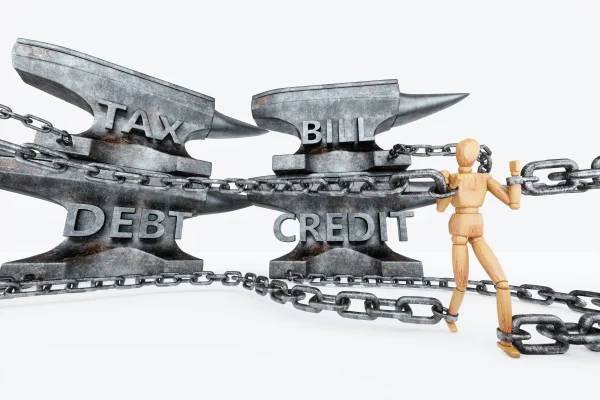
When a deal goes wrong, the type of failure determines the financial fallout. As specified in the UK Sale of Goods Act 1979, Mercantile Law distinguishes between a "condition" and a "warranty." A condition is described as a term so vital to the contract that a violation allows the other party to treat the deal as ended. Conversely, the Act defines a warranty as a secondary term where a breach allows for damages but does not permit cancellation of the contract. The UCC Section 2-711 further notes that when a condition is breached, the buyer has the right to reject the items, terminate the agreement, and seek financial recovery. Understanding this prevents you from illegally terminating a deal over a minor issue, which would flip the liability back onto you.
Mercantile Law In The Sale Of Goods
Product liability is a massive area of concern for retailers, wholesalers, and manufacturers. The sale of goods is the heartbeat of commerce, and it is also where Mercantile Law is most specific. The rules here are technical, but they determine who loses money when disaster strikes.
Transfer Of Title And Risk
One of the most misunderstood concepts is the difference between owning something and carrying the risk for it. You might think you are liable for goods only when you are holding them. That is rarely the case in B2B transactions.
Liability follows risk, not necessarily possession. Based on the District of Columbia’s commercial code Section 2-509, in a "Shipment Contract," the risk for potential loss moves to the buyer the moment the seller delivers the items to the transporter.
If the truck falls off a bridge five minutes later, the buyer still owes the seller the full purchase price. The buyer owns the smashed goods at the bottom of the river. If you don't understand this, you might refuse to pay, get sued, and lose. This technicality alone causes millions in disputed losses annually because buyers assume "no delivery means no payment."
Warranties And Conditions
We discussed conditions earlier, but product quality brings up specific warranties. The "fitness for a particular purpose" rule is a trap for many helpful sellers. If a buyer comes to you and says, "I need a paint that will stick to underwater metal," and you hand them a can of standard house paint, you have just created a specific liability.
If the buyer relies on your skill to select suitable goods, you are liable if those goods fail that specific purpose. It doesn't matter if the paint is high quality; it matters that it was wrong for the specific job you recommended.
This leads to a common confusion: Who is liable for defective products? Generally, the seller or manufacturer is liable if the goods do not meet quality standards or fitness for purpose as outlined in the Sale of Goods Act, regardless of whether they knew about the defect. You cannot claim ignorance. If you sold it, you often own the problem.
Vicarious Liability And Agency Relationships
Your business includes your employees, your partners, and your agents, along with yourself. Mercantile Law extends your liability to cover the actions of these people.
The Principal-Agent Dynamic
Within the trade sector, an agent is anyone authorized to act on your behalf. Information from Cornell Law’s Wex database indicates that Mercantile Law makes an agreement reached by an agent binding upon the principal.
This gets tricky with "apparent authority." Even if you tell your sales manager, "Do not offer a discount over 10%," but they go out and sign a contract offering 20%, you are likely stuck with that deal. To the outside world, it appeared they had the authority to negotiate. You cannot hide behind your internal instructions to void a contract that a third party signed in good faith. You are liable for the deal, and your only recourse is to discipline the employee internally.
Employee Negligence
Businesses face strict liability for torts (civil wrongs) committed by employees within the "scope of employment." This responsibility is part of the legal principle of respondeat superior, which Cornell Law Wex defines as a rule holding an employer accountable for the harmful actions of an employee. This source further clarifies that the law distinguishes between a "frolic" and a "detour," where a detour is a minor side trip while a frolic involves a significant departure from work duties for personal gain.
If the driver stops for coffee on the way to a drop-off and hits a car, you are liable. However, if the driver takes the company van three hours off-route to visit a girlfriend and crashes, Mercantile Law may shield the business because the employee was no longer acting for the business. Knowing the difference can save a company millions in insurance payouts.
Strategic Defenses Under Mercantile Law
Now that we have covered the risks, we need to look at the shields. Mercantile Law provides specific tools to limit or shift liability. A smart business owner uses these legally recognized defenses to build a fortress around their assets.
Utilizing Indemnity Clauses
An indemnity clause is a contractual weapon. As noted by Thomson Reuters, an indemnity clause acts as a method for one party to compensate another for costs or legal responsibilities arising from third-party claims.
When you sign a contract with a supplier, you should include a "hold harmless" or indemnity clause. For example, imagine you are a retailer selling electric scooters. If a battery explodes and burns down a customer's garage, the customer will sue you. A strong indemnity clause in your purchase contract with the scooter manufacturer forces the manufacturer to step in, hire the lawyers, and pay the settlement. Without this clause, you are paying out of pocket and hoping to sue the manufacturer later to get your money back.
Force Majeure And Frustration
Sometimes, the world simply falls apart. Hurricanes strike, wars break out, or pandemics close borders. Legal insights from Thomson Reuters highlight that a force majeure clause provides a way to assign risk if an unexpected event makes fulfilling the contract impossible or impractical. Performance must be truly impossible, as simply becoming expensive or difficult is insufficient for this defense.
This is distinct from the doctrine of "frustration." Frustration applies when the contract's purpose is destroyed. The classic examples come from the coronation of King Edward VII. People rented balconies to watch the parade. When the King got sick, and the parade was cancelled, the renters refused to pay. The courts ruled the contracts were "frustrated"; the room was available, but the purpose of the rental (the view) was gone. These defenses are your safety net against total chaos.
Liability In Financing And Negotiable Instruments
Trade relies on the flow of money. Mercantile Law governs the documents that move this money, known as negotiable instruments. This includes checks, promissory notes, and bills of exchange. The liability rules here are rigid and mathematical.
Dishonor Of Instruments
When you sign a check or a note, you are creating a chain of liability. The UCC Section 3-104 describes negotiable instruments as written promises or orders to pay a set amount of money, such as checks. According to Section 3-414, if such a document is not honored, the person who wrote it is required to pay. Section 3-415 further adds that if you sign the back of a check and it is later rejected, you are personally responsible for the payment. You are "secondarily liable."
Secured Transactions
If you lend money or offer credit, you need to know about Secured Transactions. As specified in UCC Section 9-310, a security interest is not considered perfected until a financing statement is officially filed with the state. Section 9-322 clarifies that when multiple creditors have claims, the priority is determined by who filed or perfected their interest first.
Imagine you lend money to a factory and take their equipment as collateral, but you forget to file the paperwork. A week later, a bank lends them money and files properly. If the factory goes bankrupt, the bank takes the equipment. You get nothing. Priority is determined by being the first to file under Mercantile Law, regardless of when the loan was made.
The Future Of Mercantile Law Compliance
We are no longer trading grain in medieval markets. We are trading digital assets across fiber optic cables. Mercantile Law is adapting, but the shift creates new cracks where liability can form.
E-Commerce Challenges
The digital age has tested the limits of contract law. The E-Sign Act, as codified in the US Code, ensures that digital signatures and records are not denied legal status simply because they are electronic. But simply clicking a box is not always enough.
Courts are scrutinizing "clickwrap" agreements, those long terms of service you scroll past. Reporting by Reuters on recent court cases indicates that clickwrap agreements are valid only if consumers have a genuine chance to review the terms before agreeing. If the terms are buried or the "I Agree" button isn't conspicuous, courts may rule that no contract was formed. This leaves an e-commerce business exposed to general civil liability without the protection of its arbitration clauses or liability caps.
Global Standardization
For international trade, commercial liability rules are increasingly governed by the CISG (United Nations Convention on Contracts for the International Sale of Goods). According to this Convention, the rules apply to sales between businesses in different countries. This convention applies automatically unless the parties specifically state they wish to exclude it, as noted by the CISG Advisory Council.
Many local businesses are caught off guard, assuming their local laws apply, only to find themselves liable under international standards they never read.
Secure Your Business Future
Becoming an expert in Mercantile Law is not about memorizing dusty statutes. It is about strategic foresight. Every day, your business engages in acts that carry heavy legal weight, such as sending a purchase order, accepting a shipment, or answering an email. Recognizing where commercial liability rules apply allows you to insulate your business from devastating financial shocks.
Don't wait for a summons to arrive. Audit your contracts today. Check your indemnity clauses. Review your insurance through the lens of agency liability. Use Mercantile Law as it was intended: not as a trap, but as a tool to beat commercial liability and secure your hard-earned success.
Recently Added
Categories
- Arts And Humanities
- Blog
- Business And Management
- Criminology
- Education
- Environment And Conservation
- Farming And Animal Care
- Geopolitics
- Lifestyle And Beauty
- Medicine And Science
- Mental Health
- Nutrition And Diet
- Religion And Spirituality
- Social Care And Health
- Sport And Fitness
- Technology
- Uncategorized
- Videos

