
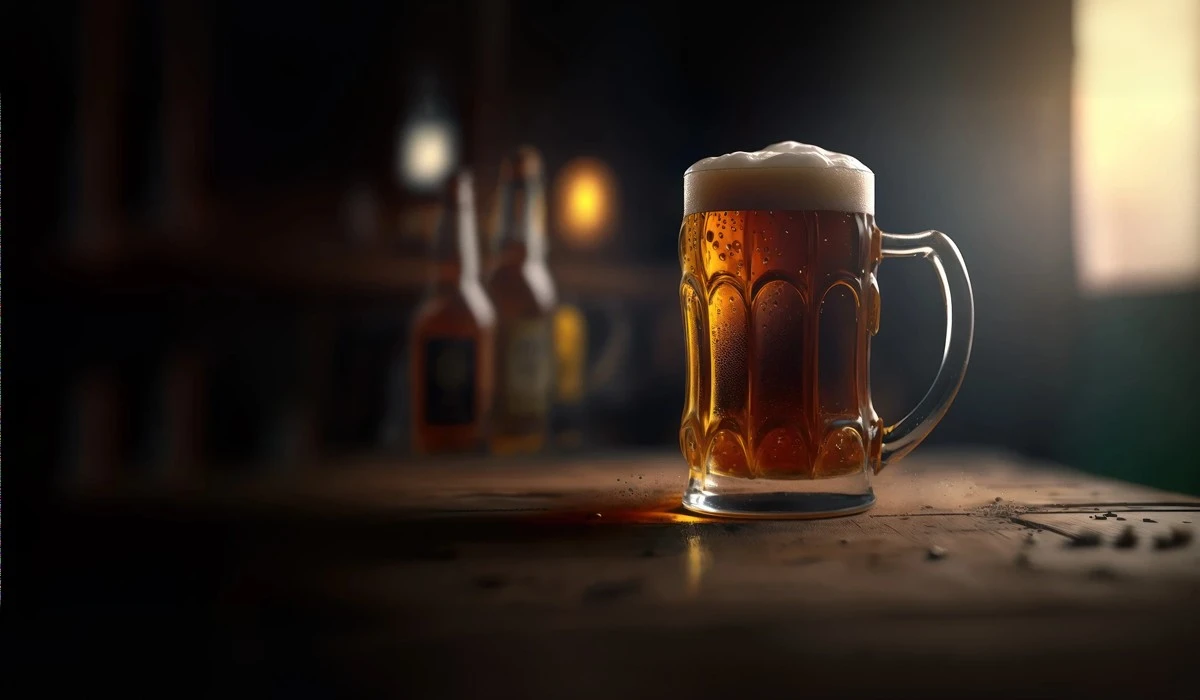
Alcohol-Free Beer: $3.9m Plant Shifted Production
A vacuum pump hums in South Wales, silently altering the chemistry of a billion-pint industry through a manipulation of atmospheric pressure. This invisible mechanical shift creates a new reality for the brewing world. On a recent Friday, the global brewing giant AB InBev unveiled a new de-alcoholisation facility at its Magor brewery. An AB InBev corporate release states that this plant already churns out over one billion pints annually, including heavy hitters like Budweiser, Stella Artois, and Corona. Now, a specific $3.9m investment changes how those beers reach the glass. The brewer's third-quarter financial report reveals the company aims to capture a market that grew global revenues by 27% in the last quarter alone.
The Engineering of Extraction
Molecular bonds break differently when you remove the weight of the atmosphere. The new unit at Magor utilizes this principle to strip alcohol without stripping character. Traditional boiling destroys delicate flavors, cooking the liquid until it tastes like soup. The new system uses vacuum distillation. This technology lowers the pressure inside the tank.
Under low pressure, alcohol evaporates at a much lower temperature. The liquid never gets hot enough to burn off the essential hop notes or malt body. Brian Perkins, a key figure at the launch, explains that older technology was primitive. He notes that rough treatment previously ruined the beer, resulting in a lousy product. The new method represents a significant step forward in preserving the full flavor and aroma.
Other methods exist in the industry, such as reverse osmosis, which pushes liquid through filters, or enzymatic changes using things like DIAZYME® NOLO. However, the vacuum method at Magor focuses on physical extraction. How is alcohol-free beer made? Makers often use vacuum distillation to lower the boiling point or special yeast that produces limited alcohol.
The Price of Absence
Removing an ingredient often costs more than leaving it in. Consumers frequently stare at the shelf price of alcohol-free beer and wonder why it matches the cost of regular pints. The logic seems backwards to the average shopper, who expects a discount for the missing buzz.
The reality lies in the process. Perkins clarifies that they brew the beer using the exact same process as the alcoholic version. Then, they add an entire extra step. This step requires the new capital equipment and millions of dollars in investment. The brewery must pay for the raw materials, the full fermentation time, and then the energy-intensive extraction phase.
Shoppers also forget the tax nuance. While they expect the lack of alcohol duty to lower the price, the production costs eat up that margin. The industry defends the price point as a reflection of the added labor and technology.

The Zebra Striping Phenomenon
A new pattern of behavior, known as "zebra striping," disrupts the old binary of drinking versus abstinence. Drinkers no longer simply choose between a wild night and a sober one. Instead, they alternate. They drink a full-strength beer, then a alcohol-free beer, and repeat. This blurs the lines between a drinker and a non-drinker.
Demographics drive this shift. Data from IWSR shows that 46% of Gen Z are likely to substitute alcohol with NoLo (No and Low alcohol) options. The research adds that Millennials follow closely at 41%, while Boomers trail at 36%. Two distinct consumer types emerge from this data. "Substituters" replace full-strength drinks entirely for specific events. "Blenders" switch between the two in a single session. The study indicates that this blending group accounts for up to 23% of young consumers.
The strategic intent here is "inclusivity" rather than "disruption." Perkins states they do not see this as a disruptor. He views it as a way to make the category more inclusive. Who drinks alcohol-free beer? Young adults and moderators increasingly drink it to pace themselves during social events without leaving the party early.
Market Battles and Headroom
A quiet divergence in strategy separates the winners from the losers in the UK market. While some competitors pull back from UK investments, AB InBev doubles down. The Magor facility signals a bet on long-term structural change rather than a passing fad.
The numbers support this aggression. The UK beer market holds a value of over £13.5bn. Currently, the NoLo market share sits at a distinct 2%. However, forecasts predict this will double to 4% by 2029. Historic growth rates since 2019 hover above 20% annually.
Susie Goldspink notes that innovation levels remain high. She points out that consumer engagement continues to grow, leaving plenty of headroom for future expansion. Retailers see the surge firsthand. Tesco reported a 106% year-on-year growth in this category, with Sainsbury's seeing a 91% jump.
Political figures also see the value. Chris Bryant emphasized the importance of local production. He noted that changing habits make it good to brew alcohol-free beer in South Wales instead of importing it from the Netherlands or Belgium. This localizes the supply chain and protects jobs against rising business rates and National Insurance costs.
The Flavor Gap
Marketing claims often sprint ahead of sensory reality. While executives praise the "fantastic taste," consumer tongues often tell a different story. A significant gap remains between the promise of a perfect pint and the liquid in the can.
Research reveals that 53% of consumers dislike the "bread" taste common in these brews. Another 51% complain about a "wort" flavor, which resembles unfermented beer. These specific off-notes plague the category. Brian Perkins admits that beer is delicate. He acknowledges that you must treat it with care to avoid the lousy taste of the past.
The industry relies on technology to close this gap. The vacuum distillation method specifically targets these complaints by avoiding heat damage. However, the persistence of consumer complaints suggests the code is not fully cracked yet.
Defining the decimals
A decimal point creates a legal minefield for brewers and retailers alike. The definition of what constitutes alcohol-free beer varies wildly depending on which side of a border you stand. This regulatory chaos complicates how brands label and sell their products.
In the UK, "alcohol-free" voluntary guidance sets the limit at a tiny 0.05% ABV. Anything between 0.05% and 0.5% falls under the "dealcoholized" label. In contrast, the USA and parts of the EU allow "non-alcoholic" or "alcohol-free" labels up to 0.5% ABV. This stems from the Volstead Act legacy in America.
This creates confusion. A pregnant woman or a person avoiding alcohol for religious reasons might see "0.0%" marketing but ingest trace amounts. Is alcohol-free beer completely alcohol-free? UK versions labeled "alcohol-free" contain less than 0.05% alcohol, while other "non-alcoholic" types can contain up to 0.5%.
Trademark laws add another layer of complexity. Class 32 covers beer and non-alcoholic beverages. Class 33 covers alcoholic beverages like wine and spirits. As non-alcoholic spirits move into Class 32, they blur the lines, causing intellectual property risks and registration conflicts.
The Shelf Space Conflict
The physical placement of bottles in a store reveals the industry's identity crisis. Retailers struggle to categorize these new liquids. Some place them in a dedicated "Health and Wellness" section, grouping beer, wine, and spirits together. This isolates the product from its natural environment.
Bars take a different approach. They place alcohol-free beer taps directly next to alcoholic ones. This supports the "inclusive" narrative AB InBev pushes. It normalizes the choice. The beverage becomes just another option on the bar, rather than a special medical dietary requirement.
This tension between being a "health product" and a "social lubricant" defines the current market. The rise of brands like Corona Cero and Budweiser Zero within AB InBev’s 29-brand NoLo portfolio shows a desire to keep the branding identical. They want the bottle to look and feel the same, even if the content differs.

Innovation Beyond The Pint
A broader wave of chemistry transforms the sector beyond just beer. While beer dominates with 75% of the NoLo market, other categories race to catch up. Spirits currently hold a tiny 0.6% share. However, forecasts predict a massive 14% Compound Annual Growth Rate (CAGR) for NoLo spirits.
This suggests that the technology installed in Magor is just the beginning. The shift impacts the entire beverage landscape. The move from simple filtration to complex enzymatic transformations and vacuum systems indicates a high-tech future. Efficiency gains from enzymes, for example, can boost production by 60% and reduce raw material use by 37.5%.
The industry is moving from an art form to a science. The focus on molecular preservation proves that the future of drinking involves less intoxication and more engineering.
Conclusion: The Permanent Pivot
The hum of the vacuum pump in Magor signifies a permanent alteration in the brewing blueprint. This $3.9m expansion is not merely a reaction to a trend; it is an infrastructure update for a new era of consumption. The industry has moved past the phase of primitive, lousy substitutes. It now operates in a world of precise molecular extraction and "zebra striping" consumers. Alcohol-free beer has secured its place on the tap, backed by billion-pint scale and serious capital. The gamble is no longer about whether people will drink it, but which technology will finally perfect the taste. The pressure is on, literally and figuratively.
Recently Added
Categories
- Arts And Humanities
- Blog
- Business And Management
- Criminology
- Education
- Environment And Conservation
- Farming And Animal Care
- Geopolitics
- Lifestyle And Beauty
- Medicine And Science
- Mental Health
- Nutrition And Diet
- Religion And Spirituality
- Social Care And Health
- Sport And Fitness
- Technology
- Uncategorized
- Videos

