
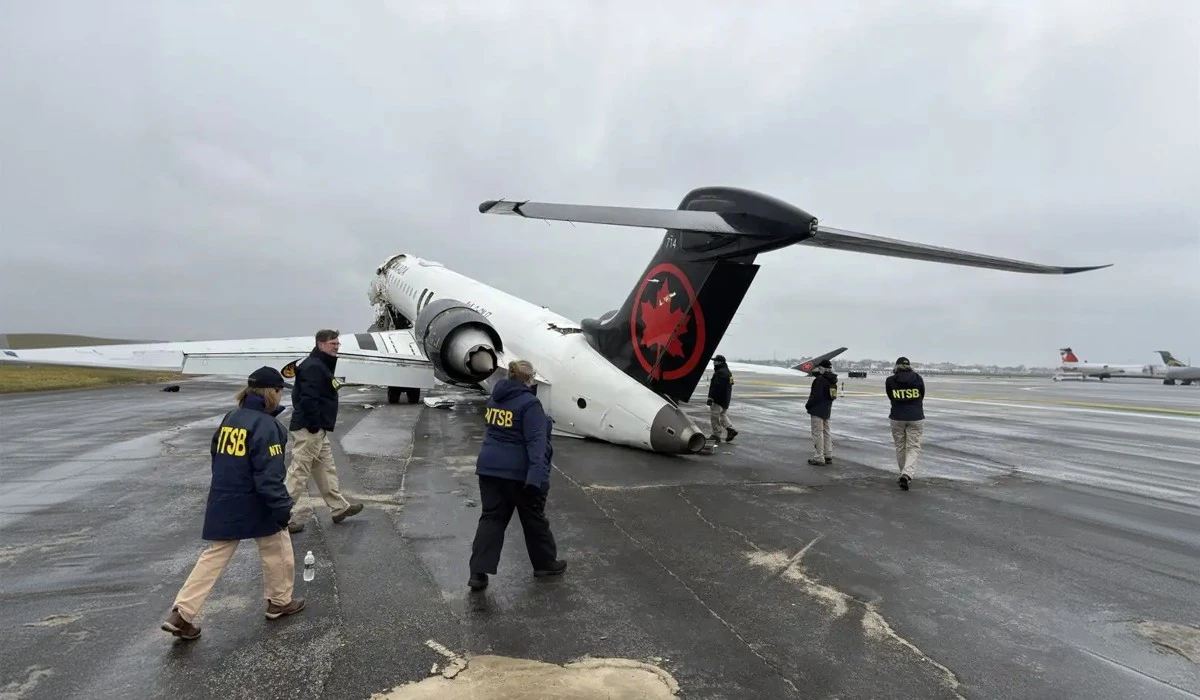
Air Canada Collision Kills Two Young Pilots
Aviation safety engineers build cabin walls to absorb massive collisions, but sometimes that exact structural reinforcement turns a bolted jump seat into a human slingshot. Extreme physics violently ripped a veteran flight attendant from the aircraft during touchdown. She survived entirely because her four-point restraint strapped her tight to a tearing bulkhead. When metal shreds at landing speeds, kinetic energy seeks the weakest structural point. Here, the cabin wall broke outward into the darkness. We see this brutal reality whenever heavy aircraft and emergency ground vehicles occupy the same narrow strip of tarmac. A routine arrival suddenly morphs into a desperate fight for survival.
This disaster exposes how tiny communication errors inflict catastrophic physical damage. Pilots lost their lives, and paramedics rushed injured passengers to local trauma centers. The ensuing investigation highlights deep flaws in airport ground coordination and tower protocols. The Air Canada Jazz CRJ-900 crash forces the industry to confront deadly radio failures. The sheer force of the crash permanently changed the lives of everyone on board the doomed flight.
The Anatomy of the Air Canada Jazz CRJ-900 Crash
Air traffic controllers orchestrate a high-speed ballet of commercial planes and heavy trucks, where one crossed wire causes instant destruction.
According to the NTSB, at approximately 11:45 PM on March 22, 2026, Jazz Aviation Air Canada Express Flight 8646, a CRJ900 from Montreal, approached the bustling LaGuardia Airport, where it collided with a fire truck on Runway 4. The pilots aimed their jet directly for Runway 4, expecting a clear, safe path. As reported by Reuters, at the exact same time, a heavy emergency fire truck sped across the tarmac because it was responding to a separate United Airlines aircraft that had reported an issue with an odor. The rescue crew raced toward a different United Airlines plane to investigate a strange cockpit odor. These two distinct missions intersected with devastating force in the dark.
The Air Canada Jazz CRJ-900 crash instantly obliterated the front nose of the passenger jet. The heavy fire apparatus acted like a solid concrete wall against the fragile aluminum fuselage. Readers often wonder, how many people were on Flight AC8646? The flight carried 72 passengers and four crew members. These individuals experienced a violent, jarring halt as their aircraft slammed into the heavy rescue vehicle. The collision trapped the flight crew in crushed metal and initiated an immediate, massive emergency response from airport authorities.
Fire sirens immediately drowned out the screeching metal. Port Authority Police Department officers rushed toward the flaming wreckage. They faced complete chaos on the dark runway. First responders prioritized finding survivors among the scattered debris. They deployed heavy cutting tools to reach trapped individuals inside the crushed cabin.
Deadly Miscommunication on the Tarmac
Busy radio frequencies process thousands of clear commands daily until a single overlapping transmission blocks a life-saving warning.
According to the Associated Press, the fatal LaGuardia Airport collision stemmed directly from an air traffic control failure, with reports indicating two controllers were on duty and one had cleared the fire truck to cross the runway. Audio recordings reveal desperate, terrifying moments inside the control tower. Audio obtained by Reuters reveals that one seasoned controller issued an urgent command demanding the emergency vehicle halt its approach, repeatedly shouting, "Stop, stop, stop, truck 1 stop, truck 1, stop." He then tried frantically to divert the incoming Canadian jet. The warnings arrived seconds too late to change the tragic outcome.
Another controller later admitted to experiencing significant distraction from a prior airport crisis. He openly acknowledged his personal failure in the critical moments leading up to the crash. Colleagues reassured him, noting his maximum effort under extreme, sudden pressure. Still, the visual of the high-speed collision left the entire tower crew deeply distressed. The failure to halt the fast-moving fire truck created a lethal trap for the landing pilots.
Tower personnel watched helplessly as the jet plowed into the truck. They immediately hit the crash alarms to summon medical teams. The ATC miscommunication highlights a persistent vulnerability in modern airport operations. Controllers juggle dozens of moving targets, and a momentary lapse in focus carries deadly consequences.
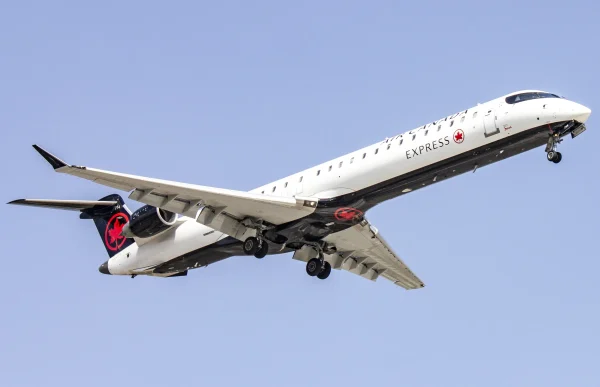
Image Credit - by Aaron Davis - Own work, CC BY-SA 4.0, Wikimedia Commons
The Lost Aviators
The violent blow instantly killed 30-year-old Antoine Forest and his co-pilot, Mackenzie Gunther. They absorbed the direct, unsurvivable blow when the heavy rescue truck crushed the nose of their commercial jet. Jason Ambrosi, president of the Air Line Pilots Association, expressed immense sorrow over their sudden deaths. He highlighted the lifelong devotion these professionals showed toward secure traveler transit.
Canadian Prime Minister Mark Carney called the tarmac incident deeply sorrowful. Air Canada quickly released a corporate statement mourning the two beloved Jazz employees. Port Authority Executive Director Kathryn Garcia confirmed the aviator deaths during a tense press briefing. She noted that airline support personnel immediately began managing difficult next-of-kin alerts. The airline community rallied around the devastated families.
The 100-Meter Ejection Over Runway 4
Bolting a four-point harness to a reinforced bulkhead changes the survival odds because it keeps the occupant secured to the strongest piece of flying debris.
The collision ripped the fuselage apart and launched flight attendant Tremblay into the cold night sky. She flew more than 100 meters away from the primary crash site. Tremblay survived this terrifying, high-speed ejection because she remained strapped tightly into her wall-mounted jump seat. Her daughter, Sarah Lépine, called her mother’s incredible survival an absolute marvel. She credited a divine protector for saving the 26-year veteran of Jazz Aviation.
Port Authority Police Department responders eventually found her lying outside the mangled plane. The Air Canada Jazz CRJ-900 crash generated extreme G-forces, yet her specialized restraint held firmly together. People frequently ask, how fast does a plane land at LaGuardia? Commercial jets typically touch down at roughly 150 miles per hour. That immense speed easily carried her bolted seat far across the tarmac after the violent cabin separation.
Tremblay sustained injuries, but her life remained intact against impossible odds. Paramedics carefully loaded her onto a stretcher and rushed her to a nearby trauma center. Her remarkable ejection story quickly became the defining survival narrative of the disaster.
Engineered for Maximum Destruction
Aviation safety expert Jeff Guzzetti explains the rigorous science behind this incredible jump seat survival. Engineers anchor these collapsible jump seats directly against the reinforced flight deck partition. This structural design provides extreme durability during violent crashes. Designers specifically build these safety fixtures to handle much greater collision forces than standard commercial passenger seating.
Safety regulations require this extra strength so flight attendants can survive major accidents and actively assist travelers with rapid evacuation. A remarkably similar event occurred during the 2013 Asiana Flight 214 crash in San Francisco. Two ejected flight attendants survived that historic disaster under almost identical circumstances. Tremblay lived precisely because her safety gear performed exactly as designed under massive stress.
Conflicting Medical Reports After the Air Canada Jazz CRJ-900 Crash
Emergency medical routing prioritizes rapid patient movement over accurate counting, creating temporary statistical illusions for the public.
Initial news reports painted an incomplete picture of the overall casualties. Early press bulletins listed only nine hospitalizations. The bloody reality on the ground looked much more severe. Fleets of ambulances actually transported 41 individuals to multiple local hospitals. Doctors later released 32 of those patients after treating their minor lacerations and severe bruises.
About ten people remain in serious medical condition. The injured individuals also include two Port Authority police officers who required urgent medical stabilization. The absolute chaos of the LaGuardia Airport collision forced first responders to act quickly without counting heads. NYC Official Zohran Mamdani praised the emergency personnel for their rapid medical interventions. He noted their quick actions definitely prevented further casualties on the tarmac.
Paramedics set up triage tents directly on the cold concrete. They sorted patients by injury severity while firefighters extinguished localized fires. The swift medical response saved lives, even as the official injury numbers fluctuated wildly throughout the early morning hours.
The Complete Halt of Airport Operations
A runway disaster instantly paralyzes the entire local airspace, forcing hundreds of inbound flights to seek alternative concrete miles away.
The fatal disaster forced aviation authorities to shut down LaGuardia Airport completely. Normal operations ceased immediately following the massive collision. Officials firmly kept the busy facility closed until 2 PM Eastern Time the following afternoon. This mandatory shutdown allowed hazardous materials teams to clear dangerous debris and secure the massive crime scene.
The Air Canada Jazz CRJ-900 crash scattered torn metal, highly flammable aviation fuel, and passenger luggage across a wide operational area. Cleaning this sprawling hazard takes rigorous, methodical effort. You might wonder, who investigates airline crashes in the US? The National Transportation Safety Board (NTSB) and the Federal Aviation Administration (FAA) strictly lead these detailed inquiries. NTSB Chair Jennifer Homendy and board member John DeLeeuw arrived quickly to coordinate the active response units.
Stranded passengers filled the terminals, waiting anxiously for updates. Airlines scrambled to rebook thousands of displaced travelers. The economic effect of the sudden closure rippled across the entire North American travel grid.
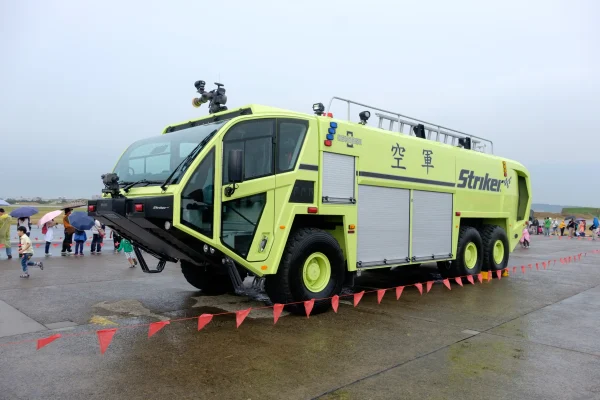
Image Credit - by 玄史生, CC0, via Wikimedia Commons
Piecing Together the Air Canada Jazz CRJ-900 Crash Evidence
Investigators look past the twisted metal to carefully trace the digital footprints of every radio call and radar blip.
The rigorous NTSB investigation now focuses heavily on the air traffic controllers and their specific communication protocols. Investigators must determine exactly why the tower cleared the heavy fire truck to cross an active, busy runway. The ATC miscommunication clearly stands as the primary cause for this fatal, high-speed event.
A Reuters report states that the NTSB has recovered the flight data recorder and cockpit voice recorder, which technical experts will analyze alongside the recorded tower communications. They want to understand the exact sequence of events that led to the Air Canada Jazz CRJ-900 crash. They will thoroughly scrutinize the mental distraction one controller mentioned in the public audio logs.
Investigators prioritize three key data sources to reconstruct the disaster:
- Digital flight data recorders tracking the exact speed and braking force of the jet.
- High-resolution airport surface radar showing the exact path of the fire truck.
- Synchronized audio logs capturing the desperate final warnings from the control tower.
Detectives also plan to interview the surviving flight attendant and the emergency vehicle drivers. They need multiple human perspectives to verify the digital data. Every shred of evidence helps build a comprehensive timeline of the tragedy.
Rebuilding Public Trust in Aviation
Every major air disaster permanently changes global airline safety protocols. The aviation industry closely studies these fatal failures to eliminate future operational blind spots. The tragic deaths of Forest and Gunther will undoubtedly result in much stricter rules for emergency vehicle deployment.
Busy airports must ensure absolutely clear boundaries between active runways and necessary ground operations. The Federal Aviation Administration will likely mandate new tracking technology to alert controllers about impending ground incursions. These sweeping changes aim to protect future pilots and weary passengers from ever experiencing a similar nighttime nightmare.
The Devastating Ripple Effects of Flight AC8646
Severe trauma stretches far beyond the physical wreckage, violently rewriting the daily realities of everyone involved. Flight AC8646 started as a completely routine trip from Montreal but ended in severe, undeniable tragedy. The grieving families of the two young pilots now face an unimaginable, harsh reality. The surviving passengers will carry the deep mental scars of this brutal collision for years to come.
Tremblay’s miraculous survival offers a slight glimmer of hope amidst the massive devastation. Her violent 100-meter flight through the air proves the immense value of rigorous structural safety engineering. Jazz Aviation colleagues continue to actively support each other through this agonizing, dark period. The entire North American airline industry mourns the sudden loss of two highly dedicated professionals.
Support groups formed immediately to help the victims process their trauma. Counselors arrived at the airport hotels to speak with the shaken survivors. The emotional recovery will undoubtedly take much longer than the physical cleanup of the runway.
The Final Toll of the Air Canada Jazz CRJ-900 Crash
The absolute destruction on Runway 4 highlights the razor-thin margin for error in modern commercial aviation. Massive passenger aircraft and heavy ground vehicles require perfect, flawless coordination to avoid total disaster. A single, brief lapse in verbal communication turned a standard touchdown into the fatal Air Canada Jazz CRJ-900 crash.
We build modern planes to survive extreme physical forces, as clearly seen in the remarkable jump seat survival of the veteran flight attendant. Yet, advanced engineering alone cannot overcome catastrophic, cascading human errors. The NTSB investigation will eventually deliver a comprehensive final report, but the aviation world already understands the harsh core lesson. Ground safety demands absolute, unwavering precision to ensure passengers and dedicated crews return home safely every single time.
Recently Added
Categories
- Arts And Humanities
- Blog
- Business And Management
- Criminology
- Education
- Environment And Conservation
- Farming And Animal Care
- Geopolitics
- Lifestyle And Beauty
- Medicine And Science
- Mental Health
- Nutrition And Diet
- Religion And Spirituality
- Social Care And Health
- Sport And Fitness
- Technology
- Uncategorized
- Videos

