
Use Intermedialities Philosophy To Link Art
In the quiet halls of a museum, we are taught that walls must separate the canvas from the stone. Yet, this habit blinds us to the way art bleeds across borders. Intermediality invites us to see the rhythm in a drawing and the patterns in a song, proving that no medium exists in a vacuum. When we understand the soul of our tools, recognizing the light, logic, and history woven into a single digital frame, we stop building fences and start building bridges. This is the heart of transmedial aesthetics: the ability of a story to migrate from the page to the screen without losing its spirit. In this light, art is no longer a series of isolated items, but one continuous, flowing river.
Defining the Core Principles of Intermedialities Philosophy
Most people think about media as containers. They think a book contains a story and a screen contains a movie. This philosophy suggests that the most interesting things happen when these containers leak. It focuses on the relationships between different forms rather than the forms themselves. We look at how one medium speaks through another. This perspective helps us understand why a digital painting still feels like it has "brushstrokes" even though there is no physical paint.
Moving Beyond Multimedia and Mixed Media
Multimedia usually means putting several things in one room. You might see a video playing next to a statue. This is a simple combination. Intermedialities Philosophy goes much deeper than just grouping tools. It looks for the change that happens when media rub against each other. For example, when a poet uses the layout of the page to create a visual shape, the text starts acting like a drawing. The two forms change each other. They create a new kind of experience that neither could achieve alone.
The Concept of the In-Between Space
Researchers like Irina Rajewsky point out that art lives in the gaps. These gaps occur when one medium references or imitates another. Think about a film that uses comic book panels to tell its story. The film uses the "language" of comics instead of being a comic itself. This creates a unique space for the viewer. One might wonder, what is the best way to define intermediality in simple terms? It is the study of the relationships and interactions between different media types that create a new, unified meaning. This study allows us to see how a "material" like music can influence the way we "read" a visual scene.
Understanding Media Ontology in the Digital Age
To link different arts effectively, we must understand what they are made of at their core. This is what we call media ontology. In the past, a painting was made of canvas and pigment. According to a report by Francis Press, digital art utilizes digital code as its creative material, which means that today, a digital painting is made of code. This shift from physical matter to digital data changes everything about how art connects. When the base of the art is the same, bits and bytes, the lines between a song and a picture start to fade.
Materiality vs. Virtual Essence
Physical art has a specific weight and texture. A marble statue feels cold and hard. A digital 3D model of that same statue has no temperature or weight. However, it has a "virtual essence" that allows it to exist in a video game or an augmented reality app. As noted in the work of Friedrich Kittler, inside computers, everything becomes a number, which means that computers turn all media into the same thing: data. He also suggests that any medium can be shifted into another, so this translation depends on the internal logic of the computer rather than the laws of the physical world.
How Ontology Influences Artistic Connection
Knowing the "DNA" of your medium helps you bridge the gap between different worlds. If an artist understands that their digital sculpture is actually a set of mathematical coordinates, they can link it to a musical score. The same numbers that define the height of a statue could define the pitch of a note. Why is media ontology vital for modern artists? It allows creators to understand the basic limitations and possibilities of their tools, ensuring the art remains authentic across different formats. This deep understanding prevents the art from feeling "lost" when it moves from one medium to another.
Why Intermedialities Philosophy is Essential for Transmedial Aesthetics
When we create an experience that spans many platforms, we need a way to keep it consistent. This is where transmedial aesthetics comes into play. It provides the "flavor" or the "mood" that stays the same regardless of the medium. Whether a fan is reading a graphic novel or playing a mobile game, they should feel like they are in the same universe. Intermedialities Philosophy provides the map for this process. It ensures that the transition between media feels natural rather than forced.
Creating a Unified Sensory Language
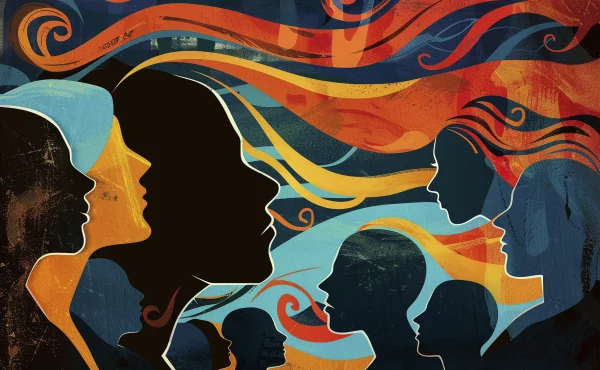
We often experience art through multiple senses at once. A great film uses sound to make the images feel "heavier" or "faster." Using a unified sensory language allows artists to make sure a color "sounds" right. This harmony creates a stronger emotional effect on the audience. For example, a horror game might use jagged, sharp visual lines and high-pitched, piercing sounds. Both media are using the same "sharp" aesthetic to create fear. This coordination makes the experience feel like a single, solid reality.
The Viewer as the Final Link
The person watching or playing the art is the most important part of the link. They are the ones who combine the music, the text, and the images in their own minds. As noted by Henry Jenkins, consumers act like hunters and gatherers, meaning the audience takes fragments from different places and builds a whole world out of them. Intermedialities Philosophy recognizes that the audience is active, not passive. The viewer acts as the bridge that connects a physical book in their hands to a digital forum online. Without the viewer, the links between these diverse arts would not exist.
Practical Ways to Apply Intermedialities Philosophy to Creative Projects
You do not need to be a philosopher to use these ideas in your work. Any creator can start looking for the connections between different media. This process starts by looking at the "rhythm" or "texture" of your primary art form. Once you find these core traits, you can look for them in other areas. This allows you to build projects that feel bigger and more complicated than a single piece of media.
Mapping Artistic Relationships
Start by identifying a "bridge" between two different art forms. For instance, if you are writing a poem, look at the rhythm of your words. You can then try to match that rhythm to the brushstrokes in a painting or the beat in a song. This creates a link that the audience can feel, even if they cannot explain it. Mapping these relationships ensures that every part of your project supports the others. You stop making separate pieces and start making a network of art.
Harmonizing Different Media Ontologies
It can be hard to make a high-tech digital display feel as "real" as a traditional oil painting. To fix this, you must look at the media ontology of both. You might add digital "noise" to a screen to mimic the grain of physical film. Or, you might use a physical projector to cast digital images onto a rough stone wall. This mix of the digital and the physical creates a unique texture. Can intermedialities philosophy be applied to commercial design? Yes, it helps designers create cohesive brand experiences that translate perfectly from physical packaging to digital mobile interfaces.
Breaking Narrative Silos Using Intermedialities Philosophy
In the past, a story was usually told in one way. It was a book, or it was a play, or it was a movie. Today, stories break out of these boxes. They become "ecosystems" where information is spread across many different places. This philosophy helps creators manage these complicated stories. It ensures that the story does not just repeat itself on every platform, but instead grows and changes as it moves.
From Linear Storytelling to Intermedial Immersion
Traditional stories usually have a beginning, a middle, and an end. They move in a straight line. Intermedial immersion is different. It surrounds the audience with the story. You might find a clue in a physical letter, then use that clue to open a video online. This type of storytelling requires the audience to move between different media to get the full picture. It makes the world of the story feel much more "real" because it exists in the same multi-media world that we live in every day.
Case Studies in Successful Intermedial Linking
Research published in ResearchGate and MDPI notes that modern VR art installations utilize immersive spatial audio and vibrotactile haptic feedback to blend 3D environments with sensory responses. In these cases, the feeling of being somewhere else constitutes the art, rather than the headset or the code. Another example is interactive theater, where actors interact with digital projections. The digital world reacts to the physical movements of the actors. This creates a loop where the "being" of the digital and the "being" of the physical become one single performance.
Overcoming the Challenges of Intermedialities Philosophy
Linking different arts is not always easy. Sometimes, adding more media just makes things confusing. It is easy to overwhelm the audience with too much noise and too many images. The key is to be very intentional about every link you create. You must ask yourself if a connection actually adds value to the work. If it does not, it is probably just a distraction.
Avoiding the Trap of Sensory Overload
More is not always better. If you try to use every sense at once without a plan, the audience will get tired. Their brains will stop processing the art and start trying to "filter" the noise. Successful creators use Intermedialities Philosophy to decide when to be loud and when to be quiet. They might use a single, haunting sound to complement a very simple visual. This focused approach is much more powerful than a chaotic mix of everything at once.
Maintaining Cohesion Across Different Media Ontologies
Sometimes, the "nature" of one medium fights against another. For example, a fast-paced video might feel strange next to a very slow, static sculpture. To maintain cohesion, you need to find a single "voice" or "theme" that ties them together. This might be a specific color palette or a shared concept. If the pieces feel like they belong to the same family, the audience will accept the differences in their physical form. It takes work to make a cold computer screen feel like it has the same "heart" as a hand-drawn sketch.
The Future of Art Through the Lens of Intermedialities Philosophy
As technology gets better, the lines between different arts will get even blurrier. We are moving toward a time where we might not even distinguish between "digital" and "physical" art. New research across several studies, including those in MDPI and IJCRT, shows that AI is already helping us translate ideas from one form to another instantly. For example, a study in MDPI (15/2/706) shows that text-to-image systems produce realistic visuals from descriptions. These studies suggest that we are entering a period where media can be converted seamlessly.
AI as an Intermedial Bridge
As detailed in research from IJCRT and MDPI (14/6/1197), artificial intelligence is very effective at finding the ‘essence’ of an image by generating descriptive text and can also compose music from textual descriptions, effectively taking a description and turning it into a song. It acts as a bridge between different media types. AI uses the math of media ontology to understand the patterns that make a certain style of artwork. In the future, an artist might "paint" a piece of music by describing the emotions they want it to evoke. The AI will then build the links between the words and the sounds.
The Next Frontier of Transmedial Aesthetics
We are heading toward environments where the art is all around us. Imagine a room where the walls change color based on the music you are playing, and the furniture changes its texture based on the "mood" of the lighting. This is the peak of transmedial aesthetics. In this environment, the distinction between "diverse arts" disappears. Everything becomes part of a single, responsive experience. Intermedialities Philosophy will be the guide that helps us design these worlds so they feel meaningful and human.
Becoming Skilled at the Art of Connection
The walls we build around art are mostly in our heads. A song, a painting, and a digital game all share the same goal: to communicate a feeling or an idea. By using Intermedialities Philosophy, we can tear down those walls. We can start seeing the connections that were always there. This toolkit allows us to build richer, more immersive worlds that touch the audience in new ways.
An understanding of the "being" of your tools and the way they interact makes you more than a specialist; instead of being only a specialist, you become a connector. You gain the power to weave different strands into a single, beautiful weave. Stop looking at your art as a single item on a shelf. Start looking for the "in-between" spaces where the real action happens. Embracing this way of thinking allows you to turn any creative project into a deep, interconnected process. Intermedialities Philosophy is the key to opening the full potential of the modern creative period.
Recently Added
Categories
- Arts And Humanities
- Blog
- Business And Management
- Criminology
- Education
- Environment And Conservation
- Farming And Animal Care
- Geopolitics
- Lifestyle And Beauty
- Medicine And Science
- Mental Health
- Nutrition And Diet
- Religion And Spirituality
- Social Care And Health
- Sport And Fitness
- Technology
- Uncategorized
- Videos

