
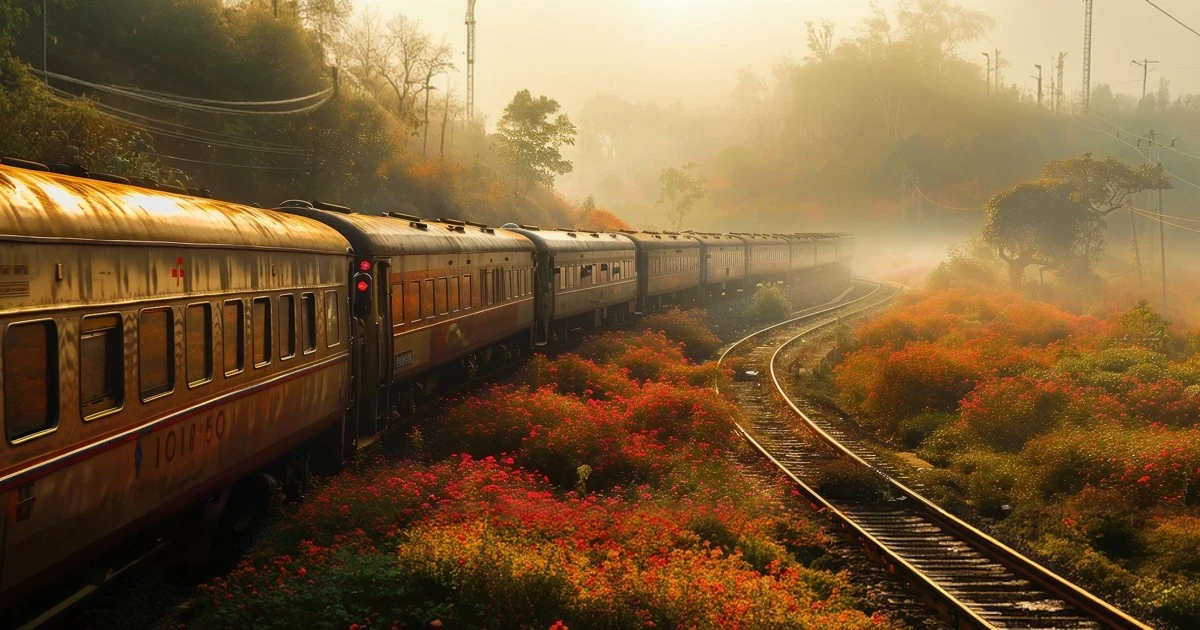
Train Journey: UK’s Longest Ends
End of the Line: Britain's Longest Train Journey Reaches Its Final Stop
A railway service that operated for over a century has been discontinued. The United Kingdom's most extensive continuous rail connection, which joined Aberdeen with Penzance, has reached its final destination. This particular route, first established in 1921, covered an impressive distance of 775 miles (1,247 kilometers). The final southbound train left Scotland's north-east on a recent Friday morning, a trip many undertook to witness this historic moment. It concluded its trip in Cornwall after a journey of more than thirteen hours, pulling in at 9:40 pm. CrossCountry, the company running the service, stated that its decision to terminate the route was part of an effort to create a more effective schedule. The original version of this cross-country journey in 1921 required a remarkable 22 and a half hours.
A Century of Connection Ceases
The rail line from Aberdeen towards Penzance, a stalwart of British rail, began its life when several different railway companies collaborated to bridge the vast expanse of Great Britain. Its inception predates "the grouping," a significant event when Britain's railways merged into four large companies; this particular service traversed the lines of all four. For over a century, this remarkable connection served as a vital artery, linking disparate corners of the nation. The route was not just a means of travel; it became a symbol of endurance and a testament to the ambition of early 20th-century railway engineering. It survived a world war, nationalisation, and privatisation, almost making it to a potential second nationalisation. The sheer length and number of stops made it unique.
The Final Whistle Sounded
A full train departed from the north-eastern part of Scotland on that last Friday, filled with passengers who understood the journey's significance. Among them was 40-year-old Aimee Smith from Derby, who made a special trip to Aberdeen to participate in the final southbound run. She wanted to take part in this piece of railway history. Her lifelong affection for trains, which began in childhood while waving at drivers near her grandfather's Tamworth home, made this last trip a poignant experience. She remembered how, as one of twenty-one cousins, this was an enjoyable way to use up energy. After learning of the service's discontinuation through a rail-related phone alert, her initial reaction was one of awe.
Enthusiasts Mark the Occasion
The allure of the final run for the UK's lengthiest continuous train journey proved irresistible for many railway aficionados. Elation was clear among a group of friends: 18-year-old Liam, a local from Elgin in Moray; 22-year-old Kieran; and Danny, who is 24 and from Edinburgh. Danny viewed the trip as a very special event for devoted followers of railways, considering its status as the longest. For Liam, it was the fulfillment of a long-held ambition; he felt incredibly thrilled, admitting he had wanted this his entire life. John Labrow, a 66-year-old from Manchester, even had a custom T-shirt produced to commemorate the occasion. He saw the journey as the end of a significant era and felt it was an honor to be there, wanting a memento to recall the passage.
A Driver's Historic Assignment
Martin Wallace, the train driver for this momentous final voyage, had only begun driving the line that runs between Aberdeen and Penzance in August of the previous year. He expressed his delight at being involved in such a historic occasion. Just before the train pulled away from the Aberdeen station, he remarked on the exciting nature of this ultimate passage. For train crew, these long-haul routes present unique experiences and challenges, requiring stamina and a deep familiarity with diverse stretches of the national rail network. The conclusion of such a service impacts not just passengers but also the dedicated staff who operate them.
CrossCountry's Operational Focus
CrossCountry stated their choice to end the direct provision connecting Aberdeen with Penzance came from a desire for a more effective schedule. A spokesperson explained that amending the schedule starting in May was intended to benefit operating crews and provide a more user-friendly arrangement for patrons. The company suggested this change would make day excursions originating in Bristol and England's west to Penzance a more practical option. Moreover, the updated schedule is set to introduce a new round-trip service linking Glasgow with England's north-east, continuing to Birmingham. Operational challenges, such as maintaining punctuality over such an extensive route, also factored into this decision.
The New Longest Journey
With the discontinuation of the Aberdeen-Penzance connection, the title of the United Kingdom's lengthiest continuous train journey is now believed by some to pass to the Aberdeen to Plymouth service. This route covers a still impressive length of 695 miles (1,118 kilometers). However, other sources suggest the Caledonian Sleeper service from London Euston to Fort William, an overnight journey, will claim the title, covering approximately 500 miles in around 12 hours and 45 minutes. The change highlights the dynamic nature of railway timetables and route planning, constantly adapting to operational needs and passenger demand. Such extensive routes are complex logistical undertakings for any rail operator.

A Journey of Many Stops
The now-historic service that linked Aberdeen with Penzance was notable not just for its length but also for its comprehensive reach. Including the starting and terminating stations, the route featured an impressive 41 stops. These stops included major centers such as Leeds, Newcastle upon Tyne, and Edinburgh, effectively connecting diverse regions of Scotland and England. The train journey offered a unique cross-section of British urban and rural landscapes, from the Scottish Lowlands, through the industrial heartlands of England, down to the scenic south-west coast. Each stop represented a community connected by this sprawling railway line.
A Concluding Chapter for Passengers
Aimee Smith, looking forward to her journey, hoped to encounter some truly pleasant individuals and enjoy convivial conversation. Bringing along a book and a full litre of orange-based drink, she anticipated sharing the experience with individuals of similar interests, discussing trains and philosophy. While excited to be present for the event, she acknowledged a sense of sadness, certain she would investigate different extensive rail excursions in the future. Luke Iden, a twenty-year-old resident of Bournemouth who is employed in the railway upkeep sector, learned about the "buzz" online and promptly booked his ticket. He expressed happiness to take part in the moment, creating a lasting memory, knowing he could always state he had achieved it.
A Temporary Lifeline in Recent Times
The railway provision connecting Aberdeen with Penzance had faced disruptions even before its final cancellation. During the Covid-19 pandemic in 2020, the route was temporarily truncated, with services concluding their journeys in Plymouth. The full, direct connection to Penzance was only reinstated in May 2023, making its final period of full operation relatively brief after that interruption. This recent history underscores the pressures and changes that national transport networks have had to navigate. The choice to fully restore it, only for it to be permanently altered a year later, reflects ongoing adjustments in railway strategy and operational planning.
Capturing the Final Moments
Luke Iden, an amateur filmmaker, planned to spend much of his time on the ultimate passage shooting footage from the train window. His interest, rooted in his railway upkeep work, found a creative outlet in documenting this historic passage. The act of filming highlights a common practice among enthusiasts and travellers alike: the desire to capture and preserve unique experiences. Extensive rail excursions often provide a constantly shifting panorama, offering ample opportunities for photography and videography, turning a simple trip into a visual narrative of the lands traversed. This final journey provided a unique, unrepeatable subject.
The Allure of the Epic Rail Trip
The fascination with extensive train journeys like the Aberdeen-Penzance route is multifaceted. For some, like Aimee Smith, it connects to cherished childhood memories, such as waving at train drivers. For others, like the trio of young men including Kieran, Liam, and Danny, it represents a lifelong goal, a unique experience among devoted followers of railways. There is an inherent romance and sense of adventure in traversing such vast distances by rail, witnessing the changing landscapes, and sharing the experience with fellow travellers. These journeys offer a different perspective on a country, a slower, more immersive way to travel compared to air.
Operational Challenges of Vast Routes
Operating a continuous rail provision over 775 miles presents significant logistical hurdles. CrossCountry cited the difficulty of keeping such a long journey on time as one justification for its cancellation. Delays on one segment of the track can have cascading effects across the entire route, impacting connections and passenger satisfaction. Furthermore, rail bosses noted that most customers historically made shorter journeys along the extensive route, rather than travelling the entire length. Optimising crew rosters and rolling stock utilisation over such distances also adds layers of complexity for the operator.
The Broader Picture: UK Rail Adjustments
The discontinuation of the direct service linking Aberdeen with Penzance is part of wider timetable adjustments by CrossCountry, effective from May 2024/2025. These changes aim to improve overall service reliability and reduce overcrowding on busy corridors. CrossCountry has been securing additional Voyager trains to increase capacity on north-south routes, particularly on the Reading to Newcastle corridor. The company is also undertaking a complete refurbishment of its Turbostar and Voyager fleets, aiming to transform the on-board experience for customers by summer 2026. These initiatives reflect a broader effort to modernise and enhance rail travel across the network.
A Nostalgic Farewell to a Record Holder
The railway path connecting Aberdeen with Penzance held a special place in British railway history, not just for its operational longevity but for its status as the lengthiest continuous pathway. This title itself became a point of interest and a draw for many. The journey crossed some of Britain's most iconic bridges, including the Tay, Forth, Royal Border, Tyne High Level, and the Royal Albert Bridge over the Tamar. It passed notable landmarks such as Chesterfield's crooked spire and offered dramatic views like the Dawlish seawall. The sheer geographic scope, connecting Scotland's oil capital with Cornwall's coastal charm, made it a unique undertaking.

More Than Miles: The Social Journey
Train travel, especially on longer routes, offers unique social opportunities. Aimee Smith's hope to meet interesting people and engage in conversation reflects a common appeal of rail journeys. Unlike solitary car travel or the often-impersonal nature of air travel, trains can foster a sense of temporary community. Shared tables, refreshment carriages, and the simple act of experiencing a long journey together can lead to spontaneous interactions and shared moments among passengers from diverse backgrounds. The carriage becomes a microcosm of society, moving through the landscape, creating connections however fleeting.
Practicalities of a Thirteen-Hour Transit
Undertaking a thirteen-hour train journey requires a degree of preparation and endurance. Passengers like Aimee came equipped with essentials like books and drinks. Entertainment, whether reading, working, or simply watching the scenery, becomes crucial. While the original article doesn't detail catering, the notoriously limited catering on some long-distance services has been a point of discussion among rail enthusiasts. Luggage space can also be a concern on crowded trains. The two hours reportedly spent stationary at stations for passenger boarding and disembarking also add to the overall duration.
A New Timetable, New Connections
CrossCountry's new timetable, implemented from mid-May, aims to create more convenient services overall. While the direct route between Aberdeen and Penzance is severed, the operator emphasises that Plymouth will remain well-connected. Passengers wishing to travel further into Cornwall can make connections from Plymouth. The operator also highlights the introduction of a new round-trip service that will connect Glasgow and the north-east of England, continuing towards Birmingham, as a positive outcome of the reshuffle. These changes reflect an effort to balance direct long-haul services with robust regional connectivity.
The Unseen Network: Supporting the Excursion
The focus on passengers and the excursion itself often overlooks the vast infrastructure and workforce that make rail travel possible. Individuals like Luke Iden, employed in the railway upkeep sector, represent the many unseen hands ensuring the safety and functionality of the tracks and signals. Train drivers like Martin Wallace are the most visible segment of the operational crew, but countless others, from signallers to station staff and fleet maintenance teams, play crucial roles. The operation of any train service, especially one spanning hundreds of miles, relies on this complex, coordinated network of professionals.
Environmental Considerations in Rail Travel
Long-distance rail travel is often promoted as a more sustainable alternative to domestic flights or extensive car journeys. The choice to curtail a very long direct route and necessitate a change of trains for some onward journeys could, for a small number of passengers, potentially influence their choice of transport mode. While the overall impact on carbon emissions from this specific service change might be negligible, the broader conversation about encouraging rail use for its environmental benefits continues. Investment in an efficient, reliable, and comprehensive rail network remains a key part of strategies to reduce transport-related carbon footprints.
A Legacy Forged in Steel and Steam
The conclusion of the direct train operation that linked Aberdeen with Penzance signifies the conclusion of a notable chapter in British railway history. For over a century, this route symbolised a connection across the length of Great Britain, an impressive feat of railway operation. The ultimate passage, filled with enthusiasts and reflective passengers, marked a poignant farewell. While railway networks must evolve to meet modern demands for efficiency and reliability, the legacy of such iconic routes endures in the memories of those who travelled them and in the annals of transport history. The spirit of epic rail adventures lives on.
Recently Added
Categories
- Arts And Humanities
- Blog
- Business And Management
- Criminology
- Education
- Environment And Conservation
- Farming And Animal Care
- Geopolitics
- Lifestyle And Beauty
- Medicine And Science
- Mental Health
- Nutrition And Diet
- Religion And Spirituality
- Social Care And Health
- Sport And Fitness
- Technology
- Uncategorized
- Videos

