
The Intellectual History of Anti-Colonial Thought
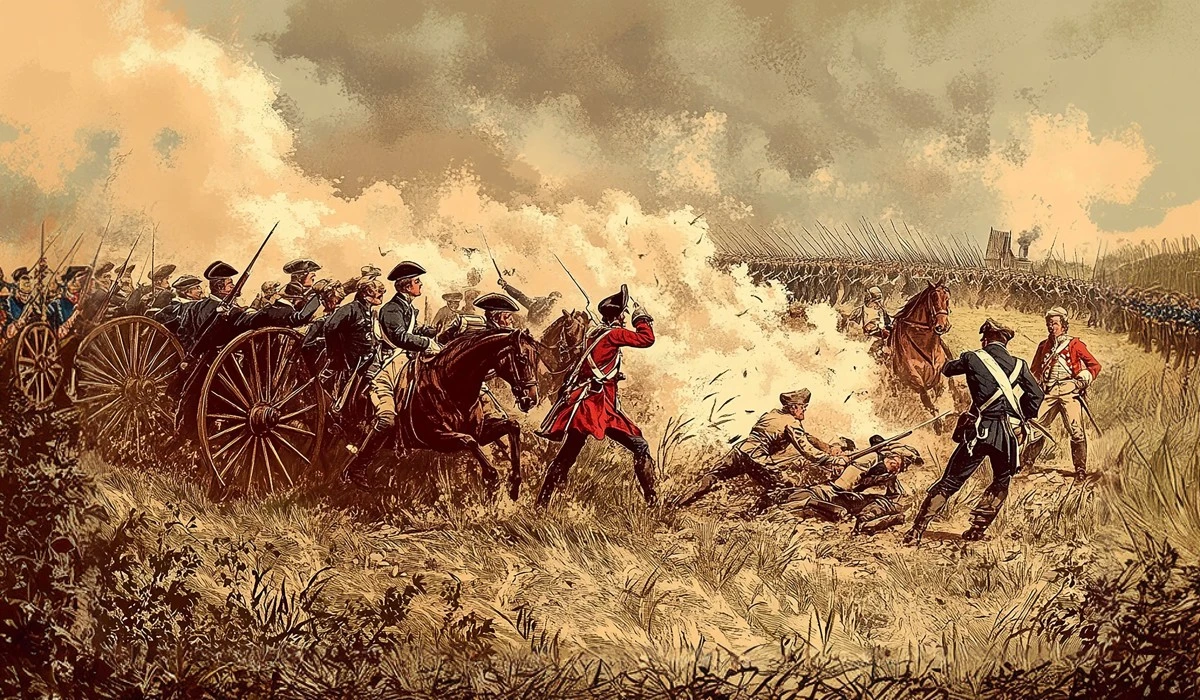
Imagine a world map changing colors overnight. Most people credit soldiers and generals for redrawing these borders. They overlook the crates of banned books and illegal pamphlets moving across oceans. These papers carried ideas that broke empires faster than cannons. These writers challenged the very way human beings understood power and freedom. They forced the world to rethink who deserves to rule. Intellectual History serves as the detective work required to find the origins of these revolutionary ideas. We often look at the history of political thought through the eyes of kings and presidents. This perspective misses the real story. The study of the evolution of these ideas allows us to see how "freedom" was reinvented by those to whom it was denied.
The Foundations of Intellectual History in Resistance
Historians often focus on a few famous names. They talk about Gandhi or Mandela as if these men worked alone. In reality, thousands of students, workers, and poets built the foundation for independence long before the famous leaders took the stage. Intellectual History looks past specific leaders to find the currents of thought that moved entire populations. It tracks how a single phrase in a local newspaper could ignite a strike across an entire colony. This field examines the "illocutionary force" of a text. This means we study what an author actually wanted to achieve in their specific moment.
Moving Beyond "Great Man" Narratives
Traditional history treats great men like solo performers. We prefer to see them as part of a larger conversation. Why is intellectual history important for understanding politics? It allows us to trace the DNA of modern governance and rights, showing that our current political reality is the result of centuries of debated ideas rather than inevitable progress. When we look at the history of political thought, we see that ordinary people often developed radical ideas first. They debated these concepts in coffee houses and secret meetings. These "underground" ideas eventually forced leaders to change their strategies.
The Intersection of Local Traditions and Global Ideas
Anti-colonial thinkers rarely just copied Western ideas. They practiced a process called "provincializing Europe." This means they viewed European theories like Marxism or Liberalism as local products rather than universal truths. They took what worked and ignored the rest. They blended indigenous governance models with modern concepts of the nation-state. This synthesis created something entirely new. For example, many African thinkers combined traditional communal values with modern socialist theory. They built states that looked like Western republics but functioned through local moral codes.
Enlightenment Contradictions in the History of Political Thought
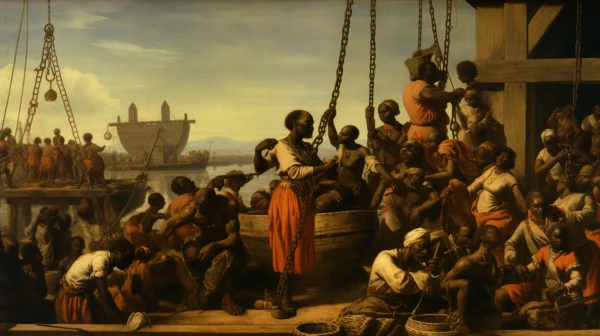
The European Enlightenment preached "liberty" and "equality" while owning human beings. This massive contradiction sat at the heart of the colonial period. European philosophers wrote about the rights of man while ignoring the millions of people in chains. Colonized thinkers noticed this flaw immediately. They used the colonizers’ own logic to trap them. They argued that if liberty was a universal right, it must apply to everyone regardless of race. This realization changed the history of political thought forever.
Using the Oppressor’s Tools to Dismantle the House
Toussaint Louverture provides the best example of this strategy. He led the Haitian Revolution by using the French Revolution’s own vocabulary. He did not reject the French "Rights of Man." He radicalized them. As documented in the Oxford University Press blog, Haiti officially declared its independence from France on January 1, 1804, following a war against forces sent by Napoléon Bonaparte. He emphasized that the universal rights meant nothing unless they applied to enslaved people. Further evidence from the Western Society for French History indicates that Haiti’s 1804 constitutional settlement permanently ended slavery and prohibited imperialism, a step France never took. Louverture showed that the colonized understood the Enlightenment better than the people who invented it.
The Universalism vs. Particularism Debate
This tension defines much of the history of political thought. Western thinkers claimed their values were "universal." Colonized people saw these values as "particular" to Europe. They argued that every culture has its own path to justice. This debate forced the world to decide if one culture should set the rules for everyone. Anti-colonial writers fought for the right to be different. They demanded a world where multiple types of political systems could exist at the same time. They rejected the idea that every country must follow the European model of progress.
Global Networks and the Intellectual History of Solidarity
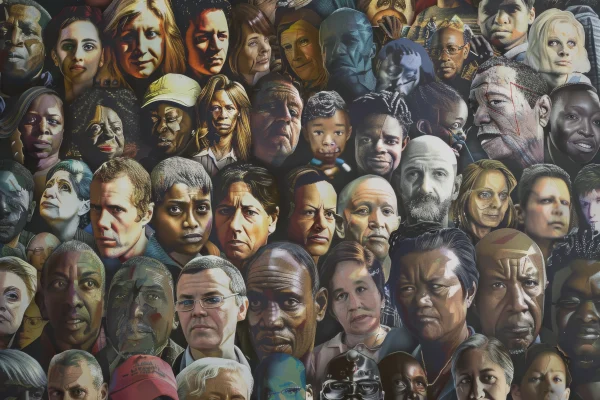
Resistance never happened in a vacuum. Thinkers in India read books from the Caribbean. Activists in New York sent money to movements in Africa. These global networks created a shared language of resistance. Intellectual History maps these connections to show how ideas traveled across the sea. These networks proved that colonialism was a global problem that required a global solution.
The Bandung Conference and the Third Way
According to the U.S. State Department’s Office of the Historian, the 1955 Bandung Conference served as a landmark moment where leaders from twenty-nine Asian and African nations met in Indonesia. The Encyclopedia Britannica mentions that these delegates represented more than half of the world's population. They articulated a new political identity called "Non-Alignment." They refused to join either the United States or the Soviet Union during the Cold War. Furthermore, the Non-Aligned Movement explains that the assembly established ten principles for global peace centered on self-determination. This conference showed that the "Global South" could lead the world toward a new type of international relations.
Pan-Africanism and the Evolution of Shared Identity
The history of political thought changed when Caribbean and American activists began talking to African leaders. According to research from Michigan State University, figures like George Padmore moved away from Soviet Communism after 1934 to embrace Pan-Africanism. He argued that African liberation required an ideology that suited Africa’s unique needs. The study further notes that at the 1945 Manchester Pan-African Congress, the focus of these thinkers moved from civil rights toward a goal of total independence. These thinkers realized that they shared a common struggle against a global system. Their solidarity made it impossible for empires to deal with colonies one by one.
Language as a Weapon in the History of Political Thought
Language controls how we see the world. Colonial powers forced their languages on the people they ruled. This act tried to erase local ways of thinking. Anti-colonial thinkers fought back by reclaiming their native tongues. They knew that words like "freedom" felt different in a local language. Intellectual History tracks how this linguistic struggle shaped political reality.
The Radical Act of Vernacular Translation
Translating European concepts into local languages changed their meaning entirely. In India, thinkers used the word Swaraj instead of "independence." Swaraj means "self-rule," but it also implies self-restraint and moral duty. How does language affect political thought? Language frames the boundaries of what is possible, and the reclamation of native terminologies allowed anti-colonial thinkers to conceptualize freedom outside of a Western framework. This translation process allowed leaders to explain complicated political goals to farmers and workers who did not speak English or French.
Reclaiming the Past to Build the Future
Colonial educators taught that Africa and Asia had no history before Europeans arrived. Historians in colonized nations used Intellectual History to disprove this lie. They searched through ancient records to find complicated political systems. They proved their ancestors had developed detailed laws and democratic councils long ago. This research gave the people the confidence to rule themselves again. It showed that independence was not a new gift from the West. It was a return to their own suppressed traditions.
The Intellectual History of Psychological Liberation
Physical freedom means nothing if the mind remains captive. According to a source hosted on Hampshire College’s Moodle, colonial rule exerted a direct mental effect that could destabilize a person's sense of self, functioning through "psychic violence." Breaking this mental cage became a primary goal for many thinkers. They realized that the history of political thought must include the study of the human mind.
Frantz Fanon and the De-linking of the Mind
Frantz Fanon was a psychiatrist who understood the damage of colonial rule. He argued that liberation requires "disalienation." This means the colonized person must consciously reject the colonizer’s culture. Fanon’s work added a psychological layer to the history of political thought. He believed that true freedom only comes when a person stops trying to be like their oppressor. His books, like The Wretched of the Earth, provided a guide for mental independence. He taught that the colonized must create their own values instead of copying European ones.
Negritude and the Beauty of Resistance
In the Francophone world, poets like Aimé Césaire started the Negritude movement. They used art to challenge political oppression. According to Aimé Césaire’s Discourse on Colonialism, he wrote about the "boomerang effect" of colonialism, where the violence used abroad eventually returned to Europe. He argued that this violence "decivilized" the colonizer and led to European wars. Negritude celebrated the beauty of Black culture and history. It turned poetry into a political tool. This movement showed that art can change political reality by changing how people feel about themselves.
Applying Intellectual History to the Post-Colonial Archive
Recovering these lost voices is difficult. Most records from the colonial period were written by the people in power. Scholars must use specific methods to find the truth in these archives. This work is a vital part of Intellectual History today.
Reading Against the Grain
According to the University of California, Santa Cruz, archival documents often reflect the viewpoints of those in power rather than acting as objective truths, frequently misrepresenting the people they ruled. Consequently, as suggested by resources on colonialism, historians now read "against the grain" of colonial records to identify hidden truths. This involves looking for gaps and silences in the text. What is the main goal of intellectual history? Its primary objective is to reconstruct the mental worlds of the past by analyzing the contexts, intentions, and meanings behind the written and spoken word. The examination of a police report about a "riot" allows a historian to find the political logic of the people who were protesting. This method turns colonial propaganda into a source of liberation.
Recovering the Voices of the Subaltern
The "subaltern" are the people at the very bottom of society. They are the peasants and workers who rarely left written records. The history of political thought often ignores them because they didn't write books. Scholarship by Ranajit Guha, provided by the Indian Institute of Technology Kanpur, changed this approach by treating peasant rebellions as planned political acts involving long consultations rather than random outbursts. They prove that even the most marginalized people have a clear political philosophy. This work expands our understanding of who creates history. It shows that the "masses" were just as intellectual as the elites.
Why the Intellectual History of Anti-Colonialism Still Matters
The period of formal empires has mostly ended, but the struggle continues. New forms of control have replaced the old ones. Modern thinkers use the lessons of the past to fight the problems of today. Intellectual History provides the tools we need to recognize these new forms of power.
Neocolonialism and the New Sovereignty
Kwame Nkrumah coined the term "neocolonialism." He described a state that has all the outward signs of independence but remains controlled by outside forces. Today, this control happens through debt and trade agreements. It also happens through "data sovereignty." Indigenous groups now fight for control over their own digital and genetic information. They use the same arguments their ancestors used to fight for land. This modern application of the history of political thought shows that the fight for self-determination never truly ends.
The Enduring Power of the Idea
The ideas born during the anti-colonial struggle now drive modern social movements. When people fight for climate justice or racial equality, they use the vocabulary of the past. Intellectual History gives these movements a basis. It reminds us that big changes start with small ideas. It shows us that even the most powerful empires cannot stop a thought whose time has come. These historical frameworks provide a guide for anyone fighting for a more just world.
The Enduring Effect of Intellectual History
The world we live in today exists because of the thinkers who dared to challenge empires. The history of political thought was greatly altered by those who refused to be subjects. They took the most basic concepts of human life and gave them new, radical meanings. They proved that power does not just come from the barrel of a gun. It comes from the ability to define the world on your own terms.
Intellectual History serves as a vital tool for understanding the power dynamics of our present lives, moving beyond the study of dusty books. It allows us to see the cracks in the systems that claim to be permanent. Through the study of the past, we learn how to question the authorities of today. The ideas of the marginalized have become the mainstay of global democratic discourse. Freedom exists as an idea won through courage and clarity rather than as a gift from the powerful.
Recently Added
Categories
- Arts And Humanities
- Blog
- Business And Management
- Criminology
- Education
- Environment And Conservation
- Farming And Animal Care
- Geopolitics
- Lifestyle And Beauty
- Medicine And Science
- Mental Health
- Nutrition And Diet
- Religion And Spirituality
- Social Care And Health
- Sport And Fitness
- Technology
- Uncategorized
- Videos

