
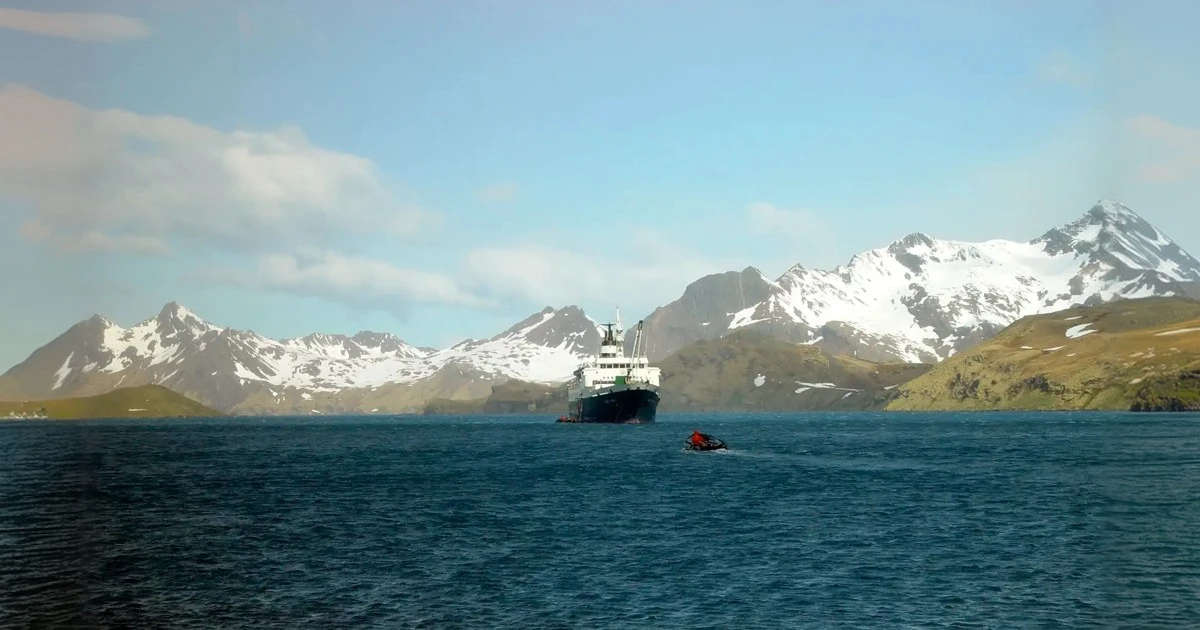
Image Credit - Wikimedia Commons
Shackleton And The Endurance Saving History
Wood usually rots when it gets wet, yet history stays perfectly preserved under three kilometers of ice. Ernest Shackleton left his mark on the Antarctic terrain through a series of failed goals that somehow became the greatest survival stories ever told. Today, the physical remnants of his expedition face two very different fates. While Shackleton's Endurance sits frozen in time at the base of the Weddell Sea, the villa where he finally found safety is rotting into the ground.
The chronicle of the Imperial Trans-Antarctic Expedition began in August 1914. Shackleton aimed to cross the entire Antarctic continent from ocean to ocean. Instead, the ice trapped his ship, crushed the hull, and forced his crew into a 17-month battle for their lives. This saga highlights a series of difficult decisions made under extreme pressure rather than a single moment of luck. We now face a new pressure: saving the structures that witnessed his return before the Antarctic wind wipes them away forever.
The Immediate Threat to Shackleton's Legacy
Gravity eventually wins against any structure left to the wind. The Stromness Villa in South Georgia served as the finish line for Shackleton’s most daring rescue mission. As Alison Neil told Swoop Antarctica, the building faces internal collapse within the next two years because rotting foundation timbers and a century of snow seepage have pushed the structure to its breaking point.
The Structural Crisis at Stromness
The villa stands as a rare physical connection to the voyager. Experts like Richard Hall argue that we have entered a critical intervention window. If workers do not stabilize the building now, the world will lose this piece of history to total ruin. The foundation has crumbled, leaving the weight of the house to rest on decaying lumber.
A Prefabricated Design Tested by a Harsh Climate
Alison Neil points out that the building uses a pre-fabricated style common in Norway during the early 1900s. According to the Evening Standard, Norwegian carpenters built the site around 1906, shipping pre-fabricated parts from Europe for assembly on the island. This design allowed for quick construction but did not account for a century of abandonment in a sub-Antarctic climate. Water enters through the roof and sits in the floorboards, speeding up the decay of the original Norwegian timber.
Finding Shackleton's Endurance Beneath Antarctic Ice
The extreme cold stops the biological clock of decay. According to the Endurance22 expedition blog, the team located the wreckage at 16:05 GMT on March 5, 2022, at a deepness of 3,008 meters. This finding solved a century-old mystery and revealed a ship that looked almost exactly as it did when it went under in 1915.
A Ship Frozen in Time
The vessel rests on the seabed of the ice, approximately 3,000 meters underwater. The Guardian reports that the lack of wood-eating organisms in these frigid waters prevented the hull from rotting away like shipwrecks in warmer climates. Mensun Bound, a leader in the finding team, describes the ship as being extremely well preserved. The stern remains intact, and the brass letters of the name of the ship still shine through the dark water.
The Technology of Finding
According to Reuters, the expedition used the South African icebreaker Agulhas II and deployed robotic submersibles called "Sabertooths" to scan the seabed. These robots navigated shifting ice and sub-zero temperatures to capture high-definition images of the shipwreck. John Shears, who led the hunt, called it the world’s most grueling shipwreck search. The report also highlights that ice destroyed the ship in November 1915 during Shackleton's unsuccessful bid at the first Antarctic land crossing, proving how difficult the original 1914 expedition must have been.
The Survival of Shackleton's Crew
Desperation forces men to cross oceans in boats meant for lakes. According to The Guardian, when the ice finally crushed the ship on November 21, 1915, the men moved their food and three lifeboats onto the moving ice floes. They lived on the ice for months, drifting with the currents.
From the Sea Ice to Elephant Island
The crew eventually launched three small lifeboats as the ice melted beneath them and reached Elephant Island in April 1916, according to a Reuters report. This jagged rock offered solid ground, but no hope of rescue. No one knew they were there, and no ships ever passed that far south. Shackleton realized that staying on the island meant a slow death for his 28 men.
The Voyage of the James Caird
Shackleton and five others survived the ordeal by sailing a 22-foot lifeboat called the James Caird 800 miles across the earth's most dangerous ocean to reach South Georgia. This 17-day expedition remains one of the greatest feats of navigation in history. After landing on the uninhabited side of the island, Shackleton and two men climbed over glaciers and mountain peaks for 36 hours. They finally reached the Stromness whaling station on May 20, 1916.
A Palace Built on the Edge of the Earth
A simple wooden house becomes a cathedral when you haven't seen a roof in over a year. To the Norwegian whalers, the Stromness Villa was a standard manager's residence. To Shackleton, it represented the return to civilization.

Image by Rob Oo from NL, CC BY 2.0
The Manager’s Residence at Stromness
When Shackleton went into the villa, he had not bathed or changed his clothes in over a year. He looked like a wild animal. The villa provided the first warmth, food, and safety the crew had experienced since leaving Georgia in 1914. Alison Neil notes that Shackleton viewed this "basic wooden building" as a palace because of the hardship he had just endured.
The Cost of the Whaling Industry
While the villa represents survival for Shackleton, it also sits in the middle of a grim industrial environment. Between 1904 and the 1960s, the stations on South Georgia claimed the lives of 175,250 whales. The Stromness station eventually closed in the 1960s, leaving behind a graveyard of rusting metal and industrial waste. This context adds complications to the preservation of Shackleton's history.
The Logistics of Antarctic Conservation
Freezing temperatures drain batteries and break steel. Restoring a building in maybe the most remote place on Earth requires a massive investment of time and money. The stabilization project for the Stromness Villa carries a budget of over £3 million.
Specialist Teams and Battery Power
A team of 4 specialist carpenters from Norway handles the physical restoration. These workers must live on an offshore support vessel because the land around the villa is too dangerous for a camp. They use battery-powered tools to avoid the need for heavy generators on the fragile site. The general public cannot enter the villa due to high volumes of asbestos and the risk of flying sheets of metal from the surrounding ruins.
Lifting History
The conservation team uses heavy-duty jacks to elevate the entire building. This allows them to replace the collapsed brickwork with modern materials that can withstand the weight of the snow. They also remove the damaged timber caused by decades of water seepage. This work ensures the building survives long enough for the next phase of the project: digital heritage.
Turning Shifting Ice Into a Digital Legacy
High-tech cameras now allow people to visit places that would otherwise kill them. Because the Stromness Villa and the ruins of Shackleton's Endurance are so hard to reach, preservationists are turning to virtual reality.
The Digital Twin Project
The South Georgia Heritage Trust notes that they have commissioned a team to build the villa's digital "twin." Laser scanning and high-resolution photography allow experts to recreate the 1916 interior in a virtual space. This removes the geographic and financial barriers that prevent most people from visiting South Georgia.
Democratizing Heritage
Alison Neil believes that historical legacy is a universal right. The South Georgia Annual Visitor Report notes that currently, only about 18,000 individuals visit South Georgia each year, mostly on expensive cruise ships. A digital reconstruction allows anyone with an internet connection to experience the "palace" where Shackleton’s expedition ended. It provides an immersive look at the site without risking the health of visitors who might otherwise encounter asbestos or sharp wreckage.

Image Credit - Wikimedia Commons
Why Shackleton's Endurance Matters Today
We study the shipwreck to learn how to survive the storm. Modern interest in Ernest Shackleton has shifted over the last century. During the early 1900s, the public viewed Robert Falcon Scott as the primary hero because of his scientific rigor and his tragic death at the South Pole.
The Leadership Icon
Today, Shackleton has surpassed Scott in popular culture. People study his leadership style in business schools and military academies. Sir Raymond Priestley famously said that for a "total catastrophe," one should pray for Shackleton. His capacity to manage a disaster and keep every single of his crew alive makes him a unique figure in the history of exploration.
Narrative Continuity
The Stromness Villa serves as the "next chapter" in the aftermath of the ship’s loss. The shipwreck of Endurance shows us where the goal died, but the villa shows us where the crew were reborn. Preserving both sites creates a complete story of human resilience. We remember the ship for the actions the men took after it disappeared beneath the ice.
The Struggle Against the Elements
The Antarctic environment does not care about human history. While the water of the Weddell Sea protects the ship, the wind of South Georgia destroys the buildings. The stabilization project must fight against a climate that is constantly trying to reclaim the land.
Hazards of the Abandoned Station
The villa is one of only a handful of safe structures in an otherwise lethal environment. The surrounding whaling station is full of "flying metal sheets" that can become deadly projectiles in high winds. Asbestos permeates the soil and the walls of the industrial buildings. This creates a contradiction where the most important historical site on the island is also one of the most dangerous places to stand.
A Rare Physical Connection
The 2022 identification of the wreckage and the launch of the villa stabilization project mark a turning point. We are now using the most advanced technology available to save a story written in wood and iron. The £3 million budget reflects the global importance of this legacy. It is an investment in the idea that some failures are more valuable than many successes.
The Enduring Legacy of Shackleton’s Endurance
We remember the leader who brought everyone home instead of the explorer who merely reached the goal. The Imperial Trans-Antarctic Expedition failed in every one of its original objectives. Shackleton never crossed the continent. He never even reached the shore with his ship. Yet, the name of his vessel remains a symbol of mental strength.
The preservation of Shackleton's Endurance in the deep and the villa on the shore ensures that future generations can touch this history. Whether through a VR headset or a protected view from a ship's deck, the story of the 28 men who survived the Weddell Sea continues to inspire. A report from Reuters confirms that every crew member reached home alive, cementing the expedition's status as a top survival story. The work in South Georgia proves that as long as we value the lessons of the past, we will find a way to keep the structures of the past standing.
Shackleton passed away due to a fatal heart attack in South Georgia in 1922 and was laid to rest in the Grytviken cemetery. He found himself back at the place where his greatest rescue ended. Saving the Stromness Villa preserves the final landmark of his greatest triumph. The ship and the villa together represent the full cycle of an expedition that began with an icy disaster and ended with a walk into a wooden palace.
Ernest Shackleton’s life began in Ireland in 1874 and ended in the cold Atlantic in 1922. In between, he redefined what it means to lead. We do not preserve the ruins of Endurance or the timber of the Stromness Villa because they are beautiful objects. We preserve them because they remind us that no matter how deep the ship sinks, the human spirit can always find its way back to the shore.
Recently Added
Categories
- Arts And Humanities
- Blog
- Business And Management
- Criminology
- Education
- Environment And Conservation
- Farming And Animal Care
- Geopolitics
- Lifestyle And Beauty
- Medicine And Science
- Mental Health
- Nutrition And Diet
- Religion And Spirituality
- Social Care And Health
- Sport And Fitness
- Technology
- Uncategorized
- Videos

