
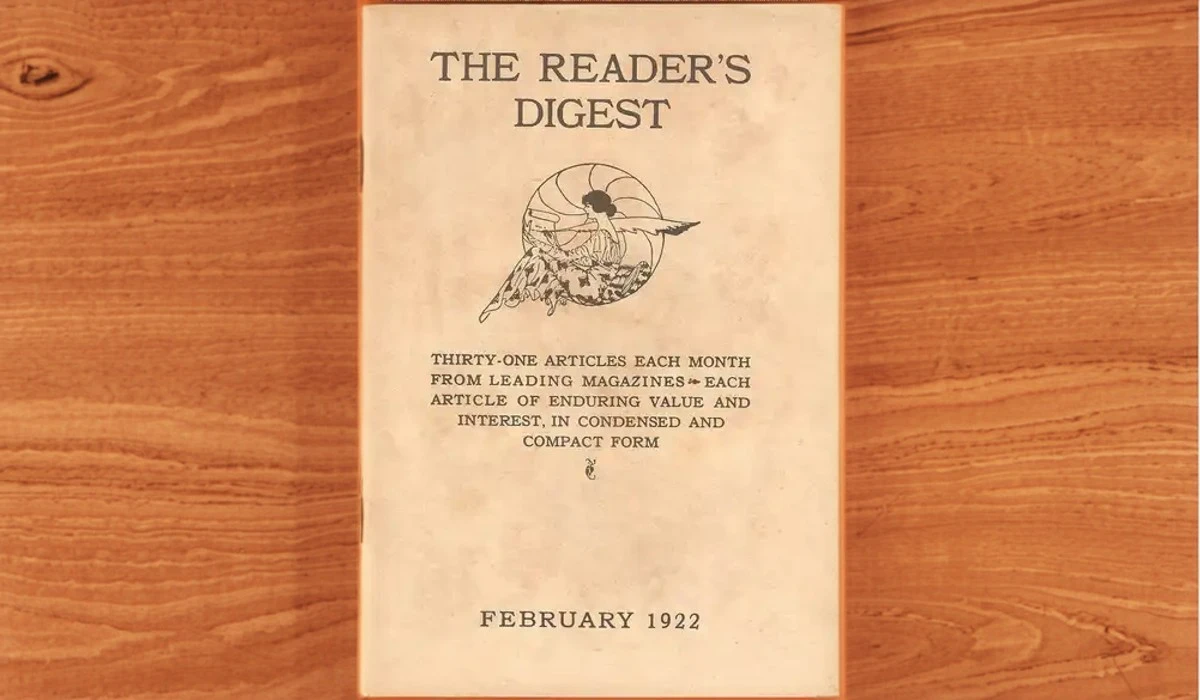
Reader’s Digest 1922: What the First Issue Reveals
Information overload paralyzes action, so savvy creators build filters to strip away the noise. DeWitt and Lila Bell Wallace recognized this problem long before the digital age and designed a pocket-sized solution to compress the world’s knowledge. They understood that busy people crave summaries rather than exhaustive depth. This insight launched a publishing phenomenon that condensed complex cultural debates into bite-sized formats. The Reader's Digest 1922 debut edition operates as a masterclass in this curation strategy. It captures a specific moment where industrial ambition collided with social anxiety. A review of this artifact exposes the repeating patterns of human concern regarding technology, labor, and authority.
The Reader’s Digest 1922 Origin Story
Great empires often start in places where success seems mathematically impossible. DeWitt and Lila Bell Wallace launched their venture from the basement of a speakeasy in Greenwich Village. They possessed low expectations and modest capital. Their initial goal targeted a mere $5,000 in net income. This humble beginning contradicts the explosive trajectory that followed. By 1929, the magazine boasted 290,000 subscribers. That number climbed to one million circulation by 1935.
The founders prioritized function over aesthetics. They designed the physical format to fit directly into a pocket. The dimensions measured exactly 14cm by 21cm. They marketed this 3:2 ratio as "America in your pocket." Visual impact took a backseat to information density. The cover simply listed the contents. Illustrations remained hidden on the back or inside pages. This invisible design philosophy ensured that the text remained the star.
Inventing the Feed Before the Internet
Aggregating content feels like a modern tech strategy, yet it powered print media long before algorithms existed. The Wallaces did not write original articles initially. They sampled, rewrote, and condensed material from other monthly magazines. This aggregation model allowed them to present a wide array of topics without hiring a massive staff.
This approach mimics the way modern social media feeds work. The Reader's Digest 1922 issue offered a "condensation technique." Editors summarized larger ideas into bullet points or short paragraphs. This format feels immediately recognizable to a modern reader. It respects the reader's time by stripping away fluff. People want the core information quickly.
When was the first Reader's Digest published? The debut issue of Reader's Digest was released in 1922.
Industrial Titans and the Future of Work
We worry about technology taking jobs, but the drive to turn humans into efficient machines began with the assembly line. The post-WWI era marked a shift toward industrial efficiency. The 1922 issue reflects this through its coverage of titans like Henry Ford and Thomas Edison. Articles introduce these figures within the first 20 pages. Their philosophies dominate the workplace logic of the time.
Edison hired employees based on their memory and ability to recall facts. This suggests a view of the human worker as a storage device. Fordism pushed this further by seeking to automatize the worker completely. The goal was to transform the human into a machine for maximum output. This aligns with the labor context of 1922. Unions faced a low point with declining membership. Courts frequently sided with corporations over workers.
The Conflict of Innovation
Nuance exists in how the magazine portrayed these figures. The main articles often highlighted the business impact of these leaders. Supporting texts, however, revealed their darker sides. Henry Ford’s reputation included his antisemitism and conspiracy theories. The magazine presented a mixed bag of tone. It combined startlingly relevant observations with content that feels dated or offensive today.
Gender Dynamics and Social Friction
Historical documents often reveal their bias not by what they argue, but by what they casually joke about. The opening line of the Reader's Digest 1922 issue features a witticism regarding women’s weight. The editors characterized this weight joke as casual misogyny. It sets the tone for the gender politics of the era.
Articles surveyed the outrage against women’s rights. This anti-suffrage sentiment permeated the text. The lack of an editorial rebuttal implies a certain ambiguity. It suggests the editors either agreed with the sentiment or viewed it as acceptable public discourse. This creates a stark contrast to modern values.
Who founded Reader's Digest? DeWitt and Lila Bell Wallace founded the magazine in a Greenwich Village basement.

Image Credit by - Foto: © JCS'
Marketing to the Masses
Despite these dated views, the magazine aimed for a broad audience. It targeted the middle class and women specifically. Later data from 2006 shows that the magazine reached high-income households more effectively than business journals. This shift from a mass-market focus to a wealthier demographic illustrates the changing readership over decades.
Reader’s Digest 1922 on Wealth and Power
Society’s definition of extreme wealth shifts so drastically that yesterday’s tycoon looks like today’s middle manager. The 1922 issue discusses wealth in terms of "millionaires." At the time, society considered the millionaire the peak of financial success. The concept of a modern billionaire remained inconceivable.
Articles compared modern oligarchs to the legendary King Croesus. J. Ogden Armour argued that the true challenge lies in transcending affluence. He believed retaining one's humanity despite riches proved difficult. Henry Ford offered a radical idea for judicial reform. He suggested that Supreme Court justices should receive pay equal to the President. He argued that financial independence ensures optimal performance from judges.
Corporate Deafness
The magazine also touched on the relationship between individuals and large entities. One article framed complaining as a constructive civic force. The piece, titled "Don't Growl—Kick," encouraged citizens to voice their grievances. The belief was that individuals suffer silently because corporate entities remain deaf to their needs. The reviewer concluded that growling louder and kicking harder serves as the only way to be heard.
War, Peace, and Global Paternalism
Nations often frame their control over others as an act of charity rather than dominance. The Reader's Digest 1922 issue covers US imperialism with a paternalistic tone. Articles describing the defense of the Philippines depict Filipinos as petulant children. The text positions the United States as the "parent" needed to guide them. The administration claimed to govern the islands more generously than any prior foreign power.
This infantilizing tone extends to discussions of warfare. The aftermath of WWI heavily influenced the content. A Chemical Warfare Chief presented a paradoxical argument for pacifism. He claimed that poison gas makes war so intolerable that it actually secures peace. This "peace via horror" logic highlights the desperate attempts to rationalize the new technologies of destruction.
What is the Reader's Digest format? The magazine is famous for its portable "digest" size of 14cm by 21cm.
Global Reach and Adaptation
The magazine eventually expanded this American perspective globally. It launched 49 editions in 21 languages across 70 countries. Editors adapted content to match the "educated informal" style of the original. International editions mixed US content with local articles. This strategy allowed the brand to maintain its core identity while appealing to diverse cultures.
Failed Predictions and Consumer Muscle
We judge the future based on current limitations, leading to predictions that seem comical in hindsight. Explorer Stefansson provided a dietary prediction that failed completely. He forecasted that reindeer meat would replace beef as a staple food. This specific forecast serves as a reminder that experts often get the future wrong.
The magazine also engaged in direct marketing that drew legal scrutiny years later. Sweepstakes and "guaranteed winner" mailings became a hallmark of their strategy. This led to a 2001 legal settlement with 32 states. Companies had to clarify that "no purchase necessary" was true. This history of aggressive marketing contrasts with the early mission of simple information aggregation.
The Health Advocate
The magazine did get some things right. In 1952, it published "Cancer by the Carton." This article provided an early link between smoking and lung cancer. This foreshadowed the health advocacy role media would play in later decades. It demonstrates that the digest model could drive serious public health conversations.
The Mirror of 1922
The Reader's Digest 1922 issue stands as more than a collection of old articles. It acts as a mirror reflecting the anxieties of a world in transition. We see the same struggles with automation, corporate power, and international conflict that we face today. The scale has changed, but the fundamental tensions remain. DeWitt and Lila Bell Wallace built a system to organize a chaotic world. Re-reading their first attempt reminds us that while technology advances, human nature stays remarkably static.
Recently Added
Categories
- Arts And Humanities
- Blog
- Business And Management
- Criminology
- Education
- Environment And Conservation
- Farming And Animal Care
- Geopolitics
- Lifestyle And Beauty
- Medicine And Science
- Mental Health
- Nutrition And Diet
- Religion And Spirituality
- Social Care And Health
- Sport And Fitness
- Technology
- Uncategorized
- Videos

