
Palaeography Skills to Identify Forged Documents
When a forger sits down to fake a thousand-year-old document, they think they only need to copy the shapes of the letters. They focus on the visual style but ignore the deep-seated muscle memory of a person who lived ten centuries ago. This gap between a modern hand and an ancient one creates a trail of evidence. Through the observation of how the pen moved across the page instead of just reading what the words say, you can spot a fake.
This field of study, known as Palaeography, acts like a lie detector for history. It turns every stroke of the pen into a forensic data point. If a scribe from the year 800 held their quill at a specific angle, a forger today will likely fail to match that physical rhythm. Through the study of Carolingian minuscule script, experts catch these small errors that the untrained eye misses completely. You can learn to see the microscopic tells that separate a priceless artifact from a cheap imitation.
The Forensic Power of Palaeography
History leaves behind physical clues that forgers find nearly impossible to replicate perfectly. While a criminal can buy old parchment, they cannot easily replicate the centuries of training that ancient scribes possessed. Palaeography provides the tools to measure the pressure, speed, and angle of every letter. Jean Mabillon established the scientific basis for this field in 1681. He wrote a treatise called De Re Diplomatica to help people tell the difference between real government charters and fakes. He realized that handwriting evolves in predictable ways over time.
Modern experts follow in his footsteps by looking at the "ductus" of a script. This term refers to the number, sequence, and direction of the strokes used to create a single letter. When looking back and forth at a model, a forger often "draws" a letter. This causes a lack of fluid motion. How do experts tell if a document is a forgery? Experts use Palaeography to look for "hesitation marks," where the ink pools because the forger paused to check their model, or inconsistent pen pressure that deviates from the historical norm. These tiny pools of ink happen because the pen stops moving while the ink keeps flowing.
Analyzing Ductus and Pen Angle
Ancient scribes wrote with a rhythmic speed. They spent years attaining proficiency in a specific style, so their hands moved with confidence. A forger lacks this confidence. When you look at a forged document under a microscope, the lines often look shaky. Experts call this the "tremor of the fraud." It shows that the person was nervous or moving too slowly.
Pen angle also tells a story. According to information from Gale, writers in the Middle Ages held their reed or quill pens at a steady angle, frequently between 35 and 45 degrees. This angle creates a specific ratio of thick and thin lines. If a forger holds a modern pen or even a quill at the wrong angle, the weight of the letters looks wrong. Even if the letter looks correct to a casual observer, the internal geometry fails the test of Palaeography.
Establishing the Baseline through Carolingian Minuscule Script Studies
To catch a fake, you must first know what the real version looks like. Research published in Britannica notes that Charlemagne established the Carolingian minuscule as part of his educational reforms to create a script readable throughout his empire. The same source mentions that the promotion of this script occurred at the Abbey of Saint-Martin at Tours, where he served as abbot. This writing style replaced the messy, localized scripts of the earlier Middle Ages. Carolingian minuscule script studies focus on this period of standardization. The script is famous for its round, clear shapes and lack of cluttered connections between letters.
Because this script was so standardized, it follows very strict rules. If you find a document from the year 850 that uses a style from the year 1100, you know it is a fake. The consistency of this period makes it an excellent baseline for researchers. Forgers often struggle to maintain this level of uniformity throughout an entire manuscript.
The Uniformity of the Charlemagne Era
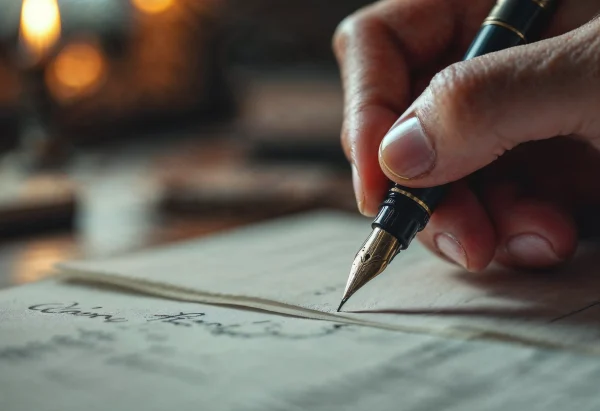
Scribes in the 9th century followed a specific way of "clubbing" their letters. When they wrote letters with tall stalks, like b, d, h, or l, they thickened the tops of those stalks. This "clubbing" is a primary marker in Carolingian minuscule script studies. A modern forger might forget this detail or make the clubs too sharp.
As recorded in research from Cambridge University Press, the practice of including spaces between words was an innovation of the early medieval period. If you see a document that purports to be from the 6th century but has the clear, spaced-out look of the 9th century, your alarm bells should ring. The evolution of the script follows a timeline that forgers frequently mess up.
Identifying Chronological Slips in Letterforms
Forgers often mix styles from different centuries without realizing it. They might use a letter a from one time and a letter g from another. Palaeography experts look for these anachronisms. It is like seeing a movie set in the 1800s where a character wears a digital watch. The script must match the date of the document perfectly.
Specific letters changed drastically over the years. In the 9th century, the letter a often stayed "open" at the top, looking a bit like a u and a c pushed together. In later centuries, the "closed" or "two-story" became common. What is the easiest way to spot a fake manuscript? The most common giveaway is the presence of a letterform or abbreviation that didn't exist until decades after the document’s purported date. A single "modern" letter in a supposedly ancient text proves the document is a fake.
The Evolution of Ligatures and Abbreviations
A study from Oxford Academic highlights that Tironian notes were a shorthand system revived during the Carolingian period to save space. One common mark looked like the number 7 and meant the word "and." The way a scribe tilted the top bar of that "7" can date a manuscript to a specific 30-year window. Carolingian minuscule script studies show that these marks changed as scribes tried to write faster.
Abbreviations for common words like "pro" or "per" also followed strict regional rules. A scribe in France would use a different mark than a scribe in Italy. If a document claims to be from a French monastery but uses Italian abbreviations, the Palaeography reveals the deception. Forgers rarely study these regional differences deeply enough to avoid making mistakes.
Material Evidence vs. Scriptural Accuracy in Palaeography
The physical surface of the document must support the handwriting. If the script and the material do not match, the document is fraudulent. Experts examine how the ink interacts with the parchment. According to the International Federation of Library Associations and Institutions (IFLA), authentic medieval ink made from oak galls and iron salts causes "ink corrosion" as it eats into the parchment. The IFLA further notes that this chemical process results in the ink color changing from black to a deep brown over time.
A forger using modern carbon-based ink produces a flat black color. This ink sits on top of the fibers rather than soaking into them. Palaeography combined with chemical analysis makes for a strong defense against fraud. Even if the forger gets the script right, the "bite" of the ink often tells the truth.
Ink Chemistry and Parchment Topography
Parchment has a "hair side" and a "flesh side." The hair side is usually darker and smoother, while the flesh side is lighter. In a real book from the Carolingian period, scribes followed "Gregory’s Rule." This rule states that when you open a book, hair side should face hair side, and flesh side should face flesh side. Forgers often assemble pages randomly, which breaks this ancient structural habit.
Parchment from the 9th century also feels different than parchment from the 13th century. Early parchment was thick and slightly yellow. Later, vellum was thin and white. If you see a Carolingian script on paper-thin vellum, the materials contradict the history. These physical details provide a secondary layer of proof that supports the work of Palaeography.
The Psychology of the Scribe
Medieval scribes viewed themselves as professional copy machines. They did not try to be "creative" with their handwriting. They followed the rules of their specific monastery. This creates a very predictable pattern of writing. Palaeography looks for the "hand" of the scribe, which includes their unique, tiny habits.
Forgers, on the other hand, often make documents look "too perfect." They try so hard to make every letter look like a textbook example that the writing loses its natural flow. A real scribe might have a "tic," like making the tail of a g slightly longer when they are tired. A forger rarely captures these human elements.
Identifying Individual Hand Variations
Every person has a unique way of moving their hand. Even within the strict rules of Carolingian minuscule script studies, individual scribes left a biological fingerprint. Experts can often identify the work of a single person across several different books.
When a forger tries to mimic a specific scribe, they often fail to capture the "aspect" of the writing. The aspect is the general "flavor" or weight of the page. A forger might get the letters right but make the lines too close together or too far apart. These spatial errors are easy to spot once you know what to look for.
Famous Forgeries Exposed by Palaeography
History is full of famous fakes that experts eventually caught. One of the most famous was the Donation of Constantine. This document claimed that Emperor Constantine gave the Pope power over the Western Roman Empire. According to Britannica, Lorenzo Valla proved the document was a fake in 1440 by demonstrating that the Latin used was not consistent with 4th-century styles. He showed that the document used words and styles that did not exist during Constantine's time.
A report by Reuters highlights the 1983 publication of the Hitler Diaries as a major hoax, noting they were quickly found to be fake. The forger tried to use "Sütterlin" script, a style used in 1940s Germany. However, the forger made "slips" where they accidentally used modern letter shapes. Palaeography experts noticed these inconsistencies almost immediately.
The Vinland Map and the Donation of Constantine
The Vinland Map supposedly showed that Vikings reached America before Columbus. For years, people debated its authenticity. Eventually, experts looked at the script and noticed it was a "suspiciously clever" mix of different centuries. The forger had combined elements of 15th-century writing with modern habits.
Chemical tests later found modern titanium in the ink, but the script had already raised red flags. Through the knowledge of how letters should look, you can spot a fake before the scientists even arrive. By seeing how letters should look, you can identify a deception before the scientists even arrive.
Practical Tools for Modern Palaeography Experts
Today, we have more tools than ever to study ancient writing. Digital humanities allow us to compare thousands of manuscripts at once. Research appearing in ResearchGate describes multi-spectral imaging as an effective tool for identifying and differentiating visually similar ink layers. This technology can reveal where a forger scraped away old text to write something new.
Can anyone learn to read old handwriting? Yes, through the study of Palaeography using online databases and practice, anyone can learn to recognize the distinctive patterns of historical scripts like Carolingian minuscule. Many universities now offer digital archives where you can practice your skills on high-resolution images of real manuscripts.
Digital Humanities and Multi-Spectral Imaging
Software like "Archetype" allows researchers to map every single letter in a document. The computer measures the exact curve of an S or the height of a t. If the computer finds that the letters are too identical, it might suggest the document was printed or traced rather than written by hand.
Statistical "bit-depth" analysis can also measure the pressure of the ink strokes. This helps determine the probability that two different pages were written by the same person. These tools make Carolingian minuscule script studies more accurate than ever. They turn the art of reading old books into a hard science.
Gaining Proficiency in the Art of Truth
Skilled use of the human hand remains the ultimate defense against historical misinformation. While technology helps us see better, the core of the work still depends on your ability to recognize patterns. Gaining proficiency in Palaeography gives you a window into the past that few people ever open. You begin to see the people behind the pages, including their mistakes, their habits, and their unique rhythms. This knowledge protects the integrity of our history. Whether you are a professional researcher or a curious hobbyist, with the knowledge of the physical reality of ancient writing, you ensure that the truth remains visible. Your dedication to Palaeography ensures that the voices of the past stay authentic and clear.
Recently Added
Categories
- Arts And Humanities
- Blog
- Business And Management
- Criminology
- Education
- Environment And Conservation
- Farming And Animal Care
- Geopolitics
- Lifestyle And Beauty
- Medicine And Science
- Mental Health
- Nutrition And Diet
- Religion And Spirituality
- Social Care And Health
- Sport And Fitness
- Technology
- Uncategorized
- Videos

