
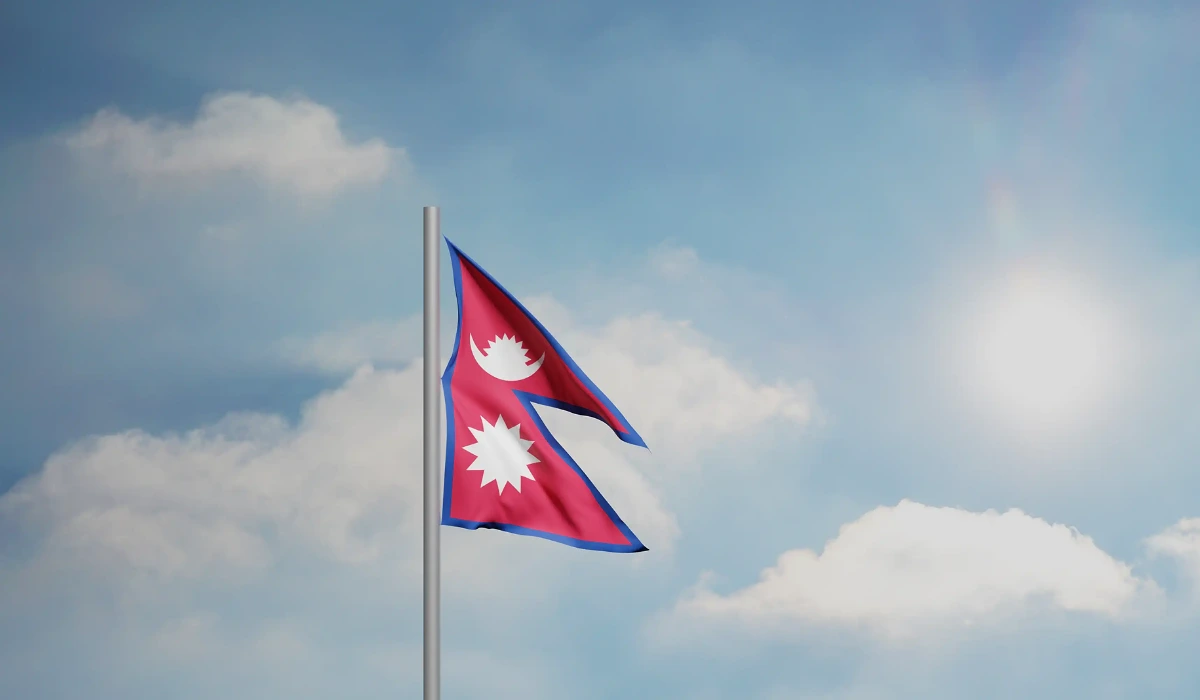
Image Credit - by Aerra Carnicom, CC BY-SA 4.0, via Wikimedia Commons
Nepal Election 2026: Youth Revolt Secures Win
Governments deploy heavy military forces to clear rioters from city squares, yet those exact rioters ultimately dismantle the ruling class legally on a Thursday afternoon. The real threat to entrenched authority rarely comes from a screaming mob. The actual danger materializes when those protesters go home, organize a campaign, and weaponize the exact voting laws originally designed to limit their influence. A ruling class builds barriers to prevent fresh challengers from gaining control. The public simply scales those barriers using ballots instead of bricks. The Nepal election 2026 reveals a stark reality about modern democracies. Citizens will tolerate extreme inequality for decades, right up until they realize they outnumber their leaders.
The Mathematics Of A Ballot Box Revolution
When leaders weight election systems heavily to force compromises, they actually hand absolute dominance to any group organized enough to break the math. The Nepal election 2026 finalized a historic political disruption. The RSP captured 182 out of 275 parliament seats. The party missed a two-thirds supermajority by exactly two seats. The victory represents the first single-party dominance in decades. National voting rules combine First-Past-The-Post and Proportional Representation formats. Leaders originally designed this two-system format to make outright victories nearly impossible. The setup forces routine coalitions. The RSP simply defied those limits.
Breaking The Two-System Format
According to reporting by Al Jazeera, the RSP seized 125 out of the 165 FPTP seats. Data from Khabarhub shows they grabbed 57 out of 110 PR slots since they dominated the proportional vote share with 47.82% of the nearly 10.8 million votes cast. For context, 6,541 total candidates ran for office. Exactly 3,406 competed for FPTP spots, while 3,135 vied for PR slots. The results stand as the second-best outcome in national electoral history. The 1959 elections represent the sole superior electoral result.
Tracing The Nepal Election 2026 Back To The Streets
When governments ban digital communication to suppress public anger, they instantly force isolated complaints to merge into a physical national strike. The timeline begins long before the March 5 poll date. During September 2025, public rage over entrenched unemployment, economic stagnation and corruption boiled over. Citizens accused politicians of hoarding wealth while skilled workers migrated away for survival. The outrage sparked deadly youth protests. People targeted nepotism using "#NepoKid" and "#NepoBabies" online. As The Guardian and Al Jazeera reported, the government responded on September 4 with a ban on 26 digital platforms, including WhatsApp and YouTube, after the companies missed a new regulatory deadline.
The September 2025 Clashes
That digital blackout caused a severe physical backlash. Citizens organized a massive "Day of Rage" on September 8 and 9. Security forces deployed live ammunition. The military took control of the Kathmandu Valley. Reports present slightly differing casualty counts. Reporting by Al Jazeera confirms at least 77 casualties during the September demonstrations. Meanwhile, earlier contemporaneous coverage by The Guardian noted at least 19 initial deaths, while other official records cite 76 dead and over 2,000 injuries by September 9.
The severe public anger forced former PM K.P. Sharma Oli to resign, collapsing the government. According to an IFES election snapshot, authorities applied Article 61 of the constitution and dissolved the House on September 12, 2025. This move led to the appointment of former Chief Justice Sushila Karki as Interim PM. They left the Provincial Assemblies intact. She formed a technocratic cabinet and became the first female leader of the nation. Her administration ran a 150-day fast-track election schedule.
A Hip-Hop Mayor Shakes The Establishment
A leader who writes protest anthems understands the rhythm of public frustration better than a career politician parsing poll data. Balendra Shah emerged as the ultimate disruptor. The 35-year-old former civil engineer and hip-hop artist served as Kathmandu's independent mayor since 2022. As Al Jazeera reports, he wrote a protest anthem called "Nepal Haseko" that accumulated over 10 million YouTube views during the turmoil. Shah ran as the RSP prime ministerial candidate. He represents a massive demographic shift. Over 40% of the population sits under the age of 35.
Over 1,000 FPTP candidates ran under the age of 40. Shah scored the highest historical vote total for a candidate. The same publication notes he even defeated 74-year-old former PM Oli in Oli's home constituency of Jhapa-5. This border region with India historically belonged to Oli. Oli formally conceded via the X platform. Kathmandu analyst Amish Raj Mulmi points out that this abundance of under-40 victors highlights a clear power shift toward the youth demographic. Shah might soon become the youngest PM in national history. Journalist Pranaya Rana notes that Shah serves as an external energy symbol for a youth demanding total establishment disruption.
The Logistical Nightmare Of The Mountain Vote
When the government forces citizens to vote only at their registered birthplace, it guarantees low turnout and maximizes the physical strain on the state apparatus. Mountainous terrain covering 80% of the landmass creates massive logistical hurdles for voters. The government mandated that citizens participate strictly at their registered birthplace constituency. Local reporting by Ratopati shows authorities actually deployed a total of 341,111 security personnel, including temporary police, to enforce the Election Code of Conduct. The code completely banned state resources, massive banners, and child rally participants.
When does the election start? The polls officially open at 07:00 local time, which is 01:15 GMT, and run straight until 17:00. Hilly terrain forces poll workers to rely heavily on manual ballot box transport and emergency airlifts. Nighttime flight bans and bad weather cause frequent, severe transport delays. The Mustang district highlights this extreme state effort. Remote village outposts required massive resource allocation. Authorities deployed 20 election officials to handle just four registrations. Exactly 35 eligible Mustang voters remained snowbound during polling. Voter registration counts show slight historical discrepancies. General estimates cite around 19 million voters. Exact tallies confirm 18,903,689 registered citizens. Turnout figures also conflict. Broad metrics report a 60% turnout. Meanwhile, other records classify the turnout as the lowest level in over two decades. First-time voters added approximately one million people to the final voter rolls.
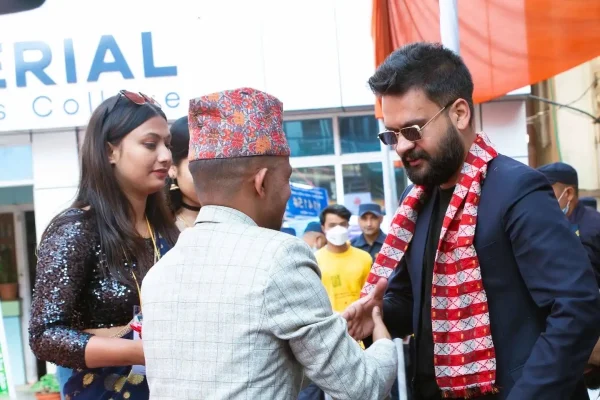
Image Credit by - Janak Bhatta, CC BY-SA 4.0, via Wikimedia Commons
Manual Counts Produce A Seven-Day Result
Election workers slow down the tabulation process when they hand-count paper slips, yet this method drastically accelerates public acceptance of the final numbers. The counting process relied entirely on manual tabulation. Party representatives maintained the explicit right to inspect every open ballot. This level of extreme scrutiny introduces high dispute risks. Recounts and arguments threaten the timeline constantly.
How long does it take to get election results? Officials finalize the formal declaration exactly seven days after the polls close. This result speed represents a massive operational upgrade over the 2022 prior election cycle, which suffered a grueling two-week delay. LiveMint reported that voting concluded at 5 PM local time with initial expectations of results within a day or two; however, the formal result declaration officially landed exactly seven days later on Thursday, March 12, 2026. Chief Election Commissioner Ram Prasad Bhandari noted the calm and high energy surrounding the ballot process completion. Sashi Gurung, a Kathmandu voter, expressed high optimism. Gurung described an irregular ballot event as a major pivot point for the nation and its citizens.
The Collapse Of Old Power Under The RSP
Legacy leaders dominate a political arena for decades and go blind to the exact moment their core supporters walk away. The elections of 2026 completely displaced established parties. The RSP, a mere four-year-old organization, executed a highly organized campaign fueled heavily by diaspora financial support from US Nepali communities. The old guard faced its worst-ever electoral defeats.
The Fall Of Legacy Politicians
The Nepali Congress secured only 38 total seats. They won 18 FPTP seats and held a 19.1% PR vote share. The CPN-UML captured just 25 total seats, earning 9 FPTP spots and a 13.4% PR vote share. The CPN (Maoist) took only 8 FPTP seats. Voters forcefully ousted massive political figures. Gagan Thapa, the Nepali Congress President, lost his race. Madhav Kumar Nepal and K.P. Sharma Oli also suffered notable, crushing losses. New parties gained slight traction amidst the chaos. The Shram Sanskriti Party led by Harka Sampang took 7 seats. The RSP under Rajendra Lingden grabbed 5 seats. Pushpa Kamal Dahal’s Nepali Communist Party secured 17 seats. Shiv Shrestha, a Jhapa voter, emphasized the immense life sacrifices made by Gen Z. Shrestha demanded a complete halt to corruption, aggressive job creation, and the absolute prevention of repeated historical tragedies.
Geopolitics And The New Foreign Policy
A neighboring superpower watches a local ballot count to figure out if it needs to redraw its own regional defense strategy. International neighbors monitored the elections with intense focus. The geopolitical stakes remain massive. India maintains close monitoring due to past friction with Oli. Oli historically favored a strong pro-China stance. China desires a friendly government that explicitly supports the Belt and Road Initiative. The US seeks tight alignment with India's strategic goals in the Asian region. Foreign leaders reacted quickly to the changing political tide. Congratulation messages poured in immediately following the math verification. India PM Narendra Modi, Bhutan PM Tshering Tobgay, and Pakistan PM Shehbaz Sharif sent early regards. Modi stated the poll success serves as an honorable milestone for Nepali democracy. He promised a tight, ongoing collaboration with the future administration.
The Manifesto Driving The Next Government
The new party must dismantle the exact constitutional norms that allowed them to grab power so they can deliver massive structural shifts. The RSP won over the public through a highly focused, aggressive manifesto. The party demands better governance, strict anti-corruption measures, and immediate unemployment reduction. What are the main promises of the RSP manifesto? The party pledges a move to a direct executive election, a fully proportional parliament, and sweeping non-partisan local governments. They also demand the strict separation of powers, the total abolition of labor unions, and a push for massive hydroelectric expansion.
The Nepali Congress attempted to counter this energetic wave. They pledged a rigorous asset investigation for all post-1990 public office holders. Voters ultimately rejected the legacy approach. Balendra Shah framed the electoral triumph as a total rejection of effortless routes. He vows to confront national betrayals and deep-rooted troubles directly. The youthful parliament must now deliver on these aggressive promises or face the exact same anger that propelled them to victory.
The Reality Of The Election of 2026
The RSP used the old rules to build an entirely new reality. They translated violent street anger into rigorous campaign logistics. They exploited the basic math of a fractured voting system and defeated a deeply entrenched political class. The election proved that sheer demographic weight easily crushes decades of careful political maneuvering. A four-year-old party effectively retired an entire generation of legacy leaders. Now, the new ruling class faces the exact same impatient youth demographic that put them in charge.
Recently Added
Categories
- Arts And Humanities
- Blog
- Business And Management
- Criminology
- Education
- Environment And Conservation
- Farming And Animal Care
- Geopolitics
- Lifestyle And Beauty
- Medicine And Science
- Mental Health
- Nutrition And Diet
- Religion And Spirituality
- Social Care And Health
- Sport And Fitness
- Technology
- Uncategorized
- Videos

