

Lydia Darragh: Revolutionary War Spy Story
When an occupying army commandeers your home, they unwittingly hand you the very intelligence they want to hide. As noted by the NW Local Paper, the British military seized control of Philadelphia and felt so secure they even used the Darragh family parlor to conduct their conferences, assuming the local pacifist population posed absolutely zero threat to their operations. They made a fatal miscalculation. Lydia Darragh turned their arrogance into a deadly weapon. According to biographical accounts from Britannica and PhillyVoice, Lydia Barrington originated from Dublin, Ireland, in 1729, married a teacher named William in 1753, and shortly thereafter crossed the Atlantic to Philadelphia with him.
She carried the outward appearance of a devout, peaceful Quaker. The military forces occupying her city saw an ordinary mother managing a household. They missed the intelligence operation forming right under their boots. Becoming a successful revolutionary war spy required exploiting the enemy’s strict gender and religious assumptions. She gathered precise troop movements, walked straight through heavily guarded checkpoints, and delivered data that altered a major military engagement. She broke the law, defied an empire, and used her mundane daily routine to shatter British military dominance in Pennsylvania.
The Ultimate Covert Identity of a Lydia Darragh Revolutionary War Spy
Pacifism functions as the perfect camouflage because the military expects resistance to look aggressive. Quakers entirely oppose violence and strictly avoid combat. The British army marched into Philadelphia in September 1777 and immediately categorized the Quaker community as harmless non-combatants. Lydia Darragh utilized this exact public perception to shield her activities. She possessed a deeply personal motivation to subvert the British occupation of Philadelphia. Charles, her eldest son, served actively in the 2nd Pennsylvania Regiment of the Continental Army.
Family loyalty drove her directly into the path of espionage. She lost her official Quaker membership before the war ended. This loss strongly suggests her local community recognized her patriotic, war-supporting actions. What did a Revolutionary War spy do? A spy observed enemy troop deployments, collected numerical data, and smuggled those details across heavily fortified lines to military contacts. This basic process dismantled large-scale offensives. Operating as a war spy required intense emotional control. She had to smile at the very soldiers aiming rifles at her son’s regiment. She hosted them, served them, and quietly plotted their defeat.
Housing the Enemy During the Philadelphia Occupation
Proximity to power guarantees access to its deepest flaws. General William Howe brought massive troop numbers into Philadelphia and established his command at the Cadwalader House. The Darraghs resided just down the street in the Loxley House. British officers routinely requisitioned large local homes to host strategic meetings and shelter commanders. They demanded use of the Loxley House for a secret British council on 2nd December, 1777.
Major John André took charge of the evening’s logistics. He issued strict orders to Lydia. He mandated an 8:00 PM curfew for her entire family. He instructed her to ensure her children went to bed early and demanded the immediate extinction of all candles in the home. André promised to knock three times on her door to wake her when the officers finally concluded their meeting. He assumed a compliant civilian would follow his demands perfectly. He severely underestimated the homeowner. Lydia put her family to bed, extinguished the flames, abandoned her sleep, and walked quietly toward the meeting room.
A Family Accustomed to Loss
Lydia understood the fragility of life deeply. She gave birth to 9 children total. She buried four of them—Hunter, Connor, Nora and Caira—due to severe infant mortality. She aggressively protected her five surviving children: Charles, Ann, John, William, and Susannah. Protecting them meant ending the war quickly, which required actionable intelligence.
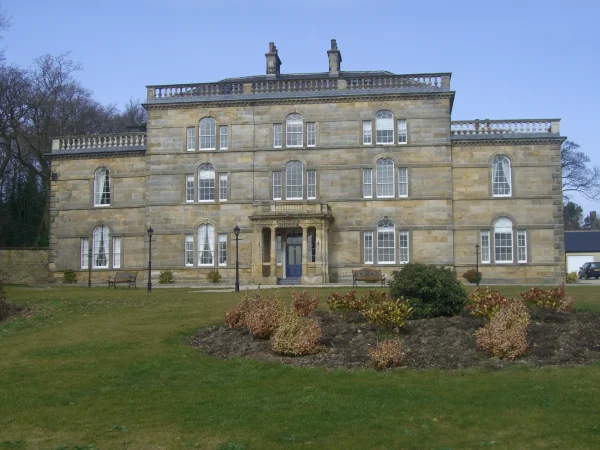
Image Credit - by Mick Knapton, CC BY-SA 3.0, via Wikimedia Commons
Eavesdropping Inside the Loxley House
Walls built to secure military secrets frequently trap the very conversations they intend to protect. Lydia bypassed her bedroom and entered a small storage closet adjacent to the primary meeting room. She pressed her ear against the thin partition. The officers spoke openly, believing the strict curfew guaranteed their absolute privacy. General Howe’s commanders finalized a a large-scale surprise assault on the Continental Army encamped at Whitemarsh, 16 miles north of Philadelphia. They explicitly discussed a departure date of December 4, 1777. Lydia listened closely and documented the exact logistics of the operation.
She heard them detail a specialized force containing 5,000 men, 13 heavy cannons, and 11 boats loaded onto wagons. How did spies memorize military numbers? They used rapid mental repetition of specific quantities and linked those numbers to visual markers before writing them down. She committed the massive troop deployment to memory. She left the closet and slipped back into her bed just before the meeting ended. Major André knocked 3 times. She feigned deep sleep, forcing him to knock repeatedly before she finally answered the door and locked the house behind them.
Encrypting the War Spy Data
Hiding a message in plain sight eliminates the need for elaborate evasion tactics. Lydia needed to record the numbers she overheard, but carrying a raw military document invited an instant execution for treason. She transformed ordinary domestic sewing supplies into secure intelligence files. She wrote the exact numbers of cannons, men, and boats on a small piece of paper. She rolled that paper tightly until it resembled the shape of a pipe shank. She jammed this rolled document deep inside a standard needle book.
This became a core technique for a Lydia Darragh Revolutionary War spy. She frequently utilized other items, routinely concealing covert messages inside large fabric buttons attached to clothing. These household items deflected all suspicion. She also maintained contact with a second cousin, Captain William Barrington. He served in the British 7th Regiment of Foot. His frequent presence near her family provided an excellent layer of legitimacy. The British soldiers viewed the Darraghs as highly cooperative civilians with direct ties to the Royal Army.
Crossing the Lines to the Frankford Mill
A routine domestic errand rarely raises suspicion from heavily armed sentries. On the morning of December 3, 1777, Lydia needed to deliver her intelligence. According to Smithsonian Magazine, she approached the British command and secured authorization from an officer to move through British lines and collect flour from a mill in Frankford. The trip spanned six miles of hostile territory. General Howe’s forces guarded every exit out of Philadelphia. Why did British sentries ignore civilians crossing lines? They considered elderly citizens gathering essential food supplies completely irrelevant to the ongoing military conflict.
Lydia presented her official pass to the guards and walked directly out of the city without facing a single search. She trekked through the winter weather toward the Rising Sun Tavern. Continental forces frequently patrolled this specific area. Historical records present slight contradictions regarding her exact primary contact, but accounts from USHistory.org and the American Battlefield Trust detail that she ran into Thomas Craig, who then handed the intelligence over to Colonel Elias Boudinot. Boudinot himself recalled requesting an operative to travel into the country to purchase grain. He described encountering a small, impoverished, and unremarkable elderly woman near the tavern.
Delivering the Needle Book
Lydia handed over her needle book. The Continental officers opened it and extracted the rolled paper. They stared at the exact troop numbers, cannons, and wagons heading their way. She also warned them about the full scale of General Howe's force, which totaled roughly 10,000 soldiers. The officers immediately dispatched this data to George Washington at Whitemarsh. Lydia finished her walk, purchased her flour at the Frankford mill, and carried the heavy sack six miles back to Philadelphia. She maintained her cover flawlessly.
The Decisive Whitemarsh Skirmish
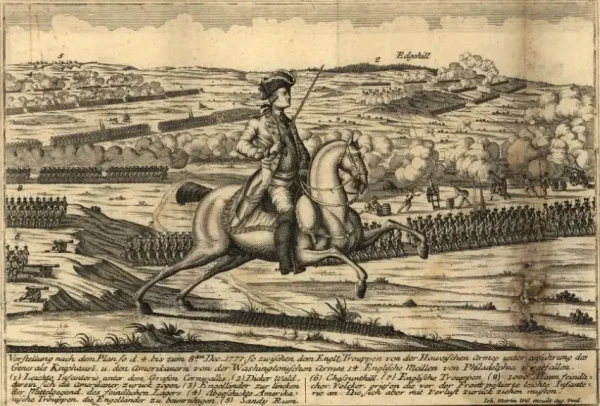
Preparing for a surprise attack neutralizes the offensive advantage completely. According to PhillyVoice, the British troops marched out of Philadelphia exactly as planned on the night of December 4, 1777. They expected to slaughter a sleeping, entirely unprepared Continental Army. The publication notes that when the troops arrived, they instead met American troops already prepared with weapons in hand. The Continental artillery already sat securely mounted and aimed directly at the advancing British lines.
The British officers immediately recognized the betrayal. They realized they had lost the element of surprise entirely. One British officer openly noted the absurdity of the situation. He stated the betrayal became evident the moment they arrived, forcing a mandatory retreat that made them look like a group of idiots. The resulting Whitemarsh skirmish produced a stark casualty differential. The prepared Americans suffered roughly 100 casualties. The ambushed British suffered approximately 300 casualties. The report confirms General Howe abandoned the offensive and ordered a humiliating retreat back to Philadelphia.
The Interrogation
As documented by USHistory.org, the British command knew someone inside Philadelphia had leaked the details of the secret British council. They immediately launched an investigation and questioned several suspects, including Lydia Darragh. She faced the officers who had occupied her home. She maintained total composure. She swore her entire family slept soundly through the December 2 meeting. The historical account notes she told Major André that everyone had been asleep early, and he believed her. The officers accepted her defense. They officially determined her family possessed zero knowledge of the plot. She survived the investigation and continued living right next to the enemy.
Conflicting Records and Modern Legacy
Historical narratives often blur the exact lines between documented fact and circumstantial evidence. As noted by PhillyVoice, Darragh’s daughter Ann first published the story in 1827, which causes the specific details of this espionage mission to fuel ongoing debates among historians. According to Smithsonian Magazine, some scholars argue there is no evidence of any kind that the espionage or the concealed button messages took place, rendering the entire account historically unsubstantiated. A Philadelphia newspaper from that exact period published an alternative theory regarding the intelligence leak. The publication claimed a woman dropped a letter concealed inside an Indian meal sack during a violent picket skirmish, which the Americans then recovered. Despite this alternative narrative, private letters from Elias Boudinot provide massive circumstantial proof supporting Lydia’s direct involvement.
He explicitly detailed his interaction with the woman matching Lydia's description and confirmed the transfer of the rolled paper. Additionally, minor historical discrepancies exist regarding her birth year, with some documents listing 1728 instead of 1729. William Darragh passed away in 1783, shortly after the war concluded. Lydia lived to see the birth of the new nation. She died in 1789. The Smithsonian article confirms the local community interred her body in the burial ground at Philadelphia’s Arch Street Meeting House.
Modern institutions consistently validate her heroism. The Sons of the American Revolution officially recognize her actions and issue the Lydia Darragh Medal in her honor. The city of Philadelphia houses the Lydia Darrah School and features Darrah Street. These geographical tributes cement her physical presence in the city she helped liberate. She permanently redefined heroism. She proved a non-combatant civilian could inflict massive damage on an empire using pure intelligence.
The Lasting Legacy of a Lydia Darragh Revolutionary War Spy
The British Empire heavily relied on overwhelming force, massive troop numbers, and aggressive intimidation. They failed to account for the intellect of the people they subjugated. Lydia Barrington Darragh observed their rigid military protocols and turned their own rules against them. She weaponized an 8:00 PM curfew. She turned a sewing kit into an encrypted database. She used a simple trip to the Frankford mill to dismantle a 10,000-troop offensive. Being a war spy required absolute nerve. Lydia Darragh stared down British commanders, endured an aggressive interrogation, and protected her family without firing a single weapon. She represents the devastating power of the overlooked civilian. The military recorded the cannons and the casualties at Whitemarsh. Meanwhile, the true victory happened inside a small, dark closet in Philadelphia.
Recently Added
Categories
- Arts And Humanities
- Blog
- Business And Management
- Criminology
- Education
- Environment And Conservation
- Farming And Animal Care
- Geopolitics
- Lifestyle And Beauty
- Medicine And Science
- Mental Health
- Nutrition And Diet
- Religion And Spirituality
- Social Care And Health
- Sport And Fitness
- Technology
- Uncategorized
- Videos

