
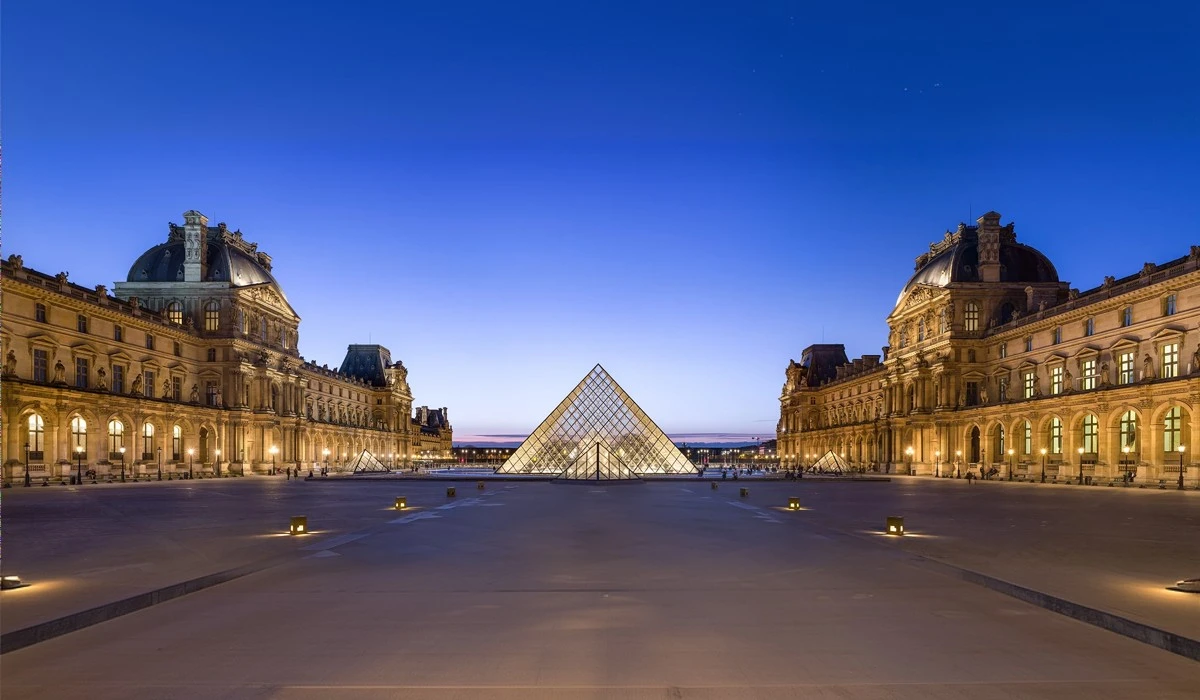
Image by Benh LIEU SONG (Flickr), CC BY-SA 4.0, via Wikimedia Commons
Louvre 7-Minute Heist Stole €88m Jewels
Grand institutions often hide fragile skeletons behind their imposing stone facades. A sudden convergence of criminal audacity and infrastructure failure recently exposed a Louvre Museum crisis that goes far deeper than surface-level mishaps. Within a span of six weeks, the most famous museum of the world faced a brazen jewel theft and a catastrophic water leak. These twin disasters reveal a hidden struggle between the preservation of history and the relentless, invisible decay of modern management systems. The security of billions of dollars in art and the safety of scientific records now seemingly hang by a thread. This situation forces a hard look at how major cultural sites prioritize their funding and protect their treasures.
The Mechanics of a Daylight Heist
High-value thefts often rely less on stealth and shadows and more on the exploitation of routine maintenance patterns. On 19th Oct, 2025, a group of four burglars shattered the illusion of invulnerability surrounding the museum. They did not strike at night. According to a prosecutor cited by Reuters, the unarmed perpetrators relied on threats involving angle grinders rather than laser-dodging acrobatics, executing a plan rooted in brute force and calculated audacity.
Breaking the Perimeter
The thieves utilized a piece of equipment common on Parisian streets: a furniture lift, known locally as a "monte-meubles." As described by AP News, the group wheeled the lift to the façade and rode the basket up to force open a window in the first-floor, bypassing ground-level checkpoints entirely. Once inside the gallery, the perpetrators used angle grinders to slice through the display cases. The noise and violence of the entry occurred in broad daylight. This method highlights a critical vulnerability in the crisis: the assumption that daylight offers protection.
The Seven-Minute Window
Speed defined the operation. ABC News reports that speed defined the operation, with the entire artful plunder lasting only seven minutes. Reuters notes that in that brief window, the thieves snatched eight items including a tiara and earrings belonging to Marie-Louise and Empresses Eugénie, as well as Queens Marie-Amélie and Hortense. A statement from the Paris prosecutor reported by Reuters confirms the haul included diadems, necklaces, and earrings with an estimated damage value of €88 million ($102 million). The quick turnaround left security forces with little time to react before the group vanished.
Security Protocols Versus Physical Reality
Protective systems frequently fail when physical access points bypass digital surveillance entirely. The museum's response protocols faced an immediate test during the robbery. Standard procedure dictates the evacuation of patrons as the primary goal. Human safety takes precedence over property protection.
The Evacuation Dilemma
Security personnel focused on clearing the galleries of visitors. This necessary protocol creates a chaotic environment that criminals can exploit. The focus on crowd control leaves the artifacts momentarily vulnerable. During the escape, the thieves dropped the Crown of Empress Eugénie outside the building. This recovered item serves as the only remnant of the stolen collection.
Historical Precedents
This incident recalls past security failures. The theft of the Mona Lisa in 1911 involved a thief hiding in a closet overnight. The 2025 heist flips that script, utilizing speed and heavy machinery instead of patience. Both events underscore the perpetual cat-and-mouse game between security teams and those seeking to exploit the museum's riches. How do thieves rob museums in daylight? They often use construction equipment or maintenance tools to blend in with daily operations or bypass standard entrances. This tactic turns the museum's operational hum into a camouflage for crime.
The Invisible Threat of Infrastructure Decay
Silent failures in aging utility systems often cause more destruction than aggressive criminal acts. While the theft grabbed headlines, a second disaster struck the museum in November 2025. This event proved that the internal Louvre Museum crisis extends to the very pipes running through the walls.
Triggering the Leak
On the night of 26th November, water began to flow into the Dept of Egyptian Antiquities. Le Louvre’s deputy administrator, Steinbock, told BFM TV via Reuters that the source was a valve in the heating and ventilation system affecting the Egyptian antiquities library, triggered after someone mistakenly opened the previously shut-down pipe. This human error interacted with obsolete infrastructure to create a disaster. Specialist website La Tribune de l'Art, cited by Reuters, indicated that the water soaked through the carpets and dripped into the library of the Mollien wing, impacting hundreds of items because of the poor condition of the pipes.
The Path of Destruction
Gravity carried the water directly onto shelves housing rare books. The leak continued unnoticed until discovery, allowing the water to saturate the materials. This incident highlights the fragility of the building's core systems. Management had already scheduled this replacement in September 2026. The failure occurred nearly a year before the planned repairs could begin.
Assessing the Water Damage
Institutional definitions of damage often clash with academic valuations of loss. The leak impacted between 300 and 400 items. These were not ancient stone statues but books, journals, and scientific documentation dating from the late 19th and early 20th centuries.
Scientific Documentation at Risk
Francis Steinbock, a top administrator, sought to minimize the perceived severity of the event. He stated that "no precious books" and "no heritage artefacts" suffered damage. He emphasized the "consultative" nature of the works, describing them as "extremely useful but by no means unique." However, academics view these "out of print" journals as irreplaceable records of Egyptology. Does water damage destroy old books? Water swells bindings and dissolves ink, often requiring professional restoration to save the content. The physical degradation of these texts represents a loss of knowledge that digital scans cannot fully replace.
The Restoration Process
The museum initiated an emergency restoration plan. Staff moved the affected items to be dried. Following the drying phase, the books will go to a bookbinder for repair before returning to the shelf. Steinbock claimed there are "no irreparable and definitive losses," yet critics argue that the bindings themselves are irreparably damaged.
Financial Pressures and Funding Mismanagement
Budgetary allocations often prioritize visible expansion over the invisible necessities of structural integrity. The Louvre crisis is fueled by a desperate need for cash. To fund renovations, the museum announced a controversial price hike.

Image by Jean-Christophe BENOIST, CC BY 3.0, via Wikimedia Commons
The Price of Admission
According to France 24 and Artforum, starting in September 2026, the ticket price for non-EU visitors will jump to €32, representing a 45% hike intended to generate revenue from international tourists. Why do museums raise prices of tickets? Institutions often increase fees to fund renovations for aging buildings and update failing infrastructure. This revenue is earmarked specifically for the renovations needed to prevent future disasters.
Allocation Disputes
Critics argue the money is already there but spent poorly. The CFDT Union and the Cour des Comptes have blasted the administration. They claim funds flow toward "artwork acquisition" and "office furniture" to the "detriment of the maintenance and renovation of buildings." Valerie Baud from the union points to years of ignored warnings regarding the building's condition.
The Battle Over Significance
Public relations strategies frequently minimize internal disasters to maintain the illusion of control. A war of words erupted between the museum administration and art critics following the leak.
Defining "Heritage"
Management draws a strict line between "heritage artefacts" (art) and "documentation" (books). By classifying the damaged items as mere tools for Egyptologists, they attempt to soften the blow of the Louvre crisis. Critics like La Tribune de l'Art reject this distinction. They argue that scientific works from the 19th century hold their own historical value.
Voices from the Union
The staff sees the leak not as an accident, but as a "foreseeable" consequence of neglect. While Steinbock calls it an mishap, the union frames it as a systemic failure. They argue that purchasing designer furniture for management offices while the Mollien wing crumbles is a dereliction of duty.
Structural Weaknesses and Future Plans
Long-term renovation plans often serve as a reactive bandage rather than a proactive cure. The leak in the Egyptian department was not an isolated incident.
Closing the Campana Gallery
Reuters reports that in mid-November 2025, the museum was mandated to partially close the Campana gallery after staff identified structural weaknesses in the room. This decision came after staff identified structural weaknesses in the room. This closure adds another layer to the narrative of a crumbling institution. The famous gallery houses a vast collection of Greek pottery, now off-limits due to safety concerns.
The Road to 2026
With 8.7 million annual visitors, 69% of whom are foreign, the pressure to remain open is immense. The scheduled repairs for the heating and ventilation systems in September 2026 aim to fix the root cause of the leak. However, until that work begins, the museum operates on borrowed time.
The Cost of Deferred Maintenance
The recent events define a critical moment in the institution's history. The Louvre crisis is a complex web of theft, water damage, and financial disputes. A 45% fee increase attempts to plug the budget holes, but the trust of the public and the safety of the collection remain fragile. From the theft of €88 million in jewels to the soaking of centuries-old books, the message is clear: ignoring the invisible mechanics of maintenance invites disaster. The museum must now prove it can protect its treasures as effectively as it displays them.
Recently Added
Categories
- Arts And Humanities
- Blog
- Business And Management
- Criminology
- Education
- Environment And Conservation
- Farming And Animal Care
- Geopolitics
- Lifestyle And Beauty
- Medicine And Science
- Mental Health
- Nutrition And Diet
- Religion And Spirituality
- Social Care And Health
- Sport And Fitness
- Technology
- Uncategorized
- Videos

