
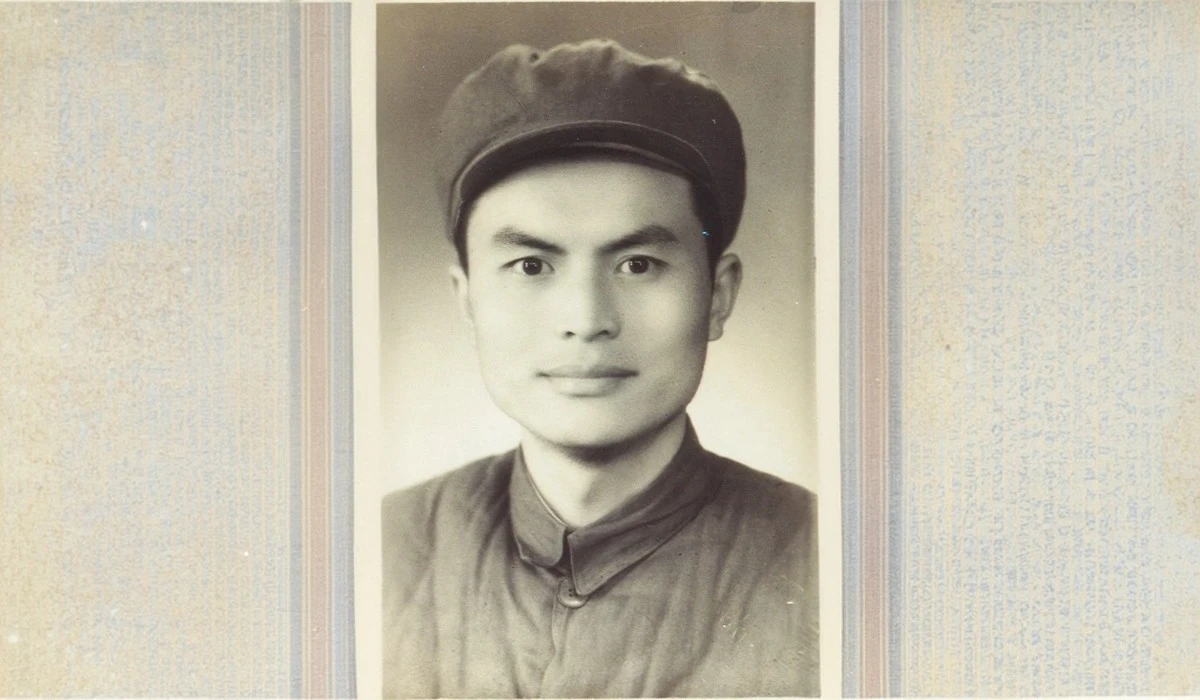
Li Rui Diaries Case: Stanford Wins Against Beijing
When Li Rui died in 2019 at age 101, he left behind something Beijing desperately wanted back: 81 years of detailed notes on the inner workings of the Chinese Communist Party. His daughter had already spent years quietly moving those records to California. What followed was a legal fight between Stanford University and a 91-year-old widow, with the Chinese state watching closely from behind the scenes.
The Li Rui diaries are now at the epicenter of some of the most significant archival battles in recent memory. Li had served as a personal secretary to Mao Zedong before becoming a fierce critic of the CCP. According to The Wire China, after his death, a Beijing court decided in support of his surviving widow, Zhang Yuzhen. Stanford refused to hand the documents over and commenced a quiet title proceeding in U.S. federal court. As Courthouse News reported, the case played out across two countries and two legal systems, with the entire historical record of modern China hanging in the balance.
The Massive Scale of the Li Rui Diaries
The sheer size of what Li Rui left behind makes the Li Rui diaries unlike almost any other personal archive. According to The Guardian, the collection contains roughly 10 million words spread across 40 heavy boxes and approximately 100 individual volumes, covering diaries, letters, and poems. The primary timeline runs from 1938 to 2018, a daily account of CCP rule over eight decades.
Stanford University's Hoover Institution treats this material as a foundational primary source for modern Asian history. Researchers rely on this kind of long-running, first-person record to track shifts in government policy that state archives deliberately obscure. Li lived through the full arc of Communist Party rule and wrote it down every day. That kind of continuity is nearly impossible to find elsewhere. As a result, the Li Rui diaries hold academic value far beyond a single biography.
Decades of Smuggling the Li Rui Diaries Across Borders
Getting the Li Rui diaries out of China required years of careful, low-profile work. Starting in 2004, Li's daughter, Li Nanyang, began moving the files out of the country by carrying digital flash drives and original manuscript papers in her regular hand luggage on international flights. She repeated this process over years, moving documents piece by piece to avoid detection by border security.
By 2013, Stanford alumni Josh Cheng connected Li Nanyang with Professor Jean Oi, which led directly to the formal Hoover Institution acquisition. By 2014, the official transfer of 40 boxes to Stanford had begun in earnest. Moving that volume of politically sensitive material across borders without interception required total secrecy at every step.
The Threat Concealed Inside the Li Rui Diaries
Beijing's hostility toward the Li Rui diaries is not difficult to understand once you look at the contents. Li survived eight years of brutal solitary confinement, and his records reflect everything he witnessed as an insider and later as a target of the state. Research published in The Wire China highlights that his notes detail the fallout of the Lushan Plenum, which triggered a massive famine and the Cultural Revolution, and expose the brutal realities of the 1989 Tiananmen Square "Black Weekend."
Li also wrote directly about current leader Xi Jinping, documenting what he saw as Xi's lack of intellectual depth and excessive vanity. He recorded the media saturation driving a cult of personality beyond anything in prior decades, and tracked how power had concentrated dangerously in a single leader, starting with Mao. Writer Ian Johnson has pointed out that the state demands absolute control over historical narrative and has zero tolerance for accounts that conflict with the official version. The Li Rui diaries are exactly the kind of record the CCP wants erased.
The Widow's Lawsuit and the Beijing Verdict
After Li Rui died in 2019, his 91-year-old widow, Zhang Yuzhen, took legal action in a Beijing court seeking the prompt return of the documents. Married to Li since 1979 and dependent on a state pension, she contended that the materials included highly personal details and that making them public infringed on her privacy. The court decided in her favor later that year.
American scholars were openly skeptical of the ruling's independence. A private citizen suing a foreign university over archival documents is unusual on its face. Surviving spouses sometimes use inheritance laws to reclaim sensitive materials, which keeps the government's hand out of view. However, legal experts Jacques deLisle and Nicholas Howson defended the validity of Chinese property law in this case, arguing that inheritance disputes do not automatically constitute human rights violations.
A Proxy Legal War in California Courts Over the Li Rui Diaries
Stanford responded by filing a quiet title claim in U.S. federal court to permanently secure its ownership under American law. In 2020, Zhang escalated the fight with a counterclaim alleging emotional distress and copyright infringement. During the California trial, Stanford's legal team openly argued that the CCP was the primary financial sponsor behind the widow's lawsuit. Zhang's representatives denied it entirely and presented the case as a personal inheritance matter.
Her attorney, Matthew Jacobs, pushed back hard on Stanford's core argument, stating that a lifelong Chinese patriot would never choose an institution known for its anti-communist reputation to hold his life's work. Major research institutions like Stanford maintain legal endowments specifically to protect archival acquisitions from international litigation, and Stanford deployed significant resources to counter the widow's legal team throughout the case.
Why do universities fight foreign lawsuits over old documents?
Major research institutions use dedicated legal endowments to defend archival acquisitions from international litigation. Beyond the legal costs, the precedent matters: if a foreign state can use local courts to recover documents held by a U.S. university, it creates a pathway to remove materials from other institutions as well.

The Absolute Necessity of Original Manuscripts
At some point during the litigation, Zhang offered a compromise: Stanford could keep copies while returning all physical originals to Beijing. Historians rejected this without hesitation. Physical paper is the only way to verify that a document has not been altered. Without the original ink and handwriting, a state actor can later claim that any controversial entry was digitally fabricated.
Historian Frank Dikötter has noted that Li recorded events with extreme detail and precision. Those specific, time-stamped observations are exactly what makes the collection valuable and exactly what makes it dangerous to Beijing. Researchers need original manuscripts to analyze handwriting patterns and ink types, which is the only reliable defense against future forgery claims. A digitized copy never carries the same academic weight in a historical dispute. Returning the paper would have handed Beijing the ability to quietly revise the record.
What makes original historical documents so important to researchers?
Researchers need physical originals to analyze handwriting patterns and ink composition. These methods permanently prevent future claims that a digital version was altered or fabricated. A copy can be disputed. The original cannot.
Decoding the Creator's Conflicting Final Intent Regarding the Li Rui Diaries
Both sides brought conflicting evidence about what Li Rui actually wanted. Stanford pointed to a 2017 diary entry showing a clear preference for preservation at the Hoover Institution. Zhang's legal team countered with a 2014 conversation wherein, Li allegedly rejected his daughter's authority to represent him, along with an unsigned draft will leaving all possessions to the widow.
Li Nanyang dismissed the Beijing court ruling entirely, arguing that her homeland's judicial system operates under authoritarian control and cannot legitimately settle a dispute involving foreign institutions. Former professor Cai Xia supported this position, explaining that the regime treats individuals like Li as living historical repositories and takes extreme measures to retrieve their records out of fear of transparent exposure.
Why would a private citizen sue a foreign university over old papers?
Surviving spouses sometimes use inheritance laws to reclaim historically sensitive materials, which keeps the government's involvement out of public view. This approach avoids the optics of direct state censorship while achieving the same result: removing the documents from foreign custody.
The Final Judicial Verdict for the Li Rui Diaries
The trial formally started in California in 2024. As documented by the MCLC Resource Center at Ohio State University, a California court issued a decisive ruling validating Stanford's permanent rights of the files. The judges determined that Beijing lacked any legitimate jurisdiction over property legally held within the US.
The court also noted the high likelihood that the lawsuit served as CCP proxy litigation, citing the widow's apparent personal reluctance to pursue it herself. Stanford's legal team viewed the ruling as fulfillment of Li's final wishes and a major preservation of scholarly material. In a press release by the Hoover Institution, former U.S. Secretary of State Condoleezza Rice confirmed that these primary sources will remain freely accessible and completely unrestricted for researchers worldwide. Stanford successfully blocked any threat of CCP censorship or document destruction.
The Li Rui Diaries and the Enduring Authority of the Page
The fight for the Li Rui diaries shows clearly how authoritarian governments use inheritance laws to reclaim historical records they find inconvenient. States that fear historical transparency will always find indirect legal tools to suppress it, because direct censorship draws too much attention.
Stanford's legal victory permanently removes the CCP's claim over an 81-year historical timeline that runs from the early Mao era straight through to Xi Jinping. The Li Rui diaries now sit in California, legally secured and open to researchers. A single man's daily observations survived eight years of solitary confinement, years of border crossings, and a coordinated international lawsuit. The physical ink outlasted every attempt to erase it from the record.
Recently Added
Categories
- Arts And Humanities
- Blog
- Business And Management
- Criminology
- Education
- Environment And Conservation
- Farming And Animal Care
- Geopolitics
- Lifestyle And Beauty
- Medicine And Science
- Mental Health
- Nutrition And Diet
- Religion And Spirituality
- Social Care And Health
- Sport And Fitness
- Technology
- Uncategorized
- Videos

