
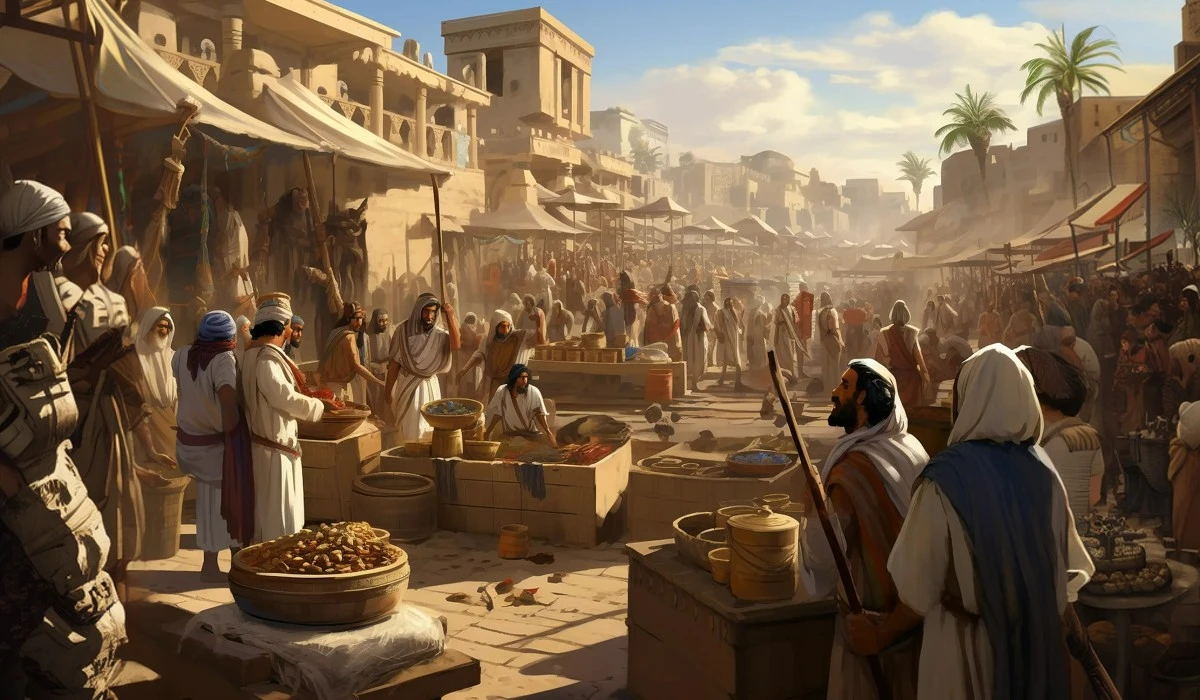
How Caliphates Changed The Map Of Arab History
Imagine trying to run a government where your borders touch the Atlantic Ocean in Spain and the Indus River in India, but your capital sits in Damascus or Baghdad. You have no telephones, no internet, and no cars. A single command takes weeks to reach your generals. Most people would assume this logistical nightmare leads to immediate collapse. Yet, for centuries, the leaders of the 7th and 8th centuries didn’t just survive; they thrived.
They built a system where a letter could cross deserts faster than a trade caravan, and taxes were collected with startling precision. To truly understand Arab History, one must look past the conquests and analyze the administrative engine that kept the empire running. This occurred by design through a strict application of strategy.
Caliphate governance included religious authority and served as an administrative high-level model that created systems for mail, taxation, and judicial independence that anticipated modern states. This post provides an understanding of the specific tactics that allowed these empires to manage millions of people across three continents.
The Pillars of Shura and Consensus Building
Before the palaces and the golden coins, Arab History began with a simpler, yet powerful form of leadership. The change from tribal democracy to imperial management relied heavily on buying in from the people who mattered.
The Art of Consultation (Shura)
The early Caliphs understood that they could not rule by force alone. They utilized Shura, or consultation, to keep the peace. According to Britannica, Mu’awiyah I adopted the shura as a council of notables for the purpose of consultation. Caliph Umar ibn al-Khattab (r. 634–644) famously refused to make major decisions, like the military advance on the Sassanid Empire, without convening a council of elders and military commanders. His logic was practical. If the tribal leaders agreed to the plan, they would commit their soldiers to the fight. A maxim attributed to him states, "There is no good in a decision without consultation." Rather than showing weakness, this served as a tactic to share the weight of leadership.
Meritocracy vs. Lineage
The early method of selecting a leader based on piety and competence created a highly motivated state, but it was unstable. This changed with the Umayyads. In 661 CE, known as the "Year of Unity," Mu’awiya I shifted the model to dynastic succession. He prioritized stability over the democratic ideals of the earlier period. While controversial, this move to hereditary rule allowed for long-term planning. It marked a distinct shift in caliphate governance, moving from a loosely allied confederation to a centralized monarchy capable of multi-generational projects.
Bureaucratic Innovation in Arab History

As the borders expanded, personal leadership was no longer enough. The state needed a "nervous system." The change from tribal management to imperial administration under the Umayyads and Abbasids created what we now recognize as a "Deep State."
Establishing the Diwan System
In 636 CE, Caliph Umar faced a problem: the empire was flooded with wealth, and he needed a way to distribute it. He established the Diwan, modeled on Persian administrative registers. In addition to a payroll, this functioned as a thorough census. The state categorized citizens by their military service and their proximity to the Prophet, distributing stipends accordingly. This created the first welfare state in Arab History. The state ensured loyalty by connecting financial rewards directly to service.
The Barid (Postal) Network
Communication is power. The Caliphs established the Barid, which most history books call a postal service. As stated in an article by Aramco World, this network functioned both as a communication link with the provinces and as an information agency. Postal directors reported on the behavior of governors, the price of grain, and the mood of the peasantry in addition to carrying letters.
Abbasid Caliph Al-Mansur (r. 754–775) famously said he needed four people to run the state: a judge, a police chief, a tax collector, and "the director of the mail to write reliable reports on the other three." Many readers often wonder, what were the main features of the caliphate? The main features included a centralized religious and political authority, a productive bureaucracy known as the Diwan, and a unified legal system based on Sharia. The Barid ensured that the central authority in Baghdad knew exactly what was happening in Cairo or Khorasan before the local governors could hide the truth.
Economic Engineering and Resource Management
An empire runs on money. Caliphate governance excelled at standardizing the economy to facilitate trade and ensure the treasury remained full.
Unifying the Currency
For decades, Arabs used Byzantine gold and Sassanid silver coins. This meant their economy was tied to foreign powers. In 696 CE, Caliph Abd al-Malik changed the game. Research from the Metropolitan Museum of Art explains that his gold reform introduced new coin styles that avoided figural imagery. An article from Dergipark highlights that this 696-7 coinage reform moved the currency from figural designs to an epigraphic Islamic style, resulting in the pure Gold Dinar and Silver Dirham. This was a massive geopolitical power move. It forced every merchant in the known world to use Islamic currency, cementing the state's economic independence.
Taxation Tactics (Jizya and Kharaj)
Taxation requires balance. If you take too little, the state fails; take too much, and the people rebel. Abu Yusuf, the Chief Judge to Harun al-Rashid, wrote a manual called Kitab al-Kharaj (The Book of Land Tax). He advised the Caliph that fair taxation yields more revenue than oppression. He established fixed rates for land tax (Kharaj) based on crop yield rather than arbitrary collection. The state also utilized financial instruments like the Sukk, the historical root of the word "check", which allowed merchants to cash a check in Baghdad that was written in Morocco. This level of financial sophistication greased the wheels of commerce across the empire.
Legal Frameworks and Judicial Independence
A state is only as strong as its justice system. One of the most interesting aspects of Arab History is the theoretical separation of the ruler from the law.
The Role of the Qadi (Judge)
The caliphate system held that God provided the law instead of the King. This meant that, in theory, even the Caliph was subject to it. A famous anecdote recounts how Caliph Ali ibn Abi Talib lost a court case regarding a stolen shield. The judge, Qadi Shuraih, ruled against the Caliph because Ali lacked sufficient witnesses. He did not accept the Caliph's word alone. This story illustrates a core principle of caliphate governance: judicial independence. The Qadis were appointed to uphold Sharia, providing a stability that persisted even when Caliphs were toppled.
The Mazalim Courts
Regular courts handled standard disputes, but who polices the police? The state created the Diwan al-Mazalim, or Board of Grievances. A doctoral thesis published by the International Ombudsman Institute notes that these complaint-handling agencies were established during the Abbasid period. These were supreme tribunals, often presided over by the Caliph or a powerful vizier, specifically designed to hear complaints against government officials. It is common to ask, how did Islam influence the government of the Arab Empire? Islam provided the foundational legal code through Sharia, which guided administrative ethics, judicial rulings, and the moral legitimacy of the Caliph’s rule. The Mazalim courts acted as a check on administrative corruption, giving the common citizen a direct line to the highest power in the land.
Strategic Military Governance and Integration
You cannot hold an empire without a sword, but the manner in which you hold it matters. The Caliphs had to manage a multi-ethnic war machine without letting it turn on them.
The Amsar (Garrison Cities)
When the Arab armies expanded, they didn't just billet in conquered towns. They built new ones. According to a biography of Umar I by Britannica, he established the garrison cities of Basra and Kūfah in Iraq, as well as Al-Fusṭāṭ in Egypt. A separate entry by Britannica notes that Kufa was founded specifically as a garrison town in 638 CE. These were planned metropolises with tribal quarters, central mosques, and administrative hubs. The goal was to keep the army segregated from the local population to maintain military discipline and prevent assimilation. Over time, these military bases evolved into the great cultural hubs of Arab History.
Integrating Non-Arab Forces
The Umayyads ran an Arab-supremacist military, which eventually caused their downfall. Britannica reports that the Abbasid Revolution overthrew the Umayyads in 750 CE. The Abbasids learned from the previous mistakes and integrated the Mawali,non-arab converts, specifically Persians, into the military apparatus. This shifted the military from a tribal levy system to a professional, multi-ethnic force. Opening the ranks to Turks and Persians allowed caliphate governance to tap into a massive pool of manpower and talent that sustained the empire for centuries.
The Golden Age’s Role in Arab History
Hard power conquers territory, but soft power conquers minds. The Caliphs used knowledge as a tool of governance.
State-Sponsored Knowledge (Bayt al-Hikma)
Caliph Al-Ma’mun (r. 813–833) didn't just like books; he saw them as a strategic asset. As noted in a Britannica biography of al-Ma’mun, he founded the House of Wisdom academy in Baghdad. He reputedly paid translators the weight of a book in gold for translating Greek, Sanskrit, and Persian texts into Arabic. This centralized intellectual power in Baghdad made the capital the brain of the world.
Patronage as Policy
Supporting scientists wasn't charity. It was policy. The state funded figures like Al-Khwarizmi, the father of Algebra, for practical ends. The state needed better math to calculate detailed inheritance shares mandated by religious law, to determine accurate prayer times, and to create maps for the postal system. Historians frequently explore why the caliphate was important in history. The caliphate was vital because it preserved ancient Greek and Roman knowledge, advanced mathematics and medicine, and facilitated a global exchange of ideas during the Middle Ages. This investment in science gave the state a technological edge over its neighbors. Britannica also mentions that the Abbasid caliphate remained in power until the Mongol invasion destroyed it in 1258.
Lessons from the Fragmentation of Power
No system is perfect. Analyzing where caliphate governance failed is just as instructive as studying where it succeeded.
The Crisis of Succession
The greatest weakness in Arab History was the lack of a clear rule for who takes over next. There was no strict primogeniture (where the eldest son inherits everything). This ambiguity often led to civil wars, known as Fitna. A prime example is the destructive war between the brothers Al-Amin and Al-Ma’mun. Every time a Caliph died, the state risked implosion. This instability drained resources and often undid years of economic progress.
Overextension and Decentralization
As the empire grew, Baghdad became too distant to manage day-to-day affairs in Spain or North Africa. The solution was to appoint powerful governors, or Emirs. However, this eventually backfired. During the time of the Buyid Dynasty (945 CE), these governors had become independent kings in all but name. They eventually marched on Baghdad, turning the Caliph into a mere figurehead. The reliance on semi-autonomous governors diluted central authority, proving that delegation without strict oversight leads to fragmentation.
Applying These Tactics Today
The empires of the past provide a blueprint for organization in addition to stories of battles and palaces. The success of caliphate governance rested on an "Iron Triangle": the Diwan for bureaucracy, the Barid for information, and the Dinar for economic sovereignty. These institutions created a framework that allowed diverse cultures to function under one roof.
The longevity of these systems proves that while borders change, strong institutions endure. The Abbasid Caliphate nominally lasted over 500 years, outliving the individual power of its rulers. Learning the lessons of Arab History reveals that true power lies not in conquest, but in the ability to build systems that outlast their creators. Whether managing a corporation or a community, the principles of consultation, reliable communication, and independent justice remain as relevant today as they were in 8th-century Baghdad.
Recently Added
Categories
- Arts And Humanities
- Blog
- Business And Management
- Criminology
- Education
- Environment And Conservation
- Farming And Animal Care
- Geopolitics
- Lifestyle And Beauty
- Medicine And Science
- Mental Health
- Nutrition And Diet
- Religion And Spirituality
- Social Care And Health
- Sport And Fitness
- Technology
- Uncategorized
- Videos

