
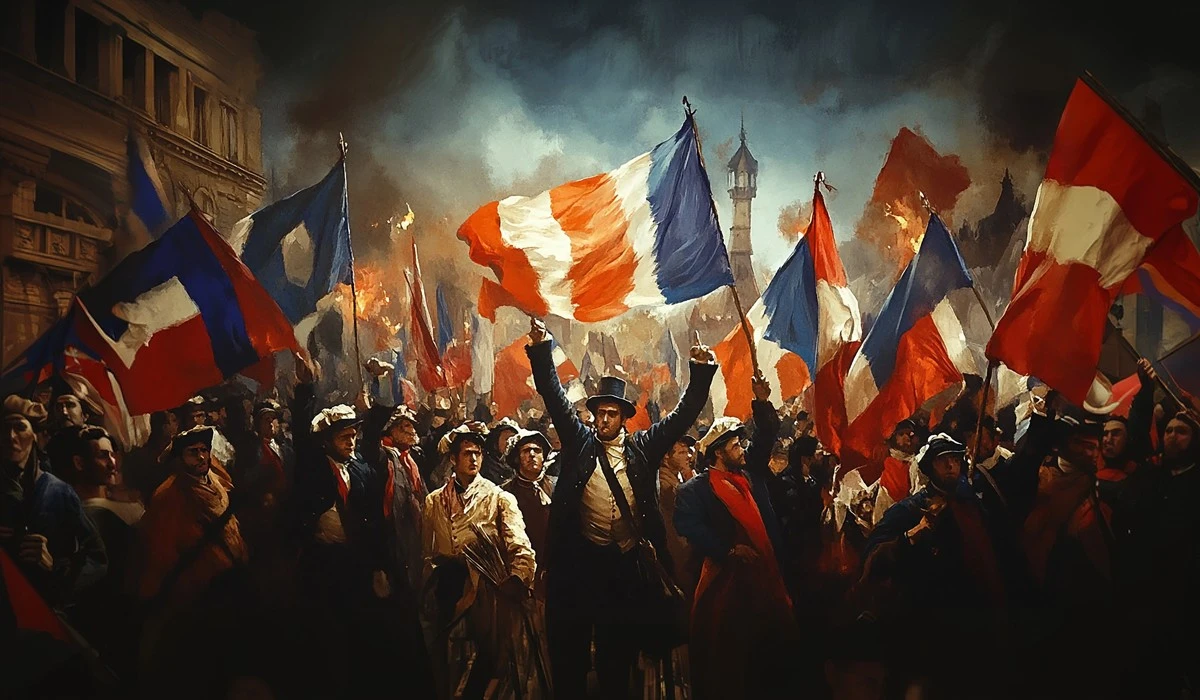
French Revolution: End Political Bias
Politicians scream at each other across an aisle because of a seating choice made by Frenchmen in a drafty hall centuries ago. Modern voters inherit their political labels from an accidental arrangement of chairs in 1789. This physical divide eventually turned into a bloody conflict that rewrote the laws of human society. Most people today feel a deep pull toward one side of the political spectrum without knowing why. They simply follow a script written during the French Revolution.
Looking at this period shows how simple disagreements change into rigid hatreds. Historical distance strips away the emotional noise of today’s headlines. It allows you to observe the exact moment when logic dies and partisanship takes over. This time offers a clear view of how groups of people lose their ability to compromise. A study of the French Revolution helps you recognize these same patterns in your own social media feed and daily news.
The Birthplace of Modern Partisanship in the French Revolution
Our current political vocabulary began as a simple way to organize a room. In August 1789, the National Constituent Assembly met to decide the future of France. The members did not have party names or logos. Instead, they used their bodies to show their loyalties.
The Seating Chart that Shaped the World
Supporters of the King’s absolute power gathered on the right side of the assembly president. These men wanted to preserve tradition and keep the social order intact. Meanwhile, the people who wanted radical reform and a limit on royal power moved to the left side. This split had nothing to do with complicated philosophy at first. It started as a way for like-minded friends to sit together.
Ironically, this seating choice created a permanent mental barrier. According to Time, the labels "Left" and "Right" began to appear in French newspapers reporting on the national assembly by 1791. The "Constitutionalists" sat on the Right, believing the reform had gone far enough. The "Innovators" sat on the Left, demanding a full republic. The Center for History and New Media notes that a majority group known as "The Plain" sat in the middle of the convention and acted as a swing vote between the two factions. These moderates often decided the fate of the country based on which side shouted the loudest.
Understanding the Radical French Revolution
Political movements rarely stay in the middle for long. Hunger and fear usually push people toward the edges. In 1792, the atmosphere in Paris changed from hopeful reform to desperate survival. This shift marked the beginning of the radical French Revolution.
When Reform Becomes Radicalism
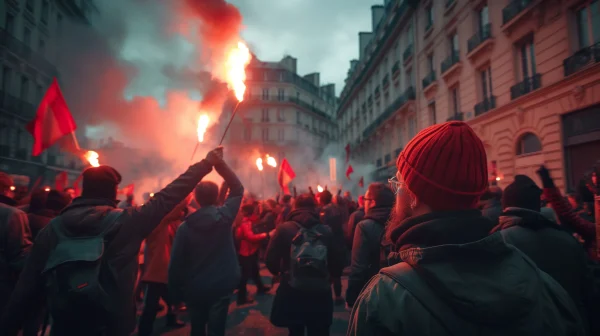
Institutional trust collapsed after proof of Louis XVI’s secret dealings and counterrevolutionary intrigues with foreigners was found in a Tuileries cupboard, as noted by Britannica. On August 10, 1792, a mob of 20,000 citizens stormed the Tuileries Palace. They arrested the King and ended the monarchy forever. Why was the French Revolution so violent? This escalation happened because extreme food shortages and the fear of foreign invasion made people feel they had no other choice but to kill their perceived enemies.
A few weeks later, the September Massacres occurred. Mobs killed over 1,100 prisoners because they feared these people were counter-revolutionaries. The National Convention then abolished the monarchy on September 22, 1792. They even started a new calendar, calling it "Year I of the Republic." This total break from the past meant that anyone who disagreed with the new system became an enemy of the state.
The Workings of Jacobin Political Ideology
The most famous group from this period, the Jacobins, perfected the art of political purity. They believed that a perfect society required perfect citizens. This belief system became the Jacobin political ideology, which prioritized the group over the individual.
The "Republic of Virtue" and the Logic of Purity
Maximilien Robespierre led this movement by preaching about a "Republic of Virtue." He argued that a government must use "terror" to protect "virtue." To him, terror was just a form of quick and severe justice. What did the Jacobins believe? As described by the Center for History and New Media, the Jacobins governed through a twelve-member group called the Committee of Public Safety, which maintained stable control as a dictatorship between July 1793 and July 1794.
This ideology left no room for nuance. If you were not 100% for the revolution, you were against it. The Jacobins used a 12-man committee to run the country like a dictatorship. They passed the "Law of Suspects" in September 1793. This law allowed the police to arrest anyone whose words or writings suggested they lacked "patriotism." This created an environment where everyone watched their neighbors for signs of "incorrect" thinking.
Breaking the Echo Chamber: Lessons for Modern Voters
The Jacobins did not have the internet, but they created a system that worked just like it. They built a massive network of clubs to spread their message. This network ensured that everyone heard the same ideas at the same time.
The Jacobin Club vs. The Modern Newsfeed
Britannica reports that by 1793, between 5,000 and 8,000 Jacobin clubs were active throughout the country. These clubs acted as information hubs. They shared pamphlets and speeches that used aggressive language to attack opponents. This system silenced dissenting voices before they could even speak. It turned politics into a sport where the goal was to crush the other side rather than solve problems.
Today, social media algorithms do something very similar. They feed you information that confirms your existing bias. The Jacobins showed that when people only talk to those who agree with them, they become more extreme. They stop seeing their opponents as humans and start seeing them as obstacles. Recognizing this pattern helps you realize that your political anger might be a product of your information environment.
Identifying the Signs of Institutional Decay
When a society stops trusting its courts and laws, it enters a dangerous phase. The French Revolution provides a warning about what happens when "safety" becomes an excuse for tyranny.
From Public Safety to Public Peril
The Committee of Public Safety eventually became the greatest threat to the public. They bypassed regular legal rules to speed up executions. The Law of 22 Prairial removed a suspect’s right to a lawyer. In the final weeks of the Terror, the only possible outcomes of a trial were acquittal or death. According to Britannica, these unstable conditions eventually paved the way for the military dictatorship of Napoleon Bonaparte, who restored order.
The statistics from this time are staggering. Official records show 16,594 guillotined victims, but the total death toll reached 40,000 when including prison deaths. According to the University of São Paulo, roughly 85% of these victims were commoners rather than members of the nobility. The system meant to "save" the poor ended up killing them in massive numbers. This proves that radical bias usually hurts the very people it claims to protect.
Using History to Neutralize Personal Bias
Studying the French Revolution acts as a mental reset. It shows you that the "new" arguments you hear today are actually very old. Most political debates today are just echoes of the 1790s.
The Historical Lens as an Objective Filter
When you read about the Girondins and the Jacobins, you don't feel a personal need to take a side. You can see the mistakes both groups made without getting angry. This historical distance allows you to use your logic instead of your emotions. A study in ScienceDirect highlights how price controls during this time led to shortages and a deterioration of quality, which resulted in more hunger rather than less. You can see how the assignat currency lost 99% of its value because of bad economic bias.
Apply this same filter to your morning news. When a politician uses "us vs. them" language, compare them to a Jacobin orator. When someone suggests removing legal protections for the sake of "public safety," remember the Committee of Public Safety. History provides a map that helps you navigate the traps of modern partisan rhetoric.
Reclaiming Logic via the French Revolution
The radical phase of the revolution eventually ate itself. The leaders who started the Terror, including Robespierre, eventually faced the guillotine themselves. This "Thermidorian Reaction" happened because people finally grew tired of the constant fear and bias.
Context as the Cure for Polarization
The radical French Revolution teaches us that extremism has a shelf life. People eventually crave stability and common sense. Studying the Cult of Reason and the forced metric system shows how far a government can go when it tries to control every part of life; Britannica highlights that the establishment of the metric system was one of the revolution's most significant results. These attempts to "fix" humanity usually fail because they ignore the complicated nature of real people.
Knowledge is the best defense against being manipulated by modern political spin. When you understand the roots of the Left/Right divide, the aisle in Congress looks less like a battlefront and more like a historical relic. You gain the power to reject the script. You can choose to look at facts instead of just following your "side."
Breaking the Cycle of History
History does not repeat, but it certainly rhymes. The French Revolution serves as a permanent warning about the dangers of unchecked political bias. It shows how easily a demand for justice can turn into a demand for blood. Researching the Jacobin political ideology helps you learn to spot the red flags of radicalism in any century.
You do not have to be a prisoner of the "Left" or "Right" seating chart. You can step back and evaluate ideas based on their results rather than their labels. This historical perspective allows you to think for yourself despite the pressure to join a mob. Use the lessons of the French Revolution to find your own path and stay grounded in logic.
Recently Added
Categories
- Arts And Humanities
- Blog
- Business And Management
- Criminology
- Education
- Environment And Conservation
- Farming And Animal Care
- Geopolitics
- Lifestyle And Beauty
- Medicine And Science
- Mental Health
- Nutrition And Diet
- Religion And Spirituality
- Social Care And Health
- Sport And Fitness
- Technology
- Uncategorized
- Videos

