
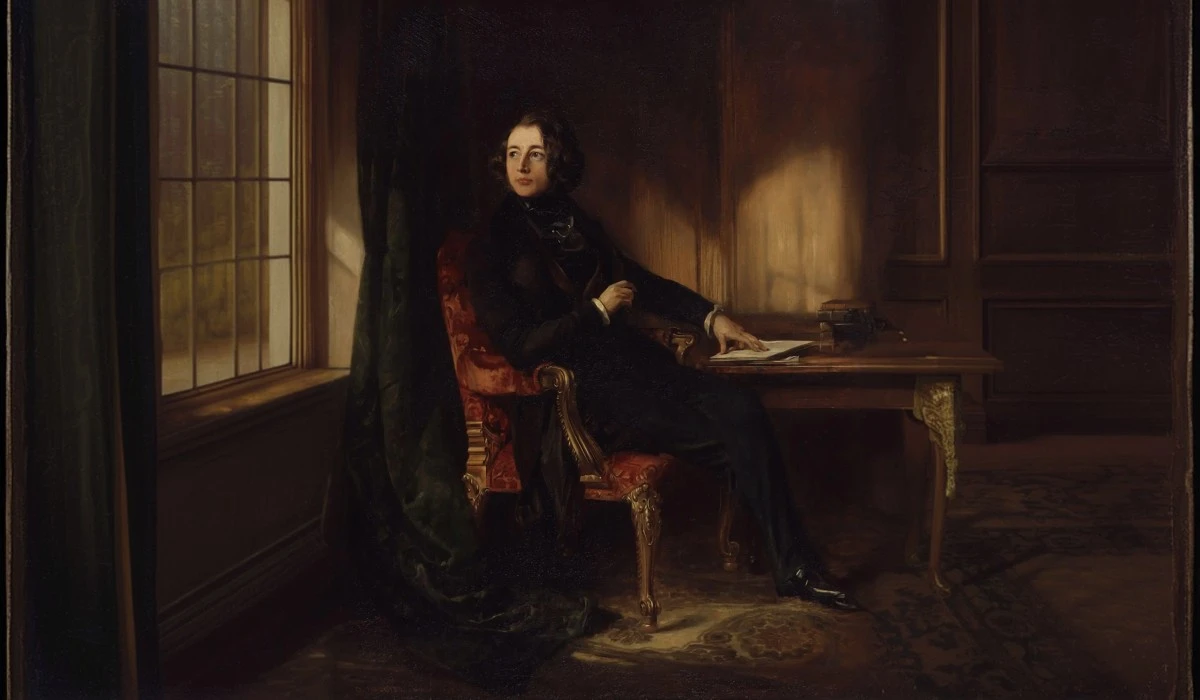
Exploring Classics Via History Of Charles Dickens
When you read a classic novel, you automatically absorb the personal traumas of the person who wrote it. Authors pour their deepest financial terrors and childhood humiliations directly into the text. Readers consume these fears without ever realizing they digest real historical pain. We usually picture nineteenth-century writers working peacefully in grand estates. The truth involves brutal child labor, filthy debtor prisons, and crippling poverty. To truly appreciate victorian literature, you must look closely at the man who defined its boundaries. Smog-filled London streets hid a punishing class structure that actively crushed vulnerable people. A rigorous exploration of the History of Charles Dickens reveals how one man's suffering birthed our modern concept of a dickensian society. He experienced these horrors firsthand before turning his memories into weapons of mass empathy. We will explore his life now.
Understanding the World of Charles Dickens
Understanding this author gives you the ultimate skeleton key for decoding layered 19th century narratives. You will see exactly how a poor clerk transformed his bitter memories into spectacular commercial success. His brilliant storytelling tactics forced wealthy readers to confront the extreme squalor surrounding them. Every vivid character and terrifying orphanage in his books stems from genuine historical events. We will examine his early traumas, his massive literary breakthroughs, and his relentless drive for social reform. Studying the History of Charles Dickens transforms dry historical facts into a gripping tale of survival and genius. You will learn how he pioneered episodic storytelling and entirely reshaped the publishing industry. This path arms you with the critical context needed to grasp the heavy classics. Grab your favorite book, because we are diving deep into his world.
The Formative Years in the History of Charles Dickens
A sudden financial catastrophe shattered his comfortable early childhood on February 9, 1824. Just after his twelfth birthday, his family pulled him abruptly from school. They sent him to work at Warren's Blacking Factory at 30 Hungerford Stairs near the River Thames. As noted in a report by The Guardian, he endured pasting labels onto pots of boot polish for ten hours a day, six days a week. The publication adds that his managers paid him exactly six shillings, or 30p, a week for this exhausting labor.
He later described the factory as a crazy, tumble-down old house overrun with swarming gray rats. This deeply traumatic environment sparked his lifelong obsession with orphaned and abandoned children in his stories. The stench of the river and the endless drudgery scarred his young mind permanently. These dark experiences provided the raw emotional fuel for his most famous protagonists. He never forgot the sting of this sudden poverty.
From Clerk to Keen Observer
In May 1827, at age fifteen, he secured a position as a junior clerk at the Holborn law firm Ellis and Blackmore. He earned ten shillings and six pence a week there. He felt intense dissatisfaction with standard legal work. He independently learned Thomas Gurney's highly complicated system of shorthand, known as brachygraphy. He successfully navigated what he called a sea of perplexity to learn this skill. According to materials from Cambridge University Press, he taught himself shorthand and began working as a freelance court reporter at Doctors' Commons by November 1828. This ecclesiastical court dealt with matrimonial law and wills. He recorded proceedings verbatim and studied the bizarre behaviors of lawyers and judges. These long days observing the courts and streets of London gave him powerful linguistic ammunition. He used this precise vocabulary to aggressively critique the legal bureaucracy of a rigid dickensian society later.
How Debt and Despair Shaped a dickensian society
According to an article in The Atlantic, authorities imprisoned his father under the Insolvent Debtors Act on February 20, 1824, when Charles was twelve. A meager debt of forty pounds and ten shillings owed to a Southwark baker named James Kerr prompted this devastating incarceration. English debtors' prisons functioned on a brutal economic logic. Inmates had to pay for their own food and lodging inside the prison walls. Except for Charles, his mother and younger siblings moved directly into his father's cramped cell at the Marshalsea. Why did Charles Dickens write about poverty? He wrote about poverty to expose the brutal realities of the class system and force middle-class readers to confront the suffering they preferred to ignore. This radical empathy became the bedrock of his storytelling. He understood perfectly how quickly a respected family could plunge into utter ruin and social disgrace.
Surviving the Poor Laws
The government formalized institutional cruelty through the Poor Law Amendment Act of 1834. Officials established a centralized workhouse system based entirely on the concept of less eligibility. This harsh principle explicitly required that living conditions inside a workhouse remain intentionally harsher and psychologically more painful than the life of the poorest independent laborer outside. Politicians designed this system specifically to deter the poor from seeking financial aid. These brutal historical backdrops served as the exact canvases for his early novels. He saw society treating vulnerable citizens like criminals simply because they lacked money. He transformed his towering rage against these institutions into gripping popular fiction. Exploring the History of Charles Dickens shows how he weaponized his trauma. He forced comfortable citizens to look directly at the immense human cost of these terrible laws.
The Turning Point for victorian literature
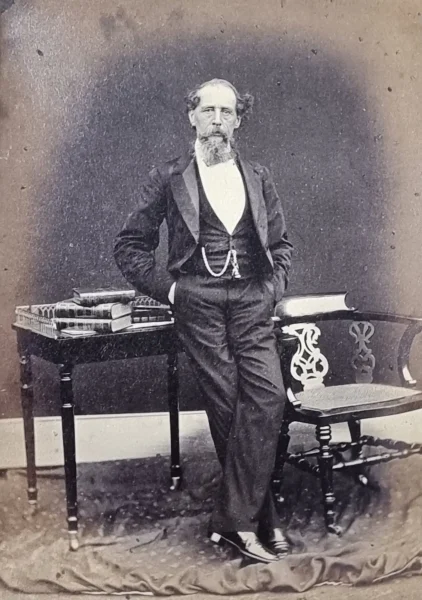
Early nineteenth-century writers focused heavily on rural settings and the wealthy elite. They celebrated nature and ignored the growing misery filling the cities. He aggressively dragged the literary focus into urban realism. He pointed his pen directly at the overlooked victims of the Industrial Revolution. This massive shift shocked readers who expected gentle tales of country manors. He painted vivid portraits of pickpockets, cruel schoolmasters, and desperate orphans struggling in filthy alleyways. His gritty style entirely disrupted traditional publishing expectations. He proved that ordinary working people possessed engaging, dramatic stories worth telling. He captured the specific cadence of street vendors and factory workers flawlessly. His revolutionary approach changed the trajectory of victorian literature forever. Other writers soon realized they needed to address the actual modern world. They abandoned their comforting rural fantasies entirely.
The Rise of the Social Novel
He fully weaponized the social novel with Oliver Twist between 1837 and 1839. He used this dark story as a blazing attack on the terrible new welfare laws. A publication by the Royal Society of Chemistry notes that he exposed starvation diets when he famously detailed the reality of feeding growing boys merely three daily meals of watered-down gruel. He explicitly mocked the institutional rules that separated married couples inside the workhouses. He firmly shifted the focus of mainstream fiction toward the working class. Exploring the History of Charles Dickens reveals the exact moment when novels became a powerful tool for deep social commentary. He proved that entertaining stories could also function as devastating political protests. His massive readership meant politicians could no longer ignore his blistering critiques. He transformed popular fiction from simple elite escapism into a driving force for actual cultural awareness and desperately needed empathy.
Key Works Defining the History of Charles Dickens
He became the most widely read author in England by the young age of twenty-five. The Pickwick Papers began simply as a basic captioning job for sporting illustrations in 1836. He quickly transformed this minor project into a massive cultural phenomenon. Research published in The Guardian indicates that subscriptions for the Pickwick serial surged from five hundred initially to forty thousand by the final episode. He captivated the public with extreme caricature, sharp humor, and clear moral duality. He created highly memorable characters with bizarre quirks and hilarious speech patterns. These early successes established his reputation as a brilliant comedic voice. People from all social classes eagerly awaited each new hilarious chapter. He proved that he understood exactly what the reading public wanted. His energetic prose brought pure joy to millions of dedicated fans.
The Darker, Layered Later Works
As he grew older, he shifted his focus toward darker, more involved systemic critiques. Bleak House aggressively targeted the Court of Chancery through the fictional Jarndyce and Jarndyce case. He launched a direct assault on a real-life legal bureaucracy so deeply flawed it frequently consumed entire family fortunes. Lawyers dragged out court cases for decades until nothing remained for the clients. He exposed this terrible greed with chilling precision. He continued this dark exploration of ambition and guilt in Great Expectations. He examined how a rigid class structure poisons human relationships and corrupts pure intentions. The vibrant comedy of his youth slowly gave way to intense psychological realism. He showed readers how a sick society infects every single citizen. These mature classics solidified his status as a genuinely insightful literary genius.
Serialization: Binge-Reading in victorian literature
Publishers traditionally released books in an expensive three-volume format that cost a guinea and a half. Only extremely wealthy people could afford to purchase these luxury items. According to an Oxford University Press volume, he dismantled this elitist model in the 1830s when his clever use of serialization began to dominate the literary marketplace. How did Charles Dickens publish his books? Magazine publishers released most of his novels in cheap, monthly or weekly serialized installments. This brilliant format allowed lower-income readers to purchase his work over time, creating a massive, shared cultural event. People paid just one shilling for each new exciting chapter. This accessible format fully democratized victorian literature for the general public. The serialization of The Old Curiosity Shop achieved unprecedented commercial success. He regularly sold over one hundred thousand copies a week. This incredible business strategy cemented the financial success found in the History of Charles Dickens.
The Cliffhanger Phenomenon
He invented the modern episodic cliffhanger to ensure readers bought the next exciting installment. He ended chapters at moments of extreme suspense or mortal danger. This brilliant tactic completely changed the pacing of popular fiction worldwide. He created intense cultural frenzies with his delayed resolutions. In 1841, the unbearable suspense regarding the fate of the protagonist in The Old Curiosity Shop drove people wild. American fans crowded the docks at New York Harbor in huge numbers. They screamed at arriving British sailors, begging to know if Little Nell survived. He turned reading from an isolated hobby into a thrilling communal experience. Whole families gathered together to read the newest chapters aloud. He refined the art of holding an audience hostage with pure narrative tension. Modern television shows still copy his brilliant pacing strategies.
Beyond the Page: The Activism in the History of Charles Dickens
He fought hard to fix the terrible society he ruthlessly critiqued in his books. In 1847, he partnered with banking heiress Angela Burdett-Coutts to found Urania Cottage in Shepherd's Bush. He personally interviewed candidates from grim prisons and workhouses for this asylum. He provided a safe home for prostitutes and petty criminals. He focused on practical rehabilitation and emigration to Australia. He entirely rejected the standard practice of pushing punitive religious guilt.
He also worked tirelessly to save the Great Ormond Street Hospital from a major financial crisis. A document from the Great Ormond Street Hospital Charity notes that in 1858, motivated to help treat more children, he delivered a public reading of A Christmas Carol. The charity states that he raised enough money for the hospital to buy the house next door, effectively expanding its capacity to seventy-five beds. He actively worked to dismantle the worst parts of a real dickensian society through sheer force of will.
Wielding the Pen as a Weapon
He launched and edited the highly influential weekly magazine Household Words between 1850 and 1859. He used this platform to aggressively campaign for sanitation reform, slum clearance, and working-class education. Did Charles Dickens change any laws? He never formally drafted legislation. However, his fierce public campaigns and novels sparked intense public outrage that directly pressured Parliament into passing critical sanitary reforms and education laws. He exposed corrupt politicians and greedy landlords in blistering editorial essays. He forced government officials to answer for the squalor infecting the city. The History of Charles Dickens intersects deeply with actual legal history. He transformed journalism into a powerful tool for protecting vulnerable citizens. He gave a loud voice to the voiceless poor. His words frightened powerful men and forced them to enact real changes.
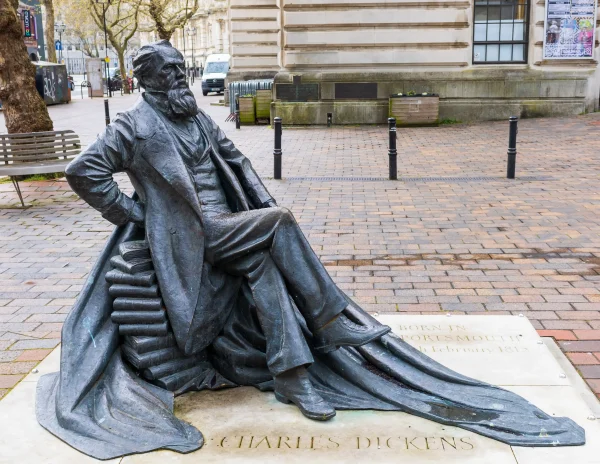
Image Credit - by The wub, CC BY-SA 4.0, via Wikimedia Commons
The Enduring Shadow of the Great Author
Between 1858 and his death, he shifted heavily into theatrical performance. He executed exhaustive public reading tours across multiple countries. During his American tour in 1867, he earned nearly forty-five thousand pounds for forty-three readings. He achieved this massive financial success despite suffering intensely from what he called true American catarrh. He pushed his body far beyond its natural physical limits to entertain his adoring fans. He ignored strict medical advice and completed a brutal farewell reading tour in the United Kingdom. This reckless physical exertion ultimately caused a mild stroke in April 1869 in Preston. He acted out the violent scenes from his books with terrifying intensity on stage. These dramatic performances broke his health completely but permanently cemented his massive celebrity status. He literally gave his life to his beloved audience.
Why His Works Still Resonate Today
He died on June 9, 1870, at his beloved home, Gad's Hill Place. He left his final novel, The Mystery of Edwin Drood, forever half-finished. His brilliant tropes, specific character archetypes, and layered narrative structures remain the foundational DNA of modern storytelling. Modern television soap operas, sprawling film series, and episodic dramas rely heavily on his original techniques. Writers still study the History of Charles Dickens to learn how to hook an audience and build suspense. He taught the world how to mix broad comedy with devastating social critique perfectly. The vivid characters he invented still live clearly in our cultural imagination today. He radically changed how society views poverty and childhood trauma. His massive legacy proves that a single author can entirely reshape the moral conscience of an entire nation.
Closing the Book on the History of Charles Dickens
Understanding the History of Charles Dickens provides the ultimate skeleton key for opening heavy classic literature. He transformed deep personal trauma into spectacular commercial triumphs and immense social changes. He forced an indifferent world to look closely at the crushing realities of poverty and disease. The terrible struggles characterizing a dickensian society represent powerful lessons wrapped tightly in brilliant fiction. We still fight many of the exact same battles against inequality and institutional cruelty today. His sharp anger and radical empathy remain incredibly relevant for modern readers. You now possess the historical context required to appreciate his massive literary achievements fully. You can spot the real pain hiding behind his funniest characters. Pick up one of his classic novels today and read it with these new critical lenses securely in place.
Recently Added
Categories
- Arts And Humanities
- Blog
- Business And Management
- Criminology
- Education
- Environment And Conservation
- Farming And Animal Care
- Geopolitics
- Lifestyle And Beauty
- Medicine And Science
- Mental Health
- Nutrition And Diet
- Religion And Spirituality
- Social Care And Health
- Sport And Fitness
- Technology
- Uncategorized
- Videos

