
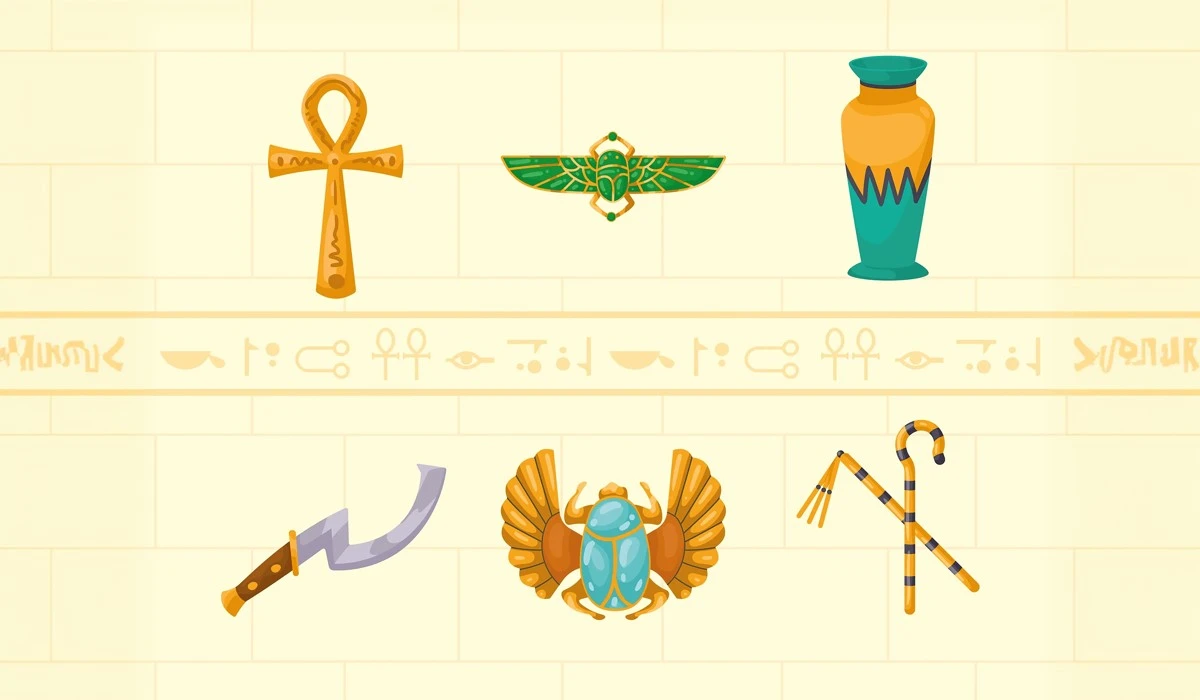
Egyptian Hieroglyphs Decoded By Pharaonic Keys
Imagine walking through a temple in Luxor. You see walls covered in birds, snakes, and eyes. Most travelers see these as beautiful art. In reality, you stand before a highly organized communication system. These figures represent the specific sounds and ideas of a civilization that lasted thousands of years. When you learn the logic behind Egyptian Hieroglyphs, you stop looking at flat carvings and start hearing the thoughts of ancient people. Learning pharaonic script decoding allows you to strip away the dust of time. You gain access to a system where a bird represents a specific sound or a deep religious concept. This guide gives you the keys to read these messages.
The Enigma of Egyptian Hieroglyphs
Ancient Egyptians viewed their writing as "Medu Netjer," or the words of the gods. They carved these symbols into stone to grant eternal life to their kings and deities. These monumental carvings required precision and time. Meanwhile, daily life demanded speed. Scribes developed a fluid, cursive version called Hieratic for administrative papyri and letters. While the stone carvings remained rigid and formal, Hieratic allowed for rapid recording of grain taxes and legal disputes. This distinction shows that the script functioned as both a holy tool and a practical government resource.
Why the Language Remained Unknown for Centuries
The knowledge of the script vanished as the ancient world shifted. In 394 AD, an anonymous scribe carved the Graffito of Esmet-Akhom at the Temple of Philae. This stands as the last known use of the hieroglyphic system. Following the closure of pagan temples by Roman decree, the ability to read the signs died out. The British Museum notes that after the later spread of Christianity led to abandoned religious practices and temple closures, the ability to read ancient Egyptian vanished, leaving the world to view these symbols as magical charms rather than a linguistic system for 1,400 years. Only through the persistent work of linguists did these carvings speak again to the modern world.
Decoding the Text: Rosetta Stone Translation
In 1799, French soldiers found a slab of granodiorite in the Nile Delta. This stone weighs 760 kg and contains a single royal decree from 196 BC. According to a blog post by the British Museum, the decree on the Rosetta Stone appears in three distinct versions: two forms of Egyptian script, Hieroglyphic and Demotic, alongside Ancient Greek. The same source indicates that because scholars could still read Ancient Greek, this stone provided the ultimate "cheat sheet" for translation, as the inscriptions say the same thing across all three scripts. The Rosetta Stone translation became the foundation for every finding that followed in the field of Egyptology.
Champollion and the Phonetic Breakthrough
Jean-François Champollion achieved his breakthrough in 1822 by looking beyond the pictures. As reported by The Guardian, Champollion realized in 1822 that the symbols functioned as a phonetic script instead of mere ideas or objects. Many people ask, how do you read Egyptian Hieroglyphs? You start by identifying the direction the animal or human figures are facing, as you must read into their faces to begin the text. The British Museum blog points out that Champollion used his knowledge of the Coptic language, which derived from ancient Egyptian, to bridge the phonetic gap between the ancient sounds and the symbols on the stone, allowing him to begin reading inscriptions fully. He recognized that the name "Ptolemy" appeared phonetically within the royal rings. This realization changed the study of ancient Egypt from guesswork into a rigorous science.
Learning Egyptian Hieroglyphs Basics
The script functions as an "abjad," similar to Hebrew or Arabic. It records consonants while omitting most vowels. You will find three types of phonetic signs. Unilateral signs represent a single sound, such as the horned viper for the letter "f." Educational resources from the Metropolitan Museum of Art explain that bilateral signs represent a combination of two consonants, like the chessboard symbol for "mn." Trilateral signs represent three sounds, such as the famous ankh symbol for "ankh." Scribes combined these sounds to build detailed words and sentences carrying the same phonetic weight as our modern alphabet.
Ideograms: Pictures that Mean Exactly What They Are
Sometimes, a picture represents the actual object it depicts. Scribes placed a small vertical stroke, known as the Z1 sign, after a symbol to indicate its literal meaning. If you see a drawing of a sun followed by this stroke, the text refers to the literal sun. This simple marker prevents confusion between a phonetic sound and a physical object. This duality allows the script to remain both a visual art form and a precise linguistic tool.
Reading Direction and Visual Logic
Scribes prioritized beauty and symmetry when carving temple walls. The Metropolitan Museum of Art also notes that scribes could write hieroglyphs in horizontal rows or vertical columns, going right to left or left to right. They often mirrored the text on either side of a doorway to create visual balance. Unlike modern English, the script does not have a fixed direction. You must look at the birds or people in the text. If they face left, you read from left to right. If they face right, you read from right to left. This flexibility allowed artists to fit detailed prayers into any architectural space.
Navigating Dense Text Layouts
A common query is, was the Rosetta Stone the only way to decode the script? While it provided the initial spark, scholars also relied heavily on the Coptic language to bridge the phonetic gaps during the pharaonic script decoding process. Scribes also avoided leaving empty spaces between words. They grouped signs into tight squares or rectangles. This "calligraphic grouping" ensures the text looks dense and intentional. When you look at a wall of text, you should identify these clusters to find the start and end of individual words.
Using Determinatives to Determine Meaning
Because the script does not record vowels, many words look identical. The Met publication explains that unpronounced determinatives solve this problem, appearing as ideograms at the end of a word to provide context and explain its meaning. For example, a pair of walking legs follows any word related to movement, like "come" or "go." The same resource adds that a figure of a seated woman or man follows a word like 'wife' or a name to indicate the gender of the person mentioned. These markers do not have a sound. Instead, they act as visual anchors that tell the reader exactly what category of word they are looking at.
Visual Puns and Multi-Layered Meanings
The script often uses symbols to convey multiple layers of meaning. A single sign can offer a phonetic sound, a literal object, and a deep theological concept all at once. Scribes enjoyed using visual puns to honor the gods or the king. A symbol for "life" might also represent a specific sound in a person's name. This creates a dense web of information that rewards careful study. Understanding these layers turns a simple sentence into a significant statement about the Egyptian worldview.
Identifying Royal Cartouches and Names
You can identify a king’s name by looking for the "shenu," known today as a cartouche. This elongated oval loop represents a rope tied at the bottom. It symbolizes the sun's path around the world, suggesting the Pharaoh rules everything the sun touches. Finding these ovals on a monument allows you to immediately identify the ruler responsible for the construction. It serves as a protective barrier for the king's name, ensuring his identity survives for eternity.
The Five-Fold Titulary of Kings
Every Pharaoh used a set of five names to establish their authority. The most common titles are the "Throne Name" and the "Birth Name," which always appear inside cartouches. You might wonder, what is a cartouche in Egyptian writing? It is an elongated protective loop that signifies the text within belongs to a Pharaoh or a deity, serving as a clear visual marker for modern pharaonic script decoding. You will often see the title "He of the Sedge and the Bee" before these names. This title highlights the king's rule over both Upper and Lower Egypt.
Your Future with Egyptian Hieroglyphs
Technology makes it easier than ever to study this ancient language. You can use Gardiner’s Sign List to identify and categorize the 763 most common symbols. Digital dictionaries and apps allow you to search for signs by their appearance, such as "bird" or "tool." These resources turn your smartphone into a portable translation kit. Practicing with these tools builds the muscle memory needed to recognize standard phrases and formulas used in ancient tombs.
Changing Your Travel Experiences

Learning even a few dozen signs changes how you see the ancient world. Instead of wandering through ruins, you begin to recognize names like Ramses or Tutankhamun on the pillars. You can read the standard offering formula that appears on almost every tomb wall. This skill creates a direct connection between you and the person who carved the stone thousands of years ago. Literacy in Egyptian Hieroglyphs changes a standard vacation into a deep, personal dialogue with history.
Learning the Eternal Script
Literacy in the ancient world provided immense power to a select few. Today, that power belongs to anyone willing to study the signs. The Rosetta Stone translation proved that these carvings were not a mystery beyond human reach. Using the principles of pharaonic script decoding allows you to reclaim a voice that the desert sands nearly erased. You see that the ancient Egyptians built pyramids and managed vast systems of information. They created a system that preserved their hopes, their laws, and their names for over five millennia. As you look at Egyptian Hieroglyphs now, you see a living testament to the human desire to be remembered forever.
Recently Added
Categories
- Arts And Humanities
- Blog
- Business And Management
- Criminology
- Education
- Environment And Conservation
- Farming And Animal Care
- Geopolitics
- Lifestyle And Beauty
- Medicine And Science
- Mental Health
- Nutrition And Diet
- Religion And Spirituality
- Social Care And Health
- Sport And Fitness
- Technology
- Uncategorized
- Videos

