
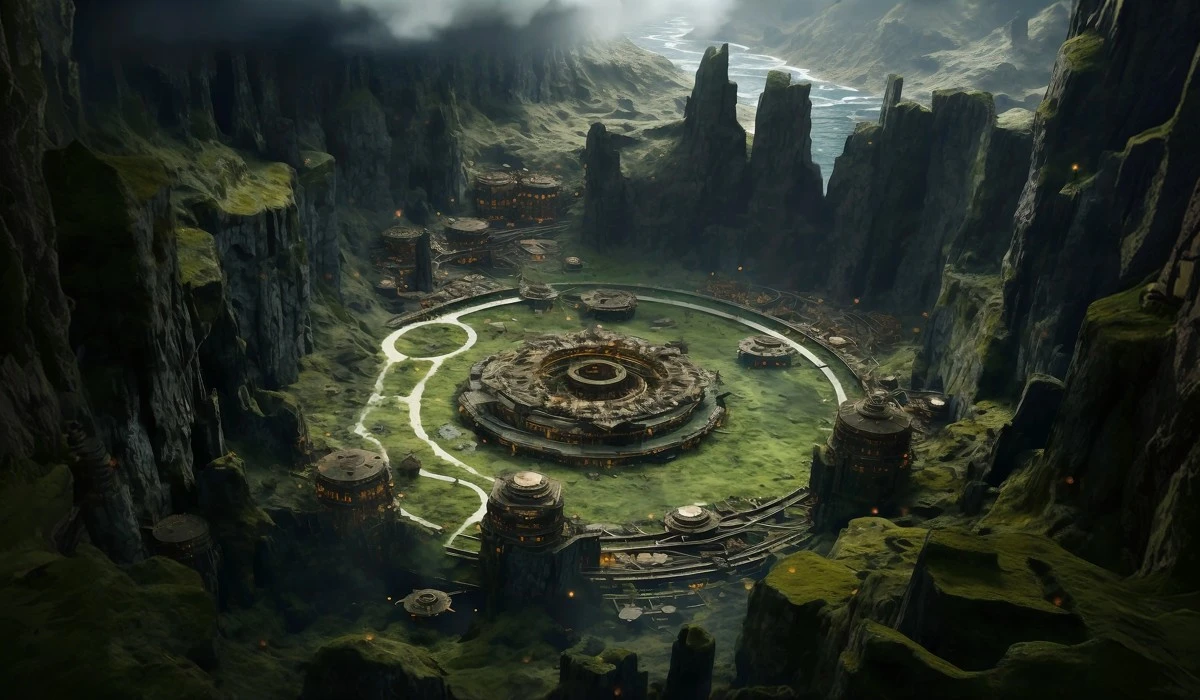
Celtic Mythology Maps Portals To Otherworlds
Imagine walking across a green pasture in Ireland or a rugged cliff in Wales. To the modern eye, these are just scenic views. However, the ancient Celts lived with a distinct reality. They believed the earth functioned as a two-way radio. Certain groves, rivers, and mounds acted as points where the air thinned out and the world next door spilled over.
This worldview, known as Celtic Mythology, suggests that you never truly walk alone in nature. You are constantly brushing against the edges of a different timeline. Ancient people used these stories to map the human mind and its connection to the wild rather than telling them just for fun. This guide helps you navigate those edges. We will look at how the world began and how to find the gates leading into otherworld mythology.
The Primordial Spark in Celtic Creation Myths
The beginning of everything starts with vibration. Unlike some cultures with a single book of origins, Celtic creation myths survive in fragments of song and poetry. Many legends start with the Oran Mór, or the Great Melody. This was a physical force that shook the first bits of matter into existence instead of being just a sound.
This song still resonates in the wind and waves today. The Celts believed the universe remained in a state of ongoing creation. They saw the world as a song that never ends rather than a finished product.
The Void and the First Beings
Out of the sea foam came Eiocha. She was a giant horse-goddess who emerged from the water at the very edge of the world. She ate sacred seeds from an oak tree that grew in the void. These seeds gave her the strength to give birth to the first gods. One of her children was Cernunnos, the horned god of the forest.
Meanwhile, the "Bile" or the Cosmic Oak served as the spine of reality. The Celts believed the first humans came directly from the bark of this tree. This established a biological kinship between people and the forest. People lived in the woods while also considering themselves descendants of the trees.
Elemental Origins: Fire, Water, and Ice
The environment shaped these stories. In the damp climates of Northern Europe, water represented the source of all life. At the center of everything stood nine hazel trees. Their nuts fell into a well, feeding the Salmon of Knowledge. How did the Celts believe the world began? Most scholars agree they saw the world as an eternal cycle emerging from a primal source of wisdom, often symbolized by water or a sacred hazel tree.
Before the gods arrived, the Fomorians ruled the earth. These beings personified the wild storms and the freezing ocean. They represented the raw material the gods had to tame. The struggle between the Fomorians and the newer gods created the seasons we experience today. This battle established the rhythm of the natural world.
Defining the Boundaries of Celtic Mythology
To understand Celtic Mythology, you must change how you look at a map. To the Celts, geography was a collection of names, personalities, and memories rather than just lines on a page. They lived in an environment where every rock held a story.
Boundaries acted as invitations instead of walls. The Celts respected the borders between the farm and the forest. They knew that crossing a stream meant entering the territory of a specific spirit. This created a culture of deep respect for the land.
Geography as a Spiritual Anchor
The land was a living relative. People saw mountains as the physical bodies of old goddesses instead of just naming them. Every river was a vein of the earth. When a king took the throne, he "married" the land to ensure the crops would grow.
This deep connection makes Celtic Mythology feel very grounded in the physical world. This tradition focuses on the soil instead of the sky. If the land suffered, the people suffered. This belief forced society to live in harmony with the changing seasons.
The Concept of "Thin Places" and Seasonal Gates
The Celts used a calendar that focused on shifts. They believed the "Veil" between our world and the next grew soft during specific holidays. At Samhain, the barrier dropped so low that the dead walked among the living. People wore masks to hide from wandering spirits.
According to the Encyclopedia Britannica, the Celts drove cattle between two bonfires on Beltane as a magical way to protect them from disease. These fires served as a shield while the fairy gates swung wide open. These were practical rules for survival rather than mere superstitions. People knew that at certain times of the year, the "Other" world moved closer. They adjusted their lives to accommodate these powerful changes in energy.
The Architecture of Otherworld Mythology
In otherworld mythology, the afterlife exists as a place of abundance rather than one of judgment. It exists right next to us, separated only by a bit of mist or a trick of the light. You don't have to die to visit; you just have to find the right path.
These realms have different names depending on their character. Some are pastoral and sunny, while others are dark and mysterious. All of them operate under rules that defy human logic.
Mag Mell and the Plain of Joy
Mag Mell is a famous version of a pastoral paradise. According to translations from York University, ancient texts describe it as a wood without decay or defect. These records also state that there is no sickness or debility there, and the land provides abundance for all. If you find yourself in Mag Mell, you spend your days feasting and listening to music.
The music there sounds like a summer breeze. Animals in Mag Mell never age or suffer. It represents the perfect version of the Irish countryside. It is the reward for those who lived with courage and stayed true to their word.
Tír na nÓg: The Land of Eternal Youth
Tír na nÓg offers a more famous promise: you never grow old. Niamh of the Golden Hair lured the hero Oisín to this land across the sea. While he enjoyed his time there, he realized that a few years in Tír na nÓg meant hundreds of years had passed back home.
This realm shows that time moves in loops rather than straight lines. It remains a core part of how people understand the supernatural. When you enter this land, you step outside of human history. You become part of the eternal now.
Identifying Portals in Celtic Mythology
Identifying a portal requires a keen eye. The Celts looked for anomalies in nature. A tree with a strange twist or a lake that never froze served as a warning sign. These spots marked the entrances to the concealed world.
Many of these portals still exist today. People still leave offerings at certain wells. They still avoid building houses on ancient paths. The physical world keeps the memory of these gates alive.
The Sidhe Mounds and Ancient Burial Cairns
Look at the large green mounds dotting the countryside. According to the Encyclopedia Britannica, the word for a burial mound is "side" (pronounced "shee"), and this term is also used for the otherworld. Research from Heritage Ireland indicates that sites like Newgrange serve as more than just graves because they are prehistoric passage tombs built around 3200BC.
As noted by Britannica, the Milesians are the ancestors of the Celtic population of Ireland. The Tuatha Dé Danann retreated into these mounds after losing a war to them. They moved into the basement of the world. They simply changed their address rather than disappearing. Now, they rule from beneath the grass.
The Lure of the Deep: Lakes, Wells, and the Sea
Water serves as a liquid mirror to the other world. Based on findings from the National Museum Wales, many iron swords and spearheads were thrown into the lake at Llyn Cerrig Bach. As described in museum records, the collection includes seven swords, six spearheads, and fragments of a shield that people threw into the water to pay a toll to the spirits. They believed that if you dived deep enough into certain wells, you wouldn't drown.
Instead, you would walk out into a dry, sunlit kingdom concealed beneath the waves. This underwater world is often ruled by Manannán mac Lir. The sea acts as a highway that connects all the different realms of Celtic Mythology rather than a barrier.
The Guardians and Residents of the Veiled Realms
You cannot just walk into the Otherworld without permission. Powerful guardians protect the gates. These beings decide who is worthy of entering the concealed kingdoms. They often test visitors with riddles or displays of courage.
These residents aren't always friendly. They have their own agendas and laws. To the Celts, interacting with these spirits was like negotiating with a foreign government. You had to be careful with your words.
The Tuatha Dé Danann: Gods in Exile
The Tuatha Dé Danann weren't always small or shy. According to Britannica, they were a tribe skilled in magic and warfare. Over time, as new people moved onto the land, these gods shifted their presence. They moved into the "thin places."
As noted in the Literary Review, the Scots referred to these beings as the sluagh maith, or the "good folk." They still influence the world, but they do it from the shadows. They can heal a sick child or blight a farmer's crop, depending on how the community treats them. Respecting them is a matter of practical survival.
Manannán mac Lir: The Gatekeeper of the Mist
Manannán mac Lir rules the sea. He owns a boat called the Wave-Sweeper that steers itself through the waves. He also carries a bag made of crane skin that holds all the world's secrets. He decides who gets to cross the mist and who gets lost at sea.
If you want to see the other side, you must deal with him first. He uses the Féth Fíada, a magical mist, to hide the Otherworld from mortal eyes. Only those he chooses can see through the fog. He remains the ultimate protector of the ancient mysteries.
Voyaging through the Veil: Immram and Echtra
According to the Encyclopedia Britannica, ancient literature categorizes fantastic voyages to the otherworld into two groups: the imram and the echtrae. These stories serve as maps for the soul. They teach people how to behave when they encounter the supernatural. They also explain the dangers of leaving the mortal world behind.
These stories often feature heroes who seek wisdom or adventure. Each trip changes the traveler forever. You never return from the Otherworld as the same person who left.
The Immram: The Sacred Sea Voyage
Britannica explains that an imram is a specific type of story involving "rowing about" or voyaging by boat across the ocean. The hero visits island after island, each more unusual than the last. These stories act as a guide for spiritual growth.
The trials the sailors face represent the hurdles a person must jump over to reach enlightenment. For example, the Voyage of Mael Dúin features islands filled with giant ants and silver nets. Each island teaches the hero a lesson about patience, anger, or faith.
The Echtra: Adventures into the Unknown
While an imram is a voyage, an echtra is an adventure on land. Usually, a beautiful woman or a strange animal lures the hero away from a feast or a hunt. The human world is bound by linear time and decay, while the Otherworld exists in a state of eternal abundance and shifting reality.
Often, the hero receives a Silver Branch. This branch rings with music that helps them step through the cracks in reality. The music of the branch puts the mortal mind into a state where it can perceive the unseen. It acts as a passport into the deep mysteries.
The Modern Legacy of Ancient Portals
You can see the bones of Celtic Mythology in almost every modern fantasy book. When characters walk through a wardrobe or find a concealed train platform, they follow the old Celtic rules. The idea of a world sitting right next to our own started with these ancient stories.
These myths continue to inspire artists and writers. They provide a language for talking about the parts of life we can't explain. They remind us that there is always more to the story than what we see on the surface.
Folklore, Fairy Tales, and Pop Culture
The shift from gods to fairies happened slowly over centuries. However, the core of the stories remained the same. Modern movies about concealed magical worlds owe a debt to the echtrae tales. Even the concept of "time dilation" in science fiction mirrors the legends of Tír na nÓg.
When you watch a movie about a hero traveling to a parallel dimension, you are watching a modern version of an ancient Celtic voyage. These themes are hard-wired into our storytelling. They satisfy a deep human craving for the extraordinary.
Why the "Otherworld" Still Resonates
People still visit sites like Glastonbury Tor because they feel a pull toward the unknown. Amid concrete and screens, the idea of a "thin place" offers a sense of wonder. We still want to believe that if we step off the path, we might find something brilliant.
The Otherworld represents our hopes for a place where time stands still, and beauty never fades. It gives us a way to process the mystery of death and the passing of time. As long as people look at the horizon and wonder what lies beyond, these myths will stay alive.
Finding Your Way Through Celtic Mythology
Exploring these ancient paths changes how you look at a simple forest or a quiet lake. From the first notes of the Celtic creation myths to the shores of Tír na nÓg, these stories provide a guide for the curious mind. You don't need a magic boat to find these portals. You only need to pay attention to the world around you.
Nature still holds its secrets for those who listen. Celtic Mythology reminds us that the mundane world is often just a thin layer of dust covering something much more powerful. When you learn the old maps, you begin to see the concealed doors that have always been there. Stay curious, respect the land, and keep your eyes on the mist.
Recently Added
Categories
- Arts And Humanities
- Blog
- Business And Management
- Criminology
- Education
- Environment And Conservation
- Farming And Animal Care
- Geopolitics
- Lifestyle And Beauty
- Medicine And Science
- Mental Health
- Nutrition And Diet
- Religion And Spirituality
- Social Care And Health
- Sport And Fitness
- Technology
- Uncategorized
- Videos

