
Celtic History Decoding Using Druid Ironwork
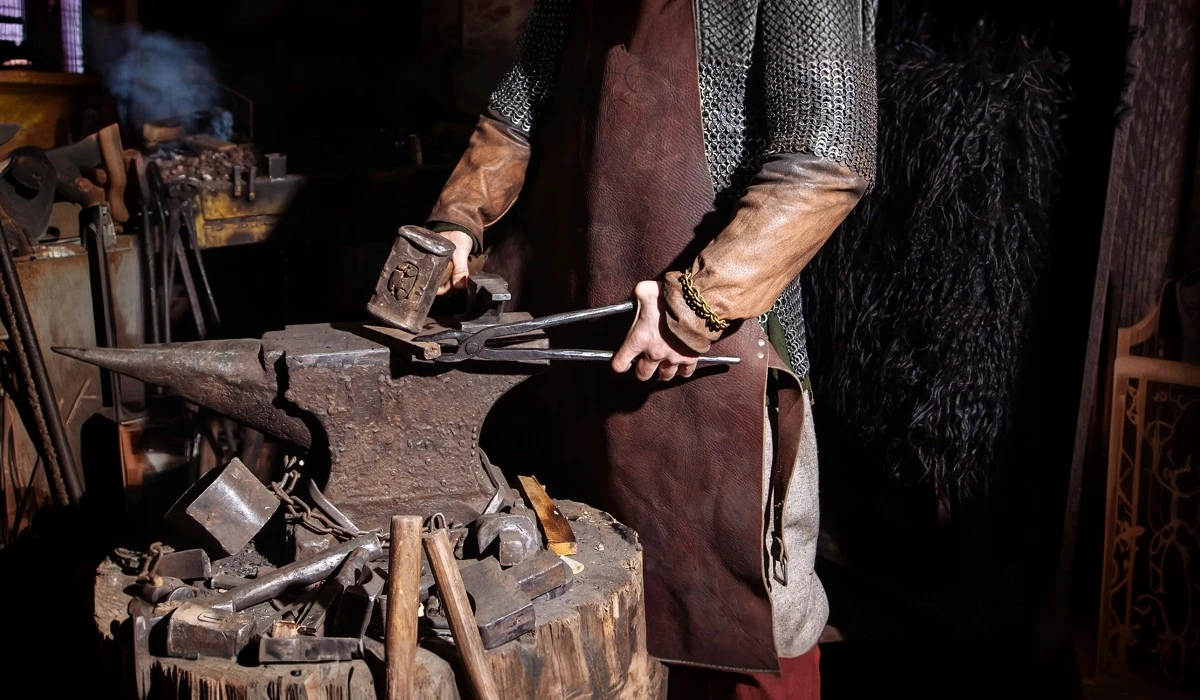
Long ago, a person swinging a heavy iron axe changed the world more than any king. For centuries, bronze ruled the land. It was soft, expensive, and hard to make. Then, a new sound echoed across the European forests—the rhythmic strike of a heavy hammer against red-hot metal. This single shift in materials turned small tribes into a continental force.
Iron allowed common farmers to chop down massive oaks and turn thick swamps into rich wheat fields. It gave warriors blades that did not bend in the middle of a life-or-death struggle. To truly understand Celtic History, you must look at the smoke rising from the ancient forge. The ancient Celtic people built their power, piece by glowing piece, through an expert use of heat and metal that their neighbors feared. Following the trail of iron reveals the real story of how these people lived, prayed, and conquered.
The Iron Revolution and Celtic History
The shift from bronze to iron changed everything for the ancient Celtic people. According to Encyclopedia Britannica, the La Tène culture had its origins in the mid-5th century BCE, leading to further technological improvements. This time period began with the Hallstatt C period around 800 BCE. During this time, smiths started producing the Gündlingen-type sword. This massive iron blade often reached 85 centimeters in length. It signaled the end of the Bronze Age and the start of a new, harder time. Iron ore was everywhere, located in bogs and hills. This made the metal cheaper and more available than bronze.
Research from EXARC explains that bloomery furnaces used during this growth were capable of reaching temperatures over 1,200 degrees Celsius, which is necessary for smelting iron. This process resulted in a solid but porous mass of iron known as a bloom. The same study notes that the smith would then hammer this mass to remove the molten slag that had separated during heating. This process created a metal that was tough and reliable. Did the Celts invent the longsword? Yes, the expert control of iron allowed them to forge longer, heavier blades that altered ancient warfare and became a hallmark of their military identity.
Forging a New Social Order
Iron democratized power. In the Bronze Age, only the super-rich could afford weapons. Iron changed that because the raw ore was easy to find. Now, every village could have a smith. This allowed the ancient Celtic people to arm more men and clear more land. A more mobile society grew from this abundance. Farmers used iron saws and shears to build better homes and manage larger flocks of sheep.
The durability of these tools allowed people to move into the deep, dark forests of Central Europe. They moved from just surviving to having a surplus of food and goods. This wealth led to the rise of a warrior elite. These leaders wore iron-trimmed helmets and carried swords with iron cores. Meanwhile, the average person used iron knives and needles every day. This metal was the basis of their growing economy.
Sacred Smiths and Celtic Druids History
For the Celts, the forge functioned as a holy place rather than just a workshop. It was a place where the earth’s bones turned into tools. Celtic Druids' history shows that the priestly class viewed metalworking as a form of alchemy. They believed the smith held the power of transformation. Because iron came from deep within the ground, it carried the energy of the underworld.
Smiths held a very high rank in society. As detailed in a paper on ResearchGate, they were members of the Aos Dána, a term referring to "people of skill." This group included Druids, bards, and healers. A smith was often seen as a bridge between the human world and the divine. Druids likely performed rituals at the forge to ensure the spirits of the earth stayed calm while people extracted ore. They treated the process of smelting as a sacred birth.
The Druid’s Role at the Forge
The connection between the forge and the spirit world appears in many myths. Encyclopedia Britannica describes the goddess Brigid as the patron of crafts and poetic arts, noting that her sisters were specifically linked to the craft of the smith. This shows that the Celts saw no difference between physical work and spiritual wisdom. The same source mentions that the Irish smith-god Goibniu reportedly brewed a special ale for the "Feast of Age" that was believed to grant immortality to those who drank it.
Druids used iron as a tool for protection. People believed that "cold iron" could ward off malevolent spirits and fairies. This belief likely started because iron was a "new" technology that seemed to defy the old laws of nature. Keeping iron near the door helped a family feel safe from the unseen dangers of the forest. In reality, the Druids managed the spiritual risks associated with digging into the earth for ore.
Decoding Symbols in Ancient Celtic People’s Metalwork
Ironwork served as a visual language for the ancient Celtic people. They produced art in addition to functional items. By the 3rd century BCE, scabbards often featured the "Dragon Pair" motif. This design showed two symmetrical dragons or griffins. It likely represented tribal protection or a balance in the natural world. Every line etched into the metal told a story about the owner’s status and beliefs.
The Smiths also showed expert control of color. They decorated iron chariot parts and brooches with red glass enamel. This required remarkable temperature control. The red color symbolized blood and vitality. When a warrior rode into battle, the red enamel on his gear flashed in the sun. It acted as a warning to his enemies and a badge of honor for his kin.
The Language of the Latchet and Torc
The Kirkburn sword is a perfect example of this advanced skill. Found in East Yorkshire, this sword has a hilt made of 37 different pieces. It uses iron, bronze, and horn to create a beautiful, functional handle. This level of detail shows that the Celts valued beauty as much as strength. Even small items like iron pins and latchets featured detailed swirls and knots.
These designs served as a code for the community rather than serving only as decoration. A specific pattern on a torc, or neck ring, could tell you which tribe a person belonged to or what rank they held. What was the Druid's role in Celtic society? Druids served as high-ranking intellectuals, acting as judges, keepers of lore, and intermediaries between the people and the divine through elaborate ritualistic metal offerings. They often chose which symbols the smiths would use to represent the tribe's history.
Weapons of War: The Backbone of Celtic History
The military success found in Celtic History relied on iron technology. The Celts were famous for their "longswords." By 150 BCE, these blades reached 90 centimeters. Unlike the short stabbing swords of the Romans, Celtic swords were designed for slashing. A warrior would swing the blade in a wide arc from the back of a horse or a chariot. This required the metal to be both hard and flexible so it wouldn't shatter on impact.
To achieve this, smiths used a technique called "slack-quenching." They dipped the hot iron into water or oil just long enough to harden the surface but keep the inside soft. This created a weapon that could take a beating. The Gauls also invented chainmail around 300 BCE. They hand-riveted thousands of small iron rings together to create a flexible "iron skin" that could stop a spear point.
Engineering the Iron-Clad Chariot
The most impressive feat of Celtic engineering was the iron-rimmed wheel. They forged a single piece of iron into a circle slightly smaller than the wooden wheel. They heated the iron until it expanded, slipped it over the wood, and doused it in cold water. As the metal cooled, it shrank and gripped the wood with remarkable force. This made the wheel nearly indestructible.
These iron tires allowed Celtic chariots to move at high speeds over rough ground. They also used ornate iron linchpins to keep the wheels from falling off during sharp turns. These pins often had "D-shaped" heads to lock them in place. The combination of speed and durability made the Celtic war machine a threat to ancient Mediterranean armies. Iron provided a tactical advantage beyond its use as a raw material.
Iron Tools and the Prosperity of Ancient Celtic People
While swords won battles, iron tools won the land. The introduction of the iron-tipped plow, or "Ard," changed the geography of Europe. Before this, farmers could only scratch the surface of light soils. The heavy iron plowshare could cut through the thick, wet clay of the northern valleys. This opened up millions of acres of new farmland for the ancient Celtic people.
This agricultural boom led to population growth. Data published in ScienceDirect indicates that the rotary quern could grind grain about 4.3 times faster than older methods, significantly increasing production and allowing people to live in "Oppida," which were large, fortified hill cities. These cities were industrial hubs. Excavations at places like Manching in Bavaria have found iron saws, files, and specialized tongs. These tools show that the Celts had a professional class of workers who spent their lives making everything from furniture to jewelry.
From Forest to Farmstead
Iron also changed how the Celts traded. Before they used coins, they used "currency bars." These were long pieces of iron shaped like unfinished sword blades. They had standardized weights, making them easy to trade for grain, cattle, or wine. A hoard of nearly 400 such bars was found at Meon Hill in England. This shows that the economy was organized and widespread.
The rotary quern was another life-changing invention. With more food and better tools, the Celts built massive wooden bridges and fortifications. They used huge iron nails—some over a foot long—to hold their "Murus Gallicus" (Gallic walls) together. These walls could withstand even the most powerful battering rams.
Ritual Deposits and Celtic Druids History
The end of an iron object's life was often as important as its beginning. Celtic Druids' history is full of "votive offerings." These were gifts to the gods. When a war ended or a leader died, the people did not always keep the valuable iron weapons. Instead, they took them to sacred lakes, rivers, or bogs and threw them in. This was a way of returning the metal to the earth.
At Llyn Cerrig Bach on the island of Anglesey, archaeologists found over 150 iron objects. These included swords, shields, and even slave chains with iron neck rings. These items were deposited over a period of 400 years. This shows a long, stable tradition of religious sacrifice. The Druids oversaw these ceremonies, ensuring that the community stayed in favor with the spirits of the water.
Votive Offerings in Lakes and Bogs
Before throwing a sword into a lake, the Celts would often "kill" the weapon. They heated the iron and bent it into a "U" shape or twisted it like a piece of rope. This made the weapon useless in the physical world but powerful in the spiritual world. Destroying the item ensured it belonged only to the gods. It was a permanent sacrifice of great wealth.
The Greek historian Diodorus Siculus noticed this behavior. He wrote that the Celts left piles of gold and iron in their sacred groves. Even though there were no guards, no one would dare steal from the gods for fear of a Druidic curse. How did the ancient Celts disappear? The Celts never truly vanished but were eventually absorbed into the Roman Empire, though their specialized ironworking techniques and cultural DNA remained embedded in the regions they once ruled. This change is a key part of Celtic History.
The Legacy of Ironwork in Modern Celtic History
Today, we still see the influence of these ancient smiths. Modern archaeology uses iron artifacts to map where the ancient Celtic people lived and traveled. Even when the metal is mostly gone, it leaves a rust-colored mark in the soil. These stains tell us where a forge once stood or how a warrior was buried. Every iron find is a decoded message from the past.
We also know that the Romans highly valued Celtic metal. They praised "Noric iron" from the Celtic kingdom of Noricum. This iron had a high manganese content, which made it naturally resistant to rust. The Romans even copied the Celtic design for chainmail and used it for their own legions. The skills developed by Druids and smiths lived on in the very empire that eventually conquered them.
Protecting the Iron Record
Preserving these artifacts is difficult. Iron rusts easily, especially in wet soil. However, new technology like X-ray analysis allows us to see inside rusted lumps. We can see how the smiths twisted different types of iron together to create "pattern-welded" blades. This was a forerunner to the famous Damascus steel and Viking swords of later centuries.
The Coligny Calendar is another example of lasting skill. While made of bronze, it used advanced iron tools for its precise engravings. This calendar tracked lunar cycles with high accuracy. It proves that the ancient Celtic people were not "barbarians" but sophisticated scientists. Their work with iron provided the basis for their survival and their lasting legacy in Celtic History.
The Iron Heart of the Celts
The story of the Celts is written in the metal they left behind. Iron provided the spark that ignited their golden age. It gave the ancient Celtic people the power to reshape the land and the weapons to defend it. Through the fire of the forge, they created a world that balanced the physical strength of a sword with the spiritual wisdom of the Druid.
To truly understand Celtic History, we must respect the marriage of spiritual life and hard labor. The Druids provided the vision, and the smiths provided the means. Together, they built a civilization that survived for a thousand years and still captures our imagination today. Every time we find a bent sword in a bog or a rusted plow in a field, we are touching the iron heart of a people who refused to be forgotten. Celtic Druids' history remains in these artifacts, waiting for us to listen to the echoes of the hammer.
Recently Added
Categories
- Arts And Humanities
- Blog
- Business And Management
- Criminology
- Education
- Environment And Conservation
- Farming And Animal Care
- Geopolitics
- Lifestyle And Beauty
- Medicine And Science
- Mental Health
- Nutrition And Diet
- Religion And Spirituality
- Social Care And Health
- Sport And Fitness
- Technology
- Uncategorized
- Videos

