
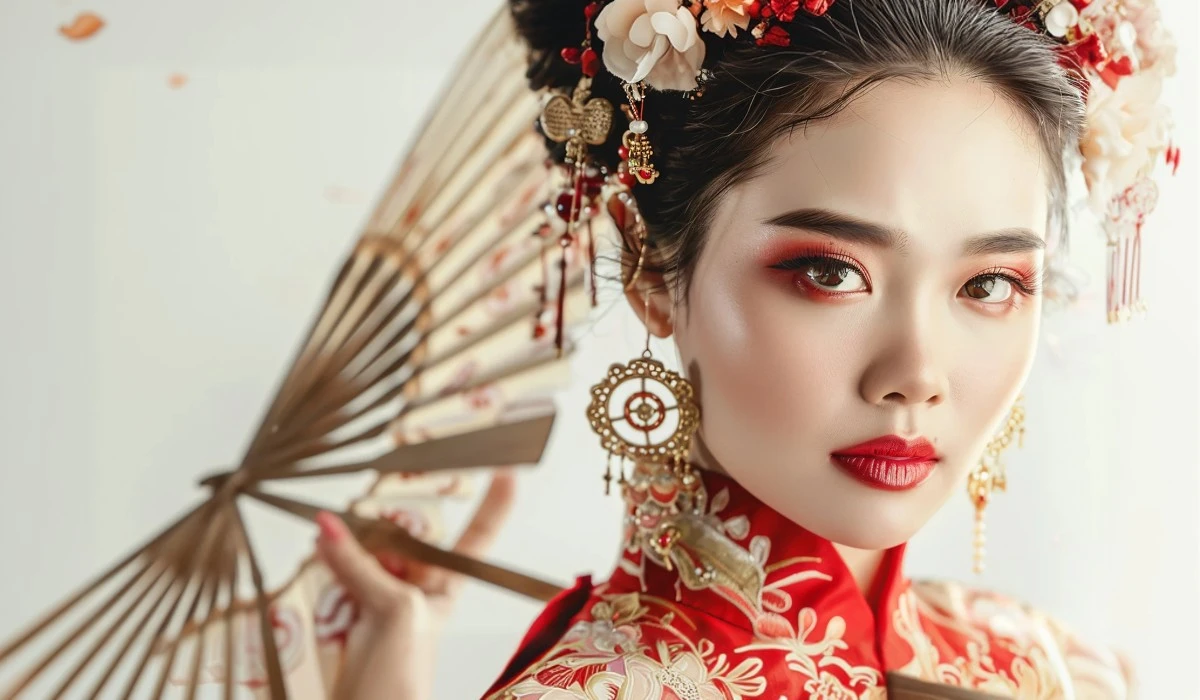
Beauty Secrets In Chinese History and Culture
Walk through the gates of 8th-century Chang’an. Thousands of people crowd the streets of the world’s largest city. Among the merchants and monks, the women stand out most. They wear vibrant silks and elaborate face paint. This makeup acts as a social currency. It signals wealth, power, and political rank. This visual language defines the peak of Chinese History and Culture. These women use their faces to communicate their place in the world.
Beauty standards changed as the empire grew. This time period moved away from the modest looks of the past. It embraced bold colors and striking shapes. In this society, makeup served as a sophisticated language of philosophy and status. The seven-step routine became a daily ritual for the elite. This specific Tang Dynasty culture represents the height of ancient cosmetic innovation. It reflects a rare period of female empowerment and social openness.
Preparing the Snow-White Canvas in Chinese History and Culture
Makeup starts with a clean, white base. Women in this time period prized a complexion as pale as jade. This desire for white skin drove many trends in Tang Dynasty culture. A white face showed that a woman did not work outside in the sun. It separated the elite from the working class.
The Toxicity of the Lead Powder Foundation
High-status women used "Hu Fen" to achieve this look. This lead-based powder required a long chemical process. Makers are exposed to lead to vinegar vapor. This caused a chemical reaction that created a white crust of lead carbonate. They scraped this crust off and ground it into a fine dust. How did Tang Dynasty women get such pale skin? Women achieved a ghostly white complexion through the application of finely ground lead and tin powders mixed with animal fats, though long-term use often caused skin damage and "lead poisoning" symptoms. Despite the danger, the obsession with pallor remained a staple of Chinese History and Culture.
Natural Alternatives: Rice and Pearl Powders
According to a report by The World of Chinese, rice-flour powder mixed with ointment provided a much safer alternative to lead, which many women preferred for their foundation. To make this, they soaked rice in water for twenty days. After the rice fermented, they ground it into a thick slurry. They let this paste dry in the sun until it became a delicate powder. Some even mixed in crushed pearls to add a shimmering effect. This natural option felt better on the skin and cost less than imported minerals.
The Safflower Revolution and the Allure of "Drunk Makeup"
Color brought life to the white foundation. The World of Chinese notes that rouge, which was essential for coloring the face and lips, traces its origins back to the Shang dynasty (1600 – 1046 BCE) when it was first produced from floral juices. Red pigments symbolized vitality and joy. During this time, the rogue application became more theatrical and daring.
Safflower Pigments and the High Tang Glow

Workers extracted the primary red pigment from the safflower plant. They boiled the petals to separate the red dye from the yellow. After squeezing out the liquid, they dried the residue into small, portable rouge cakes. This process allowed for a deep, concentrated color. Women mixed this pigment with oils to create a smooth paste for their cheeks. This technique highlights the creative spirit of tang dynasty culture.
Jiuyun Zhuang: The "Wine-Flushed" Aesthetic
One of the boldest trends was "Jiuyun Zhuang." This name translates to "wine-flushed makeup." Women applied a heavy layer of red rouge from their eyelids down to their jawline. Ironically, this look imitated the flush of someone who had drunk too much wine. It signaled a lifestyle of leisure and fun. This style stands out as a unique hallmark of tang dynasty culture compared to the quieter styles of other ages. It proved that women felt free to experiment with their appearance.
Architectural Brows: Mapping the Ten Imperial Styles
In Chinese History and Culture, eyebrows act as the spirit of the face. A woman’s brow shape told people about her personality. Trends for eyebrows shifted faster than any other part of the routine.
From Willow Leaves to Moth Wings
Early trends favored the "Willow Leaf" brow. This style featured a long, thin, and elegant curve. Later, the "Moth Wing" brow took over. These were short, thick, and slightly fuzzy. They looked like the antennae of a silkworm moth. Why did Tang Dynasty women shave their eyebrows? As noted by The World of Chinese, women in this period typically shaved off their eyebrows to make the application of face makeup easier and allow for more artistic freedom. This gave them a blank canvas for daily creativity using blue-black "Dai" mineral pigments to paint on detailed shapes.
The Influence of Emperor Xuanzong’s "Ten Brows" Decree
Imperial taste often dictated fashion. The same source explains that Emperor Xuanzong even instructed painters to illustrate ten specific eyebrow shapes to standardize these styles among high-class ladies. These designs included "Small Mountain" and "Knot" shapes. Because the Emperor favored these looks, every woman in the capital tried to replicate them. This standard appears in many historical records of Chinese History and Culture.
The Golden Leaf of Huadian: Forehead Artistry in Chinese History and Culture
The forehead often featured a decorative mark called a Huadian. These floral patterns sat right between the eyebrows. They added a focal point to the entire face.
The Legend of Princess Shouyang and the Plum Blossom
According to The World of Chinese, the floral forehead trend began when a plum blossom fell on Princess Shouyang’s forehead while she napped under a tree, leaving a mark she chose to keep for several days. The court ladies thought it looked beautiful and began painting similar marks on their own skin. This story remains a favorite piece of lore in Tang Dynasty culture. It shows how a simple moment could change the fashion of an entire empire.
Exotic Materials: Fish Scales, Gold Leaf, and Kingfisher Feathers
As the empire grew wealthier, Huadian became more involved. The publication also highlights that women moved beyond simple paint, wearing pre-cut decorations made from materials like gold, paper, bird feathers, or even fish scales. Some used iridescent kingfisher feathers to create 3D ornaments that shimmered in the light. To stick these items to their skin, they used a glue made from fish bladders. This glue held the gold leaf in place for days. These materials showcased the material wealth of tang dynasty culture.
Mianye and Xiehong: Designing the Sacred Scars
The finishing touches involved small dots and lines on the cheeks and temples. These marks added character and mystery to the face.
Mianye: Accentuating the Smile with Cinnabar Dots
"Mianye" refers to the two red dots placed near the corners of the mouth. These dots simulated dimples. Originally, this practice served a practical purpose in the palace. Concubines wore these dots to tell the Emperor they were menstruating. It was a polite way to say they were unavailable. Eventually, the meaning changed. The dots became a pure fashion trend in Chinese History and Culture. Every woman wanted the youthful look of artificial dimples.
Xiehong: The "Slanting Red" Temple Marks
"Xiehong" describes a crescent-shaped mark on the temples. These marks often looked like bloody scratches. The World of Chinese associates this "slanting red" style with a legend about a concubine named Xue Yelai who accidentally bruised her face on a crystal screen. Other women began painting red lines on their temples to copy her "broken beauty." This quirk shows how tang dynasty culture celebrated unique and even imperfect traits.
From Slender to Voluptuous: The Body Aesthetic Shift
The way women applied makeup changed as the ideal body type shifted. This change mirrors the changing values of the empire itself.
The "Skinny" Elegance of the Early Tang
At the start of the dynasty, beauty meant being slender. Paintings from this time show women with narrow faces and lean figures. Their makeup stayed relatively light to match this delicate look. This early stage of tang dynasty culture valued grace and understated elegance.
The Influence of Yang Guifei and Empress Wu Zetian
As time passed, the ideal shifted toward a fuller, more voluptuous form. Powerful women like Empress Wu Zetian and the famous consort Yang Guifei led this change. A plump face symbolized health, wealth, and a booming empire. Makeup became more flamboyant to match these larger features. Women used more rouge and broader brow shapes to balance their rounded faces. This shift highlights the confidence found in Chinese History and Culture during its golden years.
The Final Flourish: Lip Shapes and Late Tang Gothicism
The lips provided the final touch to the Tang face. Like eyebrows, lip trends changed frequently to reflect the mood of the times.
Cherry Lips and the Four-Leaf Clover Design
Women preferred a tiny, "cherry" mouth. They first covered their natural lips with white foundation. Then, they painted a small heart or a four-leaf clover shape in the center. This made the mouth look small and delicate. What did women in ancient China use for lipstick? Research from The World of Chinese describes Tang dynasty lipstick as a mixture of beeswax combined with cinnabar and aromatic spices for scent. This small, "bitten" look stayed popular in Chinese History and Culture for centuries.
The "Sad Makeup" Trend of the Decadent Late Tang
Toward the end of the dynasty, the mood darkened. War and famine began to weaken the empire. According to Vogue Singapore, gothic trends near the end of the dynasty introduced much darker tones, with women abandoning bright red rouge for black pigments on their lips. They drew their eyebrows in an "eight-character" shape to look like they were crying. The same report quotes a fashion historian who explains that these gothic looks mirrored the cultural and social implications of that period of unrest. It serves as a visual record of the decline of tang dynasty culture.
The Eternal Legacy of Beauty in Chinese History and Culture
Tang Dynasty makeup served a purpose beyond vanity, reflecting the spirit of a cosmopolitan and powerful age. These trends show a society that valued creativity, trade, and female presence. Vogue Singapore also mentions that modern enthusiasts now have a vast range of historical looks to emulate, using archaeological findings to recreate styles like the "Ten Brows" and "Plum Blossom" marks.
This resurgence proves that the aesthetic of the Tang remains a vital part of Chinese History and Culture. The bold colors and elaborate designs continue to inspire artists and fashion designers around the world. When we study these faces, we see the heart of an empire that celebrated life in all its vibrant colors. The makeup of this time stands as one of the most recognizable chapters in the long timeline of Chinese History and Culture.
Recently Added
Categories
- Arts And Humanities
- Blog
- Business And Management
- Criminology
- Education
- Environment And Conservation
- Farming And Animal Care
- Geopolitics
- Lifestyle And Beauty
- Medicine And Science
- Mental Health
- Nutrition And Diet
- Religion And Spirituality
- Social Care And Health
- Sport And Fitness
- Technology
- Uncategorized
- Videos

