
Sistine Chapel Myths In The History Of Popes
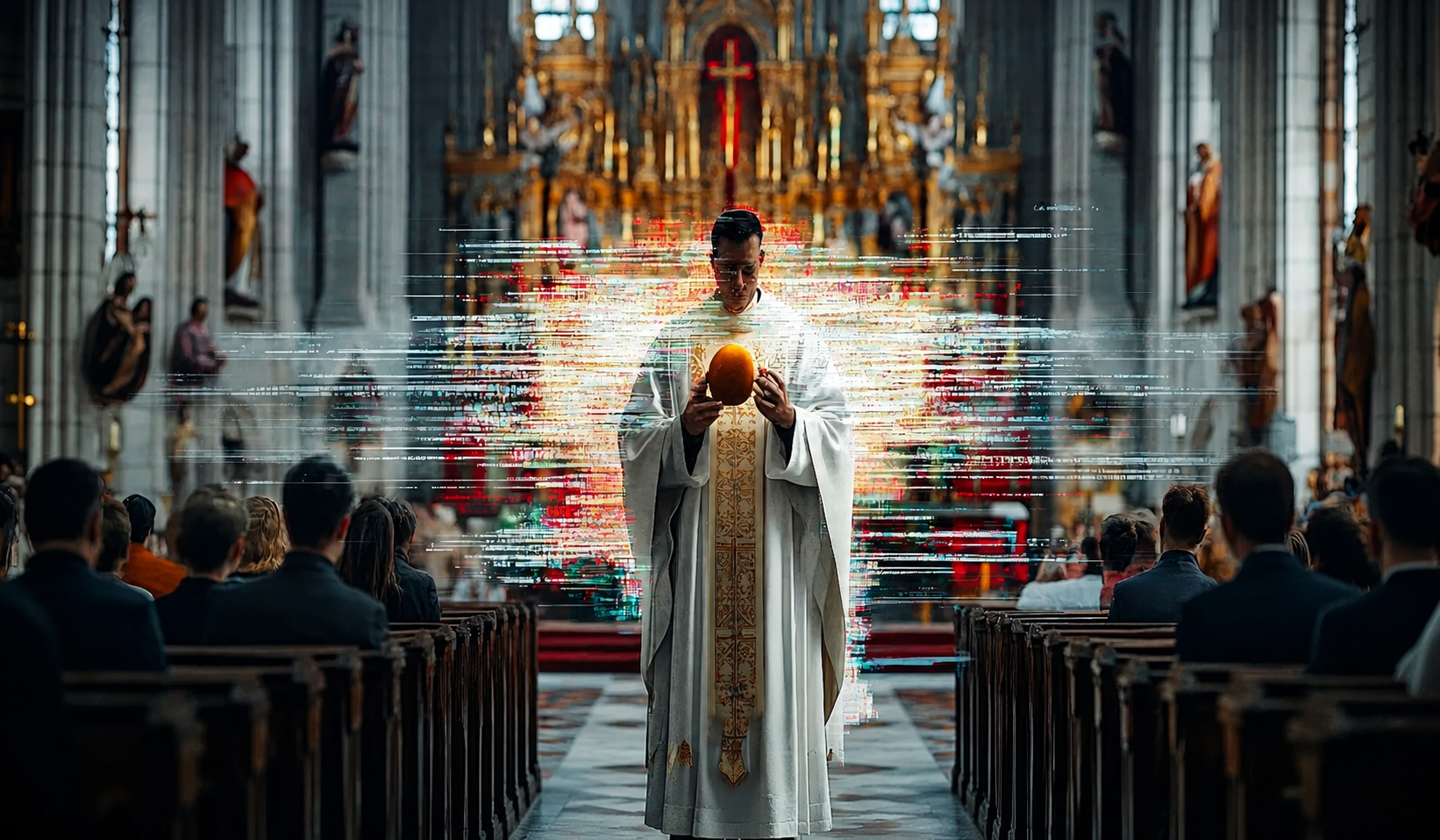
Visitors stand inside a high-stakes legal document written in pigment and plaster, rather than a gallery of beautiful frescoes. The colorful figures on the ceiling tell Bible stories and broadcast a specific message about who holds ultimate power on earth. This room serves as the central location for the Vatican’s most private rituals, yet it stays open to the public as a massive display of authority. To understand this space, you must peel back the layers of paint to find the gritty reality of papal history. This building proves that art never exists for art’s sake when a king or a bishop pays the bills.
The Architecture Of Power: Sixtus IV And The Chapel’s Bases
Pope Sixtus IV chose to build a fortress to protect the Vatican from physical and spiritual threats instead of a pretty museum. As documented by the Vatican Museums, the site takes its name from Pope Sixtus IV della Rovere, who restored the old Cappella Magna between 1477 and 1480. He hired Baccio Pontelli to design a structure with thick walls and defensive battlements because the history of popes involves constant military danger. Records from the Vatican state the chapel is 40.23 meters long, 13.40 meters wide, and 20.70 meters high, dimensions intended to match Solomon’s Temple from the Old Testament. Sixtus IV linked his new chapel to the Bible to signal that his reign represented a direct continuation of ancient divine law. The chapel functioned as a visual anchor for the history of the papacy, turning a simple rectangular room into a permanent statement of religious and political dominance.
The Defensive Chapel
The physical walls of the chapel tell a story of survival and strength that often gets lost behind the famous paintings. Sixtus IV lived during a time when internal Italian wars and external threats from the Ottoman Empire made the Vatican vulnerable to attack. He ordered the construction of high, windowless lower sections and thick masonry to ensure the building could double as a guard tower if necessary. These architectural choices reflect the dual role of the leader in papal history, where the Pope acted as both a spiritual shepherd and a secular prince. The massive structure stood as a physical warning to any rival that the Church possessed the resources to defend its territory. Every brick laid in the late fifteenth century reinforced the idea that the papacy occupied a secure and permanent place in the center of the world.
The Pre-Michelangelo Period
Who painted the Sistine Chapel first? Before Michelangelo arrived, a team of Renaissance experts like Botticelli and Perugino decorated the walls with scenes from the lives of Moses and Jesus. These artists finished their work between 1481 and 1482, focusing on the concept of Petrine Supremacy. This idea claims that Jesus handed the keys of heaven directly to Saint Peter, making every subsequent pope the legal heir to that power. Perugino’s famous fresco, The Delivery of the Keys, shows this exchange happening in a wide, open square with Roman triumphal arches in the background. He placed Peter in the center of the action, and the painting tells every visitor exactly why the man sitting on the throne deserves to be there. This strategic use of imagery defines much of the early history of popes as they fought to prove their legitimacy.
Breaking The Ceiling Myth: Michelangelo And The Papal History Of Art
Pope Julius II, known to his rivals as the Warrior Pope, possessed a temper that matched Michelangelo’s own stubbornness. According to Britannica, the Pope commissioned the frescoes on the ceiling in 1508. This demand required that the young sculptor stop working on a massive marble tomb and start painting the ceiling of the Sistine Chapel. Michelangelo hated the idea because he considered himself a sculptor, not a painter, and he suspected his rivals wanted him to fail. He even accused the architect Bramante of tricking the Pope into giving him the job to ruin his reputation. This clash of two massive personalities remains a highlight in the history of the papacy, showing how personal grudges often shaped world-class art. Despite his protests, Michelangelo eventually signed the contract, though he signed it "Michelangelo, Sculptor," as a final act of defiance against the man who paid his salary.
The Reluctant Sculptor
The tension between the artist and the patron created an environment of high pressure that pushed Michelangelo to innovate in ways he never intended. Julius II originally requested a simple design featuring the twelve apostles, but Michelangelo successfully argued for a much more ambitious plan. He wanted to depict the entire story of creation, from the separation of light and darkness to the fall of man. This expansion of the project required hundreds of additional figures and a much larger budget, which often led to shouting matches between the two men. The history of popes is full of these creative struggles, where a leader’s vision for glory collides with an artist’s need for autonomy. This specific partnership produced an outstanding work that neither man could have created alone, despite their mutual frustration and the constant threats of physical violence.
The Standing Legend Vs. The Lying Myth
Pop culture often shows Michelangelo lying on his back on high scaffolding, but historical reality paints a much more painful picture. The Getty Museum explains that Michelangelo worked standing up with his brush held above his head as paint and debris fell into his face. He designed a unique bridge-like structure that rested on brackets built into the walls, allowing him to stand upright while he worked. He spent four years with his head tilted back at a sharp angle, which caused permanent damage to his neck and eyes.
In his private journals, he wrote poems about how his chest felt like a harpy's and how the paint dripping from his brush turned his face into a rich pavement of grime. This physical struggle highlights a common theme in papal history: the Church demanded total sacrifice from the people it employed. The beautiful ceiling exists only because an artist endured years of back-breaking labor while staring directly into the blinding light of the chapel windows.
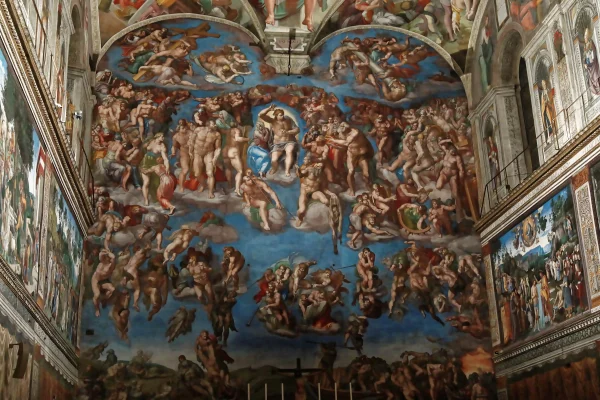
Image Credit - by Burkhard Mücke, CC BY-SA 4.0, via Wikimedia Commons
The Last Judgment: A Scandalous Turning Point In The History Of Popes
Twenty-five years after finishing the ceiling, Michelangelo returned to the chapel to paint the massive wall behind the altar. By this time, the world had changed, and the history of popes had entered the period of the Counter-Reformation. The church faced criticism from Protestants, so it cracked down on anything that seemed too worldly or scandalous. Michelangelo’s Last Judgment features over three hundred figures, and originally, almost all of them were completely naked. This choice caused an immediate uproar among the Pope’s staff, especially with Biagio da Cesena, the Supervisor of Ceremonies. He claimed the fresco belonged in a tavern or a bathhouse instead of a holy chapel. Michelangelo responded by painting Cesena’s face onto Minos, the judge of the underworld, giving him donkey ears and showing a snake biting his genitals in the bottom corner.
Nudity And The Council Of Trent
The controversy surrounding the nudity in the Last Judgment reflected a larger shift in the theological environment of the sixteenth century. As the Church struggled to defend its traditions against the Reformation, it began to strictly regulate how religious stories appeared in public. As Britannica describes, the Council of Trent forbade "lascivious" art and ordered that much of the nudity in the chapel be covered up.
The Council eventually issued decrees that banned "lascivious" or "provocative" art in churches, putting Michelangelo’s work directly in the line of fire. This period marks a restrictive chapter in the history of popes, where moral purity became a tool for political survival. Officials argued that the muscular, exposed bodies distracted the faithful from the solemnity of the Mass. This conflict between artistic freedom and religious decorum shows how the Vatican used its walls to signal its changing priorities. The once-celebrated humanism of the Renaissance began to fade under the weight of new, stricter religious requirements.
The "Fig Leaf" Campaign
The religious climate became even stricter after Michelangelo died in 1564, leading to the infamous Fig Leaf campaign. Researchers at the Getty Museum note that the Church hired another artist, Daniele da Volterra, to paint loincloths and robes over the exposed parts of Michelangelo’s figures in 1565. This action occurred soon after Michelangelo's death and earned Volterra the mocking nickname "The Breeches-maker," and his work became a permanent part of the history of the papacy.
Even though he technically vandalized the original great work, his additions reflected the desperate need of the Church to appear morally pure during a time of crisis. These layers of paint show how the history of popes is a story of changing values, where an outstanding work from one decade becomes a scandal in the next. Modern restorers eventually removed many of these additions, but they left some as historical evidence of this specific period of censorship and theological anxiety.
Sacred Walls And Secular Politics: The History Of The Papacy In Frescoes
The Vatican Museums describe how the 15th-century decoration of the walls includes the stories of Moses and Christ, alongside portraits of the Popes. The side walls of the chapel contain an elaborate visual argument designed to convince every visitor of the Pope’s absolute authority. Artists lined up stories from the life of Moses with stories from the life of Jesus to create a direct link between the old law and the new law.
This parallelism suggested that the Pope served as the modern-day Moses, leading his people through a world full of danger toward salvation. The history of the papacy relies heavily on this type of visual storytelling to maintain its influence across different cultures and languages. These frescoes acted as a constant reminder to the cardinals and foreign leaders that the man leading the Vatican was part of a divine plan. The art changed the chapel into a courtroom where the evidence for the Pope’s right to rule was permanently displayed on the walls.
Parallel Lives: Moses And Christ
According to those same museum records, the portraits of twenty-eight martyred popes look down from the upper level, creating a sense of an unbroken chain of leadership reaching back to the beginning of Christianity. The specific scenes chosen for the side walls highlight the legalistic and administrative side of papal history. For example, the scene showing Moses receiving the Ten Commandments sits directly across from the scene of Jesus delivering the Sermon on the Mount. This arrangement tells the viewer that the authority of the Church comes from the highest possible source and carries the weight of eternal law. This layout ensures that anyone standing in the room feels surrounded by the sheer weight of historical and divine precedent. The frescoes define the legal and spiritual boundaries of the history of popes rather than just decorating the space, making the chapel a temple of political legitimacy.
The Papal States And Territorial Influence
Is the Sistine Chapel used for voting? The chapel serves as the private site for the Papal Conclave. Britannica states that the conclave is held in strict seclusion inside the chapel, where the College of Cardinals meets to elect a new Bishop of Rome. This tradition ensures that the most important decision in the Church happens under the gaze of the prophets and apostles painted on the walls.
The artwork acts as a quiet jury, reminding the cardinals of their duty to maintain the long line of papal history. While tourists see the room as a museum, the Church views it as a working government building where the future of the faith is decided. The history of the papacy relies on these rituals to maintain order and continuity, proving that the chapel’s function is just as important as its aesthetics. The grandeur of the frescoes served to intimidate foreign ambassadors, reminding them that the Pope commanded vast territorial and spiritual power.
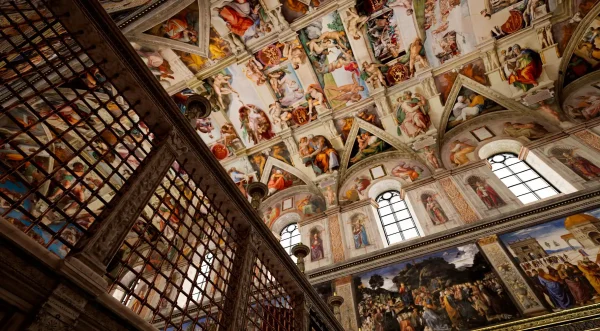
Image by Dr pangloss, CC BY-SA 4.0, via Wikimedia Commons
The Concealed Symbolism: Theological Depth In Papal History
Many people believe Michelangelo hid secret scientific messages inside his work to challenge the Church’s views on human knowledge. In the Creation of Adam, God sits inside a large red cloak that many doctors now recognize as a perfect cross-section of the human brain. This suggests that the gift of life God gives to Adam is actually the gift of intellect and consciousness. This theory adds a layer of intellectual rebellion to papal history, showing how artists tried to bridge the gap between faith and science. Whether Michelangelo intended this or not, the theory highlights the high level of education required to even understand the art in this room. The history of the papacy is full of these intellectual puzzles, where the most famous images in the world contain meanings that remain debated by experts today.
The Brain And The Creation Of Adam
The idea that Michelangelo painted a brain in the middle of a papal chapel sounds like a modern conspiracy theory, but it fits the artist’s known obsession with anatomy. A study in ScienceDirect highlights that Michelangelo had a life-long interest in anatomy that began with his participation in public dissections in his early teens. He spent years dissecting human corpses to understand how muscles and bones moved, a practice that the Church often looked upon with suspicion.
Because he concealed an anatomical diagram in the depiction of God, he may have been making a bold statement about the divine nature of the human mind. This intersection of science and religion is a recurring theme in the history of popes, who often struggled to reconcile new findings with traditional doctrines. Ironically, the image that once represented purely religious creation has now become a symbol for the power of human reason and biological sophistication. This shift of meaning shows how papal history continues to evolve as new generations interpret these ancient images through a modern lens.
Jewish Roots And Kabbalistic Influence
Michelangelo’s interest in Hebrew traditions and Jewish symbolism also appears throughout the ceiling frescoes, adding another layer of depth to the work. Instead of the traditional apple, he painted the Forbidden Fruit in the Garden of Eden as a fig, which matches Jewish Midrashic tradition. Some scholars believe he included these details as a nod to the shared heritage of the Abrahamic faiths, even while the Church took a hard line against other religions. This subtle inclusion of diverse theological ideas reflects the layered nature of papal history during the Renaissance. It shows that even in the heart of the Vatican, artists were exploring ideas that went beyond the strict boundaries of Catholic dogma. The ceiling becomes a map of the artist’s own intellectual path, tucked away in the most sacred space of the history of popes, right under their very noses.
The Enclave Of The Conclave: How Tradition Shapes The History Of Popes
The word Conclave comes from the Latin phrase for "with a key," referring to the practice of locking the cardinals inside the chapel until they pick a leader. This tradition started in 1274 to prevent outsiders from influencing the election and to speed up a process that sometimes took years. Today, the Swiss Guard seals the doors from the outside, and the cardinals live in a nearby guest house, only entering the chapel to cast their ballots. This ritual remains one of the most quiet parts of the history of popes, blending ancient tradition with modern security. The cardinals swear a solemn oath of secrecy, and any violation can result in immediate excommunication. This intense focus on privacy ensures that the history of the papacy continues without interference from the modern political world or the 24-hour news cycle.
The Smoke And The Chimney
The smoke that rises from the Sistine Chapel roof during an election is one of the most recognizable symbols in the world. This simple chemical signal tells the waiting crowds in Saint Peter’s Square whether the history of the papacy has gained a new chapter. Historically, the cardinals burned the ballots with damp straw to create black smoke or dry straw to create white smoke. Today, they use modern chemical cartridges to ensure the color is clear and unmistakable to the thousands of people watching through binoculars and cameras. This ritual connects the high-tech modern world with a process that has remained largely unchanged for centuries. It turns a bureaucratic election into a global event, capturing the attention of millions who follow the history of popes with intense interest. The smoke acts as the only bridge between the secret deliberations inside the chapel and the public world outside.
The "Extra Omnes" Command
Can anyone visit the Sistine Chapel? Visitors enter the Sistine Chapel through the Vatican Museums, although it remains a consecrated space. Guidelines from the Vatican Museums mandate that visitors follow a dress code, which forbids sleeveless or low-cut garments, hats, and shorts or skirts above the knee. The site also forbids photography or films using any type of electronic equipment and requests that visitors observe absolute silence to respect the religious nature of the room. While millions of people walk through the doors every year, the chapel’s primary purpose remains the private use of the Pope and his court.
As specified in the apostolic constitution Universi Dominici Gregis by John Paul II, the Master of Pontifical Liturgical Celebrations shouts "Extra omnes," which means "everybody out." This command ensures that all those not taking part in the Conclave leave the chapel, signaling the start of the most private moment in papal history. This shift from a public museum to a high-security meeting room highlights the unique status of the chapel as both a cultural landmark and a functioning government center for the Church.
Preserving The Legacy: Modern Science Meets The History Of The Papacy
Between 1980 and 1994, the Vatican undertook a massive restoration project that significantly changed how we see the chapel today. For centuries, the frescoes were covered in thick layers of soot from candles and animal-glue glazes applied by previous restorers. These layers made the paintings look dark and moody, leading people to believe Michelangelo preferred a somber color palette. However, when the cleaning crew removed the grime, they found vibrant, neon-like colors that shocked the art world. This restoration sparked a huge debate in the modern history of the papacy about how much of an artist’s work should be "fixed." Some critics argued that the restorers removed the shadows Michelangelo painted on top of the wet plaster, while others celebrated the return of the artist's original, bold vision for the ceiling.
The Great Restoration Debate
The restoration of the Sistine Chapel was a high-stakes scientific experiment rather than a simple cleaning job, and it divided the art world. Critics feared that the use of chemical solvents would strip away the final layers of paint that Michelangelo applied a secco, or after the plaster had dried. They argued that the new, bright colors made the figures look flat and cartoony compared to the rich, dark images they had studied for generations. Meanwhile, the Vatican’s team of experts used microscopic analysis to prove that the grime was actually damaging the frescoes by trapping moisture against the surface. This controversy became a major event in the recent history of popes, as the Church had to defend its decision to alter the appearance of its most famous treasure. Ultimately, the project revealed a Michelangelo who was an expert of color, not just an expert of form and shadow.
Climate Control And 25,000 Daily Visitors
Today, the biggest threat to the chapel is not soot or glue, but the breath and sweat of the 25,000 people who visit every day. Human moisture and carbon dioxide can cause the plaster to crack and the colors to fade over time. To combat this, the Vatican installed a high-tech HVAC system that keeps the air temperature and humidity at perfect levels. This protective shield protects the artwork from the physical toll of being one of the world's most popular tourist destinations.
Ensuring the survival of these frescoes is a vital task in the ongoing history of popes, as they represent the ultimate cultural treasure of the Church. Modern technology now serves as the guardian of ancient tradition, ensuring that the history of the papacy remains visible for generations of visitors who still flock to Rome. The balance between public access and preservation remains a constant challenge for the Vatican’s modern administration.
The Enduring Legacy Of Papal History
The Sistine Chapel stands as a living record where politics, ego, and faith collide on a single set of walls. When visitors look past the myths of the suffering artist, they see a space that was carefully designed to justify and maintain the power of the Catholic Church. Every brushstroke on the ceiling and every ritual performed on the floor contributes to the massive narrative of papal history. The room reminds us that even the most beautiful art in the world usually serves a very practical purpose for the people in charge. Whether you view it as a holy sanctuary or a renowned example of Renaissance marketing, the chapel remains the undeniable heartbeat of the Vatican. It bridges the gap between the ancient past and the modern world, proving that the history of popes continues to shape the culture of the entire planet.
Recently Added
Categories
- Arts And Humanities
- Blog
- Business And Management
- Criminology
- Education
- Environment And Conservation
- Farming And Animal Care
- Geopolitics
- Lifestyle And Beauty
- Medicine And Science
- Mental Health
- Nutrition And Diet
- Religion And Spirituality
- Social Care And Health
- Sport And Fitness
- Technology
- Uncategorized
- Videos

