
Timely Freight And Supply Chain Risk Management
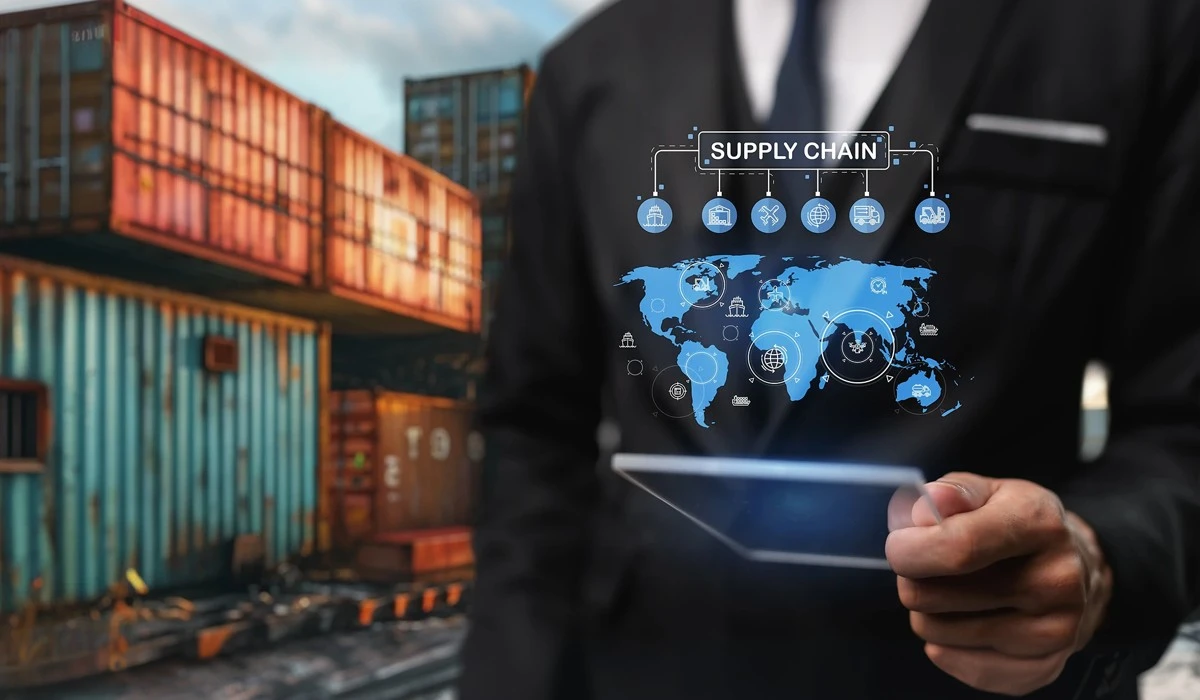
A single delayed 50-cent microchip stops a billion-dollar automotive assembly line dead in its tracks. A factory supervisor stares at a halted conveyor belt while desperate procurement managers dial international suppliers. Global networks look incredibly strong on paper until a minor disruption exposes their deep fragility. Hoping for the best rarely guarantees success when massive ocean freighters reroute or sudden storms shutter essential ports. Modern business survival demands aggressive preparation long before a crisis occurs. Supply chain risk management stands as the ultimate divide between corporations scrambling to fight daily fires and industry leaders consistently delivering on their promises. Implementing a structured defense secures the network against sudden shocks and protects revenue streams. This guide unpacks dense, actionable insights to turn reactive scrambling into a heavily fortified, predictable delivery operation.
Why supply chain risk management is the foundation of resilience?
Outdated logistics operations rely entirely on reactive scrambling, waiting for disasters to strike before taking action. Missed deliveries destroy customer trust and incur massive expedited shipping costs. A sudden disruption lasting thirty days or fewer instantly erases 3% to 5% of a company's EBITDA. Furthermore, a McKinsey report on reimagining industrial networks states that long-term production halts easily wipe out as much as 45% of an entire year's EBITDA over a decade. The 2024 BCI Supply Chain Resilience Report noted nearly 80% of organizations suffered severe disruptions in the prior twelve months. The same report indicated this massive failure rate drove specialized disruption insurance uptake from 37.4% in 2023 to 46.7% over the following twelve months. In 2021, the average financial toll of these delays reached $228 million for a single enterprise. Unprepared shippers bleed capital every single time an essential component arrives late.
Shifting from a cost-center to a value-driver
Forward-thinking leaders treat protection protocols as powerful revenue-generating assets rather than basic administrative burdens. Protecting the network directly secures revenue and builds an unshakeable competitive advantage. Industry pioneers like General Motors aggressively move away from reactive management. They utilize predictive artificial intelligence to map out potential vulnerabilities in real-time. This proactive stance turns risk prevention into a massive revenue-protecting asset that keeps assembly lines moving perfectly. Research highlights the financial power of this approach. Businesses actively implementing digital defense protocols improve their disruption recovery times by up to 50% compared to their lagging industry peers. Faster recovery times guarantee customers receive their orders exactly on schedule. Shippers who invest heavily in these modern frameworks consistently capture greater market share while competitors struggle to locate missing ocean freight or stranded inventory across the globe.
Navigating the unpredictable: Key threats in the global network
Modern commerce faces a barrage of highly complicated vulnerabilities spanning the entire globe. Without proactive supply chain risk management, these complicated global networks remain terrifyingly fragile. When auditing vulnerabilities, teams must categorize threats effectively to build a solid defense. What are the 4 types of supply chain risk? The four main types include hazard risks like natural disasters, financial risks such as supplier bankruptcy, operational risks including production failures, and strategic risks tied to market trends. Leaders map vulnerabilities accurately and allocate essential resources exactly where the network needs them most when they understand these specific categories. Teams quickly move past generic worry and start tackling macro and micro threats head-on. Mapping these four distinct risk profiles prevents catastrophic surprises from derailing quarterly production schedules and destroying carefully planned customer delivery timelines.
Geopolitical and environmental volatility
Massive macro-level threats constantly threaten to snap international trade lines. The March 2024 collapse of the Francis Scott Key Bridge dramatically shut down the Port of Baltimore. This port normally processes roughly 50 million tons of goods annually. The closure cost an estimated $9 million daily and forced emergency freight diversions across the East Coast. Severe drought conditions in 2023 caused the Panama Canal to experience its second-lowest water levels in 110 years.
A Reuters report on the severe drought states that water levels failed to recover enough, forcing authorities to keep limits on daily transit and vessel drafts in place throughout 2024. The same source notes that these restrictions forced daily transits well below the normal capacity of 36 vessels per day, nearly halving overall trade volumes. Additionally, late May 2024 saw geopolitical conflicts in the Red Sea force massive shipping diversions. The spot rate for a forty-foot container from the Far East to Northern Europe surged to $4,343. This enormous price spike roughly tripled the previous year's standard shipping cost.
Supplier and tier-2 vulnerabilities
Single-source reliance creates devastating blind spots deep within the manufacturing process. The opacity of sub-tier suppliers consistently threatens final assembly schedules. The 2024 BCI Supply Chain Resilience Report details that exactly 43.6% of organizations experienced severe disruptions specifically due to third-party or sub-tier failures. Companies rarely know who supplies their primary suppliers. In response to these deeply obscured vulnerabilities, progressive organizations rapidly changed their operational focus. The same BCI report notes that the percentage of organizations actively mapping their essential suppliers down to tier four and beyond jumped significantly from a mere 3.7% in 2023 to 17.1% in 2024. Illuminating these obscured tiers prevents sudden bankruptcies or factory fires from completely destroying a supposedly stable and heavily optimized international manufacturing pipeline.
How smart logistics planning prevents delivery delays
Building resilience starts long before a shipment ever leaves the busy loading dock. How does logistics planning reduce risk? It minimizes exposure through the creation of alternative routing options, optimizing inventory placement, and ensuring carrier diversification before disruptions actually occur. Mapping out these essential variables in advance allows companies to easily pivot their physical movements the exact moment a red flag finally appears. Highly practical preparation always dictates flawless execution during chaotic global events. Authoritative supply chain leaders refuse to rely on single transit paths or minimal safety stock. They carefully engineer flexibility directly into their daily operating procedures. This rigorous preparation guarantees that physical goods keep flowing despite unexpected weather events or sudden labor strikes. Smart optimization turns a fragile delivery network into a highly adaptable powerhouse capable of sidestepping massive international roadblocks.
Strategic route optimization
Mapping primary, secondary, and tertiary transit routes ensures freight never gets permanently trapped. Companies heavily utilize artificial intelligence-powered route optimization tools to process incredibly shifting variables. These advanced systems constantly analyze real-time traffic patterns and sudden weather effects. Implementing this technology yields a massive 22% reduction in total travel time. Furthermore, users see a 34% increase in delivery accuracy alongside a 20% savings in overall fuel consumption. Systematic enterprise route and load optimization completely overhauls fleet management. This approach reduces the total cost per delivery by up to 20%. Logistics directors achieve these massive savings while strictly maintaining flawless Service Level Agreement performance metrics. Having backup routes ready to deploy guarantees drivers bypass sudden highway closures or port congestion. Freight keeps moving seamlessly toward the final customer without any expensive delays.
Adaptable inventory buffering
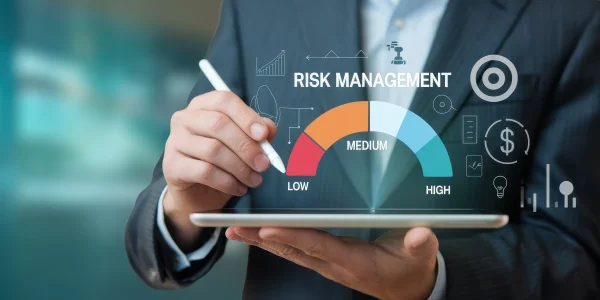
Strategically placed inventory completely absorbs the massive shock of sudden transportation delays. Adaptable safety stock effectively replaces outdated, static mathematical formulas. Modern organizations use streaming analytics and machine learning to constantly recalculate these essential inventory buffers. The software adjusts volumes based strictly on real-time demand volatility and sudden lead-time variability. According to recent Gartner research, forward-thinking organizations achieve massive success after moving away from static targets. Companies moving to adaptable, SKU-level inventory optimization reduce their total network inventory levels by an impressive 15% to 25%. They achieve these deep reductions without degrading overall customer service performance. Storing the exact right amount of product at specific regional hubs prevents devastating stockouts. This precision prevents massive capital from getting tied up in useless, stagnant warehouse inventory scattered across the entire global fulfillment network.
Frameworks for effective supply chain risk management
Constructing a powerful defense system requires a deeply structured, formal approach. Moving from vague theory to hard internal protocols demands precise methodologies. Excellent risk mitigation never happens by sheer accident or sudden luck. Establishing a reliable framework guarantees constant protection against external shocks. Risk professionals use these strict frameworks to govern every single procurement decision and transit route. This formal structure turns chaotic global networks into predictable, manageable systems. Consistent methodologies empower regional managers to make rapid, secure decisions during localized crises. Establishing a formal defense structure ensures companies never scramble to invent solutions during an active disaster. Documented protocols provide a clear path forward when facing sudden component shortages or blocked ocean channels. A fully systemized approach completely eliminates dangerous guesswork from the daily global freight management process worldwide.
Mapping critical nodes
Identifying the most indispensable suppliers, routes, and facilities forms the base of network security. The Kraljic model serves as a highly effective, basic procurement framework. This tool aggressively segments a vendor portfolio based strictly on supply risk and overall profit effect. Teams categorize items into Advantage, Strategic, Bottleneck, and Non-critical quadrants to perfectly tailor their sourcing strategies. Procurement officers also rely heavily on the Supply Chain Risk Heat Map. Enterprise risk teams utilize this visual tool to accurately plot specific vulnerabilities. They map single-sourced components or dangerous logistics choke points by likelihood and total financial effect. This aggressive mapping allows for the immediate triage of severe exposures. Fixing these highly exposed nodes prevents minor vendor failures from cascading into massive, company-wide delivery disasters that alienate loyal enterprise consumers entirely.
Establishing constant assessment loops
Implementing regular audits, rigorous stress tests, and aggressive scenario-planning exercises maintains peak readiness. Top-tier original equipment manufacturers and major electronics companies deploy permanent, dedicated risk management teams. These experts aggressively map highly complicated network-analytics algorithms. Their work creates total transparency and traces exact node interconnectivity well past the standard tier-one vendor level. Utilizing stochastic mixed-integer linear programming allows complicated networks to simulate probabilistic disruption scenarios. Planners carefully balance deterministic operational costs with aggressive risk reduction tactics. This advanced mathematical approach improves overall safety stock compliance by roughly 20%. Constant assessment loops ensure that security protocols evolve alongside emerging global threats. Running frequent simulations guarantees procurement teams know exactly how to react when a primary supplier suddenly files for bankruptcy or a major manufacturing facility burns down unexpectedly overnight.
Actionable risk mitigation tactics for modern shippers
Providing concrete strategies arms leaders to immediately fortify their logistics networks. Knowing the threats represents only half the battle; executing proactive defenses ensures companies actually win. What is a risk mitigation strategy in supply chain? This formalized action plan—such as multi-sourcing essential components, nearshoring, or increasing safety stock—actively reduces the severity of potential supply disruptions. Executing these powerful tactics ensures that a catastrophic failure at one specific node fails to compromise the entire on-time delivery schedule. High-density, actionable advice turns vulnerable operations into highly resilient supply networks. Deploying these proven tactics significantly reduces the financial blast radius of sudden market shocks. Shippers aggressively deploy these distinct strategies to maintain perfectly fluid operations. Proactive execution consistently outperforms reactive scrambling during major international freight shipping delays.
Supplier diversification and nearshoring
Moving from highly fragile models to secure frameworks demands aggressive geographic distribution and extensive local sourcing. Nearshoring to Mexico currently stands as a primary tactical defense for massive United States companies. In 2023, Mexico officially surpassed China as the largest trading partner of the United States. Mexico hit an astonishing record of $475 billion in total manufacturing exports. The automotive sector aggressively leads this massive nearshoring charge across the southern border. This single industry accounts for a massive 39% of the overall manufacturing demand in Mexico. Fully loaded labor rates sit attractively between $6 and $8 per hour. Furthermore, moving production locally significantly reduces highly volatile border transit times. Diversifying the supplier base across local regions entirely removes the terrifying threat of sudden trans-Pacific shipping halts ruining quarterly production quotas.
Building strategic redundancies
Effectively balancing the cost of redundant operations against catastrophic delays requires deep strategic foresight. By the first quarter of 2025, total foreign direct investment into Mexico reached a staggering record of $21.4 billion. Massive global corporations aggressively fueled this financial injection. Japanese auto suppliers injected $18 billion specifically to build regional redundancies for critical North American consumer markets. Research clearly indicates the massive power of this specific duplication strategy. Shippers executing highly intentional dual-sourcing strategies recover a massive 50% faster from severe global supply shocks. Maintaining backup manufacturing facilities ensures production never fully stops during a localized crisis. Spending capital on overlapping supplier contracts looks expensive initially. However, this strategic redundancy ultimately saves billions of dollars when primary overseas factories suddenly shutter operations due to unforeseen political sanctions or sudden strikes.
Using digital tools to predict and prevent disruptions
Integrating advanced technology stacks completely eliminates dark blind spots across the physical network. Integrating modern digital tools into supply chain risk management efforts turns obscured threats into illuminated, highly actionable data streams. Deploying sophisticated digital twins and advanced logistics planning software remains absolutely non-negotiable for rapidly scaling companies. A McKinsey report on digital twins notes that one original equipment manufacturer reduced costs for freight and damages by 8 percent as a result of implementing these platforms. These platforms ingest millions of data points to provide total operational clarity.
Leadership teams finally see exact cargo locations instead of relying on outdated spreadsheet updates. Digital platforms replace frantic phone calls with automated, highly precise alerts. This technological advantage allows dispatchers to instantly reroute cargo trucks moving toward severe storms. Advanced software turns basic tracking into a predictive powerhouse capable of anticipating massive failures. Utilizing modern code ensures managers easily outmaneuver complicated global disruptions long before they physically halt daily operations.
Predictive analytics and AI
Using advanced machine learning strictly forecasts severe weather effects, sudden demand spikes, and dangerous transit delays before they happen. Approximately 45% of mid-sized logistics and tech-driven businesses across the United States currently utilize this software. They actively pilot artificial intelligence-first logistics digital twins strictly for predictive risk modeling and automated route optimization. Gartner predicts a massive change in technological reliance shortly. By 2026, a staggering 65% of global supply chains will rely heavily on hybrid digital twin systems. These advanced platforms merge traditional static ERP simulations with constantly learning, artificial intelligence-driven adaptive layers. The software constantly analyzes shifting international variables. Planners securely adjust their purchasing orders based on predictive alerts rather than reacting to outdated news. Machine learning guarantees raw materials arrive exactly when the assembly line needs them most.
End-to-end visibility platforms
Maintaining absolute real-time tracking through Internet of Things devices allows companies to pivot shipments mid-transit smoothly. Currently, 70% of modern organizations deeply prioritize heavy technology investments specifically for total network visibility. They aggressively utilize advanced telematics and real-time data sharing across their entire supplier network. Artificial intelligence-driven predictive analytics tools completely overhauled European freight operations throughout 2024 and 2025. Integrating these powerful tools resulted in a massive 28% increase in highly accurate, on-time deliveries. The software achieved this through constant analysis of traffic, weather, and demand for adaptable rerouting. Complete end-to-end visibility totally eliminates the terrifying anxiety of lost ocean containers. Executives monitor exact temperature fluctuations inside refrigerated trailers traveling across the country. This absolute transparency guarantees sensitive pharmaceutical shipments or delicate electronics reach consumers in absolutely perfect condition every time.
Measuring success: KPIs for resilient delivery systems
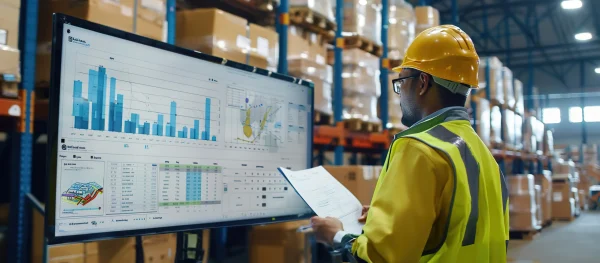
Proving the total return on investment requires leaders to track highly specific, objective data points. Effective supply chain risk management relies entirely on hard numbers rather than gut feelings. Analytical executives aggressively monitor network elasticity to ensure total operational stability. Deploying strict performance metrics highlights exactly which defense tactics actually generate substantial financial value. Measurement proves exactly how well a company absorbs an unexpected external shock. Without concrete data, directors merely guess at their total network vulnerability. Key performance indicators quickly separate highly resilient corporations from those simply riding a wave of temporary good luck. Tracking precise recovery speeds and fulfillment accuracy highlights deep systemic flaws. Fixing these measurable flaws guarantees total reliability during the most chaotic international shipping seasons. Hard metrics ultimately govern every single successful physical freight movement completely.
Time to Recovery (TTR) and Time to Survive (TTS)
Defining precise duration metrics perfectly measures total network elasticity and overall survival capability. Massachusetts Institute of Technology professor David Simchi-Levi developed highly effective assessment frameworks. Time to Recovery strictly measures the exact duration required for a disrupted supply chain node to restore full functionality. Time to Survive calculates the maximum duration the network continues meeting customer demand after a specific node goes offline. This specific calculation aggressively utilizes existing pipeline inventory and available alternate sourcing. Leading corporations like Ford Motor Company and Cisco successfully utilize these specific measurement tools. They deeply assess strategic inventory positioning to guarantee total operational continuity. A global network safely earns the title of functionally resilient only if every single node’s Time to Survive strictly exceeds its exact Time to Recovery during a severe disruption.
Perfect order rate under duress
Tracking on-time, in-full fulfillment metrics specifically during periods of known disruption reveals true operational strength. Achieving a high perfect order rate during a massive port strike proves the ultimate value of aggressive preparation. Companies measure exactly how many deliveries arrive completely intact despite severe external chaos. Monitoring this specific metric ensures localized disasters fail to negatively affect the final consumer experience. If a hurricane destroys a major regional distribution center, the perfect order rate immediately flags any subsequent delivery failures. Maintaining high fulfillment numbers during crises builds massive, unbreakable customer loyalty. Clients firmly trust suppliers who consistently deliver flawlessly while competitors’ issue constant delay apologies. Perfect execution under massive duress firmly establishes a company as an absolute industry powerhouse capable of dominating heavily contested international markets with extreme confidence.
Securing the future with supply chain risk management
The ultimate goal of deploying these advanced tactics and technologies guarantees the customer receives exactly what they need immediately. Global networks face increasing volatility every single day. Companies must proactively build massive defensive structures to survive this constant external pressure. Implementing deep supply chain risk management guarantees massive sustainable growth and fiercely loyal enterprise customers. Outdated reactive strategies completely fail modern businesses competing in a highly aggressive international market. Using predictive artificial intelligence, aggressive local nearshoring, and total end-to-end visibility ensures absolutely flawless daily execution. Leaders must permanently abandon hope as a business strategy and firmly embrace rigorous, mathematical preparation. Committing completely to these advanced resilience frameworks permanently insulates a business from chaotic international shocks. Investing deeply in total network protection ultimately secures a highly profitable future and guarantees flawless on-time delivery entirely.
Recently Added
Categories
- Arts And Humanities
- Blog
- Business And Management
- Criminology
- Education
- Environment And Conservation
- Farming And Animal Care
- Geopolitics
- Lifestyle And Beauty
- Medicine And Science
- Mental Health
- Nutrition And Diet
- Religion And Spirituality
- Social Care And Health
- Sport And Fitness
- Technology
- Uncategorized
- Videos

