

Creative Copywriting That Actually Converts
You pour thousands of dollars into digital ads and polished brand images. Yet, your sales numbers barely budge. People scroll past your best offers without a second glance. They ignore you because your words sound like every other generic business on the internet. Most founders think buyers compare prices and features to make a choice. In reality, buyers respond to the way you make them feel before they ever see a price tag.
Why is creative copywriting important for business? Creative copywriting is essential because it differentiates a brand amidst heavily populated markets and builds an emotional connection that logic-based selling often misses. You win when you stop talking at people and start talking to their deepest desires. Perfecting Creative Copywriting changes how prospects see your value. It turns cold traffic into loyal fans who feel like you finally understand them. This shift moves you from begging for attention to commanding it through better words.
The Evolution of Sales Through Creative Copywriting
The world of selling changed forever when Claude Hopkins published Scientific Advertising in 1923. He proved that copy must produce measurable results alongside visual appeal. Today, Creative Copywriting follows that same rule but faces a significantly louder environment. Modern buyers have a high BS detector. They ignore flashy slogans and demand real value.
Shifting from Product Features to Human Benefits
Many businesses waste space listing technical specs. They talk about high-speed processors or durable fabric. This bores the reader. You must translate those specs into emotional wins. A high-speed processor actually means more time to play with your kids because your work finishes faster. Durable fabric means never feeling embarrassed by a rip during a big meeting.
When you focus on benefits, you enter the reader's perspective. You show them a better version of their own life. Use sensory language to make these benefits feel real. Tell them how a velvety cream feels on their skin or how a sturdy door sounds when it clicks shut. These details activate the brain's sensory cortex. They make the reader mentally own the product before they pay for it.
The Role of Empathy in Modern Sales
Empathy serves as the base of every high-converting campaign. Eugene Schwartz, a legendary copywriter, identified five levels of prospect awareness in 1966. You cannot sell a complicated solution to someone who doesn't even know they have a problem. Your words must meet the reader exactly where they sit.
If they feel frustrated, acknowledge that frustration. If they feel afraid of failing, show them you understand that fear. This builds a bridge of trust. You prove your genuine care for their success as well as processing their credit card number. This human connection creates the Endowment Effect, where the reader begins to value your solution as if it were already theirs.
Deep Audience Empathy as a Growth Catalyst
You cannot write winning copy if you merely guess what people want. You must find the psychological drivers that move your specific market. This requires knowing what keeps them awake at 2:00 AM in addition to their age or location.
Mapping the Customer’s Emotional Terrain
Every customer faces two types of problems: external and internal. An external problem is a broken lawnmower. An internal problem is the feeling of shame when the neighbors see an overgrown yard. Creative Copywriting addresses the internal problem first.
When you solve the internal frustration, the sale becomes easy. Research these internal problems using reviews and forum posts. Look for the specific words your customers use. Use those exact phrases in your headlines. This makes the reader think, This person is inside my head.
Crafting Personas That Feel Real
Generic personas like Marketing Mary often fail because they stay too surface-level. You need to focus on psychographics and actual behavior. What does your customer value? Who do they look up to? What do they secretly fear?
Instead of targeting small business owners, target the owner who feels overwhelmed by tech and fears losing their family legacy. This specificity allows you to use persuasive storytelling that hits home. It turns a broad message into a personal conversation. This level of detail ensures your copy cuts through the digital noise.
Implementing persuasive storytelling to Humanize Your Brand
Stories entertain and simultaneously alter how the brain functions. Dr. Paul Zak’s research shows that character-driven narratives cause the release of oxytocin. This chemical makes people more likely to trust a stranger or a brand.
How does storytelling improve sales? According to a study in the National Center for Biotechnology Information (PMC), engaging narratives cause oxytocin release and affect attitudes, beliefs, and behaviors. This shows that storytelling improves sales because activating the release of oxytocin in the brain cultivates trust and makes the consumer more receptive to your offer. When you tell a story, the reader's brain synchronizes with yours. This creates a shared experience that bypasses their natural urge to say no.
The Hero’s Path in Marketing Narratives
Many brands make the mistake of acting like the hero of the story. They talk about their history, their awards, and their greatness. This pushes the customer away. In persuasive storytelling, the customer is always the hero. Your brand acts as the guide, like Yoda or Obi-Wan Kenobi.
Position your product as the tool the hero needs to defeat their villain. The villain might be high taxes, bad skin, or a slow computer. Use the Before-After-Bridge model. Describe the hero’s struggles before the state. Paint a vivid after state. Show how your product provides the only Bridge to get there.
Building Trust Through Vulnerability and Authenticity
People buy from people they like. Sharing your brand’s origin story or a founder's struggle builds massive rapport. Mention the mistakes you made and what you learned. This vulnerability makes you appear more human and less like a faceless corporation.
Use case studies that follow a narrative arc. Instead of just showing a testimonial, tell the story of a client who almost gave up before finding your solution. A Nielsen report confirms that 92 percent of consumers completely or somewhat trust recommendations from people they know, which supports the premise that 92% of consumers want brands to make ads that feel like stories. These narratives stick in the memory far longer than a list of facts.
Using conversion framing to direct the Customer Progression
How you present a choice often matters more than the choice itself. This is conversion framing. It involves using cognitive biases to nudge a reader toward a specific action. You maintain the existing facts while altering the lens through which the reader views them.
What is conversion framing in marketing? Conversion framing is the practice of presenting information in a specific context to influence how a prospect perceives the value and risk of a transaction. A simple change in perspective can double your conversion rate overnight.
Loss Aversion vs. Benefit Gains
As outlined in a foundational paper by Daniel Kahneman and Amos Tversky that developed an alternative model of decision-making under risk, human beings feel the pain of losing twice as much as they feel the joy of gaining. This concept is established as Prospect Theory. If you tell a customer they will save $500, they might be interested. If you tell them they are losing $500 every month doing nothing, they will act immediately.
Frame your offers to highlight what the reader misses out on if they wait. Use limited quantity or limited time markers to activate the fear of missing out. Research published in JSTOR indicates that scarcity appeals in advertising enhance value perception and affect purchase intentions, explaining why scarcity increases the perceived value of an item by 22% because people hate losing the opportunity to own it.
Anchoring and Choice Architecture
The first price a person sees sets the anchor for everything else. If you show a $2,000 premium package first, a $500 standard package looks like a bargain. If you show the $500 package first, it might feel expensive.
According to a study featured in ScienceDirect, introducing a third alternative that is clearly inferior to the target product can increase preference for that target over competitors. Apply this Decoy Effect to guide choices. Offer a $100 digital-only plan, a $200 print-only plan, and a $200 digital-plus-print plan. Most people will pick the third option because the second option makes it look like a steal. This is choice architecture in action. It makes the right choice feel like the most logical one for the buyer.
Advanced Creative Copywriting Methods for Digital Platforms
Writing for a screen requires different tactics than writing for print. You have seconds to win or lose a reader. Digital Creative Copywriting must be fast, punchy, and easy to scan.
Short-Form Expertise for Social Media

Although an article in The Guardian clarifies that our focus is not actually reducing, and goldfish do not inherently possess poor memories, the common adage persists that social media users have shorter attention spans than goldfish. You must capture attention in under three seconds. Start with a hook that opens a curiosity gap. This is the space between what the reader knows and what they want to know.
Use The Rule of One. Focus on one big idea and one call to action. Do not overwhelm the user with choices. Use strong micro-copy on your buttons. Change Sign Up to Get My Free Cheat Sheet. According to a Campaign Monitor guide on A/B testing, studies show that benefit-driven button text can increase click rates by over 14%, even though many direct matches for that figure usually align with general email personalization efforts.
Long-Form Sales Pages That Hold Attention
For high-ticket items, you need more room to persuade. Long-form sales pages work best when they follow the PAS formula: Problem, Agitate, Solve. First, name the problem. Then, use sensory details to agitate it until the reader feels the discomfort. Finally, present your solution as the only relief.
Keep the reader moving down the page with greased slide connectors. These are short phrases like But it gets better, or Here is the catch. They keep the eyes moving. Research by the Nielsen Norman Group shows that the first few words on the left of each line of text receive more fixations and that the first two paragraphs must state the primary details. Therefore, follow the Nielsen Norman F-Pattern. Place your most important information on the left side of the screen and in the first two paragraphs.
Overcoming Consumer Skepticism with Radical Transparency
Today’s buyers are skeptical. They have been burned by false promises and too good to be true claims. Brutal honesty wins their heart. This is the Damaging Admission technique.
Addressing Objections Head-On
Do not hide your product’s weaknesses. If your software is expensive, say so. Bill Bernbach used this for Volkswagen in the 1950s, labeling the car a Lemon or calling it Ugly. This honesty made the claims about its reliability and fuel economy much more believable.
When you admit a minor flaw, your credibility on major benefits shoots up. List the common reasons people don't buy and answer them directly in your copy. This removes the friction in the buyer's mind. It shows you have nothing to hide.
Social Proof and the Power of the Crowd
Robert Cialdini identifies social proof as a key pillar of influence. People look to others when they are unsure what to do. Use specific numbers to frame your success. Joining 14,582 experts is more powerful than joining our community.
Display logos of well-known companies you have worked with. Use video testimonials that show real faces and real emotions. This validates the claims in your Creative Copywriting. It proves that your solution works in practical applications for people just like the reader.
Refining Your Message Through Data-Driven Iteration
Creativity gets you in the door, but data keeps you in the room. You must test your assumptions to see what actually drives revenue. The best copywriters are also part-time scientists.
A/B Testing Your Hook and Call to Action
Run two versions of your headline. Change only one variable at a time. You might find that a headline focused on avoiding loss beats a headline focused on gaining a benefit by 50%.
Test different persuasive storytelling angles. Does your audience respond better to a story about a founder’s failure or a customer’s success? Small changes in word choice can lead to massive swings in ROI. Always let the market tell you what works.
Heatmaps and User Behavior Analysis
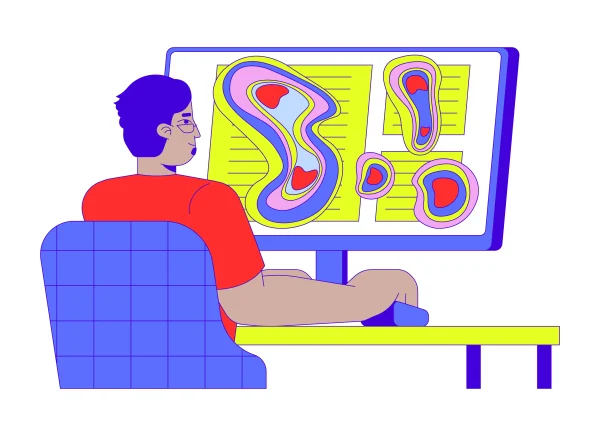
Use tools like heatmaps to see where people stop reading. If everyone drops off after the third paragraph, your connection is weak. You might need better conversion framing to pull them further down.
Look for rage clicks where people get frustrated and leave. Fix these friction points with clearer instructions and better micro-copy. Constant iteration ensures your message stays sharp as the market changes. Data gives you the confidence to scale your spending.
Scale Your Revenue with Creative Copywriting
Developing the art of words is the most profitable skill you can build. You have seen how empathy, storytelling, and framing work together to move people toward a sale. Great Creative Copywriting sells a product, solves a human problem, and builds a lasting relationship.
Stop treating your words like an afterthought. Every headline, email, and product description is an opportunity to prove you understand your customer. Focus on their internal needs, tell stories that build trust, and frame your offers to minimize their risk. When you stop sounding like a business and start sounding like a person, your sales will follow. Skill development takes time, but the payoff is a business that thrives in any economy. Use these principles today to turn your copy into a high-performance sales engine.
Recently Added
Categories
- Arts And Humanities
- Blog
- Business And Management
- Criminology
- Education
- Environment And Conservation
- Farming And Animal Care
- Geopolitics
- Lifestyle And Beauty
- Medicine And Science
- Mental Health
- Nutrition And Diet
- Religion And Spirituality
- Social Care And Health
- Sport And Fitness
- Technology
- Uncategorized
- Videos

