
Crack Tough Avian Field Identification Secrets
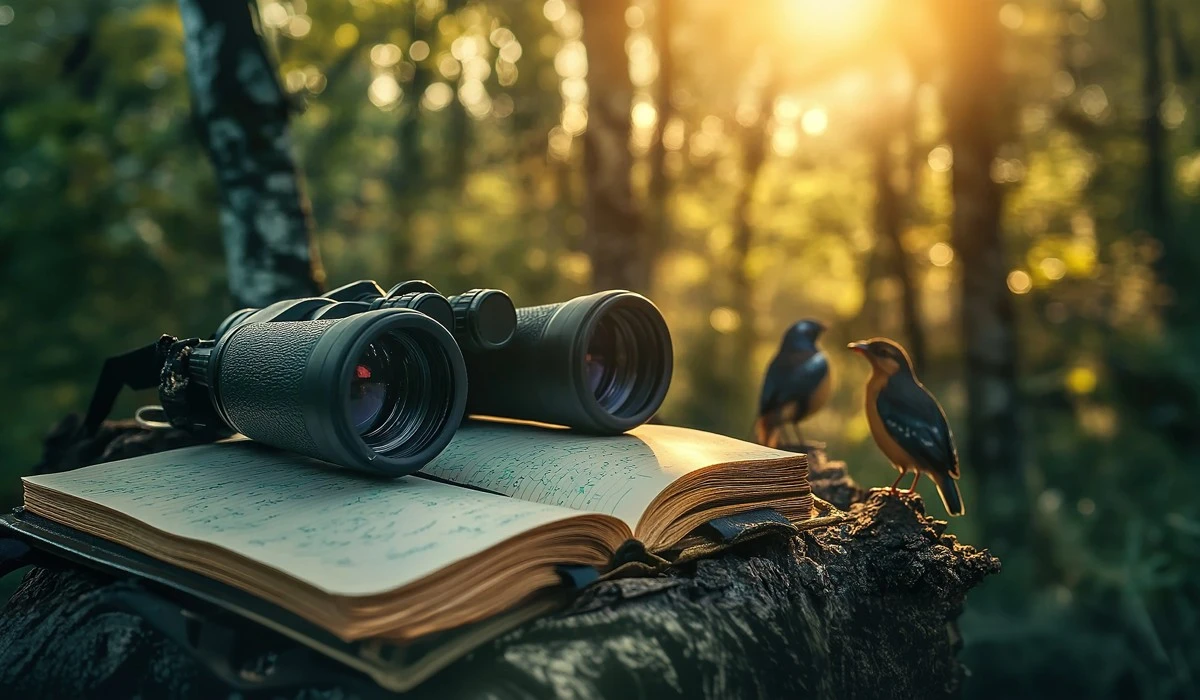
Most people walk into the woods and see a flash of red or hear a generic chirp without realizing they stand in the middle of a sophisticated biological conversation. While it might seem like eyes are failing when two small brown birds look identical, the actual difficulty stems from observing the whole rather than the specific parts. True Birdwatching starts the moment you stop trying to name the bird and start trying to describe its life through specific physical evidence. When you look at a feather, you actually look at a map of that bird's health, its age, and even its travel history across the globe. Becoming skilled at Avian field identification means learning to read these small physical markers that others ignore. High-quality Ornithology optics pull these details out of the shadows and turn a blurry shape into a clear story.
The Core Principles of Expert Birdwatching
Expertise in the field does not come from memorizing a thousand photos in a book. It comes from training your brain to ignore the obvious and hunt for the clues that nature provides. When you encounter a new species, your brain naturally wants to jump to a conclusion, but this often leads to mistakes. Instead of guessing, you must build a case like a detective using repeatable evidence. Every movement and every shadow on a wing tells you something about the species. Many beginners often ask, how do you identify birds for beginners?
A report from All About Birds, referencing an excerpt from the Better Birding book, suggests that the most effective approach for newcomers is to focus on the GISS method. This technique prioritizes evaluating General Impression, Size, and Shape before considering specific colors. Focusing on these foundational steps ensures a much higher degree of accuracy in Avian field identification because shapes are more reliable than colors in varying light.
Behavior and Context: The Key to Accurate Bird Identification
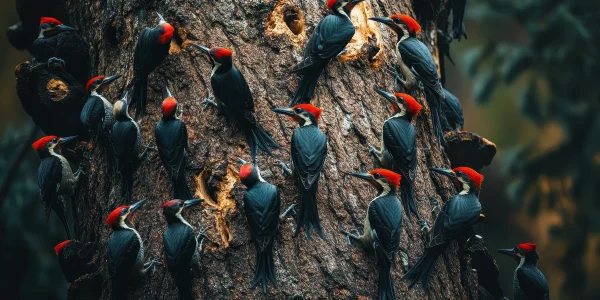
Ludlow Griscom, the man who proved sight identification worked as well as lab study, taught us that context matters as much as the bird itself. You should observe how a bird sits on a wire or how it clings to the side of a tree trunk. According to the All About Birds guide for White-breasted Nuthatches, these birds often descend trees head-first, whereas woodpeckers typically move upward. These behavioral traits provide instant answers before you even lift your binoculars. Shifting focus from the what to the how makes the basic patterns of the natural world visible. This mental shift separates the casual observer from the serious birder who understands the biology of the subjects. Engaging in Birdwatching with this level of intent transforms every outing into a scientific expedition. You find more joy when you understand the logic behind the feathers and the flight.
Shifting from Generalization to Specificity
Specific details often hide in plain sight unless you know exactly where to look. For example, when you see a shorebird, look at the length of the bill relative to the size of the head rather than only observing its legs. A guide from the Cornell Lab’s All About Birds emphasizes checking bill length relative to the head; for instance, a Greater Yellowlegs possesses a bill that is notably longer than its head and has a slight upward curve.
In contrast, the Lesser Yellowlegs has a straight bill that matches the length of its head almost perfectly. These micro-measurements allow you to make a definitive Avian field identification even when the birds stand far away in the mud. You must treat every bird like a puzzle where the pieces include feather wear, molt patterns, and posture. This level of detail requires patience and a willingness to stay still while the bird reveals its true identity through its unique physical traits.
Refining Your Skills in Avian field identification
To improve your accuracy, you must become skilled at deciphering shape and proportion under different lighting conditions. A bird seen against a bright sky becomes a silhouette, making color useless for identification purposes. In these moments, you rely on the primary extension, which is the distance the flight feathers extend past the rest of the wing. For flycatchers, this measurement acts as a biological fingerprint. An Acadian Flycatcher shows a long primary extension, while a Least Flycatcher looks much more compact. Learning these anatomical landmarks allows you to identify species that look identical to the untrained eye. You essentially learn to see the skeletal structure and feather arrangement through the skin. This technical approach makes Birdwatching a much more rewarding and intellectual pursuit for anyone who enjoys solving sophisticated natural mysteries.
Deciphering Shape, Posture, and Proportion
Posture provides immediate clues that help narrow down the possibilities before you even consider plumage. Some birds, like the Eastern Phoebe, sit upright and constantly pump their tails downward in a rhythmic motion. Others, like the various species of pipits, walk on the ground and wag their tails side-to-side. These physical habits remain consistent even when the bird is in a heavy molt or poor light. When you use high-end Ornithology optics, you can see subtle structural differences. Research from the All About Birds species comparison tool shows that Cooper’s Hawks exhibit a squared head with a capped appearance, whereas Sharp-shinned Hawks have a smaller and more rounded head profile. These differences in bone structure and feather lay allow for precise identification. Focusing on these reliable physical constants reduces the frustration of maybe and promotes the confidence of certainty.
Mapping Field Marks and Plumage Patterns
Field marks act as the specific signposts that guide your identification process. You should look for eye rings, wing bars, and rump patches as if you are reading a technical manual. These features often distinguish between two species that live in the same forest but never interbreed. For example, a white eye ring can be bold and complete or thin and broken. In the world of vireos, these spectacles provide the primary evidence needed to separate a Blue-headed Vireo from its cousins. You must also pay attention to the auriculars, or the feathers covering the ears. A small patch of color here often serves as the final piece of evidence in a difficult ID. Understanding these plumage maps turns a confusing group of birds into an organized collection of distinct and recognizable individuals with unique stories.
Selecting Professional-Grade Ornithology optics
Your gear serves as the physical interface between your eyes and the bird. Without high-quality Ornithology optics, you miss the fine serrations on a feather or the true color of a bird’s iris. Most experts prefer an 8x42 configuration because it offers the best balance between magnification and light gathering. A larger objective lens allows more light to reach your eye, which is vital when you search for owls at dusk or warblers in a dark canopy. A common technical query is, what is the best lens for bird watching? For most field conditions, a lens with ED glass is ideal because it minimizes color fringing and provides the sharpest contrast. This high-performance glass ensures that you see the bird exactly as it appears in nature, without the distortions caused by lower-quality manufacturing processes.
Understanding Magnification and Light Transmission
Light transmission determines how much detail you can see when the sun begins to set. High-end binoculars use dielectric mirror coatings on the prisms to reflect over 99 percent of the incoming light. As noted in the Joy of Birdwatching course, higher magnification reduces the light-gathering capability and narrows the field of view. This technology allows you to see deep into the shadows where many hard-to-find species hide during the day.
When you use these tools, you notice the phase-correction coatings that keep the image sharp and high-contrast. This clarity is essential for Avian field identification because it allows you to see the primary projection on a resting bird. If your optics produce a dim or blurry image, you will likely misidentify a bird based on a false perception of its color. Investing in professional gear removes the visual barriers that stand between you and a successful identification. You see the world with a clarity that basic binoculars simply cannot provide.
Strategic Birdwatching Across Diverse Habitats
Success in Birdwatching requires an understanding of how birds use their environment. You should not expect to see a marsh wren in a dry pine forest, just as you would not look for a mountain bluebird in a coastal swamp. Geography and habitat act as natural filters that help you eliminate 90 percent of the possibilities before you even look through your glass. A study of range maps and seasonal data teaches you which birds should be present at any given time of year. This logic prevents you from making impossible identifications of birds that are currently thousands of miles away. You become a more effective birder when you anticipate what you will see based on the trees, the water, and the weather around you. This strategic approach turns a random walk into a targeted search.
Using Range Maps and Seasonal Data
Range maps provide the boundaries of where a species can realistically exist. If you think you see a rare tropical bird in the middle of a Canadian winter, the data suggests you should look closer at similar local species. Seasonality also plays a massive role because many birds change their appearance entirely between summer and winter. The Humphrey-Parkes system helps birders understand these molt cycles, allowing them to identify a bird in its basic plumage just as easily as its alternate plumage. This knowledge prevents the confusion that occurs when a bright yellow warbler turns into a dull olive bird in the fall. Layering geographic knowledge over visual observations builds a more reliable and accurate method for Avian field identification. This context provides the final layer of proof for your field notes and sightings.
Behavioral Cues and Foraging Styles
How a bird finds its food often tells you its name before you see its face. The All About Birds species guide explains that Brown Creepers typically search for prey by moving upward in a spiral pattern around tree limbs and trunks. Meanwhile, a Black-and-white Warbler behaves more like a nuthatch, scurrying along the limbs in every direction. These foraging styles are hard-coded into the bird's DNA and rarely change. You should also watch the flight patterns, as some birds undulate by flapping and then tucking their wings. Woodpeckers are famous for this rollercoaster-like flight. Other birds, like swifts, seem to twinkle in the sky with rapid, stiff wingbeats. People often wonder, how can I improve my bird identification skills? The best method is to practice ear-birding by recording unknown sounds and comparing them to digital databases once you are back from the field.
Advanced Field Identification via Vocalizations
When the leaves are thick and the birds stay hidden, your ears must do the work of your eyes. Learning to identify birds by sound opens up a whole new dimension of Birdwatching that most people ignore. Every species has a unique vocabulary of songs, calls, and chip notes that serve different purposes. A song usually claims a territory or attracts a mate, while a chip note might warn of a nearby hawk. You can train your brain to recognize the tempo, pitch, and quality of these sounds. Some birds, like the Gray Catbird, mimic the sounds of other animals, creating a confusing medley of notes. A deconstruction of these sounds into their individual components allows for the identification of the singer without ever seeing a single feather. This skill doubles your effective range in the field and ensures you never miss a bird.
Categorizing Calls, Songs, and Chips
You should categorize bird sounds by their tone color or timber. Some birds have a buzzy quality, like a Grasshopper Sparrow, while others sound like clear whistles or flute-like melodies. The Wood Thrush produces a haunting, multi-tonal song because it uses a specialized vocal organ called a syrinx. This organ allows the bird to sing two different notes at the same time. When you listen for these complexities, you move beyond simple recognition and begin to appreciate the biological wonder of avian communication.
You can also use mnemonics to remember songs, such as the Barred Owl’s famous call. As described in the All About Birds sound archives, this owl is famous for its distinctive eight-to-nine-note call often phrased as who cooks for you; who cooks for you-all. Combining these audio clues with your Ornithology optics creates a powerful, multi-sensory approach to the hobby. You find that the forest is never truly quiet once you learn to hear the individual voices within the chorus.
Elevating Your Birdwatching Experience with Optics Maintenance
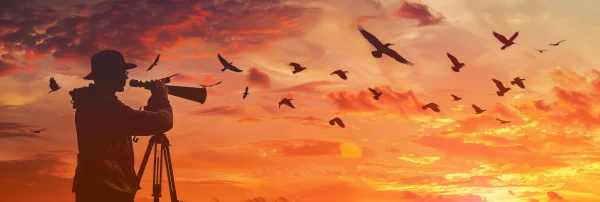
High-performance tools require regular care to maintain their precision. If your binoculars are out of alignment, your brain has to work harder to merge the two images, leading to significant eye strain and headaches. You should learn to use the diopter adjustment to calibrate the optics to your specific eyesight. This small dial compensates for the strength difference between your left and right eyes, ensuring a perfectly sharp image. As noted in an All About Birds equipment review, professional Ornithology optics are frequently pressurized with nitrogen or argon gas to create a fogproof and waterproof seal. Maintaining gear calibrated and protected ensures that Avian field identification remains accurate even in the most challenging weather conditions. Proper maintenance preserves your investment and keeps your vision clear for years to come.
Field Cleaning and Protection
Dust and saltwater are the primary enemies of glass coatings. You should never wipe your lenses with a dry cloth or your shirt, as small grains of sand will act like sandpaper and scratch the delicate surfaces. Instead, use a soft brush or a puff of air to remove loose debris before using a specialized lens cleaner. Many birders use tethered lens caps to ensure the glass stays covered whenever they are not actively looking at a bird. This habit prevents rain and oil from your skin from smudging the objective lenses. When you take care of your gear, your gear takes care of you. A clean lens provides the contrast needed to see the faint streaks on a sparrow’s breast or the subtle ring around a duck's bill. Precision work requires precision tools, and maintenance is the only way to keep them functional.
The Ethics and Impact of Precision Birding
As you become more skilled, you gain a responsibility to the birds you observe. Your presence should never disrupt the natural behavior of the animals you hunt for. Precision Birdwatching allows you to stay at a distance while still getting a clear view of the subject. Using high-quality Ornithology optics means you do not have to flush a bird off its nest just to see its field marks. The Audubon Society warns that utilizing recorded playbacks can harm birds by causing significant stress, as they perceive the sound as a rival in their territory. Responsible birders prioritize the health of the bird over the quality of the sighting. This ethical approach ensures that bird populations remain healthy and that future generations can enjoy the same wonders you see today.
Contributing to Community Science
Your observations have value far beyond your personal life list. When you practice accurate Avian field identification, you can contribute your data to global databases like eBird. Scientists use this information to track migration patterns, monitor population declines, and identify critical habitats that need protection. One billion observations now exist in these databases because of the dedication of people like you. Every time you log a sighting, you provide a data point that helps researchers understand how climate change and habitat loss affect different species. This transformation from a hobbyist to a community scientist gives your time in the field a much deeper purpose. Beyond simply looking at birds, you are helping to save them. Your precision in the field directly affects the future of conservation efforts across the entire planet.
Excel at the Art of Birdwatching
The shift from a casual observer to an expert birder requires a commitment to both technical skill and environmental understanding. You have learned that identifying a bird involves much more than looking at a picture in a book. It requires a systematic look at shape, behavior, and the specific physical markers revealed by your tools. A combination of Avian field identification knowledge and the power of pro-grade Ornithology optics reveals a level of detail that remains concealed to most of the world. You see the subtle curve of a bill and the specific shade of a leg that confirms a rare find. This hobby represents a lifelong pursuit of knowledge rather than a mere pastime that keeps your mind sharp and your connection to nature strong.
Every trip into the field offers a new opportunity to refine your eyes and ears. You now understand how to use light, geography, and sound to build a complete picture of the birds around you. This analytical approach makes every sighting more meaningful because you understand the biology behind the beauty. As you continue your path, remember that the most important tool you possess is your own curiosity and patience. The birds will always be there, living their sophisticated lives in the trees and the skies. Your job is to stay quiet, stay observant, and use your skills to witness the incredible diversity of life. Take your gear, head outside, and continue to excel at the incredible world of Birdwatching with precision and respect for every winged creature you encounter.
Recently Added
Categories
- Arts And Humanities
- Blog
- Business And Management
- Criminology
- Education
- Environment And Conservation
- Farming And Animal Care
- Geopolitics
- Lifestyle And Beauty
- Medicine And Science
- Mental Health
- Nutrition And Diet
- Religion And Spirituality
- Social Care And Health
- Sport And Fitness
- Technology
- Uncategorized
- Videos

