
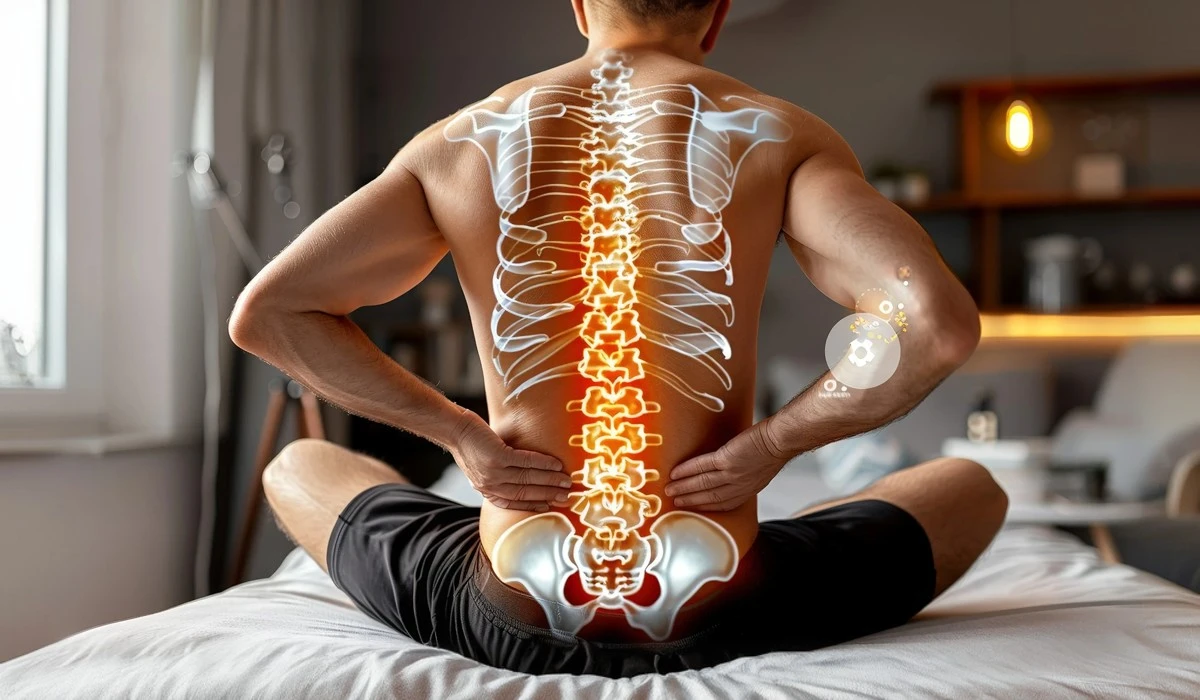
Try Rolfing To Cure That Stiff Spine For Good
You wake up, and your back feels like a frozen board. You try to touch your toes, but your spine resists your effort. You likely blame your age or your desk chair for this daily struggle. In reality, your body engages in a constant, losing battle with the ground beneath your feet. Gravity pulls on your frame every second of the day. If your bones sit even a fraction out of place, your soft tissues thicken to hold you up. This thickening makes you feel stiff and heavy long before you should.
Rolfing offers a way to reverse this process by rearranging these dense tissues. It addresses the root cause of your rigidity directly. Most people view their stiffness as a permanent trait, yet they actually live inside a system that has simply tightened to survive. Working with this system allows you to reclaim the fluidity you thought you lost years ago.
Beyond the Surface: The Anatomy of Chronic Spinal Tension
Chronic stiffness rarely starts in the bones themselves. Instead, it begins in the soft tissue that wraps around every muscle and organ. When you sit hunched over a laptop, your body perceives a threat to your balance. To prevent you from falling forward, your brain signals your connective tissue to shorten and toughen. This creates a physical "drag" on your spine. You feel this as a dull ache or a limited range of motion. Over time, these tissues become so thick that they pull your vertebrae out of their natural alignment.
The Role of Gravity on Your Skeleton
Gravity acts as a relentless downward force that shapes your physical form. According to the Indian Express, maintaining a sustained forward head posture increases strain on the cervical extensor muscles, which makes the weight of your skull feel as though it effectively doubles. Your spinal muscles cannot hold this extra weight forever, so they recruit fascia to help. Fascia acts as the body's internal wrapping paper. In an aligned body, gravity flows through the bones and into the earth. In a misaligned body, gravity gets "caught" in the soft tissues. A paper published in MDPI suggests a theory based on the thixotropic property of fascia to explain this "densification," where your tissues conceptually turn from a flexible gel into a hard, leather-like substance. This leather-like tissue locks your spine into a permanent slouch, making every movement feel like a chore.
Why Conventional Stretching Often Falls Short
According to the Mayo Clinic, therapies like myofascial release focus on the tough coverings that wrap and support muscles, whereas conventional stretching usually targets the belly of a muscle. You might feel a temporary release after a long yoga session or a quick hamstring stretch. However, the connective "sleeve" surrounding that muscle often remains tight. If the sleeve stays small, the muscle cannot stay elongated. Ironically, aggressive stretching sometimes initiates a protective reflex that makes the tissue even tighter. You need a method that changes the actual shape and length of the fascial sleeve. Without addressing this outer layer, your muscles simply snap back to their old, shortened state as soon as you stand up. This explains why your morning stretches never seem to provide lasting relief for your stiff back.
The Foundation of Structural Integration Therapy
Dr. Ida P. Rolf changed how we view the human body when she introduced her system in the 1940s. She earned her Ph.D. in Biological Chemistry from Columbia University in 1920, a rare feat for a woman at that time. She spent decades studying how the body’s structure relates to the Earth’s gravitational field. According to Rolf.org, her lifelong investigation led to the system of soft tissue manipulation and movement education known today as structural integration therapy to help people find their "vertical line." This line represents a state of perfect balance where your ears, shoulders, hips, knees, and ankles stack vertically. When you achieve this alignment, your body no longer wastes energy fighting to stay upright.
The practice relies on the idea of biotensegrity. Think of your body as a tent. The bones are the poles, and the fascia is the guy-wires. If you pull one wire too tight, the whole tent leans. You cannot fix the lean by just pushing on the pole; you must adjust the tension in the wires. Practitioners of structural integration therapy work on these "wires" to bring the poles back into balance. What is the difference between Rolfing and massage? The Cleveland Clinic notes that, unlike massage therapists who manipulate muscles for immediate relaxation, Rolfers target the fascia, utilizing this method to reorganize the entire body’s connective tissue structure for long-term functional change. This approach shifts the focus from temporary comfort to permanent structural evolution.
Why Deep Fascial Manipulation is the Key to Lasting Relief
To change the body’s shape, a practitioner must reach the deep layers of connective tissue. This requires deep fascial manipulation, a technique that applies slow, steady pressure to the fascia. This pressure initiates a physical change in the tissue’s state. Fascia is thixotropic, which means it behaves like certain types of clay or gel. When it remains still and cold, it hardens. When you apply heat and mechanical energy, it becomes fluid. Applying focused pressure allows a Rolfer to "melt" the rigid areas of your back, allowing the tissue to stretch and move freely once again.
Breaking the Cycle of Fascial Adhesions
Fascial layers should slide past each other like silk sheets. When you experience an injury or maintain poor posture, these layers grow "adhesions." These are essentially internal scars that act like glue. They bind your muscles together, preventing them from working independently. If your back muscles are glued to your ribcage, every breath you take becomes a struggle against your own anatomy. Deep fascial manipulation breaks these bonds by shearing the layers apart. A review published in PMC notes the bio-piezoelectric properties of tissues, leading to the theory that this process utilizes the piezoelectric effect. The concept suggests that when the practitioner applies pressure, the tissue generates a tiny electrical charge that tells your body to produce more liquid and fiber-dissolving enzymes, which naturally break down the "glue" holding you back.
Creating Space Between the Vertebrae
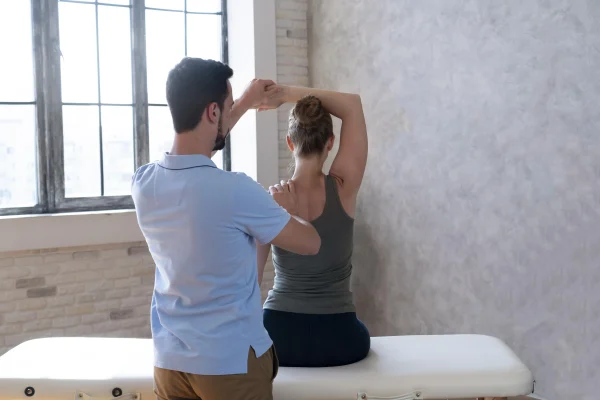
A stiff spine usually suffers from compression. The discs between your vertebrae need space to absorb fluid and stay healthy. When your fascia is tight, it acts like a shrink-wrap that squeezes your spine downward. This pressure can lead to bulging discs and pinched nerves. Through manual pressure, a Rolfer can exert up to 2,000 pounds of pressure per square inch on specific points. This high-intensity, slow-moving force stretches the longitudinal ligaments of the spine. Is Rolfing painful? The process can be intense as chronic tension is released, but a skilled practitioner works within your comfort level to ensure the pressure is restorative rather than distressing. As the compression lifts, your discs rehydrate, and the "stiff" feeling in your back begins to evaporate.
The Ten-Series Path: How Rolfing Reshapes Your Posture
As outlined by Rolf.org, Dr. Rolf created a standardized method where practitioners usually deliver this work through a systematic process called the "Ten-Series." You do not simply walk in and ask the Rolfer to "fix your back." Instead, the practitioner follows a roadmap that addresses your entire body. They understand that a stiff neck often starts with a flat foot. Working through the whole system ensures that the changes in your spine actually last. Each session builds upon the previous one, slowly peeling back the layers of compensation you have built up over a lifetime.
The Introductory Sessions: Opening the Breath and Feet
The first three sessions focus on the "sleeve" or the superficial layers of the body. Session one targets the ribcage and the hamstrings. Loosening the tissue around your ribs allows you to breathe more deeply. This extra oxygen helps your muscles relax from the inside out. Session two focuses on your feet and lower legs. If your feet do not strike the ground correctly, your spine has to wobble to keep you balanced.
Session three works along the sides of your body, from your hips to your neck. This session creates "depth" in your torso, making room for your internal organs and allowing your spine to sit further back in your body. How many sessions of Rolfing do I need? Rolf.org explains that the Ten-Series is designed to systematically balance and align the entire body, which is how most people achieve the best results through a standard ten-session series designed to systematically realign every part of the structural web.
The Core Sessions: Directly Addressing the Spine and Pelvis
Sessions four through seven address the "core" tissues. This is where the practitioner directly addresses the stiff spine. An excerpt from the Rolf Institute Journal highlights that psoas work is highly important, making session five particularly famous because it targets the psoas muscle. A related article in ScienceDirect notes that psoas tightness causes frequent compensatory extensions in the lumbar spine, meaning that when the psoas is tight, it pulls your lower back into a deep, painful arch, despite some conflicting reports on its exact relationship to lower back pain. Releasing this muscle through deep fascial manipulation allows your lower back to flatten and relax. Session six moves to the back of the pelvis and the sacrum. This session realigns your tailbone, which acts as the foundation for your entire vertebral column. Finally, session seven works on the neck and head, ensuring your "top" is balanced over your "bottom."
Restoring the Vertical Line: The Result of a Balanced Spine
Once you finish the Ten-Series, your body occupies a different relationship with gravity. You no longer feel like you are "holding yourself up." Instead, your skeleton supports you effortlessly. This state of balance produces a feeling of lightness that many people describe as "walking on air." Because your muscles no longer have to work double-time to fight a crooked frame, your chronic pain begins to fade. You move as a single, coordinated unit rather than a collection of stiff, unrelated parts.
Increased Range of Motion and Fluidity
A balanced spine moves like a slinky rather than a solid rod. After receiving structural integration therapy, you will notice that twisting, bending, and reaching become much easier. This happens because the layers of fascia now slide freely over one another. A study in the Journal of Bodywork and Movement Therapies observed a decrease in pain and an increase in active range of motion for the cervical spine, extending the idea that this work significantly increases the functional range of motion in people with chronic back pain. You might find that you can suddenly check your blind spot while driving without rotating your whole torso. This fluidity protects you from future injuries because your body can absorb shocks and movements more capably.
Improved Energy Levels and Reduced Fatigue
Poor posture is an energy thief. If your spine is out of alignment, your muscles must constantly fire just to keep you from falling over. This leads to "postural fatigue," which explains why you feel exhausted after a long day of just sitting at a desk. When Rolfing realigns your frame, these muscles can finally turn off. This "tonus" in your nervous system drops, lowering your heart rate and reducing cortisol levels. You suddenly have more energy for your hobbies and your family because you aren't spending it all on the simple act of standing. Your brain also functions better, as it no longer has to process constant "pain signals" coming from your stiff back.
Preparing for Your First Rolfing Experience
Starting your introduction into structural integration therapy requires a bit of mental and physical preparation. Unlike a spa massage, you will be an active participant in the session. Your practitioner might ask you to breathe into a specific area or move a joint while they apply pressure. This "sensorimotor education" helps your brain recognize the new, better way of moving. You should wear comfortable, minimal clothing, such as gym shorts or a sports bra, as the Rolfer needs to see your alignment and skin as you move around the room.
Communication is your most important tool during a session. You should describe the sensations you feel, whether they are "sharp," "dull," or "releasing." This feedback allows the practitioner to adjust their depth and speed. Remember that Rolfing is a process of exploration. You are learning how you hold tension and how to let it go. Between sessions, pay attention to how you sit, stand, and walk. The work is most effective when you carry the lessons from the table into your daily life. This active engagement ensures that your spine remains balanced long after the tenth session concludes.
A New Foundation with Rolfing
Living with a stiff spine can feel like a life sentence, but it is often just a sign of a body out of balance. Your tissues have simply adapted to the stresses of your life. Through Rolfing, you can teach those tissues a new way to exist. Addressing the fascial web that holds your skeleton together solves the structural puzzle that causes your pain. You do not have to accept rigidity as a natural part of aging. Instead, you can choose to realign your frame and reclaim the effortless movement of your youth. Rolfing provides the tools to rebuild your foundation from the ground up, leaving you with a body that feels balanced, light, and perfectly upright.
Recently Added
Categories
- Arts And Humanities
- Blog
- Business And Management
- Criminology
- Education
- Environment And Conservation
- Farming And Animal Care
- Geopolitics
- Lifestyle And Beauty
- Medicine And Science
- Mental Health
- Nutrition And Diet
- Religion And Spirituality
- Social Care And Health
- Sport And Fitness
- Technology
- Uncategorized
- Videos

