
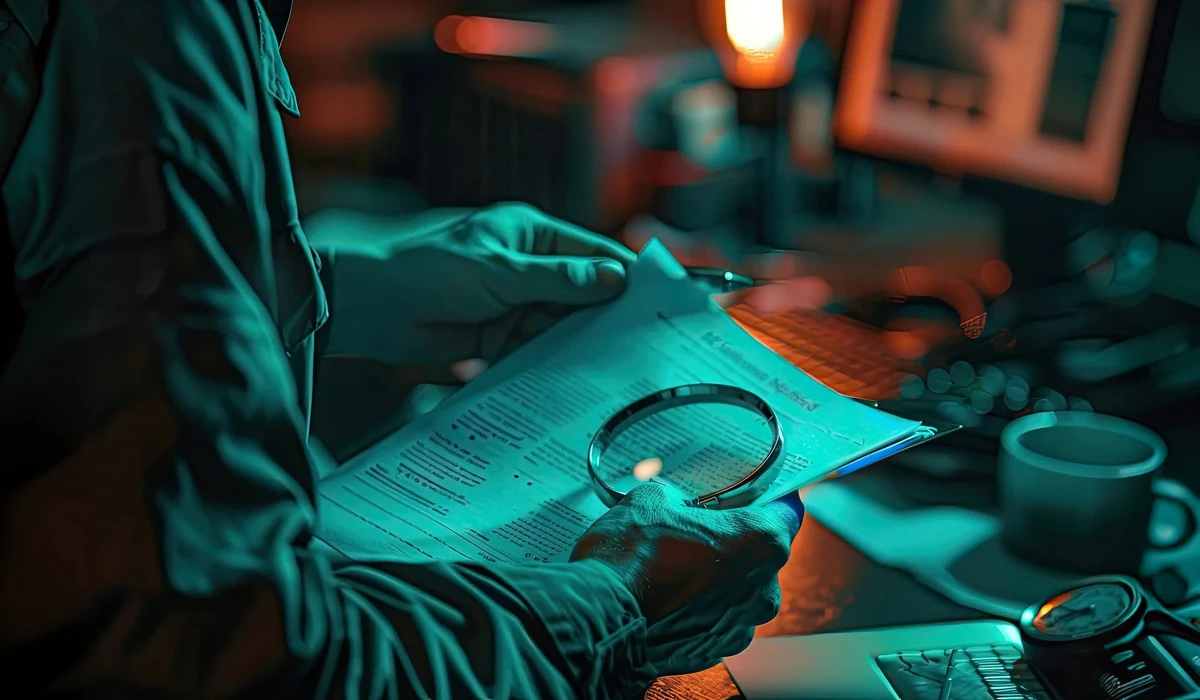
Forensic Document Analysis in Contract Fraud Cases
When you sign a business deal, you trust that the paper tells a true story. You expect the dates to match the ink and the signatures to match the names. But sometimes, a fraudster swaps a page or copies a signature so well that your eyes fail you. You feel a knot in your stomach because you know something is wrong, yet you cannot prove it.
This is where Forensic Document Analysis steps in. It turns a hunch into a legal weapon. Forensic experts examine both the writing and the molecular history of the document. They find the tiny physical slips that every criminal makes. During high-stakes lawsuits, this science acts as the ultimate truth-teller. It exposes the lies concealed in the fibers and chemicals of a simple sheet of paper. Examining the physical evidence allows experts to provide the proof needed to win in court.
The High Stakes of Modern Contract Disputes
Contracts govern our lives. Wills, property deeds, and business buyouts involve millions of dollars. Because the stakes are so high, these documents become prime targets for criminals. A single forged signature can strip a family of its inheritance. A swapped page in a merger agreement can ruin a corporation.
Modern fraudsters use advanced technology. They mix digital printing with "wet" ink signatures to create convincing fakes. Ironically, the more tech they use, the more digital tracks they leave behind. Paper is surprisingly vulnerable to manipulation. A thief might use a blade to scrape off a single digit or a chemical to wash away a name.
Standard legal reviews often miss these subtle changes. You need a specialist who understands how paper and ink age over time. Without professional intervention, a fraudulent document looks exactly like a real one. Expert analysis provides the only way to verify that a contract is what it claims to be. It protects your assets and your reputation.
How Forensic Document Analysis Exposes Deception
Experts use a specific set of rules to catch fraud. Instead of guessing, they follow a process called ACE-V. This stands for Analysis, Comparison, Evaluation, and Verification. This scientific method ensures the findings hold up under pressure.
The Intersection of Law and Science
Courts have very strict rules for evidence. In the United States, experts follow the Daubert standard. This means the techniques must have a known error rate and peer-reviewed backing. According to the U.S. Supreme Court ruling in Daubert v. Merrell Dow Pharmaceuticals, an analyst must demonstrate that their procedures have gained widespread acceptance within the relevant scientific community. This rigor prevents "junk science" from entering the courtroom.
Physical vs. Chemical Examination
A full investigation evaluates two different areas. First, the analyst examines the surface for physical marks like staple holes or erased fibers. Next, they examine the chemistry of the page. Forensic Document Analysis utilizes both methods to build a bulletproof case. This dual approach catches everything from a forged name to a backdated date.
Decoding the Art of Handwriting Forgery Detection
Every person has a unique way of writing. Once you reach "graphic maturity" in your teens, your handwriting becomes an automatic habit. Your brain and muscles work together to create a rhythm that is yours alone.
Identifying Muscle Memory and Fluency
Experts look for 12 distinct characteristics in your script. These include how you slant your letters and how much pressure you put on the pen. Can a forensic document examiner tell if a signature is fake? Yes, analyzing line quality, pen pressure, and hesitation marks exposes what a forger cannot naturally replicate. Even the best forgers struggle to copy the fluid speed of a genuine signature.
Detecting the "Slow Draw" of Forgery

When a criminal tries to copy your name, they usually "paint" the signature. They move the pen slowly to get the shapes right. This creates something called the "tremor of fraud." These are tiny, shaky lines that show the writer was thinking too hard.
Handwriting forgery detection identifies these unnatural breaks and pen lifts. Meanwhile, a real signature shows smooth, tapering lines where the pen lifts off the paper at high speed.
Using Ink Chromatography to Unmask Backdated Agreements
While ink appears as a single color to the eye, it contains a mixture of different chemicals. When a fraudster claims they signed a document in 1990, the ink might tell a different story.
The Chemical Breakdown of Document Timelines
Analysts use a process called Thin Layer Chromatography (TLC). They take a tiny 1mm sample of ink from the page and dissolve it in a solvent. Is ink chromatography admissible in court? This scientific method is widely accepted in legal proceedings because it provides objective, reproducible chemical data regarding a document's origin. The process separates the ink into its original dyes and pigments.
Matching Ink Batches to Specific Years
Ink manufacturers change their formulas every few years. Research published in the Journal of the American Society of Questioned Document Examiners notes that if ink chromatography shows an ink formulation was not in production on the purported date—such as finding a 2005 dye on a 1995 contract—the fraud is exposed. This "chemical fingerprint" acts as a smoking gun. Ironically, criminals often use modern pens to forge old documents, thinking all black ink is the same. Science proves them wrong.
Forensic Document Analysis Tools Beyond the Naked Eye
Modern labs use powerful machines to see what is concealed. These tools reveal history that has been buried under layers of ink or paper fibers.
Multi-spectral Imaging and Paper Fiber Analysis
Experts use a Video Spectral Comparator (VSC) to look at documents under different light waves. According to Forensic Science Simplified, ultraviolet and infrared light can expose alterations or removed text, revealing "obliterations" where writing was added with a different ink. For example, if someone crossed out a price with a different pen, the VSC makes the top layer of ink disappear. This allows the examiner to read the original number underneath.
Indented Writing and Impression Evidence
When you write on a pad of paper, you leave unseen grooves on the pages below. As noted in a report from Lucknow University, equipment known as an Electrostatic Detection Apparatus (ESDA) can find these "ghost" impressions. The study also suggests that Forensic Document Analysis can recover indented text from three, four, or even more pages beneath the original writing, revealing pages that were ripped off long ago. This proves whether a document was part of a specific notebook or if it was created out of the claimed sequence.
Common Signs Your Contract Might Be Compromised
You don’t always need a lab to see the first warning signs. Some red flags are physical clues that the document has been handled or altered.
Spotting Physical and Chemical Alterations
Look closely at the staple holes. If a document has been taken apart and put back together, the holes often don't line up perfectly. You might also see tiny scratches on the paper surface. This suggests someone used a blade to scrape off text. Sometimes, chemicals like bleach leave a dark stain that only shows up under a UV light.
Discrepancies in Digital Printing and Alignment
Modern printers leave concealed marks. An article published in Nature explains that many color laser printers add tiny yellow dots to the pages they produce. The source further states that these dots reveal the date and time a page was made, as well as the serial number of the printer used. Forensic Document Analysis examines these marks to see if every page in a contract actually came from the same machine. If page three has different tracking dots than page four, you likely have a forged document.
Winning Your Legal Battle with Expert Evidence
The lab work is only half the battle. The results must be explained to a judge or a jury in a way they can understand.
The Role of the Expert Witness
An analyst acts as an expert witness. They take detailed data from handwriting forgery detection and turn it into clear pictures for the jury. How much does forensic document analysis cost? Fees vary based on the case details and the number of documents, but the investment often saves clients from losing massive sums to fraudulent claims. A good expert makes the science easy to see.
Building a Defensible Chain of Custody
Evidence must be handled with care. According to training materials from the National Institute of Justice, every person who has physical possession of the document must be recorded in a continuous log. The training also emphasizes that proper documentation is required to maintain integrity, and if the chain of custody breaks, the court might throw out the evidence. The results of the Forensic Document Analysis remain valid only if the document is protected from contamination. Proper storage ensures the ink and paper don't change before the trial starts.
Utilizing Forensic Document Analysis
Fraudsters depend on your eyes being too weak to see their mistakes. They hope you won't look past the signature or check the age of the ink. However, science provides a level of certainty that simple observation cannot match. Combining handwriting forgery detection with the chemical proof of ink chromatography allows you to dismantle a lie piece by piece.
In reality, most frauds are caught because the criminal was overconfident. They didn't realize that paper fibers hold memories and ink carries a date stamp. When millions of dollars or your personal reputation are on the line, you cannot afford to guess. You must apply Forensic Document Analysis to find the truth and secure your legal victory. Truth is rarely found on the surface; it is concealed in the chemistry of the page.
Recently Added
Categories
- Arts And Humanities
- Blog
- Business And Management
- Criminology
- Education
- Environment And Conservation
- Farming And Animal Care
- Geopolitics
- Lifestyle And Beauty
- Medicine And Science
- Mental Health
- Nutrition And Diet
- Religion And Spirituality
- Social Care And Health
- Sport And Fitness
- Technology
- Uncategorized
- Videos

