
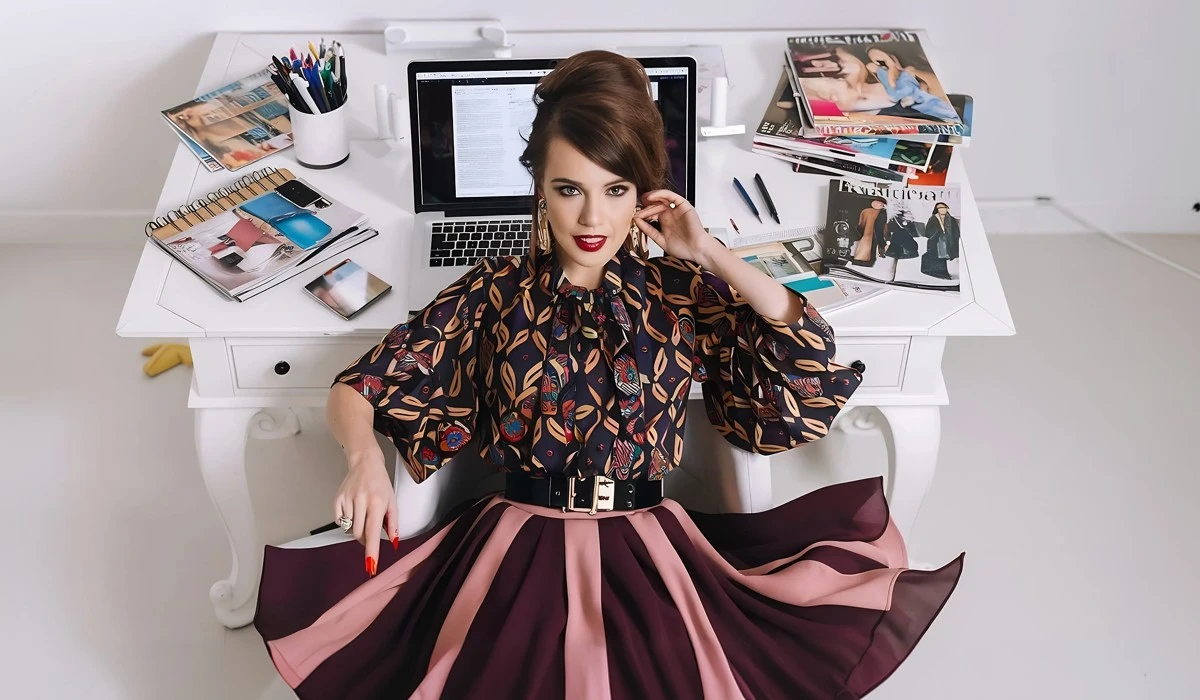
Fashion Journalism and Advanced Styling Critiques
When you scroll through social media, you see thousands of people sharing their outfits. Many individuals share a personal preference when they say they "love" or "hate" a dress. Professional Fashion Journalism asks why a skirt exists right now instead of judging if it is pretty. If you only look at the surface, you miss the historical shifts happening on the stage.
Experts in this field evaluate the presentation and connect a designer's choice to the world's economy or a political movement. For example, a System Magazine piece notes that when Robin Givhan won a Pulitzer Prize, her essays transformed fashion criticism into cultural criticism, illustrating how clothes tell us who has power and who does not. True authority comes from knowing the difference between a temporary fad and a major shift in how we live. This guide will show you how to move past basic opinions and perfect the art of the critique.
The Evolving Environment of Fashion Journalism
The way we talk about clothes has changed forever. In the past, a few major magazines held all the power. They decided what was "in" and what was "out." Today, everyone has a voice, but not everyone has authority. This shift has made deep analysis highly important. Readers are tired of fast-fashion ads disguised as news. They want to understand the substance behind the style.
From Print Pillars to Digital Authority
High-quality editorial styling critiques are now the gold standard for digital success. While Instagram provides quick photos, a professional journalist provides the "why." You must bridge the gap between a 15-second clip and a decade of history. People crave long-form content that explains how a specific look fits into the larger world. This creates a space where your expertise becomes a trusted filter for the noise.
The Responsibility of the Critical Voice
Being a critic is a balancing act. You have to be honest without being cruel. You also have to maintain relationships with the brands you cover. Historically, events like the "Battle of Versailles" in 1973 showed that reporting can alter a brand's future. According to The Metropolitan Museum of Art, this specific event shifted the power balance between traditional Parisian haute couture and the rising American sportswear scene. Your voice carries weight, and using it correctly requires a blend of bravery and factual accuracy.
Developing a Rigorous Framework for Editorial Styling Critiques
To write a great critique, you need a system. You cannot rely on your mood or the music at the show. You must look at the technical details first. If you don't know how a garment is built, you can't explain why it looks the way it does. Start by looking at the seams, the weight of the cloth, and how the model moves.
Analyzing Silhouette, Fabric, and Construction
You must use the right words to build credibility. Is the dress a "bias-cut" that clings to the body, or is it "draped" to create volume? Knowing the difference between "bespoke" hand-cutting and "made-to-measure" alterations is vital. When you describe a Balenciaga "Cocoon" shape, you are referencing decades of shape-making history. This technical knowledge proves to your readers that you know your craft.
Contextualizing the Creative Direction
Every collection tells a story. Your job is to find the theme that connects forty different looks. How do you write a professional fashion critique? A professional critique focuses on evaluating the technical execution and cultural relevance of a collection rather than relying on personal preference. This approach ensures your Fashion Journalism remains objective and respected by industry peers. Look for the way a designer uses a specific color or texture to signal a change in their creative vision.
Elevating Your Runway Trend Reporting with Data and Intuition
Great reporting is a mix of hard facts and gut feelings. You have to see patterns that others miss. Five different designers using the same shade of neon green serve as a clear data point rather than a coincidence. Professional runway trend reporting requires you to track these moments across New York, London, Milan, and Paris.
Identifying Micro-Trends vs. Macro-Shifts
You must separate things that last for a week from things that last for a decade. A micro-trend might be "Barbiecore," which fades as soon as the movie leaves theaters. A macro-shift is something like "Minimalism," which reflects a change in how people want to spend their money. Using Laver’s Law can help here. As highlighted in a Signal v. Noise article, this principle suggests a style may appear outré or daring a year before its time and entirely ridiculous two decades later.
Connecting the Runway to the Global Zeitgeist
Clothes reflect the world around us. For example, research presented in a Kyiv School of Economics thesis explores the "Hemline Index," which proposes that miniskirts prevail during strong economic periods, while dresses become longer during economic downturns. When you write about a show, look at what is happening in the news. Are the clothes protective and heavy because people feel unsafe? Or are they bright and tactile because people are looking for joy? This level of analysis turns a simple report into a piece of social history.
The Intersection of Fashion Journalism and Visual Analysis
Visual literacy is the ability to "read" an image. In Fashion Journalism, this means observing a model and recognizing a deliberate choice made by a team of artists rather than just seeing a person in clothes. Every button, belt, and hair clip is there for a reason. Your job is to decode those reasons for your audience.
Decoding Style Semiotics
Semiotics is the study of signs and symbols. Roland Barthes wrote that clothes become "written garments" once a journalist describes them. When a stylist puts industrial hardware on a delicate lace dress, they are creating visual tension. This "clash" might represent a struggle between tradition and the future. Explaining these symbols gives your readers a deeper way to experience the art.
The Role of the Stylist in the Critique

Designers don't work alone. Stylists often define the "vibe" of a show. What is the role of fashion journalism today? Today’s role is to provide a filtered, expert perspective that helps audiences navigate the overwhelming volume of visual information from global runways. You should analyze how a stylist like Lotta Volkova uses layering to make luxury clothes look like street fashion. This collaboration between the designer and the stylist is a key part of your report.
Perfecting the Technical Vocabulary of runway trend reporting
If you want people to take you seriously, stop using boring words. Words like "chic," "edgy," or "stunning" don't actually describe anything. They are fillers. To excel in runway trend reporting, you need to be precise. Precision builds trust with your audience and shows you have done your homework.
Precision Over Generalization
Instead of saying a fabric is "thin," describe it as "diaphanous" or "sheer." If a coat is stiff and holds its shape, mention that it is made of "gazar." When you use the right terms, you help the reader visualize the garment without even seeing a photo. This level of detail is what separates a professional from a hobbyist. It shows you understand the labor that went into the collection.
Avoiding Cliches in Fashion Media
Avoid "buzzwords" that have lost their meaning. If everyone is calling a trend "viral," find a better way to describe its growth. Talk about its "commercial viability" or its "cultural resonance." Avoiding common phrases ensures your Fashion Journalism will stand out. You want your writing to feel fresh, like a new collection on the first day of fashion week.
Navigating the Industry Standards for Fashion Journalism
The world of fashion is fast, but your research should be slow and deep. You cannot critique a veteran designer if you don't know what they did ten years ago. Professionalism means doing the "backstage" work that no one sees. This includes studying archives and understanding the business side of the brands you cover.
Research as the Foundation of Analysis
Before you write your editorial styling critiques, look at the brand’s DNA. Does the designer usually favor a certain silhouette? Have they used this specific fabric before? Knowing that a specific print is a callback to a 1995 collection adds massive value to your writing. It makes your critique feel like part of a long, ongoing conversation rather than a quick reaction.
The Speed vs. Quality Dilemma
Fashion week is a marathon of deadlines. You might have to write a full report in thirty minutes. To keep your standards high, prepare your templates and research beforehand. Use the "Front Row Metric" to see which celebrities or editors are attending. This gives you a data point about the brand's current power. Balancing speed with quality is the hardest part of the job, but it is where true professionals shine.
Future-Proofing Your Career in Professional Fashion Journalism
The industry is moving toward new formats like newsletters and video essays. To stay relevant, you must adapt your voice to these platforms. However, the core of good reporting never changes. You still need to provide value that an algorithm cannot replicate.
Multi-Platform Critiques: From Substack to Video
You can turn one deep-dive critique into several pieces of content. A long article for a website can become a script for a video or a series of posts for a newsletter. Why is runway reporting important for designers? It provides a permanent record of their artistic evolution and translates their abstract creative concepts into a narrative that the market can understand. This combination makes high-quality Fashion Journalism an essential part of the industry's world.
Ethics and Technology
As AI becomes more common in trend forecasting, your human intuition becomes more valuable. AI can count how many people are wearing blue, but it cannot explain why blue feels "right" for this moment in history. You must adhere to Federal Trade Commission (FTC) rules, as their business guidance requires influencers to disclose relationships when receiving anything of value. Specifically, FTC endorsement guides state you must include disclosures in every post if a brand sponsors your travel, and an FTC Congressional Budget Justification report emphasizes the necessity of revealing when companies gift you clothes. Honesty is the only way to keep your readers' trust over a long career.
Perfecting the Art of the Critique
Writing about clothes is a serious responsibility. The best editorial styling critiques avoid simple "good" or "bad" judgments and instead explain why the look matters in the timeline of human history. You are creating a document that helps people understand the culture they live in.
To succeed, you must commit to constant learning. Study the fabric, learn the history, and keep a close eye on the world outside the runway. When you combine technical knowledge with a clear, human voice, your work becomes essential reading. True Fashion Journalism focuses on what the clothes say about us instead of analyzing the garments in isolation. Keep your standards high and your observations sharp.
Recently Added
Categories
- Arts And Humanities
- Blog
- Business And Management
- Criminology
- Education
- Environment And Conservation
- Farming And Animal Care
- Geopolitics
- Lifestyle And Beauty
- Medicine And Science
- Mental Health
- Nutrition And Diet
- Religion And Spirituality
- Social Care And Health
- Sport And Fitness
- Technology
- Uncategorized
- Videos

