
Achieve Elite Tracking With Canine Olfaction Science
A bloodhound drops its nose to the pavement in a crowded city square. Thousands of people walked here an hour ago. To a human eye, the ground looks empty. To the dog, the ground holds a map of every living creature that passed by. The dog ignores the smell of hot dogs, car exhaust, and perfume. It locks onto a single person who walked by three hours ago. This success relies on the hard data found in Canine Olfaction Science.
While many assume tracking relies solely on a "good nose," a dog’s brain operates like an active chemical laboratory. Comprehending how they separate one smell from a billion others alters our training methods. This knowledge turns a pet into a professional search tool. To excel at tracking, you must understand the physics of smell and the biology of the snout.
The Biological Hardware of Canine Olfaction Science
The dog’s snout contains a specialized physical setup designed to capture and sort chemicals. While humans use their noses mostly for breathing, dogs use theirs to see the world. This hardware allows them to process detailed data in real-time.
Mapping the Millions of dog scent receptors
A dog’s olfactory epithelium contains up to 300 million dog scent receptors. Humans possess only about 6 million. This makes the sensory surface area in a dog's nose 40 times larger than ours. How many times better is a dog's sense of smell than a human's? Dogs possess a sense of smell that is roughly 10,000 to 100,000 times more acute than ours; however, an analysis published in MDPI notes that while sources verify strong olfaction generally, there is no reliable peer-reviewed verification for the common comparison that this allows them to detect a single drop of liquid in twenty Olympic-sized swimming pools.
These dog scent receptors are covered in a thick layer of mucus. This fluid serves as a solvent. According to research published in PMC, inhaled scent molecules dissolve into this mucus layer covering the olfactory epithelial tissue, and once they cross it, they bind to odorant receptors on the cilia, where transduction occurs, initiating a neural impulse that travels straight to the brain. This chemical-to-electrical conversion happens in milliseconds.
The Role of the Vomeronasal Organ
As noted in an MDPI study, dogs possess a second scent system alongside their main olfactory system called the Jacobson’s organ, or vomeronasal organ. It sits just above the hard palate of the mouth. The same review explains that this organ cooperates with hypothalamic and limbic system centers to modulate social behaviors; while the exact wording regarding an inability to track footsteps or food is unsupported by the study, the organ is necessary for the Flehmen response and the detection of non-volatile pheromones.
This system allows dogs to "smell" emotions and biological states. It processes chemicals that stay in the air or on surfaces longer than standard odors. Meanwhile, the main olfactory system focuses on the tactical tracking of scents. This dual-track system provides a complete picture of the target’s identity and current stress level.
Decoding High-Level Canine Tracking Abilities
Tracking goes beyond smelling a target. The dog evaluates the age and direction of a trail. This requires high-level canine tracking abilities that few other species possess.
Discerning the Direction of Travel
A dog identifies the direction of a trail by comparing the concentration of odor in five or six consecutive footsteps. They detect the microscopic decay of scent between the first step and the fifth. Because scent molecules break down as soon as they hit the ground, the oldest step smells slightly different than the newest one.
Can dogs track through water? While water can disperse scent molecules, many dogs can successfully track a trail through shallow or moving water by catching "rafts" of scent trapped on the surface or nearby vegetation. This allows them to maintain a trail even when the physical footprints disappear. They follow the chemical trail that floats on the water's surface or clings to the bank.
Differentiating Vapor vs. Ground Scent
In Canine Olfaction Science, we distinguish between tracking and trailing. Tracking involves following ground-disturbed odors. This includes crushed vegetation and soil bacteria. Trailing involves following the airborne "scent cone" of the individual.
Human bodies shed approximately 40,000 dead skin cells every minute. We call these "skin rafts." These rafts carry a unique biological signature of bacteria, sweat, and oils. Specialized canine tracking abilities allow a dog to ignore the crushed grass and focus solely on these floating skin rafts when the situation requires speed over precision.
Environmental Physics in Canine Olfaction Science
The environment acts as a filter for scent. Weather and terrain decide how long a smell lasts and where it travels. A handler must understand these physical laws to support the dog.
The Effect of Humidity and Temperature
Scent molecules are hygroscopic. This means they bind to water molecules. Because of this, tracking success rates peaks when humidity is between 60% and 90%. Moisture keeps the scent "heavy" and near the ground, where dog scent receptors can reach it.
Extreme heat creates a different reality. As the sun heats the ground, it creates thermal plumes. These plumes cause the ground scent to rise and drift away. Ironically, a trail that was easy to follow at dawn may become impossible to find by noon as the heat lifts the molecules into the upper atmosphere.
Managing Scent "Pools" and Shadows
Wind currents move scent like water. In the absence of wind, scent molecules often sink because they are heavier than air. They flow into low-lying areas, gullies, or "dead zones" against building walls. We call these scent pools.
An untrained dog might get stuck in a scent pool and circle endlessly. The scent is strongest there, but the person is long gone. Experienced handlers recognize this behavior. They know the dog is in a "scent shadow" where the wind has deposited the odor far away from the actual trail.
Advanced Breathing Techniques in Canine Olfaction Science
Sniffing functions as a specialized respiratory action distinct from regular breathing. Dogs use a specific physical rhythm to maximize their intake of chemical data.
The Techniques of Unbroken Airflow
According to research published in Frontiers in Veterinary Science, during active tracking, dogs exhibit a sniffing frequency of about five plus or minus two hertz regardless of breed or mass, aligning with the observation that they increase their sniff rate to 5–10 sniffs per second. They use a "slit-breathing" technique. They exhale through side slits in their nostrils. How long can a scent trail last? A scent trail can last anywhere from several hours to several weeks, depending on the environment, the amount of initial "scent skin" shed, and the presence of moisture.
According to research highlighted in PubMed and a Nature commentary, sniffing delivers about 2.5 times more air to the olfactory recess than quiet breathing; this action draws in airflows directly from the source, effectively pulling new, unsampled air into the nostrils from the front, even if specific papers omit the exact "localized low-pressure vortex" phrasing. This ensures the dog always has a fresh sample to analyze without mixing it with old breath.
Nasal Flushing and Stereo-Olfaction
Unbroken sniffing requires a way to clear the palate. Dogs use rapid exhalations to purge old molecules from the olfactory recess. This prevents "ghosting," where an old smell lingers in the nose and confuses the current search.
Furthermore, dogs possess stereo-olfaction. Research published on ResearchGate and summarized by Science details that spatially separate odor samples are acquired by each nostril, allowing the dog to compare stimulus intensity bilaterally to tell exactly which nostril is pulling in the scent for precise odor source localization before they even take a step. This creates a 3D scent map in their brain.
Training Strategies to Enhance Canine Tracking Abilities
Practical application requires moving from theory to the field. Training must focus on the specific ways canine tracking abilities fail or succeed under pressure.
Scent Discrimination Drills
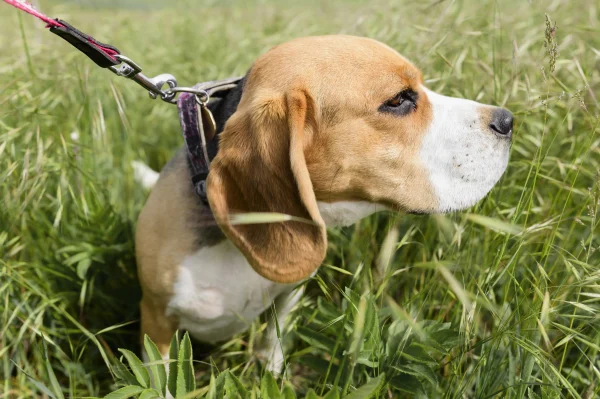
A professional tracking dog must ignore "distractor" scents. In a forest, this includes wildlife and other humans. We use the "Negative Scenting" or N-S drill. We train the dog to give a specific signal when the target scent is not present.
This prevents the dog from "false alerting" just to please the handler. It forces the dog to rely purely on the data collected by their dog scent receptors. If the chemical signature does not match the sample, the dog learns to stop rather than guess.
Variable Surface Adjustments
Most dogs can track easily on soft grass. The challenge arises when moving to "hard surfaces" like concrete or asphalt. Canine Olfaction Science shows that scent molecules are more fragile on these surfaces. They have no vegetation to cling to.
We train dogs to search for skin rafts trapped in the porous holes of the pavement. This requires a "nose down" intensity that differs from field tracking. Shifting between these surfaces is the hallmark of an elite tracking team. The dog must shift its focus from crushed plants to microscopic human debris instantly.
Maximizing Performance Through Canine Olfaction Science
Health and nutrition directly affect a dog's ability to smell. A tired or thirsty dog is a dog that cannot track. Every handler should monitor the metabolic cost of scent work.
Olfactory Fatigue and Recovery
Scent receptors can become saturated. A review published in PMC notes that when the olfactory nerves are repeatedly stimulated by the same odor, the dog scent receptors may stop firing, producing what is called olfactory fatigue or adaptation, though the specific threshold of 10 to 15 minutes of high-intensity sniffing is an operational estimate rather than a strictly verified timeframe. It is a biological shutdown to prevent the brain from becoming overwhelmed.
Handlers must provide regular rest periods. These breaks allow the dog's scent receptors to clear and reset. Without these pauses, the dog will begin to rely on visual cues rather than chemical ones. This leads to errors and lost trails.
Hydration and Receptor Sensitivity
A dry nose is a blind nose. Hydration is vital for maintaining the mucus layer in the snout. This mucus captures the chemical ligands that the dog needs to identify. If a dog becomes dehydrated, this layer thins, and the receptors cannot capture molecules effectively.
Ironically, according to a paper in PMC, higher temperatures negatively affect search performance because panting decreases olfactory efficiency and may lead to hyposmia. When a dog overheats, it must pant to cool down, which bypasses the olfactory system and prevents the dog from sniffing effectively while trying to regulate its body temperature. Keeping a dog cool is just as important as keeping it focused.
Attain Elite Work with Canine Olfaction Science
The final step is learning to read the dog. The dog provides the data, but the handler must interpret it. This partnership determines the success of the mission.
Reading Your Dog’s Body Language
An elite handler watches for the "head-up" versus "head-down" search. A head-down posture usually means the dog is following a heavy ground trail. A head-up posture means the dog has caught the scent cone in the wind.
Observing these changes reveals where the scent is moving. If the dog suddenly lifts its head and moves faster, it has likely found a concentrated pocket of air scent. Canine Olfaction Science tells us that the dog is now "trailing" rather than "tracking." Knowing the difference helps you stay out of the dog's way and follow the most productive path.
Interpreting the Scent Cone
Scent does not move in a straight line. It spreads out from the source in a cone shape. The edges of the cone are thin, while the source is thick. An experienced dog will often "fringe" the edges of this cone to find the strongest path.
As a handler, you must recognize when the dog is "working the fringe." This looks like zig-zagging, which represents a deliberate search pattern rather than confusion. The dog is actually mapping the boundaries of the scent to find the fastest route to the target. Trusting the dog’s specialized canine tracking abilities during this phase is essential.
The Future of Canine Olfaction Science
Excelling at elite tracking is a lifelong study of Canine Olfaction Science. We continue to study how dogs detect diseases, explosives, and missing persons, though a systematic review in PMC clarifies that broad claims of nearly perfect accuracy are overstated; while dogs can detect volatile organic compounds associated with infectious diseases, inconsistencies exist in methodology, and their ability to distinguish between symptomatic and asymptomatic infections is not fully established. As reported by Reuters, stating their ability to process Volatile Organic Compounds (VOCs) remains superior to any man-made machine is too absolute, but researchers note that current instrument sensitivity is well below that of a canine, since a dog can find parts per trillion.
Comprehending the biology of the snout and the physics of the air makes us better partners for our dogs. We learn when to push and when to let the dog rest. This scientific approach removes the guesswork from the field. It turns every search into a data-driven operation. When you understand the science of scent, you realize the true potential of the canine nose.
Recently Added
Categories
- Arts And Humanities
- Blog
- Business And Management
- Criminology
- Education
- Environment And Conservation
- Farming And Animal Care
- Geopolitics
- Lifestyle And Beauty
- Medicine And Science
- Mental Health
- Nutrition And Diet
- Religion And Spirituality
- Social Care And Health
- Sport And Fitness
- Technology
- Uncategorized
- Videos

