
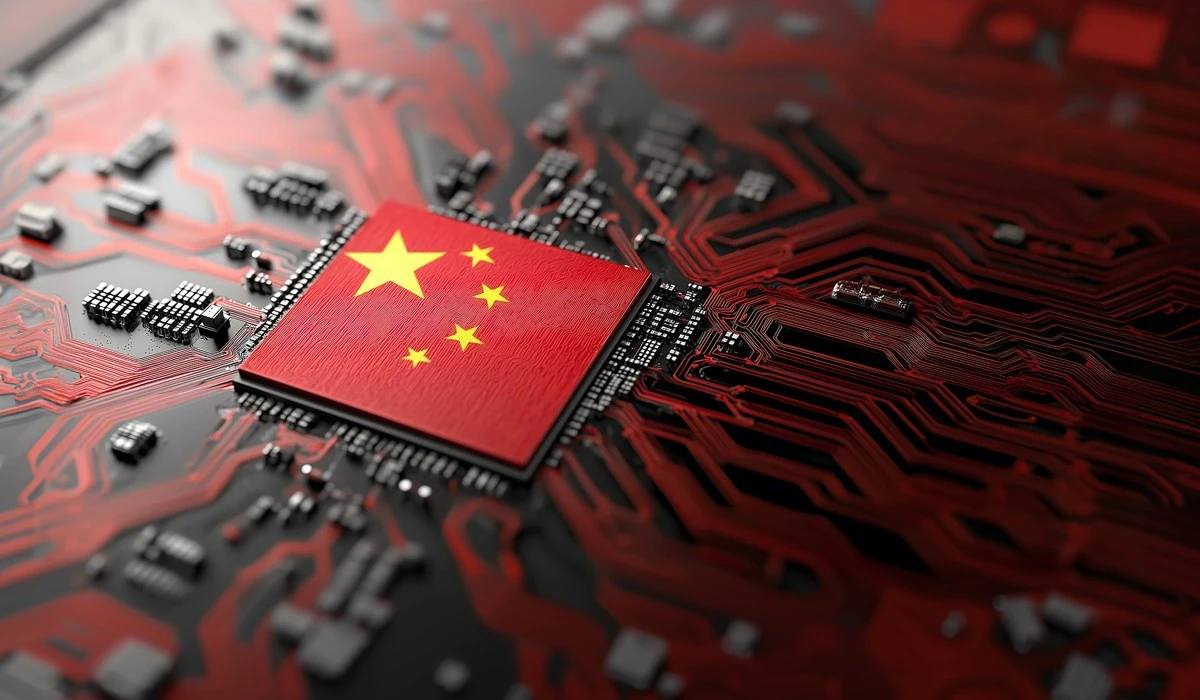
China’s AI Strategy Is Changing the World
Washington tried to slow China down by cutting off its access to the world's most powerful chips. It worked. Just not the way anyone expected. That restriction forced Chinese engineers to build software like DeepSeek-R1, which runs 20 to 50 times cheaper than American models like OpenAI's o1, according to Reuters. The United States had relied on its hardware lead for decades. In the 1950s, the US government used export prohibitions to keep technology away from Soviet-allied nations, setting the stage for the trade wars that followed.
In October 2022, the Biden administration tightened microchip export rules to block Chinese companies from accessing the processing power needed for advanced AI. Then came January 20, 2025. DeepSeek-R1 launched during the same week as the second Trump inauguration, triggering a global tech stock selloff that Reuters described as reshaping the global conversation. Many experts called it a "Sputnik moment" for the East. CNBC reported that DeepSeek-R1 outperformed the best models from US companies including OpenAI. According to Reuters, the news caused Nvidia to lose $593 billion in market value in a single day, the largest single-session loss for any company in history. China's AI strategy had arrived.
The Low-Cost Advantage in China's AI Strategy
US companies spend billions building massive data centers. Chinese developers build high-performing models on a fraction of that budget. That cost gap is now one of the defining features of China's AI strategy. OpenAI's ChatGPT reached over 900 million weekly users, roughly one-eighth of the global population. That scale requires enormous amounts of expensive hardware. Nvidia's valuation peaked at $5 trillion because every major tech company needed its chips to stay competitive. China's approach focuses on doing more with less. Chinese engineers optimize software, electricity use, and memory to reduce dependence on the newest American chips.
Most top-tier American models require billions of dollars in hardware and energy. Newer Chinese releases achieve similar results for about ten percent of that price. That lower cost allows faster adoption across industries. Chinese firms also deploy specialized tools to solve specific problems rather than waiting for a single all-purpose AI system. Journalist Karen Hao noted that Washington's discomfort with DeepSeek's efficiency proves that trade restrictions often push countries toward independence. Chinese teams now focus on "distillation," which means training new models on the outputs of existing American versions. This method lets them close the performance gap quickly, without needing access to the chips they were denied.
Hardware Dominance and the Robotics Lead
Silicon Valley builds the digital "brain" of the future. Factories in Shenzhen already build the "bodies" that carry those brains into the physical world. Nick Wright from UCL points out that while the US controls high-value processors, China dominates the manufacturing of the robots those processors control. China now operates over 2 million industrial robot units, more than the rest of the world combined. Chinese companies also control 90% of global humanoid robot exports. In any robot, the software "brain" accounts for about 80% of the value. The physical "body" makes up the remaining 20%.
The US leads in the "brain" department, particularly in deep task execution. But China's lead in "bodies" creates a strong manufacturing cycle. Chinese firms integrate design and production in the same city, so they can iterate on hardware designs faster than competitors anywhere else. A demographic shift adds pressure to this race. By 2035, China will have more people over 60 than the entire US population. That social reality is pushing the development of humanoid machines built to assist the elderly. So while US firms concentrate on digital chatbots, Chinese firms focus on machines that can walk, lift, and help people in the real world.
Energy Capacity Fuels China's AI Strategy
Training the next generation of AI requires more electricity than most nations produce in a year. Power is the raw material of the digital age. In 2024, China's energy capacity reached over 10,000 terawatt-hours, more than the combined output of the US, the EU, and India. Jensen Huang pointed out that massive energy subsidies for computing hubs could give China a decisive edge. When energy is cheap and abundant, training large models becomes a logistics problem rather than a financial gamble.
Is China better at AI than the US? The United States leads in building deep, general-purpose software. China leads in applying those tools to physical industries like manufacturing and healthcare. This "AI+" focus moves the technology out of the research lab and into the economy. For example, Alibaba recently committed 380 billion yuan, about £40 billion, to AI hardware over three years. Currently, China faces an oversupply of data centers, with a utilization rate of only 32%. That looks wasteful, but it gives China a massive safety net for future growth. American firms often struggle to find enough power to run their new computer clusters. Chinese firms have the power grid ready before the computers even arrive. That infrastructure gives China's AI strategy a stable base that is hard to replicate quickly.
Economic Utility Over General Intelligence
Beijing focuses on software that can diagnose a patient or move a shipping container today. American firms race toward a god-like computer mind. The US pursues Artificial General Intelligence (AGI) with a single-minded focus. Companies like Microsoft and OpenAI want to build a machine that can do anything a human can do. The Chinese government, by contrast, rarely mentions AGI in official policy documents. Julian Gewirtz from the White House NSC noted that Beijing prioritizes tools that improve supply chain productivity and medical diagnosis. Three examples show what this looks like in practice:
- Agent Hospital: Tsinghua University developed a virtual hospital where AI doctors treat patients. These digital physicians achieve a 93% diagnostic accuracy rate.
- Automated Ports: China currently operates 18 fully automated port terminals, with another 27 under construction.
- Logistics: AI manages multi-layered shipping routes to move goods across the country with minimal waste.
This "engineering-focused" leadership style differs sharply from the "legal-focused" approach common in the US. Author Dan Wang argues that China's advantage lies in process knowledge. Knowing how to build a better factory matters just as much as knowing how to write a better algorithm. Greg Slabaugh from Queen Mary University adds that a sustained advantage comes from integrating technology across the entire economy, rather than from any single breakthrough event.
The Shifting Talent Scene
Restricting travel and trade does not stop innovation when the engineers behind the breakthroughs never left their home country in the first place. For years, the West assumed the best Chinese researchers would move to the US to work at Google or Meta. That pattern is breaking. More than 50% of the team behind the DeepSeek breakthrough had zero training or work experience outside China. These researchers grew up in a different system and solved problems using different methods. They did not need Silicon Valley. The labor gap also shapes how each country deploys technology. China has 105 million manufacturing workers.
The US has 13 million. That massive workforce gives Chinese companies a testing ground for industrial automation that the West cannot match. When a Chinese firm develops a new way to automate a task, it can test it at a scale that is simply not possible in the US, creating a faster improvement cycle. As Investing.com reports, investors panicked when a low-cost Chinese model proved that expensive high-end chips are not the only path to powerful AI. Reuters also noted that this raised questions about future demand for AI chips and infrastructure. The realization shifted market focus from hardware scarcity to software productivity and showed that the "moat" around American hardware companies is shallower than many believed.
The Open Source Revolution
Keeping code secret protects profits. Sharing code builds a global standard that everyone else must follow. The US tech industry generally favors proprietary intellectual property. Companies keep their best models behind paywalls and closed code. China's AI strategy takes a different path by favoring open-source collaboration. Chinese firms share their models freely, letting developers worldwide improve their software at no cost. That creates a faster improvement cycle that benefits the original creator. Eddie Wu of Alibaba believes we are entering an "intelligent revolution," seeing AGI as a tool for expanding human capability and turning computers into "super-scientists."
Chinese firms build a global community around their tools while American firms protect their "black box" secrets. This builds trust and draws in users who do not want to depend entirely on a single American provider. Mari Sako from Oxford argues that the entity attracting the largest user base will ultimately win. Trust is a big part of that equation. In the West, skepticism about AI safety is high. In China, the trust rate for AI technology sits at roughly 72%. That public support allows faster deployment in sensitive areas like healthcare and public transport. When people trust the tools, the technology moves into daily life much faster.
Bridging the Seven-Month Gap
A small performance gap matters less than the ability to put a working tool into the hands of millions of workers. On average, Chinese models lag about seven months behind the latest US versions. For most business applications, a seven-month gap is almost irrelevant. A doctor or a factory manager does not need the absolute latest model. They need something reliable, affordable, and fast that runs on the hardware they already own. The US currently leads in most metrics, including deep reasoning and creative writing.
But Lennart Heim points out that we lack data on the most important indicators of long-term success. We do not know who will maintain these systems better over twenty years, or who will manage energy costs more effectively. The US lead is real, but it is expensive to maintain. Microsoft's Brad Smith noted that geopolitical influence goes to the quickest initial mover. But being first is not the same as being the most effective. That lead means little if the US builds the most powerful AI and only 5% of its deployments show a measurable profit. China's focus, by contrast, is making sure every piece of software pays for itself through increased productivity in the physical economy.
A New Time for China's AI Strategy
The global competition for AI is shifting from a race of speed to a race of utility. China focuses on what a digital mind can do in a factory, a hospital, or a port. The United States pushes the boundaries of what a digital mind can think. That practical focus defines the current shape of China's AI strategy. The shock of January 2025 proved that raw computing power is not the only path to progress.
Beijing's focus on productivity, hardware integration, and massive energy capacity has created a system that holds up even against the toughest export bans. The world no longer sees AI as a purely American invention. Two distinct paths now exist: one built around the brilliance of the digital mind, and another built around the strength of the robotic hand. The balance of global power now depends on which of those paths delivers the most practical results for the global economy.
Recently Added
Categories
- Arts And Humanities
- Blog
- Business And Management
- Criminology
- Education
- Environment And Conservation
- Farming And Animal Care
- Geopolitics
- Lifestyle And Beauty
- Medicine And Science
- Mental Health
- Nutrition And Diet
- Religion And Spirituality
- Social Care And Health
- Sport And Fitness
- Technology
- Uncategorized
- Videos