
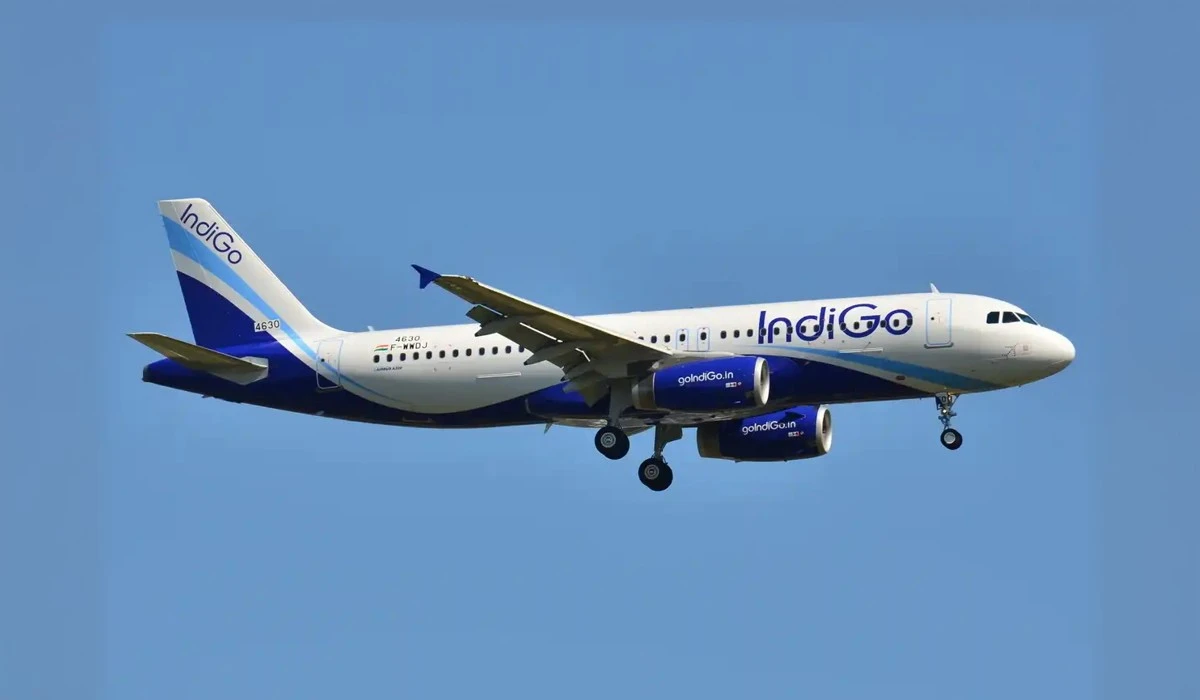
Image Credit - by Laurent ERRERA from L'Union, France, CC BY-SA 2.0, via Wikimedia Commons
Willie Walsh Tackles IndiGo’s 4,500 Flight Crisis
IndiGo holds about 65% of India’s domestic market, where a single mistake in a pilot's schedule can ground 4,500 planes in 30 days. According to Reuters, the airline cancelled approximately 4,500 flights in December 2025, showing how massive size creates a fragile dependence on labor regulations. The sudden grounding of thousands of flights exposed a gap between rapid growth and operational control. Pieter Elbers resigned immediately following this breakdown, although Reuters reports the company cautioned him for inadequate oversight of flight operations and crisis management.
The board chose a veteran who turned around Aer Lingus and built the International Airlines Group. Willie Walsh takes over during a period of intense scrutiny. The airline faces a $2.45 million fine and a negative credit watch from ICRA. The company requires a leader with expertise in scaling across international borders while maintaining a rigid domestic schedule. This change marks a shift from simple expansion to a focus on structural stability. The arrival of Willie Walsh signals a new strategy for IndiGo to overcome previous operational failures and secure dominance in a volatile global market.
The Operational Breakdown: Why Willie Walsh Matters Now
A dominant market share often masks internal fragility that only appears when government rules change. Reuters reports that IndiGo misjudged new regulations for pilots in December 2025, leading the airline to scrap about 4,500 flights. The scale of the failure shocked the industry. A report from ICRA reveals that even a carrier with 440 aircraft can collapse if it lacks the staff to fly them. Regulatory authorities issued a $2.45 million fine for mismanagement. The company currently operates over 2,200 flights every day. This high volume leaves zero room for error in scheduling. When the pilot shortage hit, the airline could not recover quickly.
Who is the new CEO of IndiGo? Reuters expects Willie Walsh to officially join the airline by August 3, 2026, after completing his time in office at IATA. He enters a company that still provides 65% of the country's domestic flights but struggles with consistency. This operational crisis demanded a change in leadership. Elbers resigned on March 10, 2026, effective immediately. His departure happened as the airline dealt with the fallout of the December cancellations. The board needed a leader who had experience managing large-scale operations under heavy regulation. Willie Walsh fits this profile because he has spent decades running major international airlines.
The Pieter Elbers Exit: Personal Choice or Regulatory Pressure?
The sudden departure of a leader often stems from a conflict between long-term goals and immediate regulatory failures. Pieter Elbers officially left for personal reasons. However, his resignation coincided with the aftermath of the massive flight disruptions and the subsequent government penalty. The timing suggests that the operational breakdown in late 2025 made his position difficult to maintain. According to Reuters, co-founder Rahul Bhatia took over leadership duties as interim chief during the change. Bhatia focused on stabilizing the airline while searching for a permanent successor.
How many planes does IndiGo have? ICRA confirms the airline maintains a fleet of 440 aircraft, serving 135 destinations. Maintaining this network during a leadership change requires a clear vision. The market reacted positively to the news of the new appointment. Share prices rose by 9% when the company announced Walsh as the successor. Investors see Walsh as a stabilizer. He brings a reputation for being tough on costs and productive with resources. His arrival comes at a junction where IndiGo must choose between continuing its aggressive growth or fixing its internal processes.

Image Credit - by StuBaileyPhoto, CC BY-SA 4.0, via Wikimedia Commons
The Rise of Willie Walsh: From the Cockpit to the Boardroom
Commanding a cockpit provides a direct understanding of the technical limits that a corporate office often ignores. Reuters reports that Walsh started in 1979 at Aer Lingus as a cadet pilot and later became CEO there in 2001. During his early career, he flew Boeing 737s as a Captain. This background gives him a unique perspective that most executives lack. He knows exactly how pilot rest rules affect the daily operation of a flight. Walsh did not stay in the cockpit.
Reuters also notes that Walsh was born in Dublin in 1961 and earned an MBA from Trinity College, Dublin. This combination of technical skill and business education allowed him to climb the ranks at Aer Lingus. In 2001, he became the CEO of the airline. At that time, the industry faced a major downturn. Walsh turned Aer Lingus into a low-cost carrier to ensure its survival. This history of radical change explains why the board wants Willie Walsh to lead the next phase as CEO. He understands the low-cost model better than almost anyone in the industry. According to Reuters, IndiGo currently holds about 65% of the country's domestic market, making it the most influential player in the region. Walsh must now use his experience to protect this share while expanding into new international territories.
Fixing the Flight Path: Solving the Pilot Shortage Crisis
Rapid expansion creates a vacuum in the workforce that eventually halts the very growth it intended to fuel. The December 2025 crisis at IndiGo was a direct result of a pilot shortage. The airline grew its fleet faster than it grew its roster of qualified captains. When the government tightened duty hours to prevent fatigue, the airline found itself without enough pilots to cover its 2,200 flights daily. Reuters reports that Walsh brings over four decades of experience to the role, including a history of dealing with labor issues.
During his time at British Airways and Aer Lingus, he often clashed with unions to implement necessary changes. He believes in a strong partnership with staff to achieve peak performance. At IndiGo, he must balance the needs of the crew with the demands of a massive flight schedule. Airlines generate sustainable value only when they fly planes without breaking safety or labor laws. Reuters indicates the airline’s network includes 95 domestic and more than 40 international destinations. Managing this variety of routes requires a disciplined approach to staffing. Walsh plans to refine the network to ensure that the most profitable routes receive the necessary resources. He has stated that the speed of change in the Indian aviation sector is high. He views IndiGo as the prime candidate for leadership in this changing environment.
The Global Expansion Strategy for Willie Walsh and IndiGo
Domestic dominance often leads to a plateau unless an airline can successfully transition into a global player. IndiGo already has a strong foothold in India, but its international presence is still growing. With more than 40 international destinations, the airline is just beginning to compete with global giants. Willie Walsh planned the merger between British Airways and Iberia to form IAG. He knows how to scale a business across different countries and cultures. IndiGo faces a requirement to scale globally while stabilizing its domestic operations.
Rahul Bhatia described Walsh as having a rare blend of global vision and operational prowess. This vision extends beyond the addition of new flight paths to include a customer-centric approach that maintains the value-led management that made IndiGo successful. The market expects Walsh to use his experience at IATA to navigate international regulations. He spent five years as the Director General of IATA, focusing on post-COVID recovery and carbon targets. This experience gives him a high-level view of the global aviation industry. He can identify which international markets offer the best growth opportunities for a low-cost carrier like IndiGo.
Market Turmoil and the ICRA Negative Watch
External geopolitical events can cripple an airline's credit rating even when the internal management is sound. IndiGo currently faces a negative credit watch by ICRA. This warning stems from disruptions in Middle East airspace caused by regional conflicts. These disruptions force flights to take longer routes, increasing fuel costs and reducing productivity. For a low-cost carrier, these extra costs can quickly erase profit margins. Walsh is no stranger to external crises.
In 2010, when a volcanic ash plume grounded flights across Europe, he famously criticized the "gross over-reaction" of safety regulators. He argued that the flight bans were unnecessary for the level of danger present. This willingness to challenge the status quo shows his focus on keeping planes in the air. At IndiGo, he must navigate the challenges of Middle Eastern airspace while keeping the airline financially healthy. The $2.45 million fine from the previous year adds to the financial pressure. Walsh must prove to investors and credit agencies that IndiGo can handle these external shocks. His history of managing Aer Lingus and British Airways through economic downturns suggests he has the tools to do so.
The Legacy of Productivity: Replicating the IAG Success at IndiGo
A successful merger depends less on the size of the companies and more on the coordination of their internal systems. Walsh proved this when he built IAG. He took two very different airlines—British Airways and Iberia—and turned them into a profitable group. He focused on cutting waste and improving the customer experience. This same focus on productivity is what IndiGo needs to recover from its 2025 failures. Vikram Singh Mehta expressed high enthusiasm for Walsh’s arrival, citing his expertise in complicated markets.
The Indian aviation market is notoriously difficult to navigate. High fuel taxes, aggressive competition, and changing regulations make it a graveyard for many carriers. Walsh’s ability to find profit in tough environments is a key asset for IndiGo. The handover to Willie Walsh as the CEO of IndiGo will conclude on August 3, 2026. Until then, the airline continues its interim leadership. The focus remains on customer experience elevation and global scaling. Walsh has already stated that he intends to work closely with the staff to ensure that the airline provides sustainable value to its shareholders and passengers. He wants to move the company beyond the "crisis mode" of the previous year and into a period of disciplined growth.
A Career Defined by Tough Decisions
Leadership often requires making choices that are unpopular in the short term but necessary for long-term survival. During his time at Aer Lingus, Walsh faced heavy opposition from the government and unions. Former Taoiseach Bertie Ahern once accused Walsh's management team of attempting an "asset seizure" that betrayed employee interests. Walsh pushed forward anyway, believing that the airline could not survive without becoming a low-cost carrier. This toughness defines his career. He does not shy away from conflict if it means protecting the future of the company.
At IndiGo, this may mean making difficult changes to how pilots are scheduled or how the airline handles its massive fleet. The airline needs a leader who can say no to rapid growth if the internal systems cannot support it. Walsh’s personal history also shows a life dedicated to the industry. Reuters reports that Walsh was born in Dublin in 1961 and has spent decades in aviation. He received the 2014 Laureate for Commercial Aviation from Aviation Week & Space Technology. This professional recognition highlights his status as one of the most influential figures in modern flight. Many industry leaders see Walsh’s move to IndiGo as a significant leadership change in Indian aviation history.
Restoring Faith in the Low-Cost Model
The ultimate goal of a low-cost carrier is to provide reliable service at a price that creates its own demand. When reliability fails, the entire model falls apart. The 4,500 cancellations in December 2025 broke the promise of reliability that IndiGo built over two decades. Willie Walsh must now restore that faith. He must ensure that when a passenger buys a ticket, the plane actually takes off. The airline’s destination network of 95 domestic and 40 international locations requires a level of coordination that few people can manage (Reuters).
Walsh’s experience at IATA gave him a bird's-eye view of how the world's best airlines operate. He knows that the difference between a successful carrier and a failing one is often found in the small details of operational management. As he prepares to take the lead, the industry is watching closely. The partnership between Walsh and the existing IndiGo team will determine if the airline can maintain its 65% market share. With the Middle East conflict and regulatory pressures looming, the task is difficult. However, Walsh’s history suggests he is most effective when the stakes are highest.

Image Credit - by SlowPhoton, CC BY-SA 4.0, via Wikimedia Commons
The Future of Indian Aviation Under Walsh
The Indian aviation market leads the world in growth at present. This growth presents both an opportunity and a threat. If IndiGo grows too fast, it risks another operational collapse. If it grows too slowly, it loses market share to rising competitors. Willie Walsh must find the "sweet spot" where growth and stability meet. The appointment of a former CEO of British Airways and IATA declares the airline’s intention to become a global powerhouse. The 9% jump in share price shows that the market believes in this change.
Walsh has the global vision required to take the airline to the next level. The focus on customer-centricity and sustainable value will be the pillars of his tenure. He has a history of delivering results across multiple carriers and complicated markets. As the industry moves toward 2050 carbon targets and deals with the fallout of geopolitical tensions, Walsh’s experience will be invaluable. The 440+ aircraft in the IndiGo fleet stand ready for the next chapter, and the world is waiting to see where he takes them.
Securing the Legacy of Willie Walsh
The success of a new leader is measured by their ability to turn a period of crisis into a period of predictable results. The tenure of Walsh as IndiGo’s CEO begins at a moment when the airline must prove it has learned from the failures of December 2025. Addressing the pilot shortage and refining the global network allows Walsh to move the company away from the threat of regulatory penalties and toward a more stable financial future.
The $2.45 million fine was a wake-up call, and the board has responded by hiring one of the most experienced pilots in the business. Stability in aviation comes from a balance between aggressive expansion and the cold reality of flight regulations. As Walsh takes the controls on August 3, 2026, his focus will remain on ensuring that the airline's massive scale becomes a strength again, rather than a point of failure. The goal is simple: keep the planes flying, keep the costs low, and turn IndiGo into a truly global name.
Recently Added
Categories
- Arts And Humanities
- Blog
- Business And Management
- Criminology
- Education
- Environment And Conservation
- Farming And Animal Care
- Geopolitics
- Lifestyle And Beauty
- Medicine And Science
- Mental Health
- Nutrition And Diet
- Religion And Spirituality
- Social Care And Health
- Sport And Fitness
- Technology
- Uncategorized
- Videos

