

Australia Fuel Excise Cut Masks Global Price Impact
When governments slash taxes to make petrol cheaper, they actually shift the financial burden directly onto the people they claim to help. According to a Reuters report, the recent Australia fuel excise cut drops the sales tax by half, instantly reducing the cost of filling up a car. Yet, this temporary relief covers up a severe international vulnerability. Domestic supply remains entirely adequate, but prices skyrocket purely because of international crude market fluctuations.
When politicians remove 26.3 cents per litre from the petrol tax—a move Reuters notes will lower retail costs—they effectively transfer a massive A$2.55 billion deficit straight to the taxpayers. Citizens celebrate saving money at the pump while paying for that exact same discount through government debt. The entire strategy ignores the root cause of the pricing spike. A single geographical bottleneck halfway across the world forces local leaders to scramble for domestic solutions.
The True Cost Behind the Australia Fuel Excise Cut
Slashing the petrol tax lowers the price at the pump while forcing a massive reshuffling of national debt. The federal government initiated the Australia fuel excise cut on Wednesday, halving the usual tax rate. Motorists now save roughly A10 to A20 every time they fill their tanks. Prime Minister Anthony Albanese framed this as a necessary step to relieve severe financial pressure on everyday citizens.
However, moving money around changes who ultimately foots the bill. The policy costs taxpayers A$2.55 billion. The Opposition Leader criticized the move, pointing out the complete lack of expenditure offsets. The government provides instant relief but creates a massive financial gap. Economists warn this approach carries a high inflation risk.
Relief programs also extend beyond civilian vehicles. As detailed on the Tasmania Alert platform, the government eliminated the heavy vehicle road user charge to provide trucking industry relief for a three-month duration. Why did the government cut the fuel excise in Australia? Politicians implemented the cut strictly to provide immediate financial relief to motorists facing extreme cost-of-living pressures from global inflation. Still, critics argue these broad tax reductions inherently skew benefits toward wealthy demographics who own more vehicles and drive more frequently.
Why State Leaders Initiate Free Public Transit
Free bus tickets actively alter human movement patterns to disguise a severe vulnerability in liquid energy supplies. To reduce petrol consumption pressure, state governments began heavily subsidizing public transportation. Coverage from ABC News confirms Victoria will commence a free public transit period spanning late March through April. Tasmania rolled out a similar initiative that runs until the end of June. Meanwhile, official statements from the Queensland Government show the state introduced a massive 50-cent fare rollout in February, surging patronage by 21 percent and saving commuters millions.
Tasmanian Premier Jeremy Rockliff described these actions as firm defensive measures to protect family budgets from energy costs. Families using the school bus system in Tasmania save roughly A$20 per week. The state recorded a massive 20% ridership spike after dropping the fares.
Western Australia Premier Roger Cook noted these transport fares represent the lowest historical prices since the music charts of the 1980s. State leaders know that shifting capable individuals onto trains preserves fuel for critical regional sectors. Does free public transport reduce fuel consumption? Yes, research published in ScienceDirect shows that removing transit fares significantly increases ridership, motivating commuters to leave their cars at home and immediately decreasing the overall demand for retail petrol. Prime Minister Albanese openly encouraged citizens to utilize these public options to protect the national fuel reserves.
Tracking the Strait of Hormuz Chokepoint
A single blocked waterway dictates exactly how much money an entire continent pays to drive to work. Global fuel prices spike when international conflict disrupts established shipping routes. The current crisis stems directly from Middle East tensions leading to the closure of the Strait of Hormuz. This specific chokepoint controls 20% of the world's global shipping.
More importantly, it handles 80% of the oil and LNG flow headed toward Asia. When tankers cannot pass through this narrow strip of water, the resulting delay creates a worldwide chain reaction. Australia possesses adequate domestic fuel supplies. The physical petrol sits safely in local tanks.
A letter published by the ACCC notes that the retail price still shoots upward because local distributors base their pricing on international crude market fluctuations. Any disruption in the Middle East forces the rest of the world to implement strict fuel conservation measures.
International Dominos Fall from Refined Fuel Bans
When one nation hoards energy, neighboring countries start forcing public workers to alter their daily physical routines. The shipping disruption sparked a wave of aggressive domestic supply protection policies across Asia. China instituted a strict refined fuel export ban. They locked down their own energy reserves, causing panic in neighboring markets.
India responded by prioritizing household LPG access. The Indian government then placed strict limitations on restaurant menus and heavily restricted business operations to conserve power. Thailand took even more drastic steps to limit electrical consumption. Thai officials restricted elevator usage and mandated the use of stairways for all public workers.
These extreme global reactions highlight the fragility of the international energy market. Australia remains somewhat insulated from taking the stairs, but local businesses still feel the squeeze. The business sector recently requested tax breaks for farmers and wage subsidies for companies struggling to absorb the rising operational costs.
The Wealth Divide Inside Government Relief
Broad financial relief programs quietly funnel the largest monetary benefits to those who need assistance the least. Economic experts heavily criticize the current relief structure. A flat tax cut provides the highest dollar-value savings to households running multiple large vehicles. Lower-income citizens who rely on public transit or drive smaller cars receive a fraction of the total benefit.
The ACCC received a strict price monitoring mandate to oversee this shift. The consumer watchdog must verify that petrol station operators actually pass the tax reductions down to the consumer. Will the ACCC punish petrol stations that keep prices high? The consumer watchdog actively monitors pump prices and possesses the authority to penalize operators who refuse to pass the mandated tax savings onto drivers.
Treasury officials pushed the current tax cut execution through rapidly. Interestingly, Treasurer Chalmers dismissed the exact same tax cut concept just last Tuesday. The sudden reversal highlights the intense political pressure surrounding the cost of living.
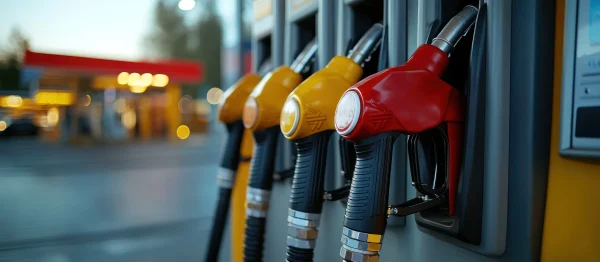
Dissecting the Contradictions in Petrol Prices
Official data reports and actual pump receipts tell two completely different stories about the baseline cost of driving. Tracking the true severity of the fuel crisis requires navigating several conflicting data points. The baseline figure for pre-war petrol sits at A2.09 per litre according to main tracking data. However, supporting industry reports indicate the pre−war price hovered much lower at A1.70 per litre.
The current peak prices show similar discrepancies. The Australian Institute of Petroleum data lists the recent average petrol price at A2.38 per litre. Drivers on the ground report specific pumps charging upto A2.50.
Even the timeline of the government response contains messy contradictions. Official announcements stated free transit started on Tuesday. Conversely, supporting documentation marks the start dates as March 31 for Victoria and March 30 for Tasmania. Politicians describe the situation as an incomplete overall solution, yet they frame every announcement as an instant victory for the consumer.
The Future of the National Fuel Security Strategy
Creating a national energy defense plan relies entirely on restricting commercial transport before touching civilian access. The federal government operates a four-stage national fuel security framework. Despite the soaring prices and international shipping closures, officials have implemented no explicit petrol rationing yet.
The strategy focuses on absorbing the financial shock rather than limiting physical access. Politicians prefer to rely on the Australia fuel excise cut and public transit subsidies rather than telling citizens they cannot buy petrol.
Victorian Premier Jacinta Allan admitted the current policies act as an immediate step rather than a permanent fix. The current system requires throwing billions of taxpayer dollars at a problem caused entirely by foreign conflicts. Until the international shipping lanes stabilize, Australian drivers remain tethered to the volatility of a market they cannot control.
Fixing the Core Vulnerability
Throwing taxpayer money at retail petrol prices guarantees the nation remains entirely dependent on volatile foreign shipping lanes. The Australia fuel excise cut provides undeniable immediate financial relief. Drivers save money today. However, the true cost of this strategy transfers directly to the national deficit.
State and federal leaders manage the immediate symptoms of the crisis when they push citizens toward free public transit and temporarily suspend heavy vehicle charges. They shield the public from the true severity of the Strait of Hormuz closure. Until the global shipping choke points reopen, Australia will continue paying billions to mask the fragility of its own energy dependence.
Recently Added
Categories
- Arts And Humanities
- Blog
- Business And Management
- Criminology
- Education
- Environment And Conservation
- Farming And Animal Care
- Geopolitics
- Lifestyle And Beauty
- Medicine And Science
- Mental Health
- Nutrition And Diet
- Religion And Spirituality
- Social Care And Health
- Sport And Fitness
- Technology
- Uncategorized
- Videos