
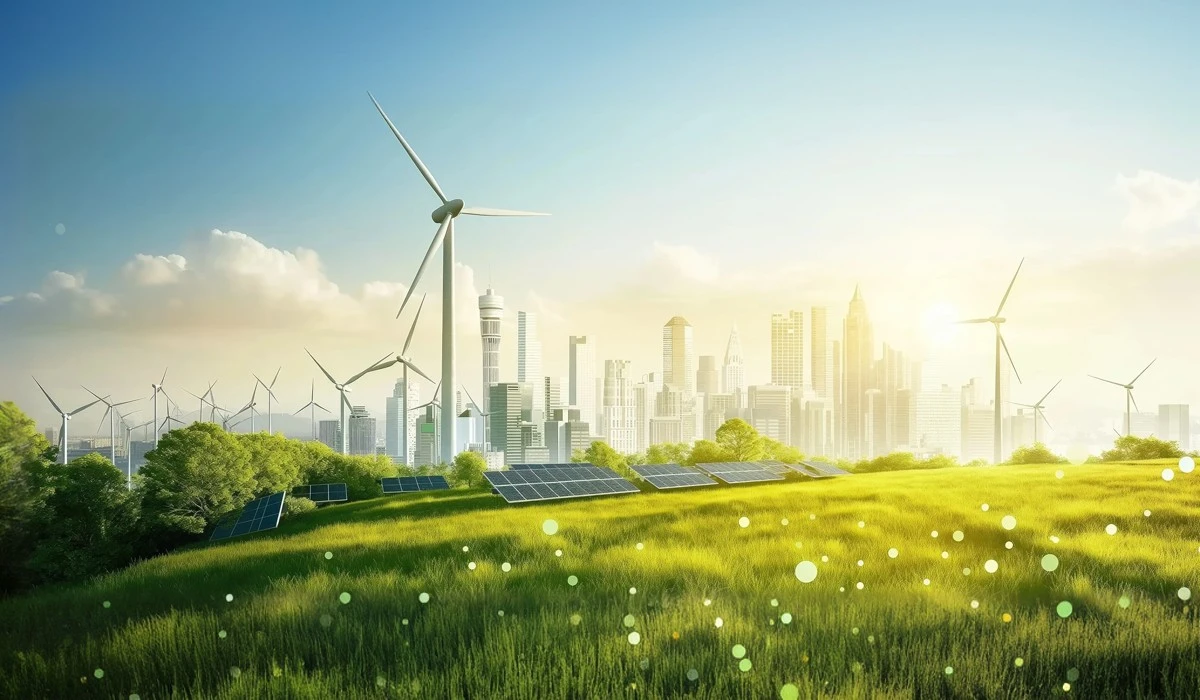
Green Energy Shift Driven by Global Geopolitics
Wars fought to secure fossil fuels rapidly destroy the public need for them. According to Reuters, the outbreak of conflict in the Middle East on February 28 severely disrupted global energy production, as the conflict caused multiple oil and gas shutdowns in the region and shipping through the Strait ground to a near halt. This geopolitical shock forced consumers to abandon traditional power grids and rush toward the green energy shift.
People care about climate change, but immediate financial pain drives actual market behavior. When consumers face an initial fuel pump hike, they anticipate broader inflation across global goods and future home energy bill spikes. They respond by severing their reliance on the traditional grid entirely. We are watching a rapid, global pivot away from imported fossil fuels. This shift stems entirely from a desire for domestic security and financial survival.
The Panic Response Driving the Green Energy Shift
Consumers ignore decade-long climate warnings but completely rewire their homes the moment their fuel bills spike. Octopus Energy tracked a massive shift in consumer behavior during the first three weeks of March. Customers watched the escalating conflict in the Middle East and immediately sought alternatives to grid dependency. Data published in an Octopus Energy press release shows that solar panel sales at the company jumped 50% in March compared to the February baseline, noting an overall 54% increase in solar sales. Customers also purchased 30% more heat pumps during that exact same window.
This panic buying occurred despite conflicting signals at the policy level. In April, the Ofgem price cap temporarily dropped, offering a brief reduction in household utility costs. A logical market would temporarily relax. Instead, according to a report by Reuters, consumers anticipated the July Ofgem price cap reset and the expected energy bill hikes, forecasting a 10% increase to 1,801 pounds from the 1,641-pound cap set in April. They ignored the short-term relief and prepared for a long-term crisis.
Octopus Energy CEO Greg Jackson noted the urgency in consumer sentiment. Buyers demanded immediate action against rising costs. Fatih Birol reinforced this reality, pointing out that geopolitical safety easily overrides environmental concerns for the average household. Families want homegrown power sources to protect their bank accounts.
How Transport Shifts Push the Green Energy Shift
Drop the initial barrier to entry, and a luxury item immediately turns into a baseline survival tool. Electric vehicles once sat strictly in the domain of wealthy early adopters. Today, price parity between petrol and electric models completely rewrites the transport market. The rapid expansion of the second-hand market eliminates the traditional low-income barrier. Consumers flock to electric options to escape volatile gas station prices.
Octopus Energy recorded this shift in real-time. EV inquiries spiked by over a third in March compared to February. As reported by The Guardian, EV charger inquiries simultaneously rose by about a fifth, with sales of electric vehicle charger systems specifically climbing by 20%. Why are electric vehicles becoming more popular? They are reaching price parity with petrol cars and the second-hand market is rapidly expanding, eliminating the low-income barrier. People recognize that generating their own power at home and pumping it into their cars provides absolute financial security.
Ed Miliband argued that fossil fuel crises require a total pivot from traditional resources. The market agrees. Consumers commit to domestic clean power generation because they refuse to remain vulnerable to international conflicts. The global automotive industry must now keep pace with a customer base that views the petrol station as a financial liability.
The Geographic Divide in Global Energy Independence
Countries trying to drill their way out of a global supply crunch end up paying international rates for their own backyard resources. Politicians frequently propose North Sea gas expansion as a solution to the UK energy crisis. This approach provides false security. Extracted local gas prices match global market rates. Domestic drilling offers minimal effect because the fossil fuel industry inherently lacks spare capacity during a supply crunch.
Christophe Williams warned that domestic extraction leaves nations vulnerable to international supply route disruptions. True resilience requires efficiency improvements and localized renewable power. The United States enjoys protection via abundant domestic natural gas. Europe and Asia suffer extreme vulnerability due to heavy import reliance.
Asian Decisiveness vs. European Debate
Greg Jackson highlighted the stark contrast between global responses. European policy involves endless debates over adoption speeds and North Sea drilling. Chinese policy focuses on decisive action for energy independence. The Chinese state oil company established a bold 2040 target year for the complete removal of Chinese petrol stations. This aggressive stance builds absolute resilience against Middle East fuel crises. Europe remains trapped in regulatory arguments while Asia builds physical infrastructure.
The Supply Chain Threat to the Green Energy Shift
A sudden rush for independence creates massive bottlenecks, pushing up the price of the exact tools meant to save money. The US-Israel and Iran airstrikes knocked roughly 20% of global oil and gas supply offline. This reduction sparked an escalation in freight, insurance, and feedstock expenses. Higher production and transport costs directly hit green tech manufacturers. Solar panels, home batteries, and wind turbines suddenly cost much more to move across the globe.
Lloyd Greenfield warned that geopolitical instability directly threatens renewable tech availability. The market faces a potential repeat of the 2022 Ukraine-period hardware shortages. Consumer demand currently vastly exceeds available inventory. People want to buy solar panels, but the ships carrying them cannot afford the insurance premiums to cross active conflict zones.
This logistical nightmare threatens to stall the green energy shift. Manufacturers face higher operational costs, and they pass those expenses down to the consumer. The race to achieve energy independence requires massive amounts of global shipping. When global shipping breaks down, local independence becomes significantly harder to achieve.
Global Micro-Shifts in Heating and Cooking Logistics
A delayed delivery truck in one hemisphere causes a massive retail run on electric appliances in another. Energy crises force instantaneous behavioral changes at the local level. In India, LPG delivery delays stretched from five days to 25 days. Consumers panicked and caused a 30x Amazon sales spike for electric induction stoves. They refused to wait for gas trucks and simply plugged their cookware into the wall.
While local accounts reported that in Pakistan, a 20% spike in gasoline prices caused an immediate inventory depletion of electric rickshaws at Tezmo Motors, a Reuters video report found a parallel situation where soaring petrol costs are boosting used electric vehicle sales across Europe. Drivers switched to electric alternatives overnight to protect their daily wages. How do gas prices affect renewable energy sales? Spikes in fuel costs create immediate consumer panic, driving massive overnight surges in solar panel and electric appliance purchases.
San Francisco gas prices hit $6.81 per gallon. This local price shock acted as a direct catalyst for increased traffic at the Ever used EV dealership. In Germany, a 21% jump in heating oil prices created a mad rush for alternatives. Calls tripled and sales doubled at Solarhandel24. Homeowners recognized the immediate threat to their winter heating bills and bought solar setups out of sheer necessity.
The Unintended Irony of the Green Energy Shift
The desperate scramble to build clean tech relies on a massive short-term burn of the dirtiest fuels available. The surge in green tech adoption drives short-term global emissions significantly higher. Asian manufacturing hubs rely heavily on coal to fill the massive energy gaps required to build millions of new solar panels and electric batteries. The planet suffers a warming pollution spike precisely because the world wants to go green.
Despite this contradiction, financial markets rallied behind clean tech. Following the post-conflict market reaction, SolarEdge stock jumped 45%. Plug Power climbed 27%. CATL rose 29%, and BYD saw a 12% boost. Investors recognized that the Middle East conflict permanently altered consumer demand.
Glow Green data revealed a 182% year-over-year surge in UK solar demand. This spike correlates directly to the Iran tensions. Consumers want absolute detachment from global energy markets. To meet this massive demand, the UK Government partnered with Lidl and Amazon to provide upcoming plug-in solar availability. Buying a solar panel will soon require the same effort as buying groceries.
The Financial Allocation
In 2023, global energy shift investment hit 2.3 trillion. According to a report by the International Energy Agency (IEA), corporations and governments allocated over 1 trillion specifically for green products like EVs and heat pumps, driven by momentum in renewable power and EVs, alongside important contributions from heat pumps. The IEA states that more than $1.7 trillion is now going to clean energy. This monumental capital deployment proves that the primary decarbonization driver centers on energy security and domestic production. Climate change mitigation takes a back seat to raw economic survival.
Societal Adaptation and the Looming Threat of AI
Fixing the global power grid only clears the board for a faster technological wave that threatens human labor. As the world scrambles to solve the energy crisis, artificial intelligence advances at a breakneck pace. Greg Jackson warned about this relentless technological advancement. He outlined the very real threat to future human uniqueness as machines learn to replicate advanced skills.
Society must rapidly adapt to this impending obsolescence. What is the connection between the energy crisis and AI? Both force rapid societal adaptation, as volatile fuel markets demand new infrastructure while artificial intelligence threatens to outpace human skill sets. The global economy cannot simply fix the energy grid and declare victory. It must prepare for a workforce completely altered by machine intelligence.
Jackson emphasized the urgent requirement for positive outcomes through strong social policies. A strong welfare state provides an essential social safety net during these massive economic shifts. Drawing on a personal anecdote, Jackson framed the welfare state as an enabler for future economic contributors. If society provides stability during the energy and AI shifts, individuals have the breathing room required to learn new skills and adapt.
The Future of Global Energy
The green energy shift accelerates purely through necessity. Consumers will not wait for government mandates or climate treaties when their monthly bills threaten their livelihood. The February Middle East conflict permanently broke the illusion of fossil fuel stability.
Every delayed gas delivery, every price hike at the pump, and every geopolitical threat pushes another household to install a heat pump or buy an EV. The shift requires massive logistical effort and creates severe supply chain bottlenecks. Yet, the momentum remains entirely unstoppable.
Global energy independence requires physical hardware, and consumers demand that hardware immediately. The world shifts toward clean power because individuals refuse to fund international conflicts with their utility bills. The shift wins out of sheer financial self-defense.
Recently Added
Categories
- Arts And Humanities
- Blog
- Business And Management
- Criminology
- Education
- Environment And Conservation
- Farming And Animal Care
- Geopolitics
- Lifestyle And Beauty
- Medicine And Science
- Mental Health
- Nutrition And Diet
- Religion And Spirituality
- Social Care And Health
- Sport And Fitness
- Technology
- Uncategorized
- Videos

